Some cars feel like a handshake—quick, friendly, and forgettable. The Subaru Impreza feels more like a seasoned watchmaker’s craft: quiet precision, engineered resilience, and a reassuring sense that safety isn’t an afterthought—it’s the architecture beneath the dashboard. Its standard all-wheel drive (AWD) isn’t merely a drivetrain feature; it’s a philosophy. When conditions shift—rain turning asphalt to a slick mirror, wind tugging at traction, or uneven roads corrugating the ride—the Impreza answers with a composed, calculated steadiness.
In the Impreza, safety becomes a choreography. Sensors and systems work like the ensemble in a well-rehearsed play: each player has a role, yet the performance reads as one seamless motion. From staying centered to helping you avoid hazards, the Impreza’s standard AWD safety features aim to keep you moving with intent rather than improvisation.
All-Wheel Drive as a Foundational Safety Argument
AWD is often described as confidence. But confidence is too simple. In the Impreza, AWD behaves like a stabilizing counterweight—spreading torque and reducing the tendency for any single wheel to become the weak link. That matters when the road is a little unpredictable: wet corners, gravelly pull-offs, or a damp commute where tire grip is never guaranteed.
Think of it as the vehicle’s instinctive “grip reflex.” Front and rear traction cooperate so the car can respond more predictably to steering inputs. The result is a driving feel that’s less like wrestling and more like guidance—especially when the surface changes mid-turn or when you accelerate out of a junction and the tires might otherwise negotiate for traction.
Electronic Stability Control: The Quiet Referee
Stability control doesn’t announce itself with drama. It intervenes like a careful referee in the background—detecting when the vehicle’s path and the driver’s intended direction diverge. When that happens, the system can selectively apply brakes and adjust engine output to help bring the car back into alignment.
In practical terms, it’s the Impreza taking the long view during sudden maneuvers. If a driver enters a corner too quickly, if a road is icy but not obvious, or if traction drops unexpectedly, stability control aims to reduce the severity of a skid by restoring directional control.
Traction Control: Managing the “Slip” Before It Becomes a Story
Traction control focuses on one of driving’s most common anxieties: wheel slip. If the wheels lose grip, acceleration can turn from momentum into loss—especially on loose surfaces. Traction control helps prevent that by moderating engine power and, when needed, braking a spinning wheel.
This system acts like dampening foam beneath the chaos. Instead of allowing slip to snowball, it keeps wheel rotation within a manageable range. The Impreza’s standard setup supports smooth throttle delivery and steadier behavior when grip is inconsistent—so you can accelerate without that uncomfortable sensation of the car “searching” for traction.
Anti-Lock Braking System (ABS): Brakes That Respect Direction
ABS is a cornerstone of modern stopping control. By preventing wheel lock-up during hard braking, ABS helps maintain steering ability. That’s a subtle but vital advantage: you can brake firmly while still steering around hazards.
Picture a sudden lane change ahead of you. ABS enables the braking force to be applied effectively without turning the tires into skids. The Impreza’s braking confidence is less about maximum deceleration on paper and more about controllability when milliseconds matter—when visibility is imperfect and the roadway is unforgiving.
Brake Assist: The Moment You Need More Than Intention
In emergency situations, drivers don’t always apply maximum brake force. Sometimes the pedal travel is too conservative. Brake Assist responds to that by recognizing panic-like or emergency braking patterns and boosting braking effectiveness.
It’s an empathetic system, though it never speaks. It reads the urgency in your input and helps shorten stopping distance potential. In wet or low-traction conditions, that assistance becomes even more valuable, because braking effectiveness depends not just on the brakes themselves, but also on how well the tires can maintain grip while decelerating.
Forward Crash Avoidance Support: A Proactive Guardrail for the Mind
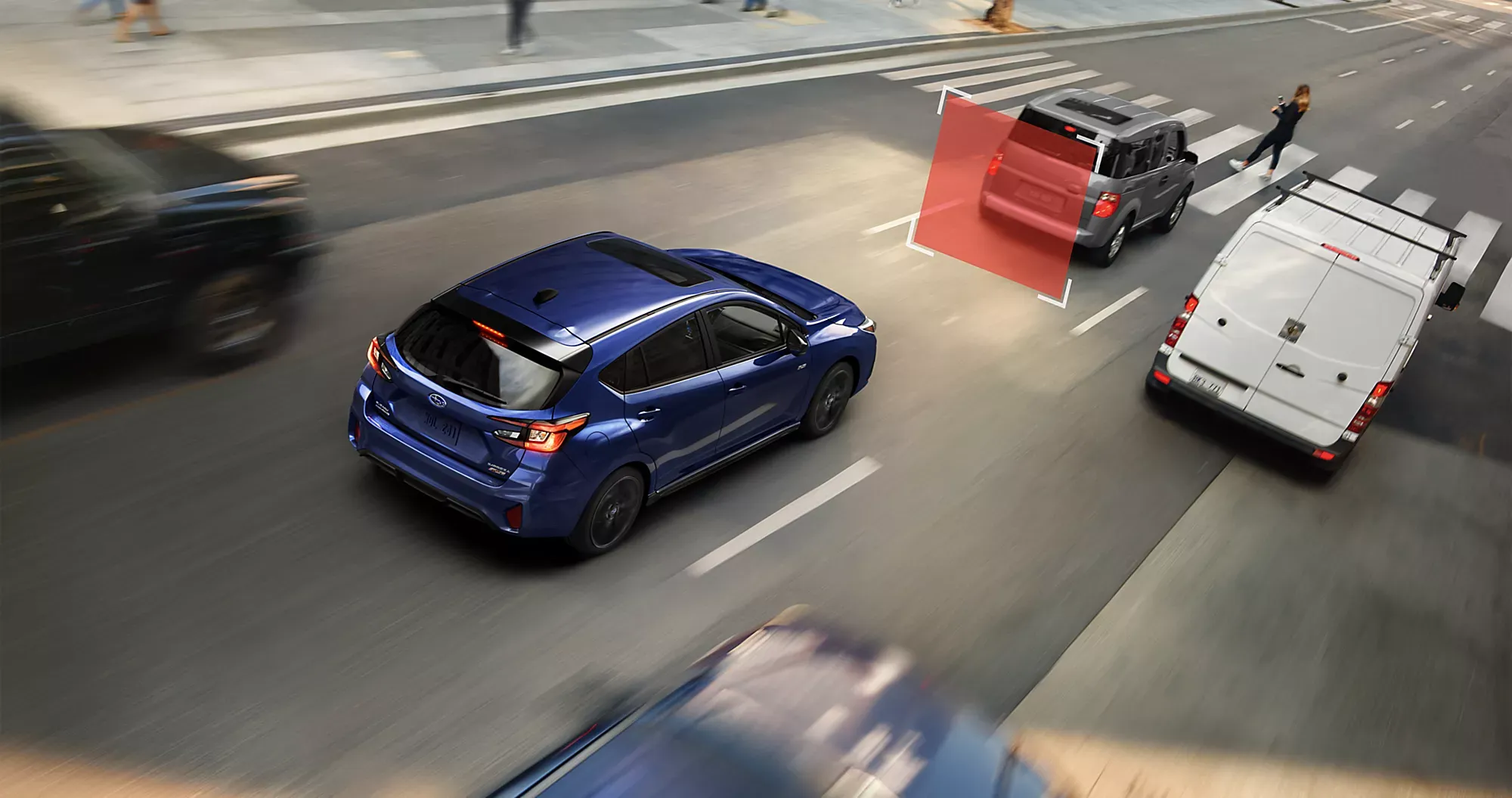
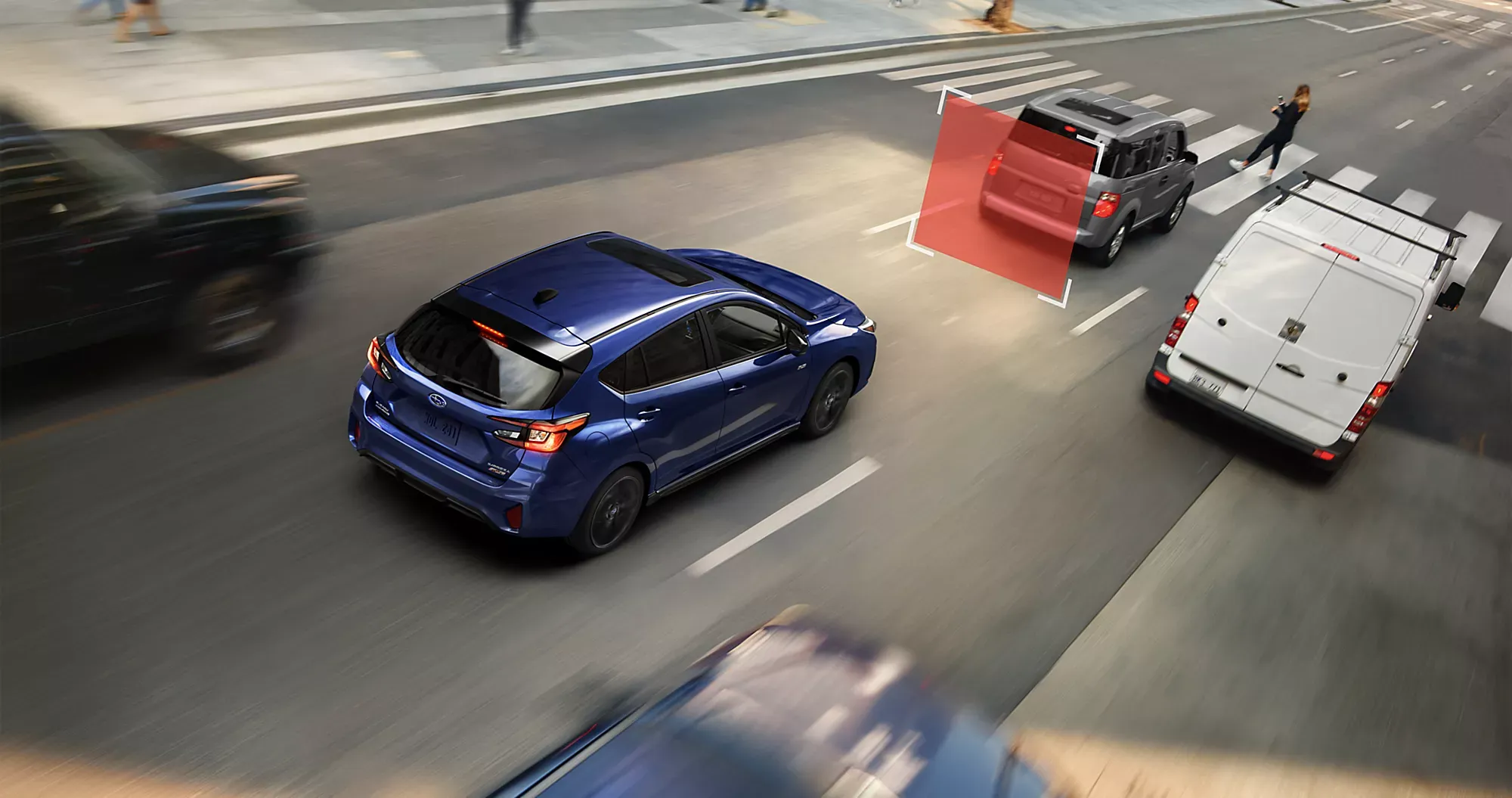
Some safety systems react after a problem begins. Others try to prevent the problem from being born. The Impreza’s driver assistance suite includes features designed to monitor the road ahead and help reduce the risk of collisions.
When a vehicle ahead slows unexpectedly—or when an obstacle appears in your path—the system can provide warnings and, depending on configuration, offer supportive intervention. Consider this a digital early-warning lighthouse: it doesn’t drive for you, but it helps you notice what your attention might miss in time.
In traffic, where speed changes are frequent and distractions are common, this kind of foresight adds a layer of calm to the driving routine. Short attention lapses happen to everyone. The best safety systems treat those lapses as probable, not exceptional.
Lane Keeping and Lane Departure Support: Staying Centered in a World That Drifts
The road rarely offers perfect lane discipline. Paint fades. Lines can blur in rain. Long stretches can encourage a micro-drift—barely noticeable, yet enough to become dangerous. Lane keeping and lane departure support aim to prevent that drift from becoming a collision scenario.
It’s like a gentle hand on the shoulder—steadying, not controlling. When the Impreza senses unintentional lane departure, it can issue alerts and assist with steering input to help return the vehicle toward the lane. The effect is subtle: fewer sudden corrections, fewer “catch-up” moments, and a more composed approach to highway cruising.
Driver Monitoring and Attention-Influencing Alerts
Fatigue and distraction are not dramatic in the moment. They arrive with a soft inevitability. Driver attention-related features help mitigate risk by encouraging the driver to stay alert.
These systems don’t scold; they nudge. They detect patterns that suggest reduced attentiveness and can provide warnings when intervention is warranted. It’s a kind of cognitive scaffolding—supporting human limits with electronic vigilance.
Rear Visibility and Parking-Aid Assistance: Precision in Tight Spaces
Safety isn’t only about speed. It’s also about space. Parking lots are miniature test tracks of uncertainty: tight corners, hidden pedestrians, and vehicles that appear from blind angles at the exact time you least expect them.
The Impreza’s standard approach to rear visibility and parking assistance helps reduce blind-angle surprises. Sensors and camera-based support can make backing up less of a negotiation and more of a measured maneuver. It’s the difference between guessing and knowing—between hesitation and smooth, controlled movement.
Airbag Protection and Safety Restraint Systems: The Backup Plan That Saves Moments
A well-designed safety system includes both prevention and protection. If avoidance fails, the Impreza’s airbag and restraint architecture stands ready. Airbags work with seatbelts to manage occupant motion during a crash, helping reduce the risk of injury.
Seatbelts are the first line of protection. Airbags are the cushioning follow-through. Together, they create a protective envelope—one that recognizes that physics doesn’t negotiate, but engineering can still cushion the consequences.
Why the Impreza’s Standard Safety Feels Different
Many vehicles offer a list of features. The Impreza offers an attitude: safety that feels continuous rather than ceremonial. Standard AWD adds traction-minded control. Stability and traction systems maintain composure. Braking technologies support steering when it counts. Driver assistance features aim to reduce risk before a situation escalates. Visibility and parking aids help prevent low-speed surprises. And the restraint and airbag system prepares the vehicle for worst-case outcomes.
Altogether, it’s like traveling with a co-pilot made of math and intuition—never replacing your judgment, always strengthening it.
Final Thoughts: Confidence You Can Feel in the Everyday
The best safety features aren’t the ones you brag about at a dinner party. They’re the ones you quietly rely on during ordinary commutes—when weather turns unexpectedly, when traffic tightens, when you need to brake firmly, or when you drift a fraction of a degree and the car keeps you aligned.
The Subaru Impreza’s standard AWD safety features offer that kind of dependable reassurance. They turn unpredictability into manageable variables. And in a world that never stops shifting, that steadiness is more than convenience—it’s peace of mind, built into motion.