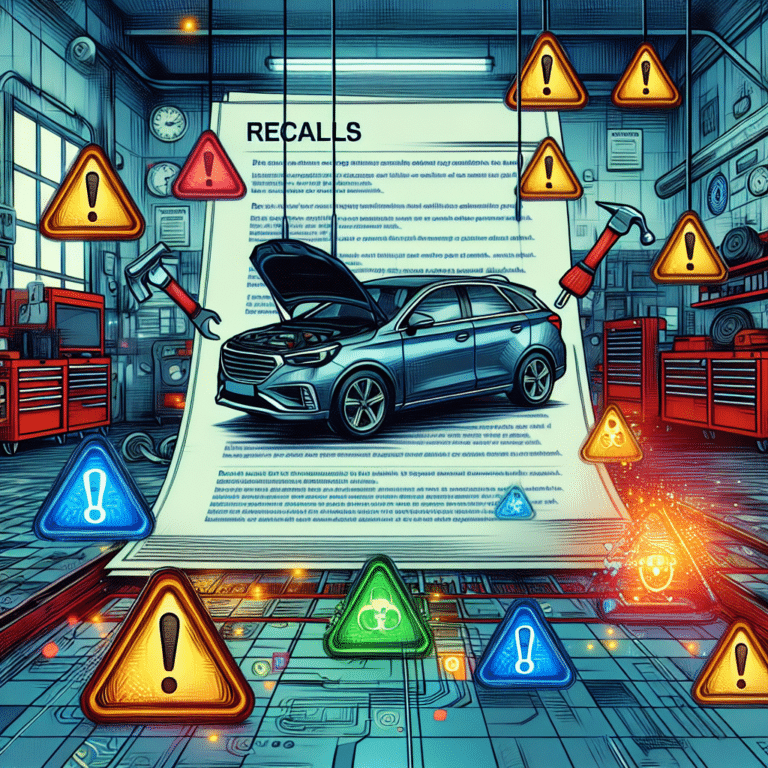
There’s a particular kind of anticipation that comes with luxury car shopping: the showroom lighting, the muted leather scent, the quiet confidence of a well-engineered cabin. Yet beneath the satin of chrome and the hush of advanced suspension lies an unglamorous reality every discerning buyer eventually confronts—recalls. In 2026, luxury vehicles remain marvels of software and machinery, but modern sophistication also means a broader surface area for defects to emerge. The good news is that recalls are not necessarily omens of doom. They’re signals—sometimes urgent, sometimes routine—that help protect owners and inform future buying decisions.
Before you sign, it pays to understand what kinds of recalls show up in luxury segments, how they’re communicated, what they cost to resolve, and how they can affect resale value. This guide walks through the types of content you’ll encounter, the documentation you should seek, and the practical questions worth asking so that your purchase feels as secure as it does elegant.
Why Luxury Recalls Can Feel Different in 2026
Luxury vehicles increasingly depend on integrated networks: sensors, cameras, radar, adaptive cruise control, infotainment systems, and a constellation of electronic control units. When something goes awry—an electrical pathway, a software routine, or a hardware alignment—the problem can ripple through multiple systems. That’s why luxury recalls often sound more complex than the simple “replace a faulty part” narratives of older eras.
At the same time, automakers typically have well-developed remedy logistics for high-end brands. Dealerships may be trained with more specialized tools, and parts distribution can be more streamlined. Still, even a well-run recall can inconvenience your schedule, so understanding the nature of the remedy matters.
The Main Categories of 2026 Luxury Car Recalls
When you research “2026 luxury car recalls,” you’ll generally encounter recurring categories. Think of them as different chapters in the same book. Each chapter has its own tone: safety-critical issues, regulatory compliance needs, drivability quirks, and software updates that can change how the car behaves at the edges.
Safety-Related Recalls (The High-Stakes Chapter)
These are the recalls that tend to generate the most attention because they can affect crash risk, injury prevention systems, or vehicle motion under certain conditions. Safety-related recalls might involve braking performance, lighting behavior, airbag deployment logic, or unintended vehicle movement.
Even if you’re shopping for an indulgent ride—heated seats, premium audio, and cinematic displays—your safety systems are the foundation. In a luxury context, safety recalls may involve components tucked away behind trim, which can make repair timelines longer than buyers expect.
Common reader-facing content here often includes: a description of the risk, the conditions under which it occurs, and what exactly the remedy does. Look for language that specifies whether the issue can occur while parked, during low-speed maneuvers, or only under certain environmental conditions.
Software and Electronic System Recalls (The Invisible Complexity)
In 2026, many luxury recalls are software-driven. The issue may be an incorrect logic path, a sensor interpretation anomaly, or a communication glitch between modules. These can affect advanced driver-assistance features such as lane centering, collision warnings, parking assist behavior, or the reliability of steering-related systems.
A software recall doesn’t always mean the fix is painless. Over-the-air updates can be convenient when available. However, some updates require a dealership visit due to calibration steps or diagnostic verification. The best content you’ll see usually includes: what version of software is impacted, how the update changes behavior, and whether the issue could be present immediately or only after a certain sequence of events.
Pay attention to the specificity. Vague descriptions can be a red flag in research. Clear documentation is usually more reassuring.
Structural and Mechanical Recalls (The Concrete Reality)
Despite the prevalence of electronics, luxury cars still rely on physical systems: suspension components, steering linkages, engine or transmission hardware, and restraint mechanisms. Structural and mechanical recalls can involve parts manufacturing tolerances, fastener integrity, alignment concerns, or wear-related vulnerabilities.
In the reader ecosystem, this type of recall often appears as an itemized remedy: inspect, replace, torque to spec, or install revised components. Riders of luxury vehicles tend to value smoothness and composure; mechanical recalls can directly challenge that by affecting ride stability, steering feel, or noise characteristics.
Before buying, it’s smart to ask whether the vehicle’s production range overlaps with the affected build interval. Many recall communications hinge on build dates or production codes.
Fuel Economy, Emissions, and Compliance Recalls (The Regulatory Layer)
Luxury automakers often prioritize regulatory compliance, yet recalls can still surface when emissions control systems, durability targets, or labeling requirements are misaligned with legal thresholds. These recalls might not feel dramatic, but they can influence performance, long-term maintenance, and warranty considerations.
Look for content describing which models, engine configurations, and model years are involved. If you plan to keep the car for many years, compliance-related fixes are worth treating with the same seriousness as safety items.
How to Predict the Kind of Fix You’ll Be Offered
When readers search for “recall remedies,” the answers typically fall into a few patterns. Some are straightforward: inspection and part replacement. Others involve software updates, calibration procedures, or temporary workarounds. A less common but important category involves longer-term remedial actions—remedy parts not yet available, followed by a later notice.
The most useful buyer-focused content doesn’t just list the fix; it explains timing. Ask whether appointments are widely available, what the typical duration is, and whether the repair requires additional inspections.
Also consider whether the remedy affects ownership experience. For example, if a software recall changes the behavior of a driver-assistance feature, you may want to test that feature after repair to ensure the revised calibration matches your expectations.
What You Should Request Before Buying a 2026 Luxury Vehicle
Confidence in a purchase is built on proof, not assumptions. Before signing, ask for documentation that demonstrates whether prior recall work has been completed. Dealers may be able to confirm completion status by vehicle identification number (VIN). Private sellers may be less rigorous, so buyers should verify records independently.
Request a recall status summary. Then cross-reference it with service history. If the car has had recall repairs performed, look for receipts that specify the recall campaign and the work performed. Short sentences can be powerful here: “Show the invoice.” “Confirm the VIN.” “Verify the remedy date.”
Additionally, check warranty terms. Some recall repairs relate to components that might still be under warranty coverage even if the original recall campaign is outside your timeframe. Knowing that overlap can save real money later.
Resale Value and Buyer Perception: The Quiet Consequence
Recalls can influence resale value, but the direction depends on transparency, remedy completion, and severity. Buyers often ask, “Was it fixed?” A luxury buyer might not care about an early advisory if the remedy was completed promptly and properly. Yet chronic or unresolved safety concerns can become a bargaining chip.
The most credible research content typically differentiates between open recalls and those marked as completed. A completed recall often reads like a resolution, not a blemish. An open recall reads like a pending uncertainty. If you plan to trade in later, a documented repair history helps protect your negotiation leverage.
Even long-term owners notice the difference. When a recall remedy is completed, the vehicle tends to behave as designed again. That can matter in the subtle ways—stability in braking feel, predictability in steering response, and consistency in driver-assistance alerts.
How to Evaluate Recall Severity Without Getting Paralyzed
It’s easy to become overwhelmed by recall announcements. Instead of panic-scrolling, evaluate severity through a structured lens. Ask whether the issue affects vehicle motion, collision avoidance, restraint systems, or visibility. Then ask whether the condition is likely to occur under normal driving.
Consider also the remedy. A recall that requires only inspection and a software patch may be less disruptive than one involving multiple hardware replacements. However, don’t let convenience blind you. If the risk is severe, the priority should remain safety even if the appointment takes longer.
Think like a systems engineer for a moment: cause, condition, consequence, and cure. When you can name all four, uncertainty shrinks.
Before and After Repair: What to Expect as an Owner
After a recall repair, some owners report changes that are perceptible only after a few drives: different warning behavior, a recalibrated steering response, or a refined operation of driver-assistance functions. Most luxury features aren’t merely decorative; they’re calibrated interactions between hardware and software. Therefore, a “fix” can sometimes feel like a subtle redesign.
Before returning home from a service appointment, ask the technician what they adjusted and whether any settings were updated. Then, on your first drive, pay attention to the specific system referenced in the recall. A short review—what changed, what remained the same—can help you detect anomalies early.
Final Checklist: Buying Confidently in a Recall-Aware Market
The luxury car you want is attainable, but it should come with clarity. Start with VIN-based verification. Confirm whether any recalls are open. Review what remedy is planned and whether parts are already available. Ask for service records and receipts that document completion.
Finally, keep your perspective balanced. Recalls are not proof that a car is inherently unsafe. They are proof that the ecosystem works—diagnosis, communication, and remedy. The goal is not to avoid every campaign; it’s to purchase a vehicle whose issues have been addressed and whose future behavior aligns with your expectations.
Conclusion: Elegance with Accountability
Luxury should feel effortless, but responsibility doesn’t have to be tedious. In 2026, the smartest buyers treat recalls as a decision-making tool rather than a source of dread. They verify facts, understand recall categories, evaluate severity with discipline, and demand documentation. When that process is done well, you’re left with what luxury is supposed to deliver in the first place: a refined driving life—with peace of mind built on informed choices.