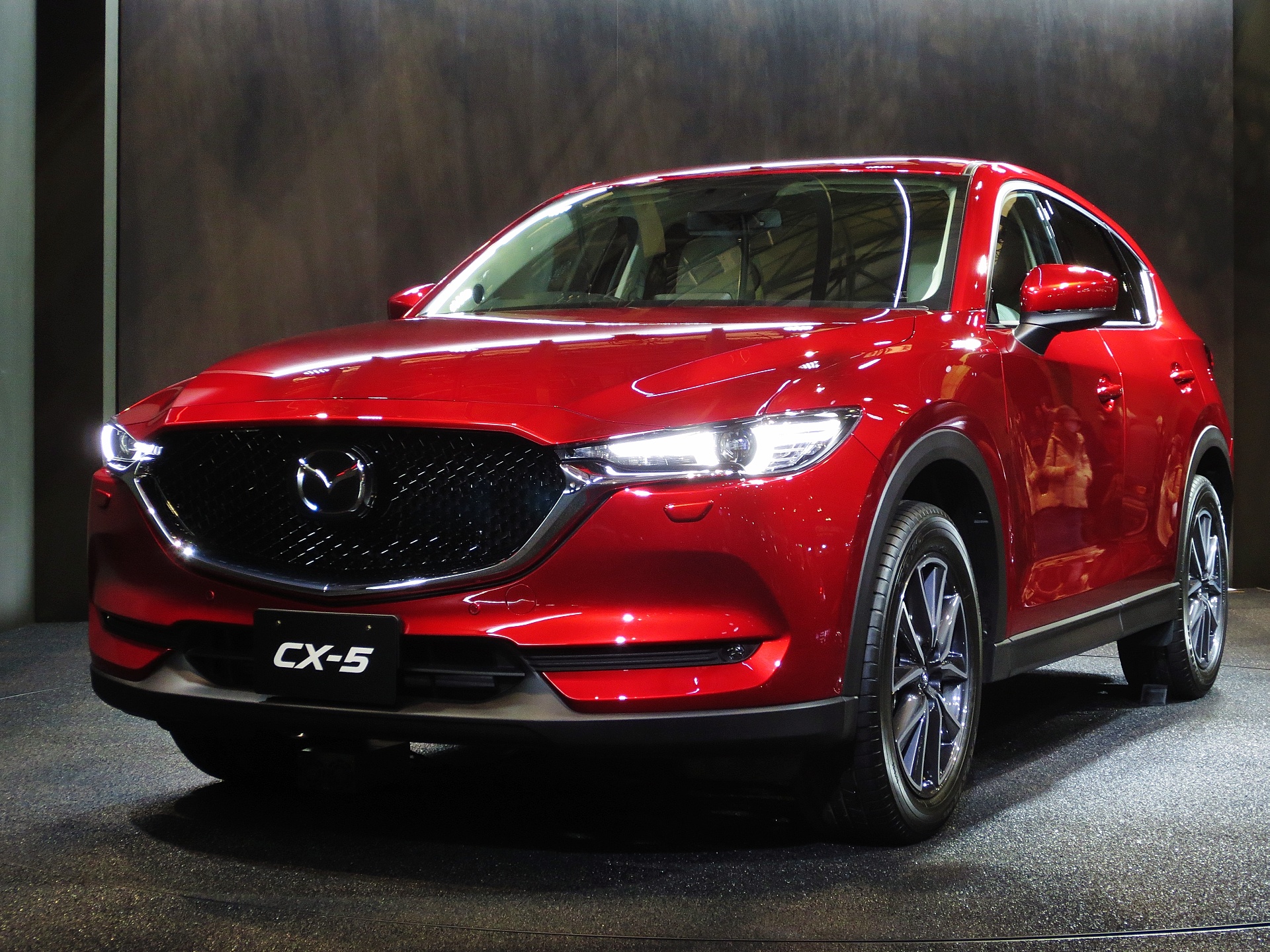
Is the Mazda MX-30 Rotary EV truly dead—or is it simply lurking in the shadows, waiting for the right moment to reappear? The automotive world is full of ambitious concepts that fade into rumor. Yet every so often, a nameplate carries a peculiar gravity, as if it refuses to settle into the past. The MX-30 Rotary EV is one of those cases: a project that feels both unfinished and strangely alive. The unanswered question is not merely “Will it launch?” but rather “What kind of departure would it make if it ever returns?”
There’s a playful challenge hidden inside that question. Imagine a rotary-shaped echo of the future: part engineering maverick, part brand philosophy, part question mark. Now imagine the batteries, regulations, and supply chains moving like tides that do not care about nostalgia. How does an idea built on distinctive combustion-era heritage translate into a world that now demands electrified pragmatism? That challenge—equal parts technical and strategic—is where the story becomes compelling.
Why the MX-30 Rotary EV captured attention in the first place
Some vehicles attract attention with raw speed; others do it with sharp styling. The MX-30 Rotary EV drew interest through conceptual audacity. Mazda’s rotary reputation isn’t just branding—it’s an ethos: lighter components, compact packaging, and a willingness to approach problems from uncommon angles. When the idea of an EV reimagined with rotary logic surfaced, it wasn’t merely a powertrain suggestion. It felt like a philosophical wink. Could the rotary spirit be resurrected without hauling the baggage of the old combustion era?
That emotional pull matters, because car buyers rarely choose technology alone. They choose identity. They choose the feeling that a manufacturer is still willing to take risks instead of chasing the most obvious path. The MX-30 platform, with its distinctive character, provided a stage. But stages don’t guarantee performances. In the EV era, timelines are unforgiving.
What “rotary EV” could mean: clarity versus myth
One reason the MX-30 Rotary EV debate never fully resolves is that “rotary” can be interpreted multiple ways. People might envision a rotary generator, a compact range-extending unit, or even a more radical hybrid architecture. Each interpretation carries a different set of consequences: efficiency targets, thermal management demands, noise profile, emissions calculations, and—crucially—cost.
Ambiguity can be intoxicating at first. It invites speculation. It fuels online mythology. But for a project approaching production readiness, uncertainty becomes expensive. A rotary-based electrified system must be engineered to survive long-term duty cycles while remaining manufacturable at scale. Reliability is the true arbiter. Not the novelty.
So the first challenge arrives like a stopwatch: can the rotary element deliver what marketing promises, under real-world constraints, without turning production into a labyrinth?
The EV market moved faster than the narrative
Even when automakers hold bold plans, the market may still sprint ahead. The EV landscape has evolved with unusual ferocity: battery chemistry shifts, charging standards consolidation, new incentives, and fierce competition from both established brands and specialized EV makers. Under those conditions, a project that takes extra time must justify its delay with either superior capability or sharply lower total cost of ownership.
Meanwhile, mainstream EVs have become more predictable. Range estimates are more standardized. Charging experiences are less chaotic (though still imperfect). Consumers have learned to compare vehicles with spreadsheets and road-test notes. It becomes harder for a niche experiment to win attention unless it clearly answers practical questions: How far? How fast to charge? How much does it cost to own?
The MX-30 Rotary EV faces a particular pressure: it must not only be interesting—it must be inevitably logical. That’s a high bar for an unconventional architecture in a market built on incremental improvements.
Regulations and emissions math: the silent boss fight
EVs don’t live in a vacuum. Legislation shapes everything: tailpipe rules, lifecycle emissions considerations, and compliance deadlines. If the “rotary EV” concept leaned toward a range-extender model, it would need to fit inside increasingly strict frameworks. A range extender can be a clever compromise, but only if emissions and efficiency meet the threshold required for incentives and qualification.
Here, the challenge is subtle. A rotary generator might be compact and mechanically elegant, yet still face scrutiny around fuel consumption, on-board control strategy, and emissions behavior during variable load conditions. Thermal management becomes especially important. When a system alternates between battery-only driving and generator assistance, engineers must ensure stability and protect components from thermal stress.
In short, the rotary element would have to pass not only performance tests, but also administrative tests—those invisible hurdles that decide whether a vehicle belongs on the road or on the drawing board.
Technical hurdles: efficiency, thermal behavior, and durability
Rotary engines historically brought a mix of strengths and complications. In electrified form, the goal might not be propulsion through rotary power alone. Instead, a rotary system could serve as a generator, aiming to blend range confidence with battery practicality. But generation isn’t immune to the usual engineering dragons.
Key concerns tend to cluster around three areas. First, efficiency: if the generator burns fuel less efficiently than expected, the “range extender” becomes more like a costly detour. Second, thermal behavior: electrification adds its own heat—power electronics, batteries, inverter systems. A rotary generator must integrate seamlessly into that thermal ecosystem. Third, durability: even a well-designed rotary mechanism must survive thousands of hours under the particular vibration, load variation, and thermal cycling typical of real driving.
It’s tempting to think that innovation is purely about invention. In production, innovation is often about refinement—making the complicated thing behave predictably when nobody is looking.
Cost and manufacturability: innovation’s final gate
The EV era is a spreadsheet of constraints. Materials, supply chain stability, assembly time, and component standardization decide whether a design reaches showrooms or stays a press-release artifact. A rotary-based electrified architecture could complicate manufacturing: specialized components, tighter tolerances, different service requirements, and potentially less common repair pathways.
To be viable, the MX-30 Rotary EV would need an industrial plan that scales without quality drift. That includes supplier readiness, tooling strategies, and technician training. Even the best engineering can fail if the ecosystem around it isn’t prepared.
So the question “Is it dead?” can be reframed into a tougher prompt: has the business case survived the harsh arithmetic of manufacturing reality?
Brand philosophy versus platform pragmatism
Mazda has long leaned into design and driving feel rather than pure spec-chasing. The brand’s identity is woven into how it approaches engineering: a preference for character, responsiveness, and human-centered dynamics. EVs, however, reward different virtues. Efficiency tuning and software control can dominate the consumer experience. Those are not incompatible with Mazda’s philosophy, but they require a recalibration of priorities.
The MX-30 Rotary EV, at its best, would be an emblem of how to keep identity intact while changing the propulsion paradigm. At its worst, it becomes a costly compromise: a bridge technology that neither fully satisfies purist EV fans nor delivers the distinct advantage that would justify its middle-ground positioning.
This is where the playful question turns sharp. If it returns, will it return as a decisive new chapter—or as a “maybe” that never fully lands?
What “revival” would need to look like
If the MX-30 Rotary EV is not dead, revival likely requires more than renewed enthusiasm. It would need a crisp product narrative and a technically coherent implementation. That means transparent performance targets: energy consumption under common routes, charging behavior, and generator engagement strategy (if applicable). It also means a confident stance on pricing and incentives.
Revival would also require timing discipline. The EV market doesn’t wait for late answers. If a rotary EV reappears, it would need a clear reason for existing among many alternatives—perhaps a unique balance of range confidence, driving feel, and packaging efficiency that competitors struggle to replicate.
In other words: it must earn its comeback with measurable advantages, not just mythic memory.
The cultural factor: why the idea refuses to fade
Even when timelines slip, concepts gain cultural residue. The rotary name carries a romance of engineering craft. For some drivers, the mere existence of the MX-30 Rotary EV idea represents a refusal to surrender to bland uniformity. That emotional signal has value. Brands sometimes thrive not only on sales but on loyalty forged through perspective.
Still, culture can’t substitute for distribution, service support, and consistent product delivery. The concept’s legacy can keep it discussed, but production demands closure.
So, is it dead? A balanced verdict
“Dead” is a dramatic word. In automotive development, projects rarely vanish entirely; they are redirected, re-scoped, or quietly shelved until the conditions align. The MX-30 Rotary EV feels less like a grave and more like a paused scene. The question is not whether it once existed. It did. The question is whether it still makes sense given today’s pace, costs, and regulations.
If the project has not resurfaced with a concrete timeline, it suggests at least one challenge hasn’t been fully solved—whether technical, financial, or strategic. Yet the absence of final confirmation doesn’t guarantee oblivion. Sometimes the future arrives in delayed installments, and sometimes it arrives with a different name. The rotary twist deserves respect either way, because it represents effort rather than indifference.
Ultimately, the most playful truth is also the most serious: the MX-30 Rotary EV might be waiting for the world to catch up to its ambition—or for Mazda to find the exact engineering “key” that makes the concept not just feasible, but compelling.
Conclusion: the rotary question mark
The MX-30 Rotary EV lingers in the public imagination because it asks a daring question: can an idea rooted in Mazda’s rotary heritage evolve into a modern electrified solution without losing its soul? That’s not a small challenge. It’s a three-headed puzzle—technical reliability, regulatory compatibility, and economic reality—demanding an answer precise enough to be built, priced, and supported.
So, is it dead? The truest response might be: it’s undecided. The rotary spirit doesn’t disappear easily. It either returns with clarity, or it becomes a cautionary tale about how fast the EV era moves. Until a definitive product plan appears, the question remains delightfully inconvenient, hovering like a spark above a battery pack—waiting to see whether it becomes fire.