Hot hatches have always had a peculiar magic. They’re compact, brash, and somehow engineered to feel like a dare. For years, they’ve lived in the sweet spot between daily practicality and weekend adrenaline—an everyday car that can still smirk at the traffic light.
So when people first heard whispers about an Volkswagen ID.GTI, a question followed immediately: Can an electric powertrain deliver the same sparks, the same theatre, the same driver-first personality? It’s a common observation, and it’s not entirely wrong to be skeptical. Electric vehicles can be smooth to the point of serenity. Performance, too, can sometimes feel strangely clinical.
But fascination doesn’t emerge from sameness. It arrives when something familiar grows a new set of muscles—when the known shape of a hot hatch is reimagined with electric immediacy. The ID.GTI concept points toward that exact moment of transition: the point where instinctive fun meets electrified cleverness.
Why the “hot hatch” identity matters
A hot hatch isn’t merely a faster hatchback. It’s a mindset built into the chassis, the steering response, the brake feel, the way weight shifts under throttle, and even the soundscape your brain expects. The phrase “hot hatch” implies attitude—an engineered impatience.
Now picture that identity trying to coexist with an electric drivetrain. The power delivery is different. The vehicle architecture can be different, too. Yet the concept of a hot hatch is less about the fuel type and more about the sensation: torque that arrives without delay, chassis tuning that treats corners like conversations, and a layout that keeps the driver at the center of the experience.
That’s why the ID.GTI preview intrigues people. It suggests Volkswagen isn’t treating the GTI badge like a souvenir. Instead, it seems determined to treat it like a living character—one that needs to be reinterpreted, not replaced.

Electric performance: torque is only the beginning
Electric power can be a headline, but it’s not the whole story. Yes, instant torque can create that “snap forward” feeling many enthusiasts chase. Yet the deeper fascination comes from what engineers can do once they’re no longer bound to a combustion engine’s rhythms.
With electric drivetrains, power delivery can be mapped in layers—fine-grained responses that can be tuned for traction, steering angle, and even the subtle differences between road surfaces. That means the car can be coaxed into behaving like a precision instrument without losing the playful edge.
In a GTI, throttle response isn’t just acceleration. It’s feedback—an ongoing dialogue between your right foot and the front axle. If the ID.GTI can translate electric torque into crisp, confidence-building movements, it can feel remarkably “hot hatch,” even if the mechanics underneath are futuristic.
Battery placement, balance, and the art of cornering
Here’s where the conversation gets deeper than the obvious. Many skeptics assume electric cars are heavy and therefore automatically less agile. Weight is real, of course. But so is packaging.
Electric platforms often enable low, centralized mass—an advantage that can sharpen handling. When the car’s mass sits lower, body roll can be moderated. When it’s centralized, turn-in can feel more immediate. And when software can anticipate traction limits, the car can deliver stability without becoming numb.
The result can be an electric hot hatch that doesn’t just accelerate quickly in a straight line, but also negotiates bends with a kind of contained enthusiasm. That’s the essence of chassis romance: not speed alone, but the way speed is organized.
Design cues that promise more than styling
Hot hatches have always used design as a kind of shorthand. Even before you touch the pedals, you read the stance: wider track presence, purposeful lines, and details that suggest aggression without needing to shout.
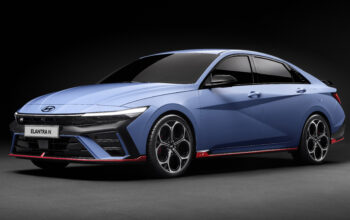
The ID.GTI preview leans into recognizable Volkswagen energy while hinting at EV-specific identity. That matters because it signals intent. A concept isn’t simply an exercise in aesthetics; it’s a blueprint for future priorities.
Look for the cues that indicate aerodynamic care, brake cooling intention, and a stance optimized for dynamic driving. That’s the not-so-secret connection between design and engineering. The body doesn’t just dress the car—it shapes how the car moves through air and how it performs at speed.

Sound and sensation: replacing the familiar without killing the mood
One common observation is that electric driving can feel too quiet. For some, that’s a feature. For hot hatch fans, it can be a problem. The GTI tradition is built on a kind of theatrical feedback—vibration, induction noise, and that mechanical intensity which reminds you the car is alive.
Electric cars can’t reproduce combustion acoustics in the same way. But they can create sensation through other channels: controlled drivetrain hum, synthesized audio, haptic steering feedback, and the immediacy of torque delivery.
Here’s the deeper reason for fascination: modern enthusiasts aren’t only chasing noise. They’re chasing communication. If the ID.GTI concept can craft a responsive “feel” that matches the driver’s expectations—weight shift you can sense, steering that feels talkative, and acceleration that feels urgent without being chaotic—then the mood survives the switch to electrification.
Software as a performance ingredient
In an electric hot hatch, software becomes a tuning fork. It can adjust throttle mapping, traction behavior, regenerative braking strength, and steering feel. The driver’s experience changes not only with hardware, but with how precisely the car interprets your inputs.
This can create multiple personalities: daily-friendly smoothness for commutes, sharper response for enthusiastic drives, and track-inspired calibration that reduces hesitation. That flexibility can be intoxicating. It means the car doesn’t just perform once; it evolves with context.
And for a GTI, evolution matters. The badge historically represents a balanced spectrum—sporty enough for joy, civilized enough for everyday use. Software can help maintain that balance even when the powertrain philosophy changes completely.
Regenerative braking and the “one-pedal” myth
Many people reduce EV driving to one-pedal operation. But regeneration is more nuanced. Done well, it can enhance control by allowing smooth deceleration without abrupt pedal transitions. Done poorly, it can feel like an invisible hand yanking the vehicle’s behavior.
The ID.GTI preview invites a more enthusiastic possibility: regeneration tuned like a performance feature, not a passive default. Imagine braking that feels predictable, with adjustable intensity that supports trail braking habits. That would make the car feel less like a gadget and more like a driver’s tool.
Control is the key word. A hot hatch lives on precision. If the regen system can be calibrated to preserve that precision, then electric driving becomes less about learning a new ritual and more about refining an existing one.
The endurance question: speed versus charging reality
Enthusiasts often worry that electric performance will be constrained by range and charging logistics. That’s a valid concern, especially when weekend drives stretch longer than intended.
Yet concepts like the ID.GTI often function as proof of philosophy: not necessarily a single final specification, but a commitment to delivering performance that doesn’t apologize for being electric. The fascination here is forward-looking. It asks whether charging infrastructure, battery improvements, and drivetrain efficiency can turn “limits” into mere scheduling details.
When performance becomes predictable and repeatable—when charging fits the rhythm of real life—electric hot hatches stop being curiosities and start being choices.
Why the ID.GTI feels like more than a concept
Concept cars can be dismissed as distant dreams. But the ID.GTI preview suggests something else: it feels like Volkswagen is choosing a specific kind of challenge. Not “Can we make an EV fast?” but “Can we make an EV feel like a hot hatch in the way enthusiasts actually mean?”
That’s harder. It requires a synthesis of engineering, software, packaging, and driver psychology. It requires respecting the emotional expectations tied to a legendary badge.
And that respect is precisely why people can’t shake the idea. The GTI spirit doesn’t want to be museum art. It wants to be driven.
Final thoughts: the electric future can still grin
The Volkswagen ID.GTI preview lands in an exciting tension: familiar desire meeting unfamiliar mechanics. The common observation—electric cars don’t always deliver the same emotional punch—is understandable. Yet the hints embedded in the concept point toward a counterargument.
With intelligent torque mapping, thoughtful chassis balance, and a software-driven approach to sensation, an electric hot hatch can do more than go quickly. It can communicate. It can reward. It can turn ordinary roads into tiny arenas.
And maybe that’s the real reason the ID.GTI is captivating: it promises that electrification doesn’t have to sand off personality. In the right form, it can sharpen it—like a blade finally honed for the kind of drive you’ll remember after the battery gauge has moved on.