The EV crossover market has become a kind of modern marketplace—bright, busy, and filled with choices that feel almost identical from a distance. Yet when you step closer, two names start to shimmer with their own temperament: the Volkswagen ID.4 and the Nissan Ariya. They are both affordable-minded electric SUVs, both designed for everyday errands and weekend escapes. But beyond the similar silhouette lies a different philosophy of motion, comfort, and character. One is like a calm conductor, keeping the entire orchestra synchronized. The other moves like a stylish sparrow, quick to react and eager to surprise. Together, they paint a compelling picture of what “affordable” can still feel like when electrified.
Two crossovers, two personalities
Think of the ID.4 as a dependable compass. It doesn’t insist on being dramatic; it simply points you forward with steady confidence. The cabin feels organized, almost pragmatic in its design language, as if every control has been placed with careful intention. Meanwhile, the Ariya arrives with a different energy—its presence feels more expressive, more aerodynamic in spirit, like a skimming stone across water.
This is not merely styling. It’s a tone. The ID.4 leans toward familiarity and ease, while the Ariya leans toward individuality and a touch of futuristic flair. If you’re the type who likes the feeling of everything “just works,” the ID.4’s straightforward approach is reassuring. If you prefer a crossover that feels like it’s part tech exhibit, part personal cockpit, the Ariya’s design-forward attitude is seductive.
Exterior design: the art of being seen
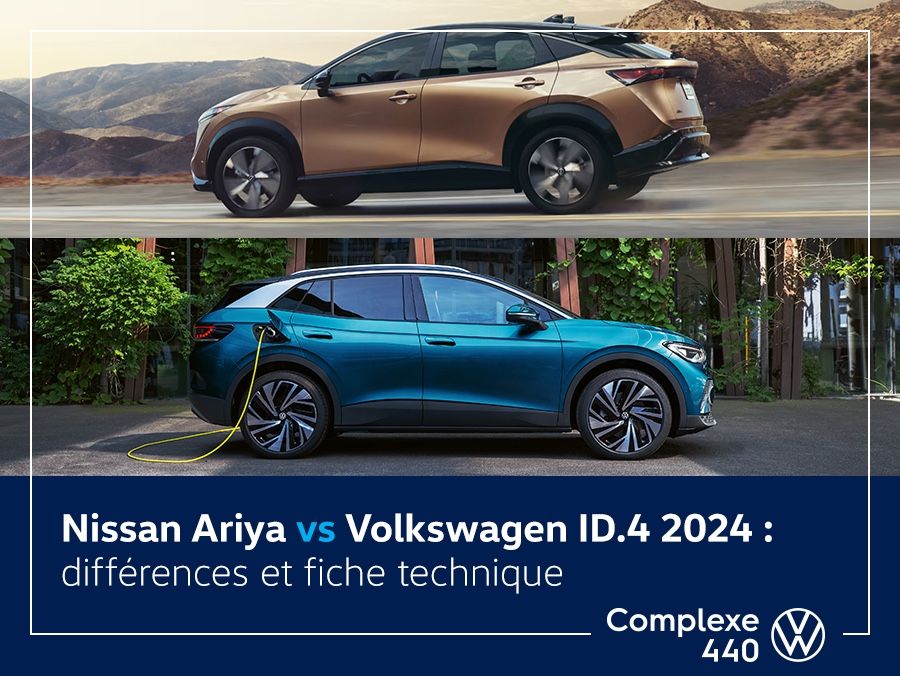
From the outside, both vehicles communicate their electric intent without shouting. The ID.4’s form is clean and robust, with proportions that feel SUV-solid rather than fragile. It’s the type of design that holds its own in a parking lot—comfortable, visible, and easy to recognize.
The Ariya, however, carries a more fluid silhouette. Its surfaces read like a continuous conversation between light and shadow. Where the ID.4 suggests stability, the Ariya suggests motion—even when standing still. It’s an aesthetic that rewards attention. Spend a little time with it, and you’ll notice details that feel intentional rather than incidental.
Interior ambiance: calm efficiency vs tech-sculpted comfort
Step inside the ID.4 and you’ll likely feel a sense of orderly relaxation. The materials and layout emphasize clarity. Controls are positioned to be second-nature, and the overall ergonomics encourage smooth transitions between tasks—unlocking your day, starting navigation, adjusting climate, and settling into the rhythm of driving.
The Ariya’s cabin feels more like a lounge with a digital heartbeat. Its interface and styling create an environment that feels slightly more sculptural, slightly more immersive. It’s not just about screens. It’s about how everything connects: the visual flow, the seating position, the way the dash space frames you like a cockpit.
In practical terms, both aim for comfort on daily drives. Yet the emotional difference is real. The ID.4 can feel like a cozy office desk—organized, efficient, quietly reassuring. The Ariya can feel like a modern gallery exhibit—stylish, slightly dramatic, and eager to engage.
Driving feel: steering character and everyday agility
Driving an EV is often described in terms of torque and instant response. That’s true, but the more interesting part is the texture of motion—how the vehicle translates power into confidence. The ID.4 tends to deliver a composed, predictable stride. It’s steady through urban traffic, and its demeanor on the highway feels reassuring. The experience can be described as “evenhanded.”
The Ariya often feels a bit more alert. It can feel tuned for responsiveness, with a driving presence that suggests a slightly sportier intent. This doesn’t mean it’s a race car. Instead, it’s more about how quickly it invites your inputs—like a conversation where the other party listens immediately, without making you repeat yourself.
If your days are filled with stop-and-go commutes and frequent lane changes, the Ariya’s quickness may feel energizing. If you prefer a serene drive where the car seems to anticipate your next move with quiet steadiness, the ID.4 is likely to feel more natural.
Performance and drivetrain: enough power, differently expressed
Both crossovers offer multiple configurations depending on trim and market availability, but they share a core promise: electric power that feels effortless. The real difference is in how each vehicle distributes that immediacy. The ID.4 often emphasizes balance—traction feels orderly, acceleration feels smooth, and the overall system calibration can feel intentionally moderated for comfort.
The Ariya can feel more expressive in certain modes. It’s like stepping on a pedal that responds with enthusiasm rather than caution. Depending on configuration, you may notice differences in how power builds at low speeds, how the car behaves during passing maneuvers, and how it maintains composure when roads turn unpredictable.
In either case, the important point is that both aim at everyday usability, not performance vanity. They want to make you forget you’re driving an EV—until you glance at the energy usage and realize the trip is costing less than it used to.
Charging and range: the practical magic of planning less
An affordable EV crossover is only truly affordable when charging feels manageable. Range numbers can look similar on paper, but real life depends on driving style, temperature, and route. The key difference is not just raw distance—it’s confidence.
The ID.4 often supports a comfortable planning rhythm. Many owners appreciate its straightforward approach to everyday use, and charging experiences tend to feel familiar with common fast-charging networks. It’s the kind of vehicle that encourages you to adopt a routine rather than constantly re-evaluate your options.
The Ariya, meanwhile, can feel like it rewards forethought. Its powertrain efficiency and aerodynamic character can be advantageous in certain conditions, and it can feel confident when you’re stretching a trip across longer distances. Still, the most reassuring scenario is when both vehicles meet your life pattern—commute length, weekly errands, and whether home charging is in the picture.
Technology and driver assistance: clarity in the clutter
Modern crossovers are flooded with features, yet the best ones feel invisible. The ID.4’s technology philosophy often centers on practical usability: clear displays, logical menus, and systems that support rather than overwhelm. When driver assistance behaves predictably, it becomes a second layer of awareness, like a safety net that rarely needs to be noticed.
The Ariya’s technology can feel more immersive. Its interface design and cabin presentation encourage you to engage with the vehicle. Driver assistance features aim to enhance comfort, especially on longer drives. When it works seamlessly, it feels like the car is reading the road alongside you—an extra set of eyes, rather than an intrusive co-pilot.
Both approaches have merit. The ID.4 can feel “quietly intelligent.” The Ariya can feel “visibly futuristic.” Your preference may depend on whether you want the interface to fade into the background or feel like part of the experience.
Space and versatility: family-friendly without feeling bulky
Crossovers must be flexible. The ID.4 typically offers a calm, usable layout—rear seating that supports real passengers and cargo space that handles groceries, gear, and everyday clutter. It aims for functionality first, with the kind of practicality that makes your week easier.
The Ariya strives for a blend of style and utility. Its cabin design can make the interior feel airy, and its layout supports versatile storage needs. Whether you’re carrying sports equipment, weekend bags, or a stroller with the complexity of adult logistics, the goal is similar: make life transportable.
In this category, both vehicles want to be the dependable vehicle you don’t have to think about. The difference is emotional: the ID.4 can feel like a tool that’s pleasant to use. The Ariya can feel like a lifestyle companion—beautiful while still being capable.
Cost of ownership: where affordability becomes real
Affordability isn’t just the purchase price. It’s energy costs, maintenance expectations, insurance considerations, and how often the vehicle fits your life without friction. EVs generally simplify certain maintenance tasks, since there’s no traditional engine to manage in the same way. Still, tires, brakes (often less frequently used), and charging habits shape the real cost equation.
Both models can be financially compelling, especially when charging at home and using efficient driving habits. If you have access to convenient charging, the monthly math can tilt strongly in your favor.
Ultimately, the most affordable EV is the one that doesn’t force you to fight your schedule.
Which one suits you best?
Choose the Volkswagen ID.4 if you value calm predictability, an organized cabin, and a driving experience that feels evenhanded from city streets to highway stretches. It’s a crossover that behaves like a mature decision—steady, practical, and quietly satisfying.
Choose the Nissan Ariya if you want a more expressive design, an immersive tech atmosphere, and a driving feel that leans toward alert engagement. It’s a crossover that feels like a conversation with the future—stylish, responsive, and eager to impress.
Either way, you’re looking at two credible answers to the same question: how to enter electric driving without surrendering comfort, space, or identity.
Final thoughts: the quiet revolution inside the driveway
The ID.4 and Ariya are both affordable EV crossovers, but they aren’t clones. They’re two different metaphors for electrification. The ID.4 is the steady lantern—casting reliable light over your daily route. The Ariya is the sleek comet—brightening the road with a more animated sense of arrival. Pick the one that matches your rhythm, your tastes, and your idea of effortless driving.
In a world where EVs are often marketed like spreadsheets, these two vehicles bring something richer back to the steering wheel: character. And when an electric crossover earns your everyday trust, the future stops feeling theoretical. It becomes simply, wonderfully, yours.