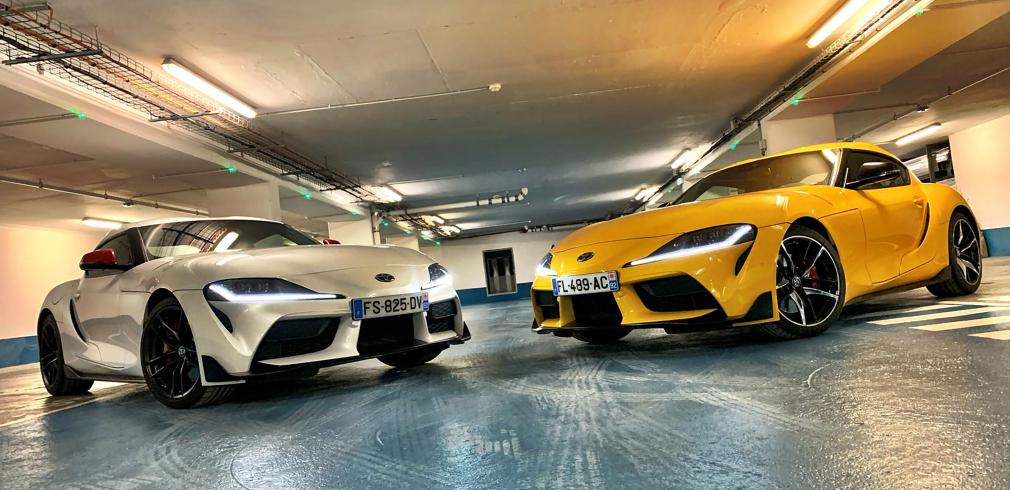
The Toyota GR Supra has long been a paradox wrapped in a sleek, aerodynamic shell—a car that defies expectations while simultaneously redefining them. For years, enthusiasts have debated its purpose: Is it a driver’s car or a boulevard cruiser? A homologation special or a genuine performance machine? The latest iteration, with its dual powertrain options—the 3.0-liter turbo inline-six and the 2.0-liter turbo inline-four—only deepens the intrigue. At first glance, the choice seems simple: more liters, more power, more excitement. But beneath the surface, the GR Supra’s dual-engine dilemma reveals a fascinating exploration of engineering philosophy, driving dynamics, and the very essence of what makes a sports car *feel* alive.
The 3.0-liter engine, a masterpiece of forced induction, roars to life with a symphony of mechanical precision. Its exhaust note isn’t just heard; it’s *felt*, vibrating through the cabin like a physical force. The 2.0-liter, while quieter in demeanor, punches well above its weight class, offering a surprising punch of torque and a responsiveness that belies its smaller displacement. Yet, the real question isn’t just about power—it’s about *purpose*. Why would Toyota offer two engines in the same car? The answer lies in the alchemy of compromise, where raw performance meets everyday usability, and where the thrill of the track collides with the practicality of the open road.
The 3.0-Liter: A Symphony of Power and Precision
The GR Supra’s 3.0-liter turbocharged inline-six is a marvel of modern engineering, a powerplant that doesn’t just push the car forward—it *commands* it. With 382 horsepower and 368 lb-ft of torque, this engine is a force of nature, its linear power delivery making it feel as though the car is constantly accelerating, even at triple-digit speeds. The sound is intoxicating, a guttural growl that shifts from a menacing idle to a high-revving scream as the tachometer climbs toward its 6,500 RPM redline. There’s an almost primal satisfaction in the way the exhaust note resonates through the cabin, a tactile reminder that this is a machine built for those who crave connection.
But power alone doesn’t make a great sports car. The 3.0-liter’s true genius lies in its balance. The engine’s weight is strategically placed low and centered, contributing to the GR Supra’s near-perfect 50:50 weight distribution. This isn’t just a number on a spec sheet; it’s the reason the car feels planted, almost telepathic in its response to driver inputs. The eight-speed ZF automatic transmission (or the optional six-speed manual) is a marvel of smoothness, its shifts imperceptible when cruising but razor-sharp when the throttle is mashed. The GR Supra doesn’t just go fast—it *feels* fast, a distinction that separates the merely quick from the truly exhilarating.
On the racetrack, the 3.0-liter’s prowess is undeniable. The car’s adaptive suspension, rear-wheel-drive layout, and aggressive tuning make it a natural at the limits of adhesion. The steering is direct, almost surgical in its precision, while the brakes—borrowed from the Lexus LC 500—provide fade-free stopping power even under the most brutal conditions. Yet, even here, the 3.0-liter’s appeal isn’t just about lap times. It’s about the *experience*. The way the car responds to throttle adjustments mid-corner, the way the exhaust note swells as the revs climb, the way the entire cabin becomes an extension of the driver’s will—these are the moments that define the GR Supra’s character.
The 2.0-Liter: A Wolf in Sheep’s Clothing
At first glance, the 2.0-liter turbocharged inline-four seems like the underdog, a smaller engine in a car that demands to be taken seriously. But don’t let its displacement fool you. With 255 horsepower and 295 lb-ft of torque, the 2.0-liter is no slouch. In fact, it’s a masterclass in efficiency meeting excitement, a powertrain that punches well above its weight while sipping fuel like a miser. The real magic, however, lies in its character. Where the 3.0-liter commands attention with brute force, the 2.0-liter seduces with finesse. Its power delivery is more linear, its exhaust note a higher-pitched whine that sings rather than growls. It’s the kind of engine that rewards patience, rewarding the driver who’s willing to explore its limits with a playful, almost mischievous demeanor.
The 2.0-liter’s real strength is its versatility. While the 3.0-liter is undeniably thrilling, it’s also a bit of a diva—demanding attention, rewarding aggression, and punishing hesitation. The 2.0-liter, by contrast, is the perfect partner for the driver who wants to enjoy the GR Supra’s charms without the commitment of a full-throttle assault. It’s the engine for those who want to dance with the car, not wrestle it into submission. The steering is lighter, the suspension more forgiving, and the overall demeanor more relaxed. Yet, when the moment calls for it, the 2.0-liter can still deliver a thrilling burst of acceleration, its turbocharger spooling up with a delightful whoosh as the car surges forward.
On the road, the 2.0-liter’s strengths become even more apparent. Its lighter weight (the engine alone is nearly 100 pounds lighter than the 3.0-liter’s) contributes to a more nimble feel, making the GR Supra feel almost like a different car. The engine’s willingness to rev freely and its responsive power delivery make it ideal for twisty backroads, where the car’s agility and balance shine. And while the 3.0-liter’s exhaust note is a symphony, the 2.0-liter’s is a sonnet—elegant, understated, and endlessly rewarding for those who take the time to listen.
The Great Divide: Why Two Engines?
The existence of two engines in the same car isn’t just a marketing gimmick—it’s a philosophical statement. Toyota, in its infinite wisdom, recognized that not all drivers are the same. Some crave the raw, unfiltered thrill of a high-revving inline-six, while others prefer the balance of a smaller, more efficient engine that still delivers plenty of excitement. The 3.0-liter is for those who want to be *seen* driving a sports car, while the 2.0-liter is for those who want to *feel* like they’re driving one.
But there’s a deeper reason for this dual-engine approach. The GR Supra isn’t just a car; it’s an experiment in human psychology. It asks the question: What do we really want from a sports car? Is it the visceral thrill of acceleration, the symphony of an exhaust note, the tactile feedback of a manual transmission? Or is it the freedom to enjoy the driving experience without the guilt of excessive fuel consumption, the ability to blend performance with practicality? The 3.0-liter answers the first question, while the 2.0-liter answers the second. Together, they represent a new kind of sports car—one that refuses to be pigeonholed, one that adapts to the driver rather than the other way around.
There’s also the matter of exclusivity. By offering two engines, Toyota ensures that the GR Supra appeals to a broader audience. The 3.0-liter is the halo model, the one that turns heads and sets pulses racing. The 2.0-liter, meanwhile, is the gateway drug—a car that introduces new drivers to the joys of sports car ownership without overwhelming them. It’s a clever strategy, one that ensures the GR Supra remains relevant in a market that’s increasingly focused on electrification and efficiency.
Behind the Wheel: A Tale of Two Personalities
To truly understand the GR Supra’s dual-engine dilemma, you have to get behind the wheel. The 3.0-liter is a car that demands respect. It’s loud, it’s brash, and it’s unapologetically performance-oriented. Every input from the driver is met with an immediate, visceral response. The steering is heavy, the suspension firm, and the exhaust note a constant reminder that this is a car built for the track. It’s exhilarating, but it’s also exhausting—a car that leaves you grinning from ear to ear but with your heart pounding in your chest.
The 2.0-liter, by contrast, is a car that invites you to stay awhile. It’s quieter, more refined, and far more approachable. The steering is lighter, the suspension more compliant, and the overall demeanor more relaxed. It’s the kind of car you could happily drive for hours on end, stopping only to refuel and stretch your legs. Yet, even here, there’s a sense of excitement. The 2.0-liter may not be as fast as its bigger brother, but it’s more than capable of delivering a thrilling drive. It’s the kind of car that makes you want to take the long way home, just to savor the experience.
Of course, the real magic happens when you drive both. The contrast is striking. The 3.0-liter is a force of nature, a car that feels like it’s alive in a way few others are. The 2.0-liter is more like a trusted companion, a car that’s happy to let you set the pace while still delivering plenty of excitement. Together, they represent the best of both worlds—a sports car that’s as at home on the autobahn as it is on a winding mountain road.
The Toyota GR Supra’s dual-engine dilemma isn’t just about choosing between power and efficiency. It’s about choosing between two different philosophies of driving, two different ways of experiencing the world behind the wheel. The 3.0-liter is for those who want to be *driven* by their car, while the 2.0-liter is for those who want to *drive* their car. Both are valid. Both are thrilling. And both remind us that the best sports cars aren’t just about speed—they’re about the *feeling* of speed.
In the end, the GR Supra’s two engines are a testament to Toyota’s understanding of what makes a sports car truly special. It’s not just about the numbers on a spec sheet or the lap times on a track. It’s about the way a car makes you feel—the rush of adrenaline, the smile on your face, the way the world seems to slow down when you’re behind the wheel. Whether you choose the 3.0-liter’s symphony of power or the 2.0-liter’s sonnet of finesse, one thing is certain: the GR Supra is a car that will leave you wanting more.