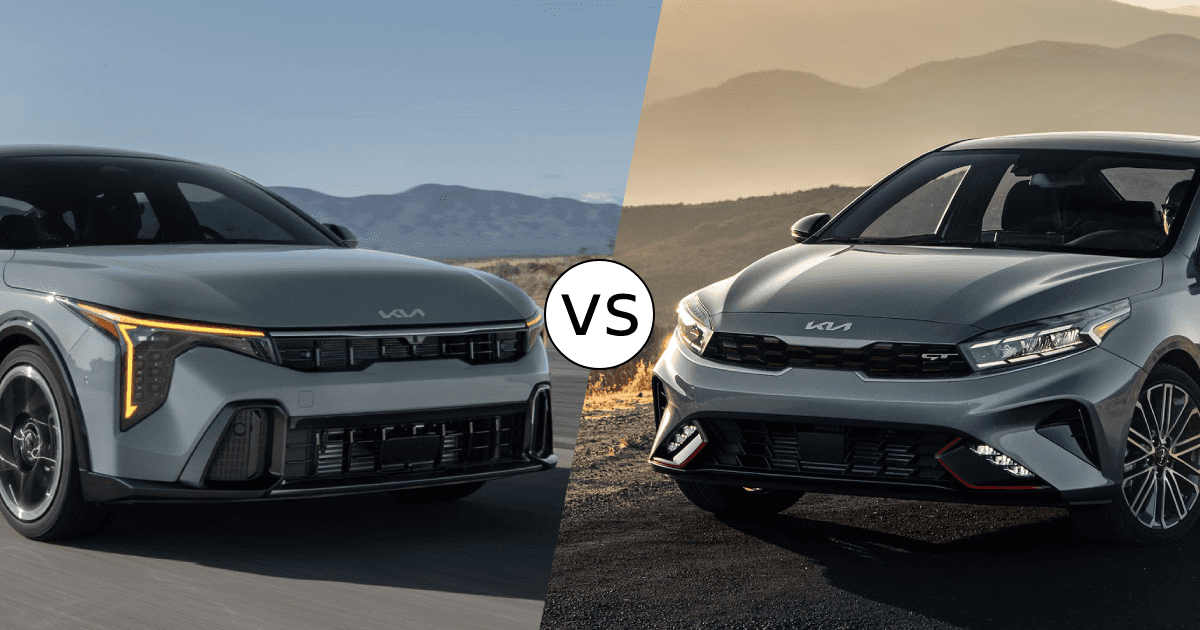
There’s a particular moment many drivers recognize: you walk up to a compact sedan, expecting familiarity, and then—almost against your will—you pause. The lines feel sharper. The stance looks more intentional. Even the silence of the design reads like a decision, not an accident. That’s the feeling the Kia K4 brings to the table, especially when you consider it as the Forte replacement. A common observation follows quickly from that first glance: it looks like an evolution, not a revolution. But that’s only the surface-level story. Beneath the fresh sheet metal, the fascination comes from how the K4 reframes everyday driving—making the ordinary look engineered, not merely assembled.
Let’s take a guided walk through the K4’s identity—where it improves, where it intrigues, and where it quietly challenges expectations for the compact class.
From Forte Legacy to K4 Intent
If you owned or drove a Forte, you likely developed an intuitive relationship with its habits: how it moved through traffic, how it felt at parking speeds, how it served as dependable commuter armor. The Kia K4 doesn’t discard that foundation. Instead, it treats it like a blueprint and redraws the lines with new priorities—modern styling, updated cabin ergonomics, and a more assertive driving presence.

On paper, it’s easy to call this “replacement strategy.” In reality, it’s a philosophy shift. Kia is aiming for a sedan that doesn’t only fulfill transportation needs. It also seeks to satisfy the more subtle desire many drivers don’t admit out loud: the desire to feel slightly ahead of the curve, even during routine errands.

Design Language: Familiar, Yet Unmistakably New
The K4’s design reads like a conversation between aerodynamics and confidence. It carries a more modern silhouette than the Forte, with sculpted surfaces that catch light differently as you pass storefronts and street poles. The overall effect is less “appliance-like” and more architectural, even when the car is sitting still.
A common reaction is to note the resemblance—because the compact sedan category has certain proven proportions. But the deeper reason for fascination appears in the details: the way creases trace from the front fascia into the body, the way the front-end geometry signals purpose, and the way the rear design avoids that dated, generic look. It’s not merely refreshment. It’s restraint with attitude.
Cabin Atmosphere: A Shift From Functional to Feel-Driven
Step inside and the K4’s priorities become clearer. The cabin aims for a more cohesive atmosphere—one that feels less like “what’s needed” and more like “what makes sense.” Seats, controls, and sightlines are arranged to minimize friction between you and the road. Short, sharp actions—like adjusting vents, reaching for media, or finding the right gear—feel smoother than you’d expect from a compact car.
There’s also an intangible upgrade: the sensation of modernity. Screens look more integrated. Materials appear more curated. Even the layout feels deliberate, as if the designers audited the daily routines drivers repeat without thinking.
And here’s where an observation becomes a clue. Many people compare the K4 to the Forte and focus on visible changes. But the cabin improvements often matter more than they seem at first glance. A well-resolved interior reduces mental load, and that turns commuting into something closer to calm.
Infotainment and Technology: Less Clutter, More Capability
In the compact segment, technology can either elevate the experience or become a distraction. The K4 leans toward the former. The interface philosophy feels grounded: fast access, understandable menus, and a layout that supports quick glances rather than prolonged staring.
Drivers commonly remark that the screen and connectivity features feel “more complete” than older compacts. But the fascination is in the workflow. A car that anticipates how you drive—how you glance, how you interact, how you listen—makes technology feel invisible.
That invisibility is a kind of magic. Not the sci-fi kind. The everyday kind: the kind where the car doesn’t demand attention; it earns it.
Powertrain Character: Balanced Response Over Loud Claims
Power is one thing. Character is another. The K4 is built to offer responsiveness that matches real life—merges, passing at highway speed, and the stop-and-go stretches where smoothness becomes the real performance metric.
Some drivers expect compact sedans to feel cautious or restrained. The K4 aims to feel more willing—less hesitant when you ask for acceleration, more settled when you’re simply maintaining pace. It’s a tuning approach that respects the fact that most journeys are not track-day dreams. They’re errands, commutes, school pickups, and late-night drives with the windows cracked open.
When powertrain behavior feels coherent, you stop thinking about it. That’s when it’s doing its job.
Ride Comfort and Handling: The Art of Controlled Compliance
A good ride doesn’t mean “soft.” It means composed. The K4 is tuned to manage road imperfections with a level of calm that makes city streets less chaotic. Over rough pavement, the car aims to absorb impacts rather than broadcast them. Over smoother stretches, it maintains stability so the steering doesn’t feel like an ongoing negotiation.
Handling is where drivers often form their real opinions. The K4 feels designed to stay predictable—especially when you change lanes quickly or thread through tight spaces. Predictability is underrated. It’s also the foundation for confidence.
That confidence ties back to a deeper reason for fascination: the K4 tries to make driving feel legible. You don’t wonder what it’s going to do next. You already know.
Safety and Driver Support: Modern Assurance, Not Just Buzzwords
Safety in the compact world can be a checklist, but the K4 positions it as reassurance. Driver-assistance systems help reduce the burden on attention—especially during highway monotony or congested urban conditions.
People often cite these features as “nice to have.” But the more meaningful impact is how they change your stress level. A safer drive is sometimes a quieter drive, where the car helps cover blind spots and supports spacing decisions.
In that sense, the K4 isn’t only replacing the Forte. It’s stepping into the newer expectation that cars should protect you proactively, not reactively.
Practicality for Real Life: Trunk, Space, and Daily Flexibility
Compact sedans are judged by the same invisible criteria: Can you fit what you need? Can you load quickly? Can passengers sit without complaining after an hour? The K4 addresses these realities with a layout that emphasizes usability.
Rear-seat comfort matters more than many anticipate. It shapes how often you reach for this car instead of the larger option. Cargo space and trunk usability also play a role in whether the car feels genuinely convenient.
Even the way doors open, how high the trunk lip sits, and how easy it is to secure items influences your daily relationship with the vehicle. These are small details, but they add up—quietly, persistently.

Who the Kia K4 Is For
The Kia K4 targets drivers who want a compact sedan that feels current in both appearance and experience. It’s for people upgrading from older models, but it’s also for first-time shoppers who don’t want to settle for “good enough.”
It’s particularly attractive to those who value smooth commute dynamics, modern connectivity, and a cabin that feels intentionally designed rather than merely functional. If you want a car that looks like it belongs in 2025 and behaves like it respects your time, the K4 aligns well.
Why the Fascination Runs Deeper Than the Surface
Yes, the K4 is easy to admire for its updated look. But fascination doesn’t come from styling alone. It comes from cohesion—how exterior design, interior atmosphere, and driving feel work together as a single product philosophy.
The deeper reason is this: the K4 doesn’t chase novelty for its own sake. It uses novelty like a tool. It aims to make daily life smoother, calmer, and more satisfying. That’s why the car can look “familiar” and still feel fresh. Familiarity lowers your learning curve; freshness adds emotional lift.
Final Verdict: An All-New Compact With Forward Gravity
The Kia K4 stands as a thoughtful successor, not a cold replacement. It evolves the Forte legacy with a more confident design stance, a cabin that feels more refined, and driving dynamics tuned for real-world consistency. It addresses the common observation—how it resembles what came before—while quietly proving that progress isn’t always about dramatic change. Sometimes it’s about better alignment between what you see, how you sit, and how the car responds when you press forward.
If the Forte earned your trust through practicality, the K4 aims to earn your trust through presence. And once you feel that presence in motion, the new compact sedan category stops looking ordinary.