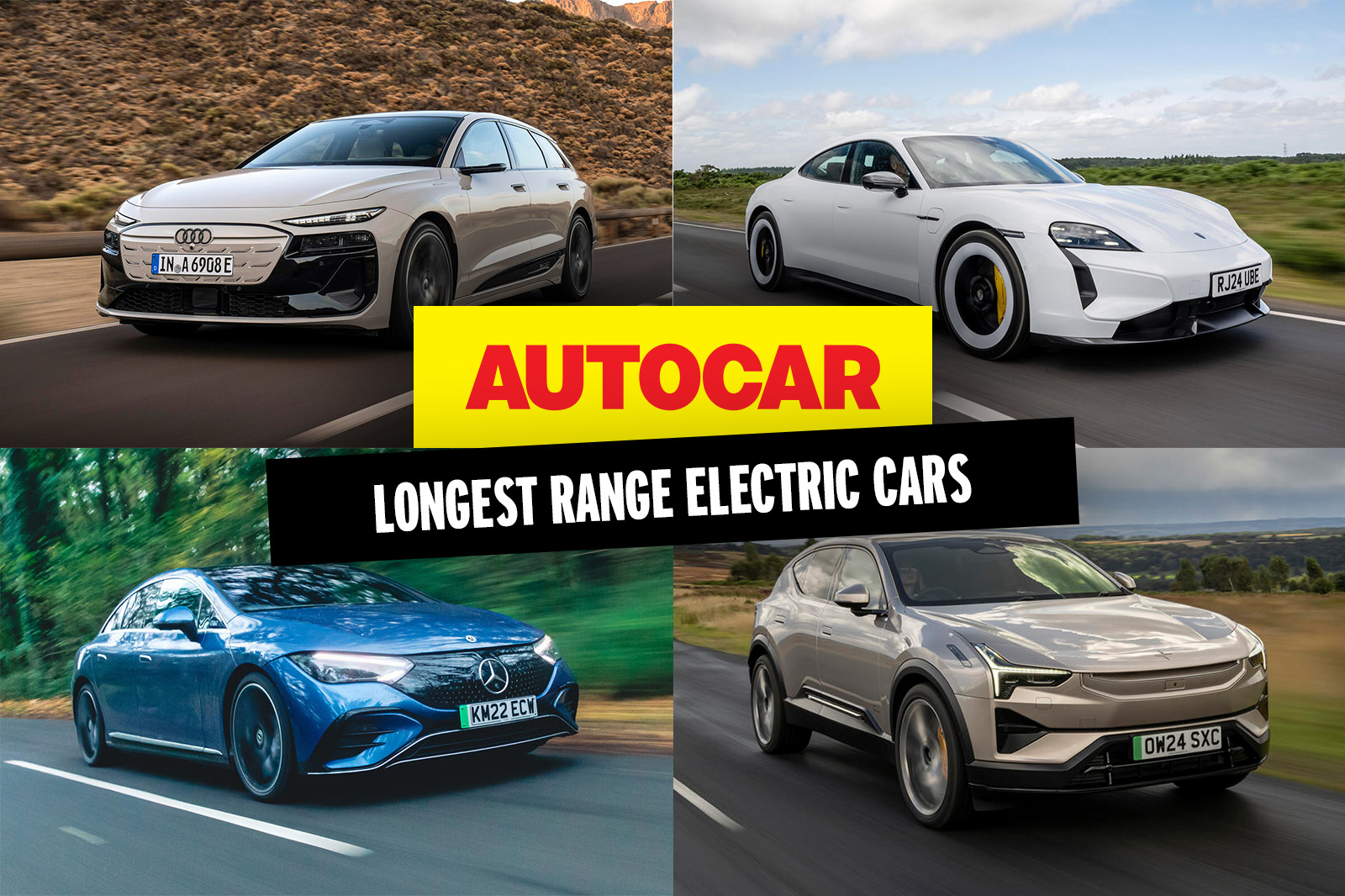
There’s a peculiar sort of hush that falls over the conversation whenever the topic turns to battery range. People don’t merely ask, “How far can it go?” They ask, in a quieter, more personal way, “How much life will it let me live without worrying?” The headline number—miles on a single charge—becomes a talisman. Yet the enchantment doesn’t stop at endurance. The real fascination lies in what long-range EVs quietly reveal: a maturing supply chain, a more disciplined approach to efficiency, and the growing sophistication of how power is managed.
In 2026, the longest-range electric cars are no longer just an engineering flex. They’re an argument about comfort, planning, and freedom—written in kilowatts and distilled into highway calm. Below is a curated list of Top 10 Longest-Range 2026 EVs (Over 350 Miles), arranged to reflect a blend of published range expectations and the broader package of technology that makes those figures feel believable in everyday conditions.
What “Over 350 Miles” Really Signals
It’s tempting to treat 350 miles as a simple threshold, like a gate you pass through. But it functions more like a psychological waypoint. Once you’re above that number, range anxiety starts to behave differently. Short charging stops become discretionary rather than mandatory, and route planning shifts from defensive to intuitive.
Deeper still is the engineering philosophy behind it. Long-range EVs typically combine larger energy capacity with unusually effective aerodynamics, lighter mass in critical components, and battery management systems that prevent usable capacity from turning into heat and inefficiency. In other words, the best long-range vehicles don’t simply carry more energy—they spend it more wisely.
1) Tesla Model S Long Range (2026 Refresh)
The Model S remains an icon in this category because it turns high-mileage ambition into a repeatable ritual. With strong efficiency characteristics and a driving feel that encourages smoothness, it often delivers that rare mix: confidence on paper and coherence on the road.
What makes it compelling is the way the car seems to “learn” the rhythm of a trip. Regenerative braking calibration and traction control tuning contribute to a calmer energy budget. The fascination isn’t only the mileage—it’s the impression of a powertrain that behaves like a well-trained instrument rather than a blunt tool.
2) Lucid Air Grand Touring (2026 Update)
Lucid’s long-range promise has always sounded like a dare to aerodynamic physics. In 2026, the Air continues to stand out for its efficiency-first design, where surface detail and airflow management are treated as more than styling—they’re survival skills for battery energy.
On long drives, the experience tends to feel composed, with less of the “energy see-saw” you get in less aerodynamically disciplined vehicles. It’s the sort of car that makes you notice the journey. Not every mile is fought for; many arrive as if they were always supposed to be there.
3) Mercedes-Benz EQS 580 4MATIC (2026)
The EQS attacks long-range ambitions through refinement: low-drag architecture, heavy-lift cabin comfort, and a power delivery that emphasizes linearity. Even when road conditions grow less cooperative, it rarely feels chaotic.
This car’s allure is partly emotional. A long-range EV isn’t merely for getting from A to B; it’s for being present during the middle. The EQS leans into that idea with a quiet cabin and a driving stance designed to reduce fatigue. The result is a range number that feels like it belongs to a broader sense of ease.
4) BMW i7 xDrive60 (2026)
BMW’s i7 is the kind of EV that invites a different question: “How does long-range luxury behave at speed?” It’s engineered to maintain composure, using sophisticated thermal management and stability systems that protect efficiency under real-world pressure.
Where it becomes especially interesting is in the interplay between comfort and energy strategy. A heavy, high-performance vehicle can easily squander battery power. The i7’s solution is a disciplined approach to drivetrain efficiency and energy recuperation—meaning the car doesn’t only move; it also reclaims.
5) Audi A6 e-tron quattro (2026)
The A6 e-tron brings a familiar silhouette into a new era, but its real strength is its ability to blend efficiency with practicality. Over 350 miles isn’t just a spec; it’s a statement that long-range EVs can still feel like everyday cars.
Expect thoughtful packaging and a stable energy profile, particularly when cruising. The deeper fascination is how it reframes the EV stereotype: not an appliance for short errands, but a credible long-distance platform.
6) Hyundai Ioniq 9 (2026 Long Range AWD)
Hyundai’s long-range entry in 2026 reflects a broader trend: mainstream manufacturers refining the craft of battery longevity, thermal control, and efficiency tuning. The Ioniq 9’s promise is less about drama and more about consistent throughput of usable energy.
It’s the sort of vehicle that makes long trips feel manageable for families and habitual travelers alike. When range becomes dependable, the car’s character shifts from “tech project” to “life appliance,” which is arguably the most transformative outcome of all.
7) Rivian R1S Long Range (2026 Adventure Package)
SUV practicality can complicate efficiency. Bigger tires, higher drag, and different driving styles often erode range. Yet the R1S Long Range remains a standout because it doesn’t treat endurance as an afterthought; it treats it as part of the adventure equation.
What fascinates drivers is the sense that the car can leave the paved world without immediately sacrificing the long-distance advantage. It’s not only about maximum miles—it’s about whether the car can preserve confidence when conditions shift from effortless to demanding.
8) Ford Mustang Mach-E Extended Range (2026)
Ford’s extended-range version continues to interest buyers because it narrows the gap between “long-range” and “everyday familiar.” The Mach-E’s dynamics are designed to feel natural, and its energy management is oriented toward predictable consumption patterns.
Here, the obsession with range takes on a new shape: rather than craving maximum numbers, drivers want a system that behaves consistently across seasons, speeds, and traffic. That steadiness is a quiet kind of luxury.
9) Volvo EX90 Long Range (2026)
Volvo’s approach to long-range EVs has an unmistakable moral tone—safety, stability, and the belief that technology should reduce friction. The EX90’s long-range capability aligns with that mission, using efficiency-minded design and powertrain calibration aimed at dependable real-world results.
It’s an EV that makes people think about journeys as something communal and protective, not just transactional. The fascination lies in how range becomes a framework for reassurance.
10) Volkswagen ID.7 Pro S Long Range (2026)
The ID.7 Pro S represents a new maturity in efficiency-driven design. Volkswagen’s long-range philosophy tends to focus on making the most of every watt, especially at highway speeds where aerodynamics do the heavy lifting.
What makes it notable is the way it pairs endurance with a calm sense of control. Long-range EVs often feel either sporty or serene; the ID.7 leans into serene while still offering enough responsiveness to keep drives engaging.
Why These Long-Range EVs Feel So Addictive
People fall for long-range EVs for reasons that exceed the math of miles. The mind loves thresholds. Once a vehicle crosses 350 miles, the decision fatigue of charging fades. But even more, long-range EVs offer a different psychological rhythm: fewer interruptions, fewer detours, more momentum.
Then there’s the sensory element. Less anxiety often translates into smoother driving. Drivers accelerate more gently, anticipate traffic, and use regenerative braking more effectively. That in turn improves efficiency. The whole system becomes self-reinforcing, like a virtuous loop.
Finally, the deepest fascination is cultural. Long-range EVs quietly redraw the map of what “distance” means. They blur the boundary between city routine and intercity migration, making electric travel feel less like a special event and more like a default setting.
Practical Tips to Get the Best From Over-350-Mile EVs
Range is influenced by speed, temperature, and tires. Even the most efficient cars will deviate when you drive like you’re in a hurry. In cold weather, battery efficiency drops; preconditioning helps. On long highway stretches, maintaining steady speeds often preserves the intended energy budget.
Charging strategy matters too. Even if you can technically make it, topping up briefly can keep your arrival comfortable and prevent the battery from sitting at extremes. The goal isn’t only to reach the destination—it’s to arrive with the car in a healthy state of mind.
Outro: The New Measure of Freedom
Long-range EVs in 2026 aren’t simply about exceeding 350 miles. They’re about changing how trips feel, how often you need to think about logistics, and how confidently you can plan a day around places rather than charging infrastructure.
Range, after all, is only the visible layer. Beneath it lies a deeper craft: efficiency engineered into surfaces, energy guarded by thermal intelligence, and drivetrains calibrated to reclaim momentum instead of wasting it. That’s why these vehicles captivate people. They don’t just promise distance—they promise a kind of forward motion that feels, for once, effortless.