The Tesla Roadster isn’t just another electric vehicle—it’s a manifesto of reinvention, a rolling testament to the audacity of innovation. When Elon Musk first unveiled the Roadster in 2017, he didn’t just introduce a car; he ignited a conversation about the future of transportation itself. Now, with whispers of a 2026 iteration, the anticipation has reached a fever pitch. What do we truly know about this electrified titan? Beyond the headlines and speculation, lies a narrative of engineering prowess, unbridled ambition, and a radical redefinition of what a sports car can—and should—be.
This isn’t merely a recap of specs or a regurgitation of press releases. It’s an exploration of the Roadster’s soul: the promises it makes, the myths it shatters, and the seismic shifts it heralds for an industry on the cusp of transformation. Buckle up. The journey ahead is as exhilarating as the destination.
The Genesis of a Revolution: From Concept to Cultural Phenomenon
The Tesla Roadster’s origins trace back to a 2006 prototype, a time when electric vehicles were dismissed as glorified golf carts. Yet, Musk’s vision was unwavering. The first-generation Roadster, born from a Lotus Elise chassis, proved that electric powertrains could deliver blistering acceleration and handling that belied their silent operation. It wasn’t just a car; it was a dare to the automotive establishment.
Fast-forward to 2017, and the second-generation Roadster emerged, this time as a standalone masterpiece. With a claimed 0-60 mph time of 1.9 seconds—faster than a Bugatti Chiron—it obliterated the notion that electric vehicles were inherently sluggish. The quad-motor all-wheel-drive system, SpaceX-derived battery technology, and a top speed of over 250 mph redefined the boundaries of performance. But more than that, the Roadster became a symbol: a middle finger to convention, a declaration that the future wouldn’t wait.
The 2026 Roadster: A Glimpse into the Unthinkable
Speculation about the 2026 Tesla Roadster has reached a crescendo, fueled by cryptic tweets, patent filings, and the company’s relentless pursuit of the impossible. While Tesla remains tight-lipped, industry insiders and enthusiasts have pieced together a tantalizing mosaic of what might lie ahead.
At its core, the Roadster has always been about defying physics. The 2026 iteration is rumored to leverage next-generation 4680 battery cells, promising not just greater energy density but a structural integration that eliminates the need for a traditional chassis. Imagine a car where the battery *is* the frame—a monolithic slab of energy storage and rigidity, redefining safety and performance in one fell swoop.
Performance metrics, though unverified, suggest a 0-60 mph time of under 1.5 seconds, a figure that would make the Roadster the first production car to breach the sub-1-second barrier. How? Through a combination of torque vectoring so precise it borders on telekinetic, and a power-to-weight ratio that renders traditional internal combustion engines obsolete. The top speed? Likely north of 300 mph, a number that would cement the Roadster’s dominance in the hypercar hierarchy.

Design: Where Artistry Meets Aerodynamics
The Roadster’s design has always been a study in contradictions—elegance and aggression, futurism and timelessness. The 2026 model is expected to push these boundaries further, with a drag coefficient so low it might as well be invisible. Expect a body sculpted by computational fluid dynamics, where every curve and crease serves a purpose beyond aesthetics: to slice through the air with surgical precision.
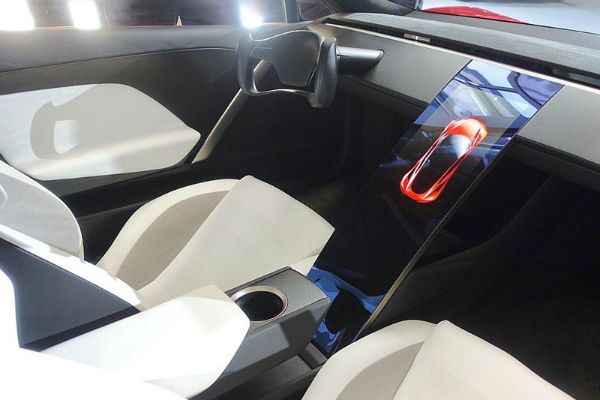
The removable glass roof—a signature Tesla feature—returns, but this time, it’s not just a novelty. Integrated solar cells could extend the car’s range by passively harvesting energy, a nod to Tesla’s broader vision of sustainability. The interior, meanwhile, is rumored to eschew traditional controls entirely, relying on a minimalist touchscreen interface and voice commands that respond to natural language. No buttons. No clutter. Just the driver, the machine, and an unspoken dialogue of intent.
Even the wheels are a marvel. Active aero wheels, capable of adjusting their shape mid-drive to optimize airflow or even act as air brakes, blur the line between automotive engineering and aviation. It’s as if the Roadster has borrowed its DNA from a stealth fighter, wrapped in the sleek silhouette of a supercar.
The Battery: A Paradigm Shift in Energy Storage
Beneath the Roadster’s carbon-fiber skin lies its beating heart: the battery. The 4680 cell, Tesla’s next-gen powerhouse, is more than an upgrade—it’s a revolution. With a 16% increase in energy density and a 14% reduction in cost, these cells promise to deliver unparalleled range without sacrificing performance. But the real magic lies in their structural role. By integrating the battery into the chassis, Tesla eliminates the need for a separate frame, shaving hundreds of pounds off the weight and dramatically improving rigidity.
Charging, too, enters a new era. With support for 350 kW+ charging speeds, the Roadster could replenish enough energy for 200 miles in under 10 minutes—a feat that would render range anxiety a relic of the past. And with Tesla’s proprietary cooling systems, these cells could theoretically operate at peak efficiency for decades, outlasting the car itself.
Yet, the most tantalizing possibility is the Roadster’s potential to act as a mobile energy storage unit. Imagine plugging your home into your car, using its battery to power your house during peak demand or emergencies. It’s a vision of energy democracy, where the boundaries between vehicle and power grid dissolve into irrelevance.
Autonomy and the Roadster’s Role in Tesla’s Grand Vision
While the Roadster has always been a performance machine, its role in Tesla’s broader ecosystem cannot be ignored. The car is expected to be a testbed for Full Self-Driving (FSD) technology, pushing the limits of AI-driven autonomy in ways no sedan or SUV could. With its advanced sensor suite and computational power, the Roadster could pioneer features like predictive racing lines, autonomous drifting, or even self-parking in tight urban spaces.
But autonomy isn’t just about convenience—it’s about redefining the driving experience. Imagine summoning your Roadster to your doorstep via a smartphone, or letting it navigate a racetrack while you relax in the passenger seat, sipping coffee as it laps the competition. The Roadster isn’t just a car; it’s a harbinger of a world where the driver’s role evolves from operator to orchestrator.
The Cultural Impact: More Than a Car
The Tesla Roadster transcends its mechanical marvels to embody a cultural zeitgeist. It’s a statement against complacency, a middle finger to the fossil fuel industry, and a rallying cry for a generation that demands more from its machines. In an era where climate change looms and innovation is often stifled by bureaucracy, the Roadster stands as a defiant beacon of progress.
It’s also a status symbol, though not in the traditional sense. Owning a Roadster isn’t about flaunting wealth—it’s about signaling allegiance to a future where performance and sustainability coexist. It’s a car for those who see driving not as a chore, but as an act of rebellion against the status quo.
Moreover, the Roadster has inspired a wave of competition. Legacy automakers, once dismissive of Tesla’s ambitions, are now scrambling to electrify their own performance lineups. Porsche’s Taycan, Rimac’s Nevera, and Lucid’s Gravity are all, in part, responses to the Roadster’s audacity. It’s a testament to Tesla’s influence: not just as a carmaker, but as a catalyst for an entire industry’s evolution.
The Road Ahead: Challenges and Unanswered Questions
Of course, the Roadster’s journey is not without its hurdles. Production timelines have a habit of slipping, and the 2026 target is ambitious even by Tesla’s standards. Supply chain constraints, regulatory hurdles, and the sheer complexity of the vehicle’s engineering could delay its arrival. Then there’s the question of affordability. With an estimated price tag north of $200,000, the Roadster remains a luxury item, accessible only to a privileged few.
There’s also the matter of infrastructure. While Tesla’s Supercharger network is expanding, the Roadster’s blistering charging speeds will demand even more robust infrastructure to support them. And in a world where range anxiety is still a concern for many, the Roadster’s focus on raw performance over practicality might limit its mass appeal.
Yet, these challenges only underscore the Roadster’s significance. It’s not a car designed for the everyman—it’s a rolling manifesto, a dare to the world to dream bigger. And if history is any indication, Tesla will find a way to overcome the obstacles, just as it has time and time again.
The Tesla Roadster is more than a vehicle; it’s a cultural earthquake, a technological tour de force, and a glimpse into a future where the impossible becomes inevitable. Whether it arrives in 2026 or 2027, its impact is already indelible. It challenges us to reconsider not just what a car can be, but what we, as a society, dare to imagine.
So, as the countdown to its unveiling begins, ask yourself: Are you ready for a machine that doesn’t just move you from point A to point B, but redefines the very act of driving? The Roadster isn’t coming. It’s already here—waiting, humming, and ready to rewrite the rules.