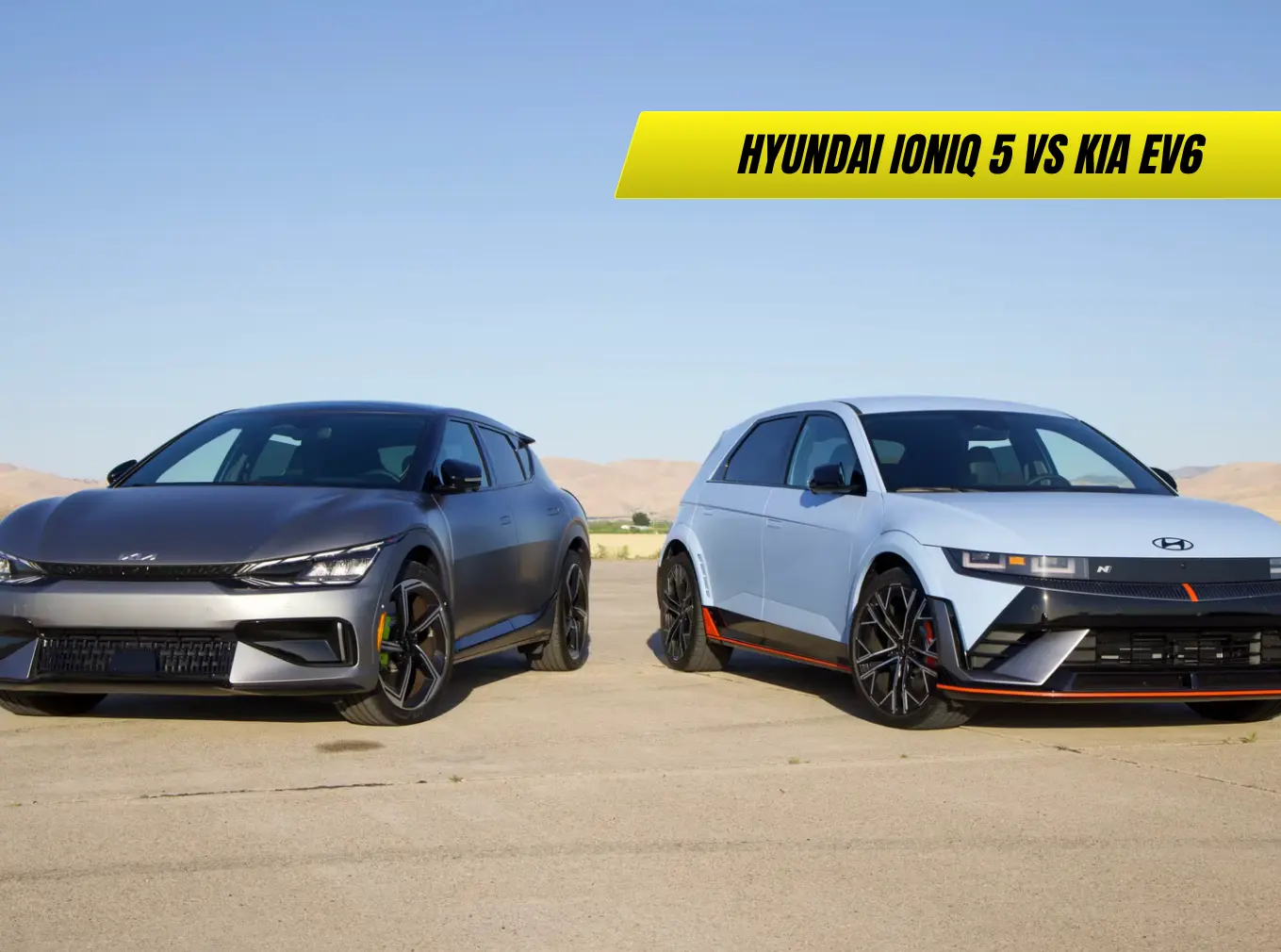
The automotive world is abuzz with anticipation as Hyundai and Kia gear up to unleash their next-generation electric vehicles, both riding on the same cutting-edge platform. The 2026 Hyundai Ioniq 5 and Kia EV6 are not just siblings under the same corporate roof—they are technological siblings, sharing DNA that promises to redefine what we expect from electric mobility. This isn’t merely a comparison of two cars; it’s a clash of philosophies, a duel of design languages, and a testament to how far EV engineering has come. Buckle up, because this showdown is about to get electrifying.
For the uninitiated, the Hyundai Ioniq 5 and Kia EV6 share the same underpinnings, a testament to the Group’s strategy of leveraging shared architecture to maximize efficiency and innovation. But where one sibling leans into futuristic retro-futurism, the other embraces a more aggressive, almost sculptural approach. The 2026 iterations promise to push boundaries further, with advancements in battery technology, aerodynamics, and digital interfaces that will leave enthusiasts and casual drivers alike breathless.
The Battle of Design Languages: Retro-Futurism Meets Aggressive Sculpting
The Hyundai Ioniq 5 has always been a head-turner, its design a love letter to the past with a nod to the future. The 2026 model refines this ethos, sharpening its pixelated LED lighting, sloping roofline, and bold, geometric body lines. It’s a car that doesn’t just drive—it performs a visual symphony, with every curve and crease telling a story of innovation. The front fascia, dominated by Hyundai’s iconic “Parametric Jewel” grille, is a statement of intent, blending heritage with hyper-modernity.


In stark contrast, the Kia EV6 adopts a more muscular, almost menacing stance. The 2026 iteration doubles down on its sharp, angular silhouette, with a front end that looks like it’s been carved from a single block of metal. The “Tiger Face” grille, a signature of Kia’s design language, is more pronounced, flanked by aggressive LED strips that give the EV6 an almost predatory presence. Where the Ioniq 5 feels like a time-traveling icon, the EV6 feels like a machine designed for the here and now—raw, unapologetic, and ready to dominate the road.
Performance and Powertrain: The Same DNA, Different Flavors
Under the skin, both vehicles share the same 800-volt architecture, a game-changer in the EV world. This high-voltage system enables ultra-fast charging, with the ability to add up to 80% charge in just 18 minutes—a boon for long-distance travelers. The 2026 models promise even more efficiency, with improved thermal management systems that keep battery temperatures optimal, extending range and longevity.
The Hyundai Ioniq 5 offers a choice between rear-wheel drive and all-wheel drive, with power outputs ranging from 229 horsepower to a blistering 320 horsepower in the high-performance variant. The Kia EV6, on the other hand, takes a more performance-oriented approach, with its GT model delivering a staggering 577 horsepower—enough to catapult it from 0 to 60 mph in under 3.5 seconds. This isn’t just a family resemblance; it’s a sibling rivalry in the truest sense.
But power isn’t everything. The Ioniq 5’s ride is tuned for comfort, with a suspension system that soaks up road imperfections with ease. The EV6, particularly in its GT guise, offers a firmer, more engaging drive, with a sport-tuned chassis that rewards spirited cornering. It’s a tale of two personalities: one for the relaxed cruiser, the other for the thrill-seeker.
Interior Innovation: Digital Cockpits and Sustainable Materials
Step inside either vehicle, and you’re greeted by a digital wonderland. The 2026 Hyundai Ioniq 5 features a dual 12.3-inch curved display that wraps around the driver, creating an immersive cockpit experience. The interface is intuitive, with customizable widgets and a minimalist aesthetic that feels both luxurious and cutting-edge. Hyundai has also doubled down on sustainability, incorporating recycled materials like fishing nets and plastic bottles into the interior trim—a nod to its commitment to eco-conscious design.
The Kia EV6’s interior is no less impressive. Its dual 12.3-inch displays are housed in a sleek, floating center console, giving the cabin a spacious, airy feel. The GT model takes it a step further with carbon fiber accents, bolstered seats, and a sportier steering wheel wrapped in perforated leather. Both vehicles offer a level of digital integration that rivals the most advanced tech suites in the industry, with over-the-air updates ensuring that the software stays fresh long after purchase.

Range, Charging, and Practicality: The Unsung Heroes
Range anxiety is a relic of the past with both the Ioniq 5 and EV6. The 2026 models promise up to 350 miles on a single charge, thanks to advancements in battery chemistry and energy density. Hyundai’s Integrated Charging Control Unit optimizes power delivery, ensuring that every watt is used efficiently. Kia’s Vehicle Charging Management System takes a similar approach, with smart algorithms that adapt to driving conditions in real time.
Practicality is another area where these EVs shine. The Ioniq 5’s “Universal Island” center console is a masterclass in clever design, with a sliding tray that can accommodate everything from a smartphone to a cup of coffee. The EV6, meanwhile, offers a more traditional layout but compensates with a cavernous cargo area and clever storage solutions under the hood. Both vehicles feature bi-directional charging, allowing them to serve as mobile power banks—a feature that’s as practical as it is futuristic.
The Verdict: Which One Wins the Platform Showdown?
Choosing between the 2026 Hyundai Ioniq 5 and Kia EV6 isn’t about picking a winner—it’s about aligning with a philosophy. If you crave a car that’s as comfortable on a cross-country road trip as it is in a city parking lot, the Ioniq 5 is your soulmate. Its retro-futuristic charm, plush ride, and eco-conscious materials make it a standout in a sea of utilitarian EVs.
But if you’re after raw performance, a head-turning presence, and a cabin that feels like it belongs in a sci-fi movie, the EV6 is the clear choice. Its aggressive styling, blistering acceleration, and sport-tuned chassis make it a thrill to drive, while its advanced tech and sustainable materials ensure it’s anything but a one-trick pony.
Ultimately, the 2026 Hyundai Ioniq 5 and Kia EV6 are two sides of the same coin—proof that shared platforms can yield extraordinary results. Whether you’re drawn to the Ioniq 5’s timeless elegance or the EV6’s audacious energy, one thing is certain: the future of electric mobility has never looked this exciting.