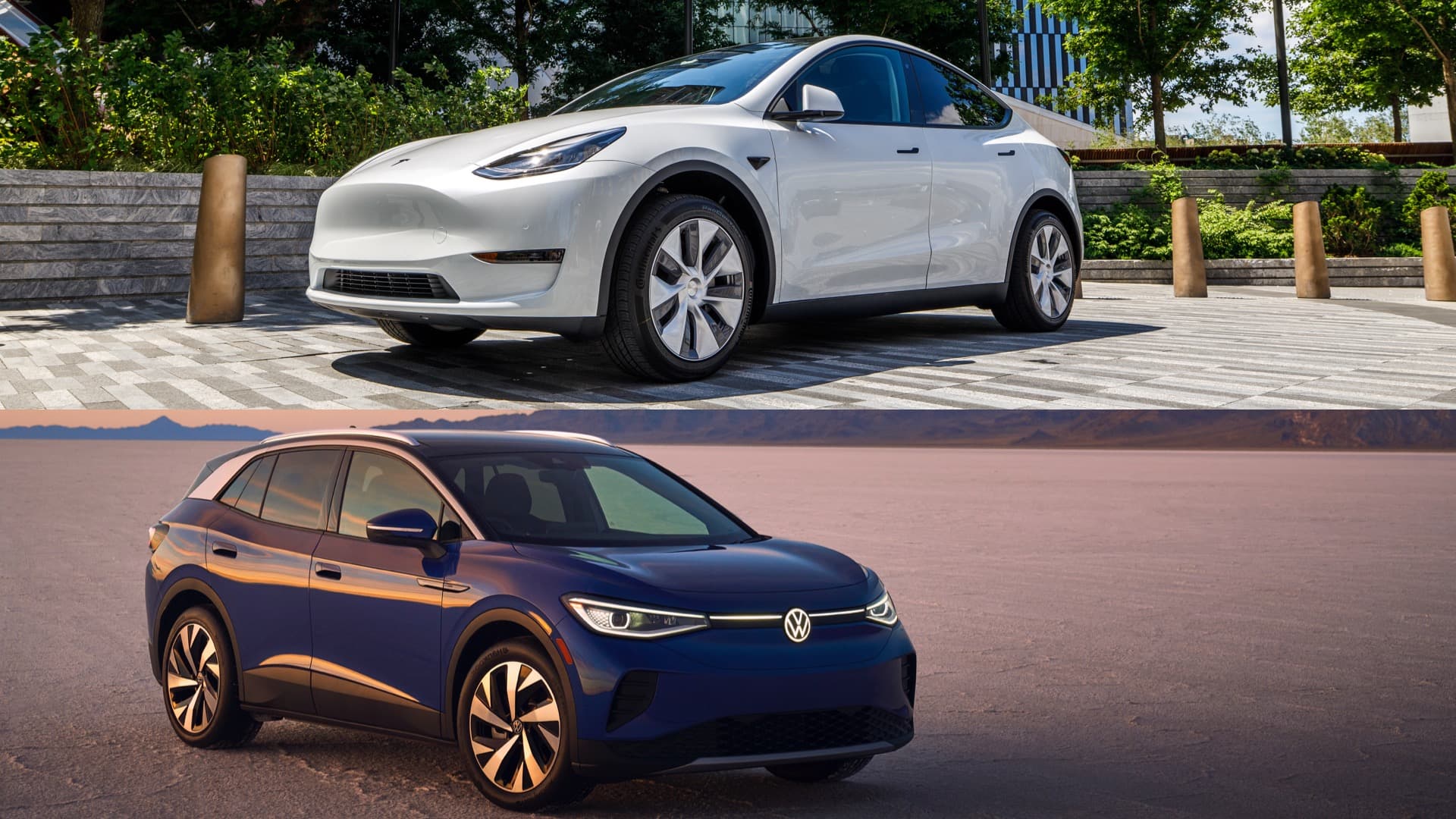
The electric vehicle revolution has reshaped the automotive landscape, and two contenders stand out in the compact SUV segment: the Tesla Model Y and the Volkswagen ID.4. These vehicles represent the pinnacle of modern EV engineering, blending innovation with practicality. For prospective buyers, the choice between them hinges on a multitude of factors—performance, affordability, technology, and long-term ownership costs. This in-depth comparison dissects their strengths, weaknesses, and unique selling points to guide your decision.
The Tesla Model Y, a stalwart of the EV market, has redefined expectations with its minimalist design, cutting-edge software, and unparalleled charging network. Meanwhile, the Volkswagen ID.4 emerges as a compelling alternative, offering a more traditional automotive experience with German engineering and a focus on comfort. Both vehicles cater to different buyer personas, whether you prioritize raw performance, eco-conscious living, or family-friendly practicality. Let’s explore what each brings to the table.


The Design Ethos: Futuristic vs Familiar
The Tesla Model Y embodies a cyberpunk aesthetic, with a sleek, almost alien-like silhouette that turns heads. Its panoramic glass roof floods the cabin with natural light, while the absence of a traditional grille and flush door handles contribute to its aerodynamic efficiency. Inside, the minimalist dashboard—dominated by a massive 15-inch touchscreen—creates an immersive, tech-centric environment. The ID.4, by contrast, adopts a more conventional SUV silhouette, blending Volkswagen’s signature design language with subtle futuristic touches. Its curved LED headlights and sculpted body panels evoke a sense of understated elegance. The cabin prioritizes ergonomics, with a horizontally oriented touchscreen and physical buttons for climate control, appealing to those who prefer a balance between modernity and familiarity.
Where the Model Y feels like a spaceship, the ID.4 feels like a well-crafted wagon. The former’s design is polarizing yet undeniably bold, while the latter’s is reassuringly familiar. This dichotomy extends to interior materials—recycled plastics and synthetic leather in the ID.4 versus Tesla’s vegan leather and aluminum trim. The choice here is less about superiority and more about personal preference: Do you crave avant-garde design or timeless sophistication?
Performance and Driving Dynamics: Raw Power vs Refined Comfort
The Tesla Model Y is a performance beast in disguise. With instant torque delivery, the dual-motor AWD variant accelerates from 0-60 mph in a blistering 4.8 seconds, outpacing many gasoline-powered SUVs. The ID.4, while no slouch, prioritizes a smoother ride. Its rear-wheel-drive configuration (with optional AWD) delivers a 0-60 mph time of 7.6 seconds, making it more of a cruiser than a sprinter. The ID.4’s air suspension, a rare feature in this segment, allows for adjustable ride heights, enhancing comfort on highways or rough terrain.
Handling dynamics reveal another contrast. The Model Y’s low center of gravity, thanks to its battery placement, offers razor-sharp cornering and a planted feel. The ID.4, with its higher seating position, provides a commanding view of the road but lacks the same agility. Braking performance also favors Tesla, with its regenerative braking system offering one-pedal driving in most conditions. The ID.4’s braking feel is adequate but lacks the same level of integration with the vehicle’s software.
For enthusiasts, the Model Y’s performance is exhilarating. For families, the ID.4’s comfort and stability may be more appealing. The question isn’t which is better, but which aligns with your driving priorities.
Range and Charging: The Long-Haul Dilemma
Range anxiety is a relic of the past for both vehicles, but their approaches differ significantly. The Tesla Model Y Long Range boasts an EPA-estimated 330 miles per charge, thanks to its 75 kWh battery. The ID.4 Pro, with a 82 kWh battery, offers 275 miles. Real-world range varies based on driving conditions, climate control usage, and terrain, but both exceed the average daily commute requirements.
Charging infrastructure is where Tesla’s Supercharger network shines. With over 50,000 global Superchargers, Tesla owners enjoy unparalleled convenience, especially on road trips. The ID.4 relies on Electrify America and other third-party networks, which, while expanding, still lag behind Tesla’s coverage. Charging speeds are comparable—both support up to 170 kW—but Tesla’s seamless integration with the vehicle’s navigation system ensures optimal routing and charging stops.
The ID.4’s advantage lies in its compatibility with home charging solutions. Volkswagen’s partnership with ChargePoint and other providers simplifies the installation process for homeowners. Tesla’s Wall Connector is equally user-friendly, but the ID.4’s broader compatibility with public charging networks may appeal to those who don’t have access to a Tesla-specific charger.
Technology and Infotainment: A Tale of Two Ecosystems
The Tesla Model Y’s infotainment system is a marvel of modern engineering. The 15-inch touchscreen controls nearly every function, from climate settings to vehicle calibration. Over-the-air updates continuously refine the software, adding features like new games, streaming services, and even dog mode. The ID.4’s 12-inch touchscreen, while intuitive, feels more like an extension of Volkswagen’s traditional infotainment systems. It lacks the same level of integration but compensates with a more familiar user interface.
Autonomy is another battleground. Tesla’s Full Self-Driving (FSD) beta, though controversial, remains the most advanced autonomous driving system on the market. The ID.4 offers adaptive cruise control and lane-keeping assist, but Volkswagen’s Travel Assist system is less ambitious. For those who prioritize cutting-edge technology, the Model Y is the clear winner. For those who prefer a more conservative approach, the ID.4’s system may feel more reassuring.
Voice control is where Tesla excels. The ID.4’s voice commands are functional but lack the natural language processing of Tesla’s system. The Model Y’s ability to understand complex requests—like “set the cabin to 72 degrees and play my jazz playlist”—is unmatched.
Interior Space and Practicality: Family-Friendly or Tech-Centric?
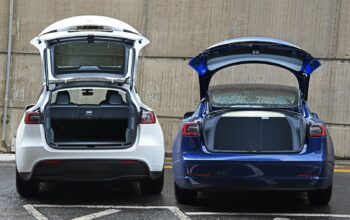
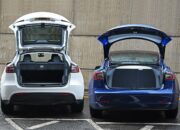
The Tesla Model Y offers ample space for passengers, with generous legroom in the rear and a flat floor, thanks to the absence of a transmission tunnel. The ID.4, while slightly roomier in headroom, features a more traditional SUV layout with a raised center console. Cargo capacity is nearly identical—both offer around 30 cubic feet behind the rear seats—but the Model Y’s low loading height makes it easier to stow large items.
Child seat compatibility is excellent in both vehicles, with LATCH anchors in the rear outboard seats. The ID.4’s higher seating position may be more comfortable for taller passengers, while the Model Y’s panoramic roof enhances the sense of openness. For families, the ID.4’s optional third row (in some markets) could be a deciding factor, though it’s tight for adults.
Material quality is subjective. The Model Y’s cabin feels sparse but high-tech, with a focus on durability and ease of cleaning. The ID.4’s interior is plusher, with soft-touch materials and a more traditional dashboard layout. The choice here depends on whether you prioritize a tech-forward environment or a cozy, familiar space.
Pricing and Value: The Bottom Line
Affordability is a key consideration, and the ID.4 has a slight edge in base pricing. The 2024 ID.4 starts at around $40,000, while the Model Y begins at $47,740. However, Tesla’s frequent price adjustments and incentives can narrow the gap. The ID.4’s higher trims, such as the Pro S, push the price closer to $50,000, but they include features like a panoramic sunroof and premium audio that are optional in the Model Y.
Long-term ownership costs favor Tesla in some areas. Electricity consumption is lower due to the Model Y’s superior efficiency, and maintenance is minimal thanks to fewer moving parts. The ID.4’s warranty—8 years/100,000 miles on the battery—is competitive, but Tesla’s 8-year/120,000-mile coverage provides extra peace of mind.
Resale value is another factor. Tesla vehicles historically retain their value better than most EVs, though the ID.4’s strong brand reputation in the used market is a mitigating factor. Ultimately, the cost difference may come down to which features matter most to you—whether it’s Tesla’s Supercharger access or the ID.4’s more traditional ownership experience.
Which One Should You Choose?
The Tesla Model Y is the choice for those who crave innovation, performance, and a tech-savvy ecosystem. Its cutting-edge features, superior range, and exhilarating driving dynamics make it a standout in the EV market. The ID.4, however, appeals to buyers who value comfort, practicality, and a more traditional automotive experience. Its refined ride, spacious interior, and German engineering may be worth the trade-offs for some.
Consider your priorities: Do you want a vehicle that feels like the future, or one that blends seamlessly into your daily life? The Model Y is for the bold, the ID.4 for the pragmatic. Both represent the best of what electric vehicles have to offer—it’s simply a matter of which philosophy resonates with you.
As the EV landscape continues to evolve, one thing is clear: the Model Y and ID.4 are not just competitors; they are harbingers of a new era in automotive design and functionality. Your perfect electric SUV awaits—it’s just a test drive away.