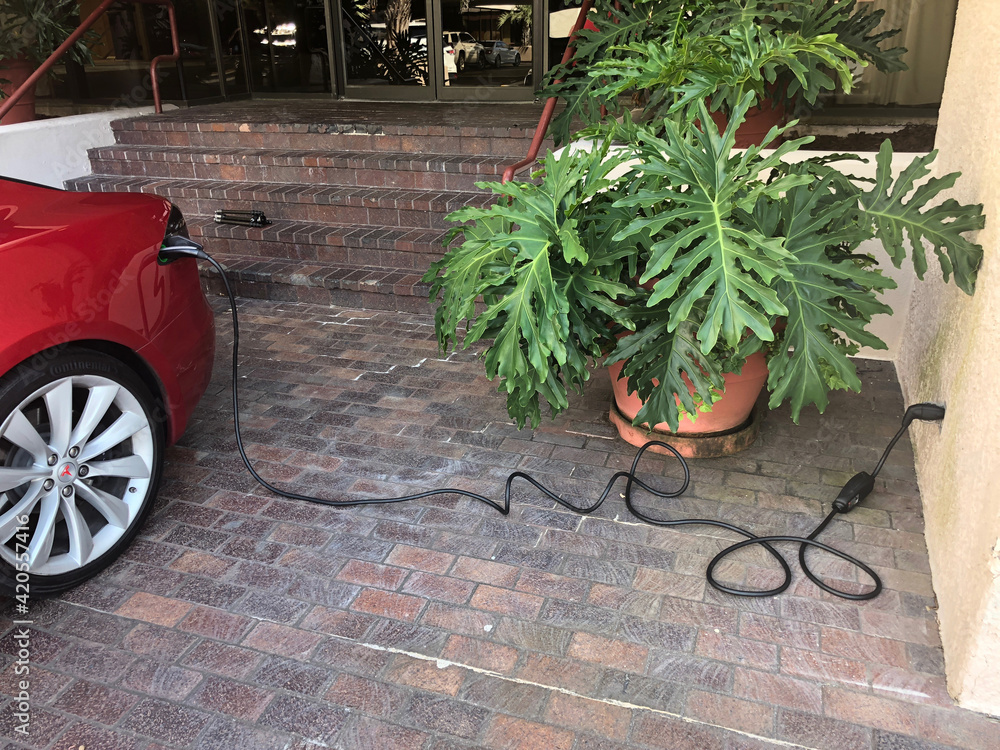
The Tesla Mobile Connector is a compact, portable charging solution designed to transform any standard household outlet into a gateway for replenishing your electric vehicle’s battery. While it offers unparalleled convenience, particularly for Tesla owners who lack dedicated home charging infrastructure, its performance on a 120V outlet is a frequent point of curiosity—and sometimes frustration. Understanding the nuances of its charging speed on this ubiquitous power source requires dissecting not just the hardware’s capabilities but also the broader context of residential electrical systems, power delivery mechanics, and real-world usability. For those considering this option, or merely seeking to demystify its limitations, a deeper exploration reveals both its practicality and its constraints.
The Tesla Mobile Connector, often referred to as the Gen 2 Mobile Connector, is a Level 1 charging solution that taps into the most accessible power source in any home: the standard 120V outlet. Unlike Level 2 chargers, which require a 240V circuit and deliver significantly faster charging, the Mobile Connector operates within the confines of a lower-voltage system. This makes it an ideal choice for renters, road trippers, or owners in temporary living situations where permanent charging solutions are not feasible. Yet, the trade-off for this portability is a charging speed that can feel glacial to those accustomed to the instantaneous refueling of combustion engines or even the rapid replenishment offered by Level 2 systems.
The Mechanics of 120V Charging: Why Speed is a Myth
At its core, the Tesla Mobile Connector is constrained by the fundamental physics of power delivery. A 120V outlet, typically rated for 15 or 20 amps, provides a maximum of 1.44 kW to 1.92 kW of power—assuming no voltage drops or inefficiencies in the electrical path. This is a far cry from the 7.2 kW to 22 kW that Level 2 chargers can harness from a 240V circuit. The Mobile Connector, therefore, delivers approximately 3 to 5 miles of range per hour of charging, depending on the vehicle model and battery condition. For a Tesla Model 3 with a 60 kWh battery, a full charge could take upwards of 40 hours—a duration that underscores the connector’s role as a supplementary, rather than primary, charging solution.
The disparity in charging speeds becomes even more pronounced when considering the vehicle’s onboard charger. Tesla’s onboard charger, which converts AC power from the outlet into DC power for the battery, is limited to 32 amps on the Mobile Connector. This means that even if the outlet and wiring could theoretically support higher amperage, the Mobile Connector itself acts as a bottleneck. The result is a charging experience that prioritizes accessibility over efficiency, a trade-off that may deter those seeking rapid turnaround times but aligns perfectly with the needs of overnight charging or emergency top-ups.
Real-World Scenarios: When the Mobile Connector Shines
Despite its leisurely pace, the Tesla Mobile Connector excels in specific scenarios where its limitations are outweighed by its convenience. For apartment dwellers or individuals in shared housing, the ability to plug into a standard outlet without requiring landlord approval or electrical upgrades is invaluable. Similarly, road trippers who find themselves in remote locations with no access to Tesla Superchargers or third-party charging networks can rely on the Mobile Connector as a fallback option. The connector’s portability also makes it an excellent choice for Tesla owners who frequently visit family or friends, as it eliminates the need to hunt for compatible charging stations.
Another scenario where the Mobile Connector proves its worth is during short-term rentals or temporary stays. Whether staying in a hotel, Airbnb, or even a campground with electrical hookups, the Mobile Connector can be deployed with minimal effort. While the charging speed may not be ideal for daily use, it ensures that the vehicle’s battery remains sufficiently charged for essential trips, such as commuting to work or running errands. The key here is managing expectations: the Mobile Connector is not designed to replace a home charging setup but rather to provide a safety net in situations where no other options exist.

The Hidden Variables: Factors That Influence Charging Speed
Charging speed on a 120V outlet is not solely determined by the Mobile Connector’s hardware; several external factors can further degrade performance. The most critical of these is the quality and condition of the electrical wiring in the home. Older homes, particularly those with aluminum wiring or outdated breaker panels, may not deliver the full 15 or 20 amps consistently, leading to slower charging or even tripped breakers. Similarly, the use of extension cords—especially those not rated for high amperage—can introduce resistance and heat, further reducing efficiency.
Environmental conditions also play a role. Extreme temperatures, both hot and cold, can impact the battery’s ability to accept a charge efficiently. In cold weather, the battery’s chemistry slows down, requiring more energy to reach a usable state, which in turn prolongs the charging process. Conversely, in hot weather, the battery management system may limit charging speed to prevent overheating, further extending the time required to replenish the battery. These variables highlight the importance of considering the broader context in which the Mobile Connector is used, as real-world performance may deviate from theoretical expectations.
Comparing Alternatives: When to Upgrade from 120V
For Tesla owners who find the Mobile Connector’s charging speed inadequate for their lifestyle, upgrading to a Level 2 charging solution is often the next logical step. A Level 2 charger, which operates on a 240V circuit, can deliver anywhere from 3.7 kW to 22 kW, translating to 12 to 80 miles of range per hour of charging. This dramatic increase in speed makes Level 2 charging far more practical for daily use, particularly for those with longer commutes or larger battery packs. The installation of a Level 2 charger, however, comes with its own set of considerations, including the need for a dedicated circuit, potential electrical upgrades, and the cost of the charger itself.
Another alternative is the Tesla Wall Connector, which is designed for home use and offers a balance between speed and convenience. The Wall Connector can deliver up to 48 amps on a 60-amp circuit, providing a significant boost over the Mobile Connector while still being more affordable and easier to install than a full Level 2 system. For those who frequently travel or lack access to home charging, portable Level 2 chargers, such as the Tesla Mobile Connector with a NEMA 14-50 adapter, offer a middle ground. These chargers can be used with both 120V and 240V outlets, providing flexibility without the need for permanent installation.
Optimizing Your 120V Charging Experience
While the Tesla Mobile Connector may not be the fastest charging solution, there are strategies to optimize its performance and make the most of its capabilities. One of the simplest yet most effective approaches is to charge during off-peak hours, when electrical demand is lower and the grid is more stable. This not only ensures a more consistent power supply but can also reduce the risk of voltage drops or brownouts that could further slow down charging. Additionally, using a dedicated outlet—one that is not shared with high-power appliances like refrigerators or air conditioners—can help maintain a steady flow of electricity to the Mobile Connector.
Another consideration is the vehicle’s charging settings. Tesla’s software allows owners to adjust the maximum charge rate for the Mobile Connector, which can be useful in situations where the outlet or wiring is not rated for the full 15 or 20 amps. By capping the charge rate, owners can prevent tripped breakers or overheating, ensuring a safer and more reliable charging experience. It’s also worth noting that the Mobile Connector’s performance can degrade over time, particularly if the cables or connectors become worn or damaged. Regular inspection and maintenance can help preserve its efficiency and extend its lifespan.
The Psychological Factor: Managing Expectations
Perhaps the most challenging aspect of using the Tesla Mobile Connector on a 120V outlet is the psychological adjustment required. In a world where instant gratification is the norm, waiting hours—or even days—for a full charge can feel counterintuitive. However, reframing the Mobile Connector as a tool for overnight or opportunistic charging rather than a primary charging solution can alleviate much of the frustration. For many Tesla owners, the Mobile Connector serves as a bridge between the convenience of home charging and the unpredictability of public charging networks, offering peace of mind without the need for speed.
It’s also helpful to view the Mobile Connector as part of a larger charging ecosystem. While it may not be the fastest option, it complements other charging methods, such as Superchargers, destination chargers, and Level 2 home setups. By leveraging each of these options strategically, Tesla owners can create a seamless and efficient charging routine that minimizes downtime and maximizes convenience. The key is to recognize the Mobile Connector’s strengths—its portability, accessibility, and simplicity—and accept its limitations as part of the trade-off for its unique advantages.
The Tesla Mobile Connector, despite its modest charging speed on a 120V outlet, remains an indispensable tool for Tesla owners who prioritize flexibility and convenience. While it may not satisfy the demands of those seeking rapid replenishment, its ability to transform any standard outlet into a charging station makes it a versatile and practical solution for a wide range of scenarios. By understanding its limitations, optimizing its use, and integrating it into a broader charging strategy, owners can harness its full potential without being hindered by its leisurely pace. In the end, the Mobile Connector is not about how fast it can charge, but rather how reliably it can keep your Tesla ready for the road ahead.