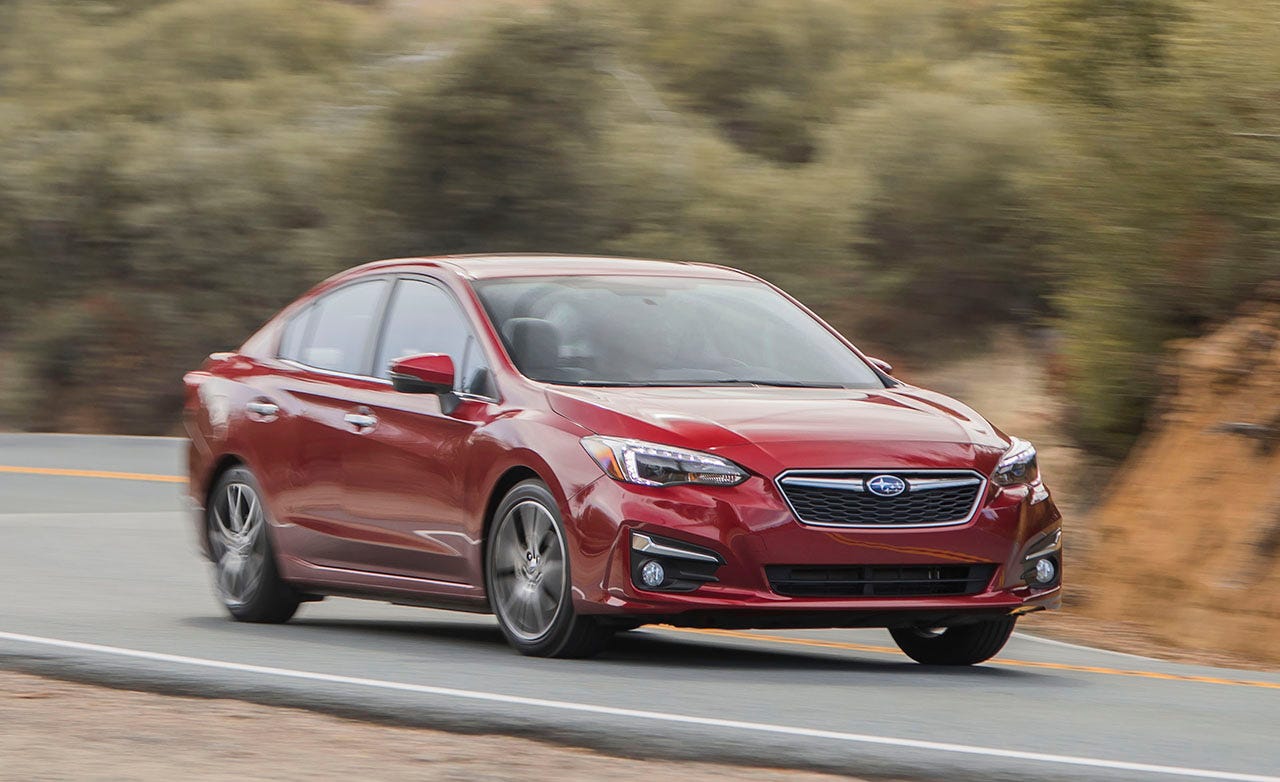
The Subaru Impreza Sedan has always lived in the in-between space of motoring—neither trying to impress with theatrical styling nor asking for attention through sheer power figures. Instead, it seduces a quieter kind of driver: the person who notices traction in the rain, steering steadiness on a cold morning, and the calm confidence that arrives when the road becomes unpredictable. In its standard AWD guise, the Impreza doesn’t just offer capability. It offers a philosophy—one that feels almost architectural, as if the car were designed to keep its composure no matter what the day throws into the windshield.
It’s also a car surrounded by a common observation: “It’s practical, but is it really anything special?” The answer is more layered than that phrase suggests. The fascination isn’t only in the features you can tick off. It’s in the way the drivetrain and chassis interact with human expectations, turning everyday driving into something closer to a ritual of control.
First Impressions: Familiar Lines, Intentional Presence
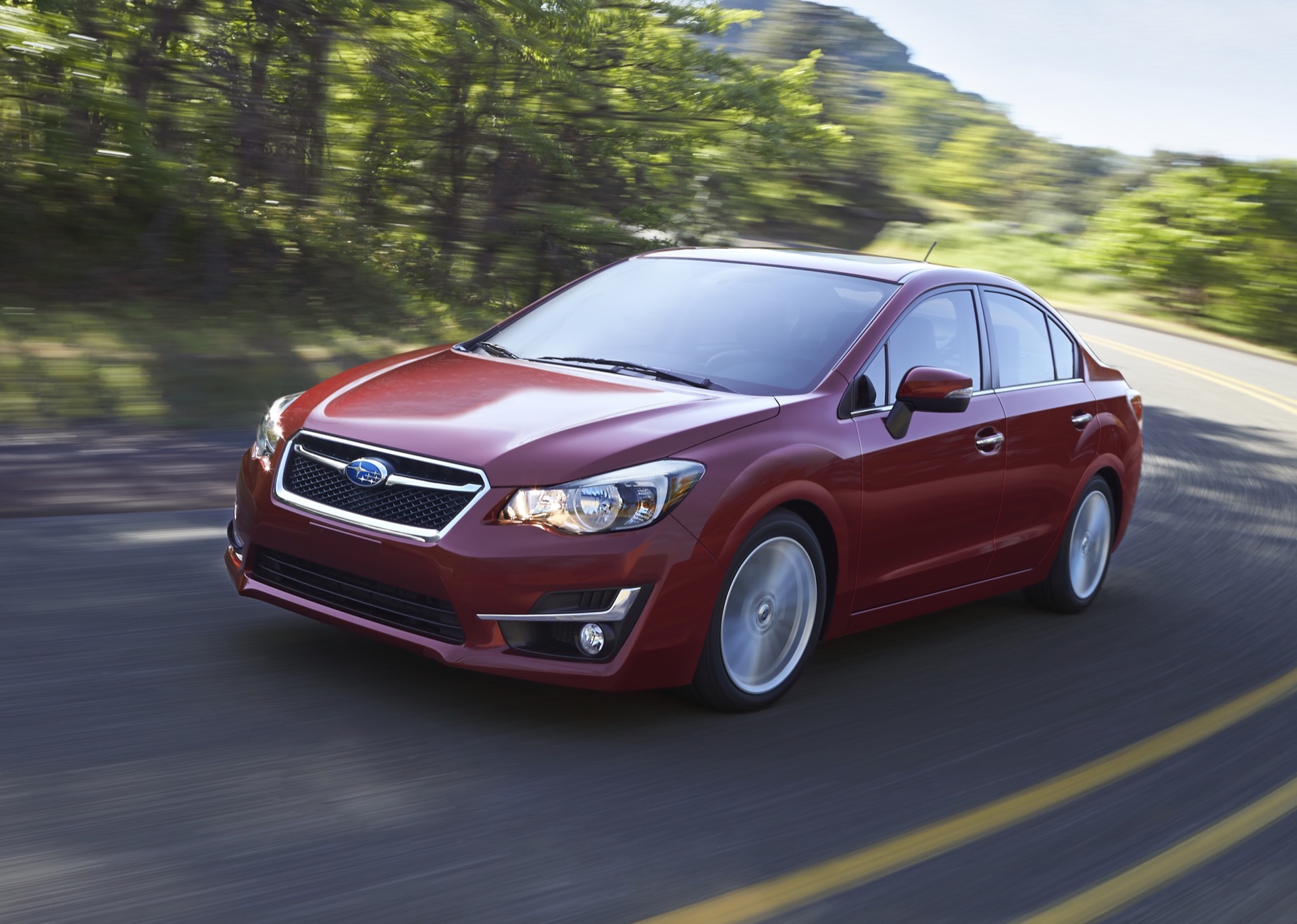
From a distance, the Impreza Sedan reads as composed. Its proportions are sensible, and its silhouette avoids the exaggerated drama of some segment rivals. Up close, the styling feels functional rather than performative. That matters, because a car meant for real weather, real commuting, and real errands must be visually coherent in all lighting conditions—dawn glare, dusk shadows, even the washed-out palette of cloudy days.
The sedan body also plays a subtle psychological role. A trunk and a proper roofline tend to signal stability, not just in the visual sense but in how the car behaves. When the cabin settles and the suspension finds its rhythm, the shape of the car seems to support the sensation of staying “planted.” It’s not a flashy kind of stability; it’s the kind you trust.
.jpg)
Standard AWD: The Quiet Advantage That Changes Everything
AWD can be marketed in bold strokes—“maximum traction,” “all-weather capability,” and similar slogans. But the Impreza’s AWD, especially in standard form, is more persuasive when you experience it rather than when you memorize it. The point isn’t that the car becomes invincible. The point is that it becomes less negotiable. Less negotiable means fewer compromises when conditions deteriorate.
In wet corners, on gravelly shoulders, or when a sudden patch of ice appears like an ambush, traction becomes a form of emotional weatherproofing. That’s a deeper reason for fascination. Drivers often underestimate how frequently uncertainty enters the commute. AWD doesn’t eliminate uncertainty. It reduces its intensity—enough to transform steering feel from “guesswork” into something nearer to choreography.
There’s also a practical elegance to standard AWD. It spares the buyer from the nagging thought that capability should have been included “just in case.” In the Impreza, that “just in case” becomes an everyday case, which is where confidence grows.
Driving Dynamics: Steering Feel Meets Predictable Momentum
Many sedans can move forward with acceptable competence. Fewer sedans create a sense of predictable momentum—where throttle response, braking behavior, and steering angle align with what the driver expects. The Impreza aims for that alignment. It feels designed to communicate. Not in a theatrical way, but through consistent feedback: tire contact, suspension compliance, and the way the car tracks through a lane line without constant correction.
When the road is dry, it feels straightforward. When it’s slick, it feels deliberate. That transition is the secret sauce. Drivers rarely mention “progressive traction management,” yet they absolutely feel it. The system’s behavior tends to be measured. It doesn’t chase the driver’s inputs blindly; it supports them.
In practical terms, the Impreza makes it easier to drive smoothly rather than aggressively. Smooth driving is underrated. It reduces fatigue. It also reduces the chances of turning a minor road inconvenience into a major moment of stress.
Engine and Transmission: Enough Power for Real-World Life
The Impreza sedan’s powertrain approach is fundamentally about usability. It doesn’t rely on dramatic peak output. Instead, it emphasizes adequate pull, manageable responsiveness, and a throttle map that makes commuting less jerky and more fluid. That’s especially important in stop-start traffic, where the mind tends to slip into impatience unless the car encourages finesse.
The transmission logic—how it downshifts, how it holds ratios, how it behaves when you request passing power—often becomes the difference between a car you tolerate and a car you enjoy. The Impreza tends to favor calm transitions. It’s not always the quickest at sprinting away from traffic lights, but it is often the steadier companion when merging, climbing gentle grades, or navigating roundabouts with intermittent gaps.
This is where the “it’s practical but not special” criticism falls short. Special isn’t only speed. Special can be coherence.
Ride Comfort and Chassis Character
Sedans live and die by ride quality. A great engine and decent brakes won’t matter if the suspension turns every seam in the road into an unpleasant conversation. The Impreza’s chassis is tuned to keep impacts from becoming sharp interruptions. There’s a smoothing effect that allows the wheels to do their work while the cabin stays composed.
That smoothing matters more than it sounds. Roads are not uniform. Urban pavements undulate, rural routes fragment into patched surfaces, and winter frost can turn familiar stretches into new landscapes. A suspension that manages this variety without constant body flail gives drivers an almost uncanny sense of continuity.
AWD can sometimes complicate ride feel, but the Impreza’s setup aims to preserve balance. The result is a ride that supports confidence rather than constantly reminding you that traction systems exist.
Braking, Stability, and Everyday Safety Confidence
Braking performance is one of those topics people discuss after something goes wrong. In normal driving, you’re rarely aware of the brakes unless you’re approaching a stop from the wrong speed or encountering a sudden obstacle. The Impreza’s braking behavior is generally predictable—firm when asked, progressive when you modulate effort, and consistent across routine conditions.
Stability on uneven surfaces also plays a major role. A sedan with standard AWD can feel more secure through steering transitions—those moments when the road curves while your speed shifts slightly due to traffic or visibility. This is where the car’s coordination becomes noticeable: it feels composed when the driver is most likely to fidget.
Safety confidence isn’t just about collision avoidance systems. It’s also about how the car helps you avoid panic. When traction is steady, the brain relaxes. That relaxation affects decision-making.
Interior Practicality: Quiet Layouts, Usable Space
Inside, the Impreza sedan leans toward practicality. Controls are typically laid out to reduce distraction. The seating position aims for long-drive comfort, and the cabin materials prioritize durability over flashy fragility. This is less about luxury and more about long-term satisfaction.
There’s a certain charm in an interior that doesn’t demand constant admiration. You sit down, you drive, you arrive. Over time, that reliability becomes a kind of comfort therapy.
Storage also deserves attention. A sedan must accommodate the messy realities of daily life—bags, groceries, gym equipment, school supplies, and the unpredictable cargo that collects in the trunk like it belongs there. The Impreza’s layout supports this, turning errands into smooth operations rather than frantic rearranging.
Fuel Economy and Ownership Feel
Even with AWD, the Impreza’s driving economics tend to remain sensible. Real-world fuel burn often matches the expectations of buyers who prioritize consistent daily use. The deeper fascination here is ownership psychology: knowing that you can drive regularly without resenting the spreadsheet.
It’s also about ongoing trust. When a car feels stable in the worst conditions, it becomes easier to keep it for years. That’s not nostalgia—it’s a practical relationship with a machine that has a track record of behaving in predictable ways.
Who It’s For: The Driver Who Wants Less Drama
The Subaru Impreza Sedan in standard AWD form suits drivers who value competence over spectacle. It’s for people who want traction as a default rather than an option, and for those who prefer steering that feels legible even when the weather turns theatrical.
If you’re the type who dislikes surprises—on icy mornings, on wet commutes, in the late-night return from a weekend away—this car speaks your language. It doesn’t promise heroics. It promises steadiness.
Conclusion: A Different Kind of Allure
The common observation about the Impreza—practical, sensible, maybe slightly underwhelming—misses what the car offers at a deeper level. In its standard AWD configuration, the Impreza doesn’t simply help you get from A to B. It helps you feel capable while you do it. That sensation is strangely addictive. It builds a relationship with the road where uncertainty loses some of its power.
In the end, the Impreza Sedan’s fascination is not about being the loudest performer. It’s about being the most reliably composed. That composure, day after day, is what turns a reasonable purchase into a quiet commitment.