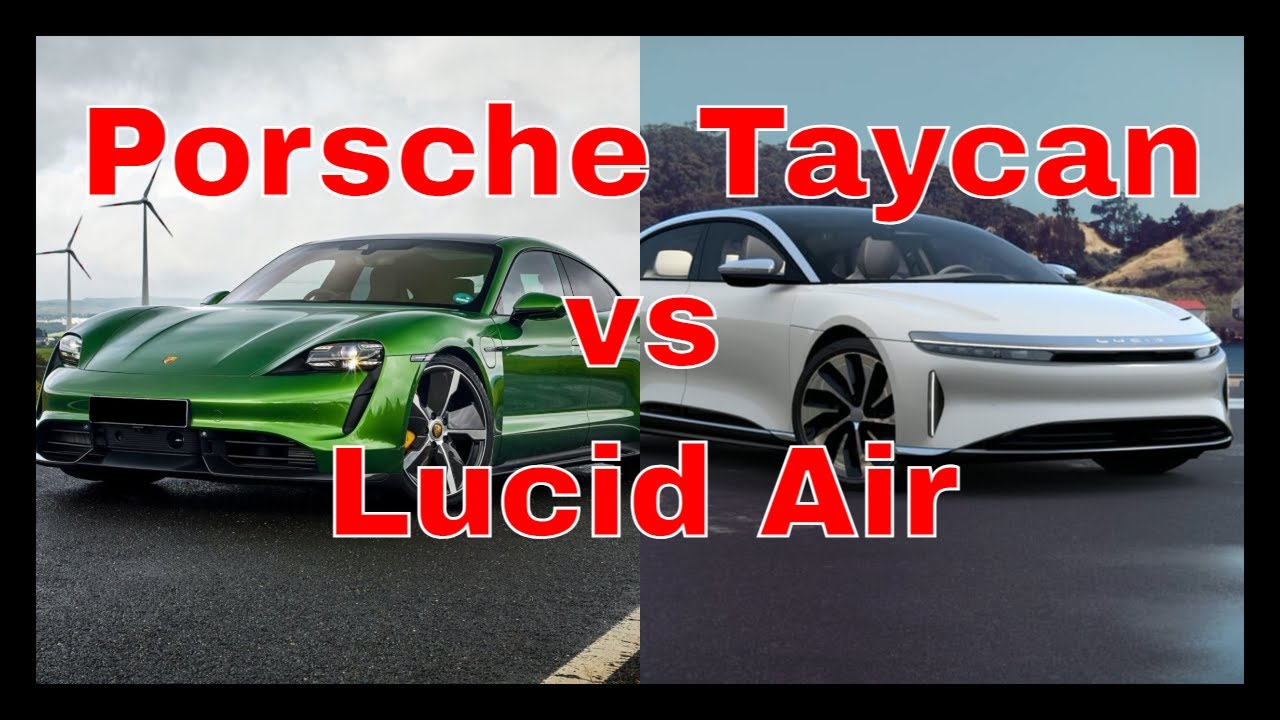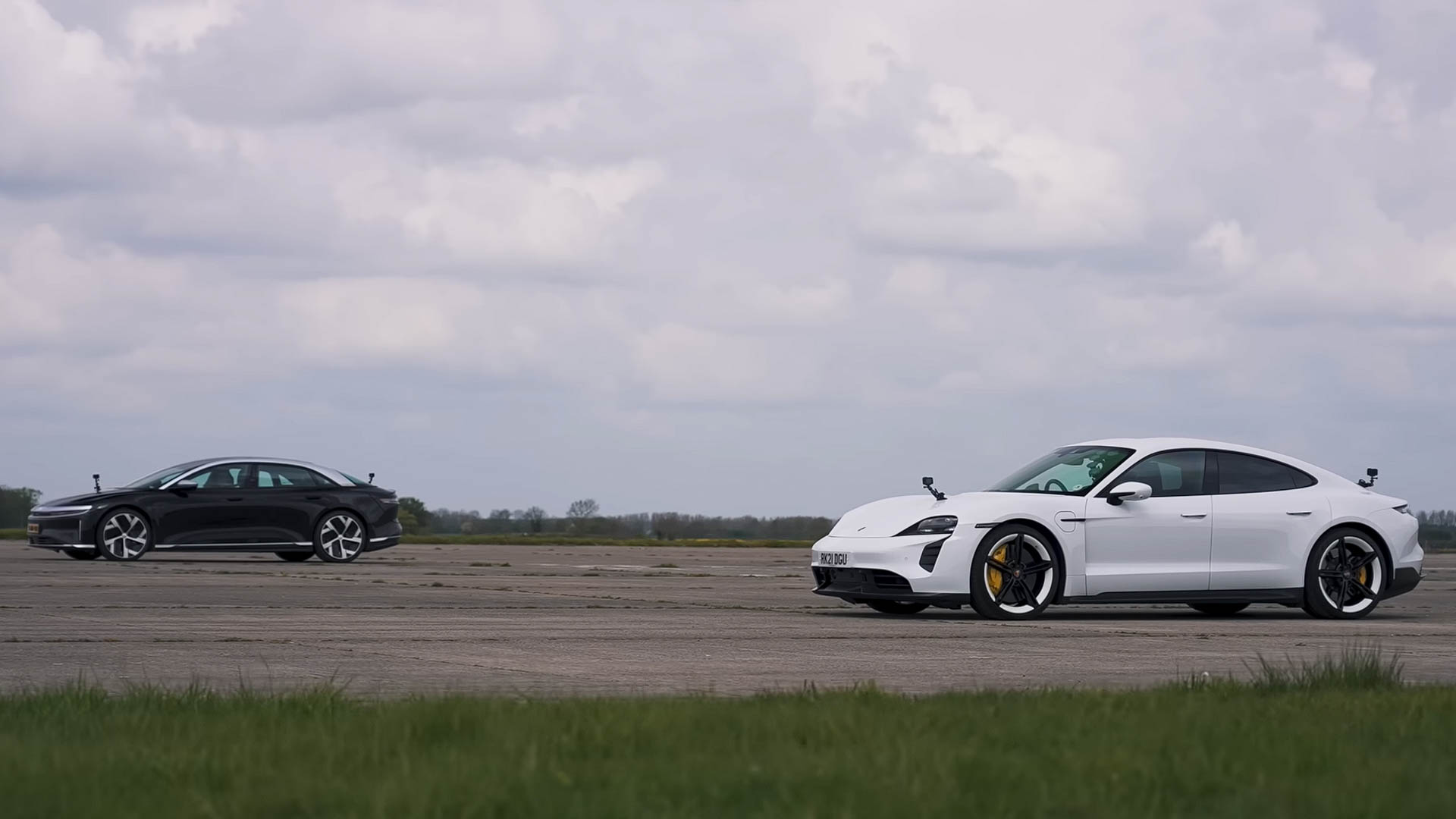
Some sedans feel like well-composed sonatas—precise, cultured, and predictably elegant. Others behave more like mischievous daredevils, slipping the leash just long enough to surprise the driver at the first opportunity. So here’s the playful question that lingers in the back of the mind: if you lined up the Porsche Taycan and the Lucid Air—two performance EV sedans with very different philosophies—who would actually grin wider when the road turns sharp, the stopwatch starts ticking, and the power delivery becomes a kind of electric poetry?
Now for the potential challenge. Try to compare them like they’re the same species of car. It’s a trap. The Taycan is a Porsche in the truest sense—engineering-forward, driver-led, and unapologetically performance-minded. The Lucid Air, meanwhile, has the aura of a technological sculptor—sleek, airy, and relentlessly focused on efficiency and acceleration that can feel almost unreal. Put them side by side, and the real contest becomes not only “which is faster,” but “how does each one make speed feel?”
Let’s take the scenic route through the performance landscape—speed, traction, powertrain character, thermal management, handling behavior, and real-world drivability—until the answer either becomes obvious… or pleasantly complicated.
Performance DNA: Two sedans, two temperaments
The Porsche Taycan arrives with the unmistakable attitude of a brand that has spent decades refining response curves, steering feel, and high-speed confidence. Even before you reference raw numbers, the Taycan tends to communicate in details—how the nose settles, how quickly the chassis takes a cue, and how the throttle translates intent into thrust with a sharp, purposeful immediacy. It’s a sedan that often feels like it’s reading your body language.
The Lucid Air approaches performance like a virtuoso mathematician. Its design philosophy emphasizes refinement, low aerodynamic drag, and a powertrain strategy that focuses on sustained output and smooth, controlled acceleration. The result is that acceleration can feel effortless—less “snap and lurch,” more “surge and glide,” as though the car is cheating physics with quiet confidence.
If the Taycan is a sprinting actor delivering lines with precision timing, the Lucid Air is the director adjusting the entire scene so the sprint looks inevitable.
Acceleration: The stopwatch’s first argument
When performance EVs are compared, acceleration is the headline because it’s measurable—and because it’s emotionally persuasive. Both cars can launch with authority, and both can make the seat feel temporarily less attached to gravity. Yet the experience of getting there differs.
The Taycan typically leans into rapid power delivery. It often feels like pressing a button that unlocks a hidden gear, then watching the horizon shift with sudden urgency. Launch control and track-oriented calibration can amplify that effect, producing a repeatable shove that suits drag-strip imagination.
The Lucid Air can also deliver startling launch performance, but it often feels more fluid through the early stages. Its surge has a distinctive smoothness, and it can sustain momentum in a way that makes passing maneuvers feel like an afterthought. In a real drive, that can be even more satisfying than a single blistering sprint.
The challenge here is simple: ask yourself whether you prefer a punchy, immediate feel—or a wave of thrust that builds with refined inevitability.
Power delivery and torque character: How speed is “authored”
Electric torque is instant by design, but the way it’s shaped is where the personality lives. The Taycan’s response often feels more tactile, with a drivetrain and stability calibration tuned to keep the car composed under aggressive input. It’s the kind of setup that can reward precision rather than punish it.
The Lucid Air tends to offer a smoother ramp in many situations, producing a sensation of control that can feel almost cinematic. That doesn’t mean it’s timid. It means the acceleration is delivered like a carefully staged performance—dramatic, but not chaotic.
Here’s a playful thought experiment: if torque were music, the Taycan might be percussion—sharp transients, crisp rhythm. The Lucid could be strings—coherent swell, elegant momentum. Both can move you fast, but in different emotional dialects.
Traction and launch behavior: Grip is the hidden referee
Acceleration contests aren’t won by power alone. Traction decides who gets to translate watts into motion. EVs can overwhelm grip the moment the torque arrives, and each car’s traction strategy becomes crucial.
The Taycan’s stability and traction systems are tuned with a performance mindset, aiming to keep the car planted during hard launches and spirited corner exits. That can make launches feel repeatable, which matters when you want confidence rather than lottery-style outcomes.
The Lucid Air, meanwhile, brings its own traction intelligence, balancing acceleration with control. Depending on the road surface and driving mode, it can transition from launch to drive with a poised steadiness that keeps the sensation smooth rather than jerky.
On imperfect pavement—cold asphalt, rain-slicked stripes, or coarse texture—the “best” car can depend less on headline numbers and more on how well traction control manages the first few milliseconds.
Handling and steering feel: Where the story turns from straight lines to character
If acceleration is the opener, handling is the plot twist. The Taycan often feels like a car engineered for engagement. Steering response tends to be direct, and the chassis behavior usually communicates grip and weight transfer with a level of honesty that seduces drivers into pushing just a bit more.
The Lucid Air is not uninterested in handling, but its approach feels more composed and serene. It’s designed to be stable, confident, and comfortable at pace. The suspension tuning and body control aim to make dynamic driving feel less like wrestling and more like flowing.
So the question becomes: do you want your performance EV to feel like an instrument you play—or a well-tailored vehicle that simply permits speed?
Braking and thermal resilience: The endurance chapter
Performance is easy to demonstrate once. Sustained performance is harder. That’s where thermal management and braking behavior matter.
The Taycan often shines under repeated high-load conditions, benefiting from Porsche’s track-oriented design heritage. With the right tires and driving style, it can maintain confidence even when you’re asking for repeated hard decelerations and rapid re-accelerations.
The Lucid Air brings efficiency-minded engineering that can support strong performance over time. Regenerative braking also plays into the experience, affecting pedal feel and how quickly the car settles after speed.
Consider a challenge: imagine a session with multiple hard pulls back-to-back. Which car would you bet on to stay consistent, not just impressive?
Aerodynamics and efficiency: The quiet power of the slipstream
Lucid’s identity is tightly linked to aerodynamic cleverness. Low drag and thoughtful airflow management can help acceleration remain impressive even as speed rises. Less aerodynamic resistance means the car can keep pulling without feeling like it’s constantly fighting the atmosphere.
Porsche, on the other hand, tends to balance aerodynamics with stability and cooling demands typical of a performance-oriented lineup. Even when the Taycan isn’t explicitly positioned as an efficiency champion, its design still supports high-speed confidence.
Efficiency isn’t merely about range. It’s also about how the car performs when momentum is already high—when the power must overcome drag rather than simply conquer inertia.
Cabin experience and driver interface: Performance isn’t only what happens outside
A fast car can still feel awkward if the cockpit isn’t aligned with the driver’s rhythm. The Taycan’s interior often feels purposeful, with a driving-centric atmosphere. The controls and visual cues typically support a “ready to act” mentality.
The Lucid Air’s cabin is known for its spacious, airy feel and a design language that prioritizes comfort. Even when performance modes are selected, the cabin can make acceleration feel more like luxury interrupted by velocity—sophisticated, controlled, and surprisingly dramatic.
If you’re planning a “test and repeat” drive—spirited roads, then a straight-line stretch, then back again—the way each car invites you to drive will affect your perception of speed.
Drag strip fantasy vs real-road reality
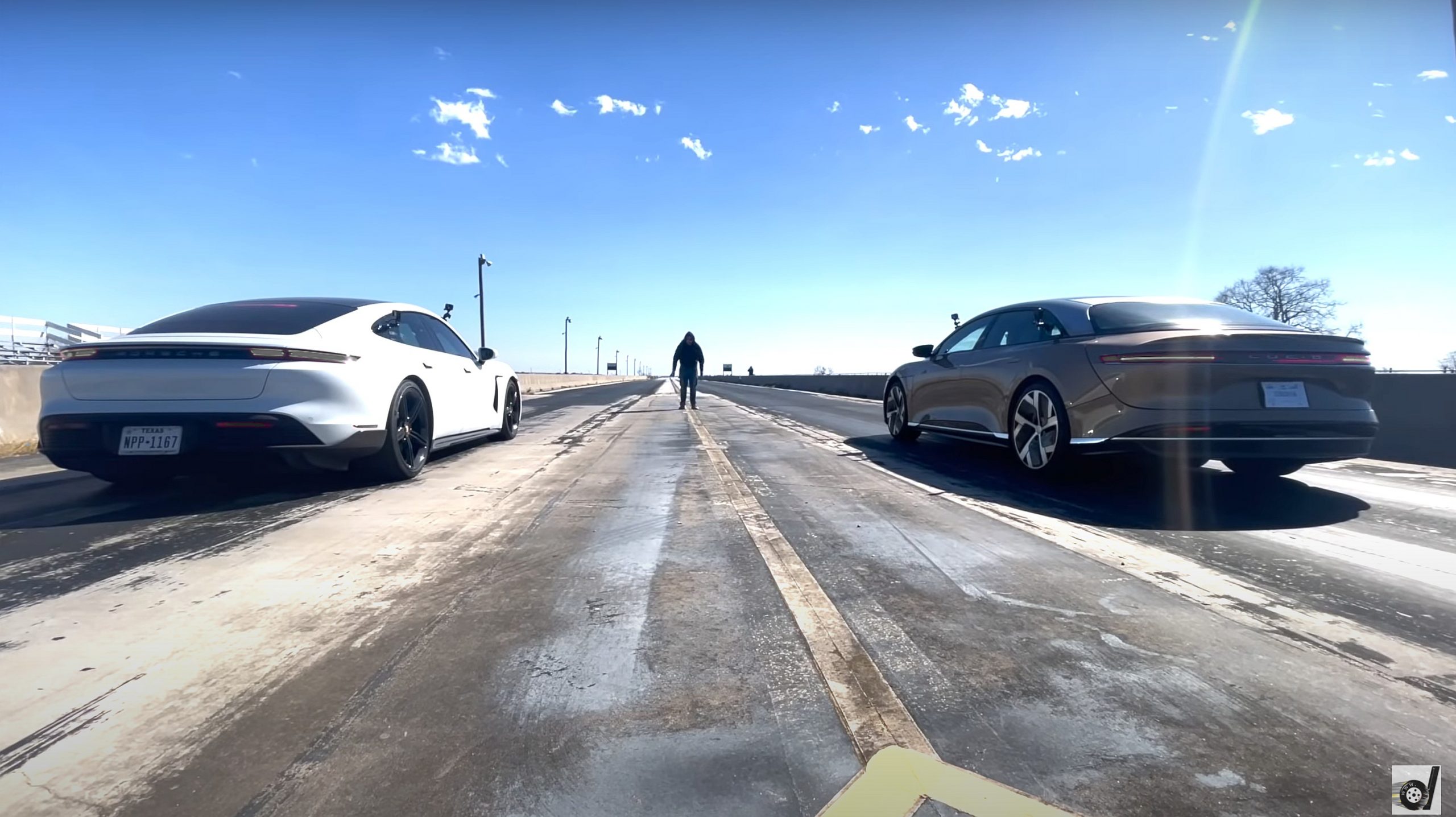
Drag strips simplify the world. The road becomes a timeline. Launch, hold, accelerate, repeat. In that environment, the cars’ acceleration potential can dominate the conversation.
But real roads don’t behave like timelines. They offer variable traction, traffic pacing, temperature swings, and curves that demand traction and composure simultaneously. In those conditions, the Taycan may impress with its connected feel and chassis confidence, while the Lucid Air may captivate with effortless surge and aerodynamic poise.
So here’s the final playful challenge: pick your favorite kind of “fast.” The aggressive, on-demand fast? Or the smooth, continuously accelerating fast?
Which one wins: A conclusion with room for a smile
The Taycan and Lucid Air are both performance EV sedans with legitimate swagger. The Taycan often wins the argument when you value driver engagement, crisp response, and performance confidence that feels engineered from the inside out. The Lucid Air often wins when you prioritize smooth power delivery, sleek aerodynamic momentum, and an acceleration experience that feels elegantly inevitable.
In practice, the “best” choice may come down to your temperament. Are you chasing the sharp thrill of an immediate shove and the precision of a Porsche chassis? Or are you drawn to the calm theater of an Air-like surge, where speed arrives with minimal drama and maximum control?
Pick the one that matches your personal definition of exhilaration—and then challenge it on the kind of road that actually tells the truth.
Because in the end, the fastest EV sedan is the one that makes you want to press the pedal again.