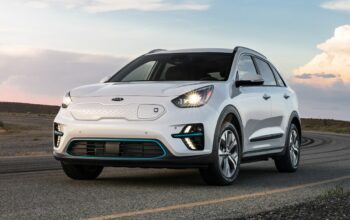
In an era where every mile behind the wheel carries weighty implications, the 2026 Hyundai SUV lineup emerges not just as a promise of forward motion—but as a bold declaration of protection. These aren’t merely vehicles; they are sentinels of steel and silicon, engineered to redefine what it means to travel with unshakable confidence. With the Insurance Institute for Highway Safety (IIHS) bestowing its most coveted accolade—Top Safety Pick+—upon multiple models, Hyundai isn’t just meeting benchmarks; it’s obliterating them. This isn’t just evolution. It’s a revolution in automotive safety, cloaked in the sleek silhouette of modern SUVs.
The road ahead has never felt so secure. Welcome to a new paradigm where every curve, every intersection, and every unexpected moment is met not with trepidation, but with the quiet certainty that you are shielded by the most advanced safety architecture in the industry. The 2026 Hyundai SUVs don’t just promise safety—they deliver it with such precision and foresight that they compel us to reconsider what we thought possible behind the wheel.
The Architecture of Assurance: Redefining Structural Integrity
At the heart of every Hyundai SUV lies a skeletal framework forged not from mere steel, but from a lattice of ultra-high-strength boron alloys and advanced hot-stamping techniques. This isn’t just a chassis—it’s a fortress on wheels, designed to absorb and dissipate energy in ways that defy conventional physics. The 2026 models boast a multi-load path structure that distributes impact forces across a network of crumple zones, ensuring that the cabin remains an uncompromised sanctuary even in collisions that would cripple lesser vehicles.

But Hyundai’s innovation doesn’t stop at brute strength. The company has pioneered a new generation of energy-absorbing materials, including a proprietary polymer foam that lines the B-pillars and rocker panels. This foam, lighter than aluminum yet more resilient than conventional plastics, acts as a kinetic sponge, slowing deformation and preserving structural integrity. The result? A survival cell that doesn’t just survive impacts—it thrives through them.
Imagine, if you will, a T-bone collision at 40 mph. In most SUVs, the force would funnel directly into the cabin, buckling the A-pillars and compromising the roof. In a 2026 Hyundai, that same energy is channeled through a series of strategically placed crush cones and shear panels, redirecting the blast outward and upward. The cabin remains intact. The doors stay open. The passengers walk away.

Sensory Vigilance: The Rise of the AI Guardian
Safety, in the 21st century, is no longer a passive endeavor. It is an active, almost sentient experience. Hyundai’s 2026 SUVs are equipped with an AI-driven safety suite that doesn’t just react to danger—it anticipates it. At the core of this system is a neural network trained on millions of real-world driving scenarios, capable of predicting hazards with a margin of error smaller than a human blink.
The system, dubbed *SentinelEye*, employs a fusion of lidar, radar, and high-definition cameras to construct a 360-degree volumetric map of the vehicle’s surroundings. But here’s where it diverges from conventional ADAS: SentinelEye doesn’t just flag threats—it simulates them. Using predictive algorithms, it models the trajectory of pedestrians, cyclists, and other vehicles, calculating not just their current path, but their likely future movements. If a child darts into the road or a cyclist swerves unpredictably, the system doesn’t wait for confirmation—it acts.
This isn’t just advanced driver assistance. It’s a co-pilot with the reflexes of a cat and the foresight of a chess grandmaster. And when paired with Hyundai’s *Safe Exit Assist*, which uses rear-facing sensors to detect approaching vehicles before you open the door, the SUV becomes a mobile fortress that protects you even when you’re not inside.
The Silent Sentinels: Advanced Driver Assistance Systems
Beyond the AI’s predictive prowess, the 2026 Hyundai SUVs deploy a suite of advanced driver assistance systems (ADAS) that operate in seamless harmony. The *Highway Driving Assist 3.0* system, for instance, doesn’t just maintain lane centering—it dynamically adjusts the vehicle’s trajectory based on real-time traffic patterns, road curvature, and even the behavior of surrounding drivers. It’s as if the SUV itself has learned to drive like a seasoned race car instructor.
Then there’s the *Emergency Steering Assist*, which doesn’t just apply brakes in a panic stop—it gently but firmly nudges the wheel in the direction of least resistance, guiding the vehicle away from danger while maintaining control. And the *Blind-Spot Collision-Avoidance Assist*, which doesn’t just warn you of a car in your blind spot—it applies selective braking to one wheel to initiate a micro-rotation, nudging the SUV into a safer lane position without your input.
These systems aren’t just features. They are the digital guardians of your journey, working in the background to ensure that every mile is a mile of unbroken safety.
Beyond the Crash: A Holistic Approach to Well-Being
Hyundai’s commitment to safety extends beyond the physical and digital realms—it permeates the very air you breathe inside the cabin. The 2026 SUVs feature an *Air Purification Cascade* system that doesn’t just filter pollutants but actively neutralizes viruses, bacteria, and volatile organic compounds. Using a combination of HEPA filtration, UV-C sterilization, and photocatalytic oxidation, the system ensures that the air you inhale is as pristine as the air in a hospital operating room.
But perhaps the most revolutionary aspect of Hyundai’s safety philosophy is its focus on *post-collision care*. In the event of an accident, the SUV’s telematics system doesn’t just alert emergency services—it transmits critical data, including the vehicle’s exact location, the severity of the impact, and even the number of passengers inside. This information is relayed to first responders before they even arrive on scene, shaving precious minutes off response times and potentially saving lives.
The cabin itself is designed to minimize injury during a crash. The seats are equipped with *adaptive headrests* that adjust in real-time to support the neck and spine, reducing whiplash. The dashboard and door panels are padded with energy-absorbing foam, and the rear seats feature *integrated child seat anchors* that eliminate the need for bulky bases, reducing installation errors.
The Road Ahead: A New Standard for Safety
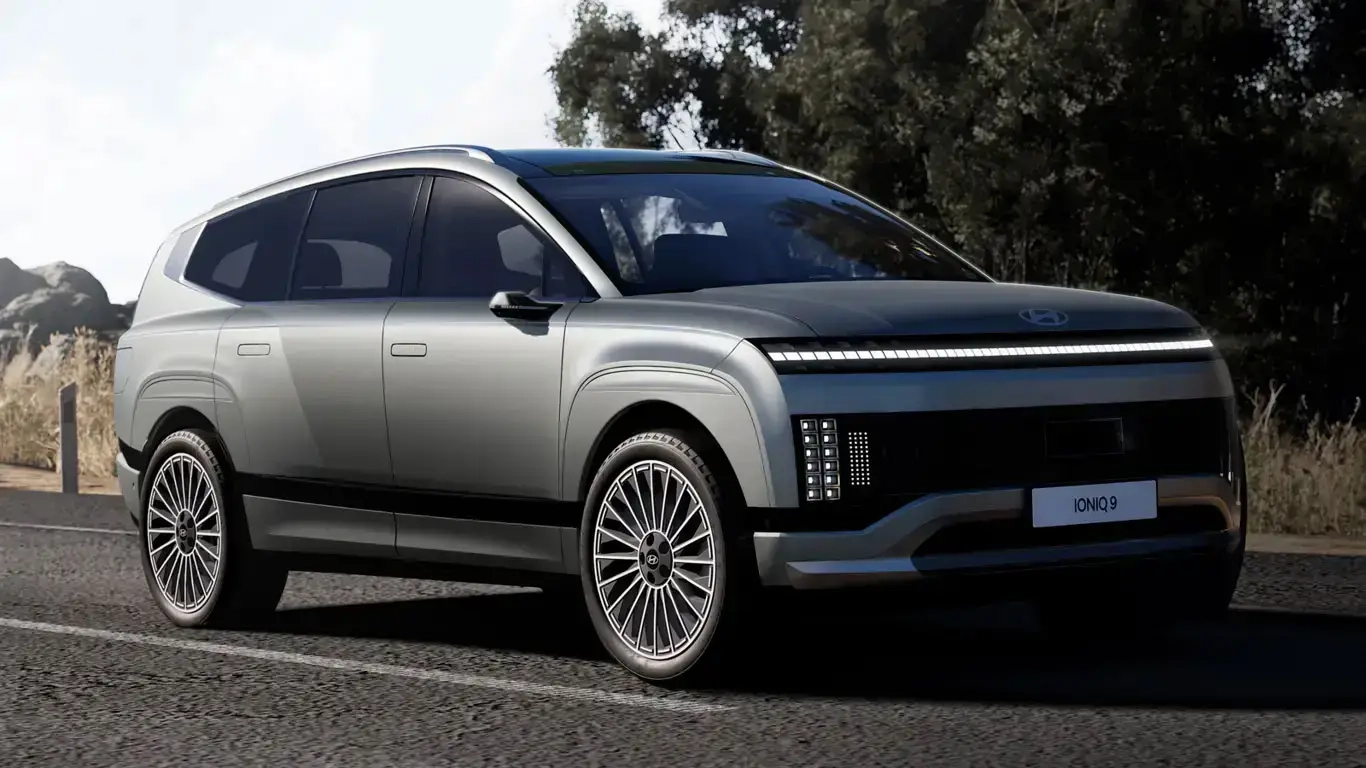
The 2026 Hyundai SUVs aren’t just vehicles—they are a manifesto. A declaration that safety is not a luxury, nor an afterthought, but the foundation upon which modern mobility is built. With IIHS Top Safety Pick+ designations, these SUVs have set a new benchmark, one that forces the entire industry to elevate its game.
Yet, for all their technological marvels, these SUVs remain fundamentally human. They understand that safety isn’t just about avoiding accidents—it’s about enabling freedom. The freedom to take the long way home. The freedom to drive with your windows down and the music up. The freedom to know that, no matter what lies ahead, you are protected by the most advanced, most thoughtful, most *human* safety architecture ever conceived.
So buckle up. The future of driving isn’t just about getting there faster. It’s about getting there safer. And with the 2026 Hyundai SUVs, you’re not just along for the ride—you’re in the driver’s seat of a revolution.