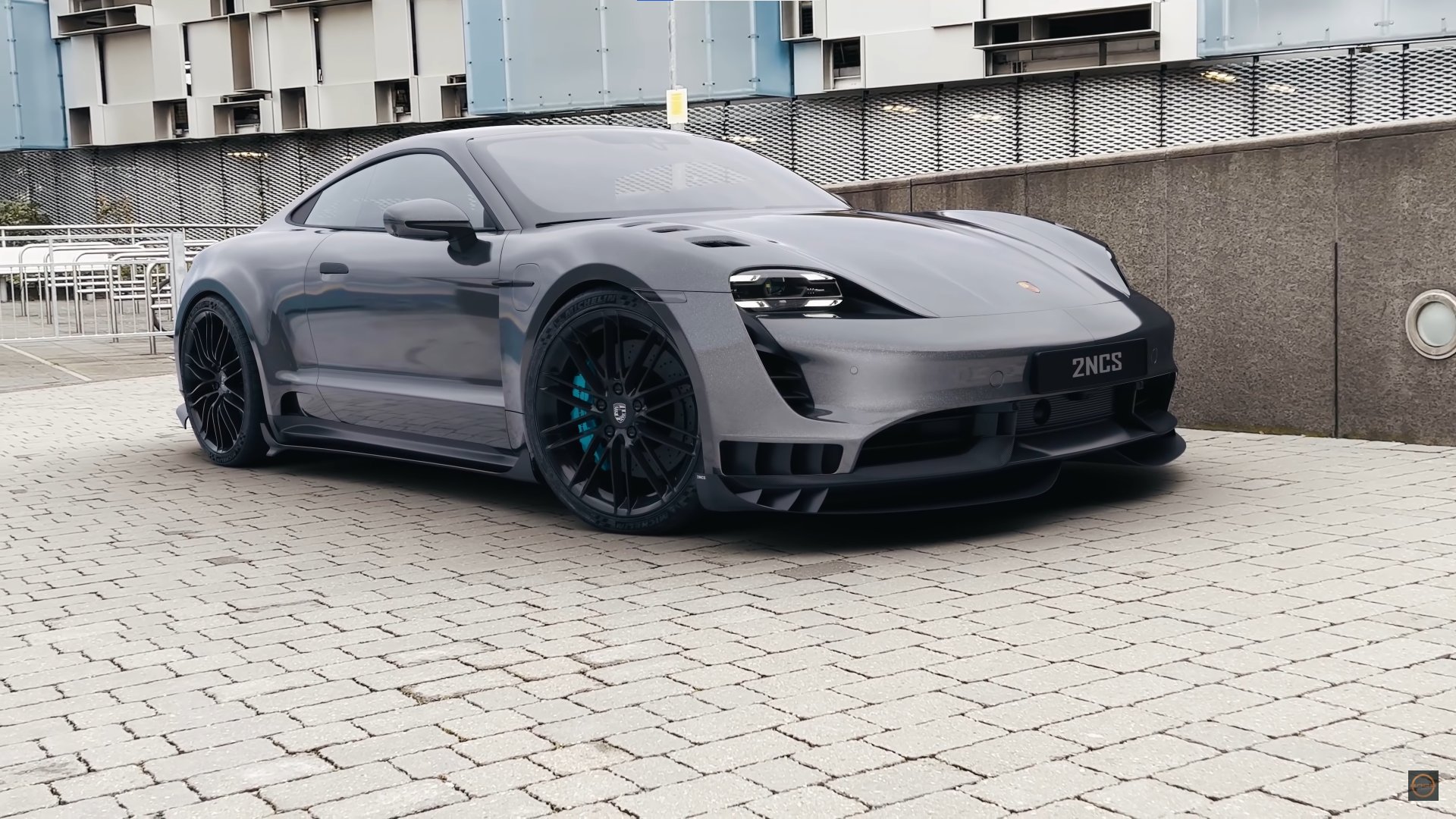
What if Porsche had taken a bold leap and unveiled a Taycan that wasn’t just a four-door saloon, but a sleek, two-door coupe? The idea alone sends shivers down the spine of enthusiasts who crave not just performance, but drama. The Taycan has already redefined electric mobility with its razor-sharp styling and blistering acceleration, but what if it had shed its practical silhouette for something more visceral? The coupe variant whispers promises of a grand tourer reborn, blending the raw elegance of the 911 with the cutting-edge tech of the Taycan. Could such a machine have turned heads even more fiercely? Let’s explore the allure of a Taycan coupe and why its absence feels like a missed overture in Porsche’s symphony of design.
The Allure of the Coupe: A Symphony of Lines and Shadows
The Taycan coupe would have been a masterclass in automotive artistry, where every contour tells a story of speed and sophistication. Unlike its four-door sibling, the coupe’s roofline would cascade into a dramatic fastback, slicing through the air with the precision of a scalpel. The absence of rear doors would allow for a more sculpted greenhouse, with elongated C-pillars that frame the cabin like the wings of a bird in flight. This isn’t just a car; it’s a statement—a rolling manifesto of Porsche’s commitment to form following function, where every line serves a purpose beyond aesthetics.
Imagine the Taycan coupe parked under the neon glow of a European city at dusk, its silhouette a silhouette of liquid metal. The headlights, sharp as daggers, would pierce the twilight, while the LED strips trace a path along the fenders like constellations in motion. The coupe’s lower stance would amplify its presence, making it a predator on the road, ready to pounce at a moment’s notice. This is the kind of car that doesn’t just occupy space—it commands it, turning heads and sparking conversations wherever it goes.
Performance Meets Poetry: The Engineered Elegance of a Taycan Coupe
But beauty alone doesn’t win races. The Taycan coupe would have been a technological tour de force, marrying the raw power of its four-door counterpart with a chassis honed for agility. Stripped of the weight and complexity of rear doors, the coupe’s structure could have been optimized for a lower center of gravity, enhancing cornering prowess and road feel. The dual-motor all-wheel-drive system would still roar to life, propelling the car from 0-60 mph in a blur, but the experience would feel more intimate, more connected—like piloting a machine rather than commanding a vessel.
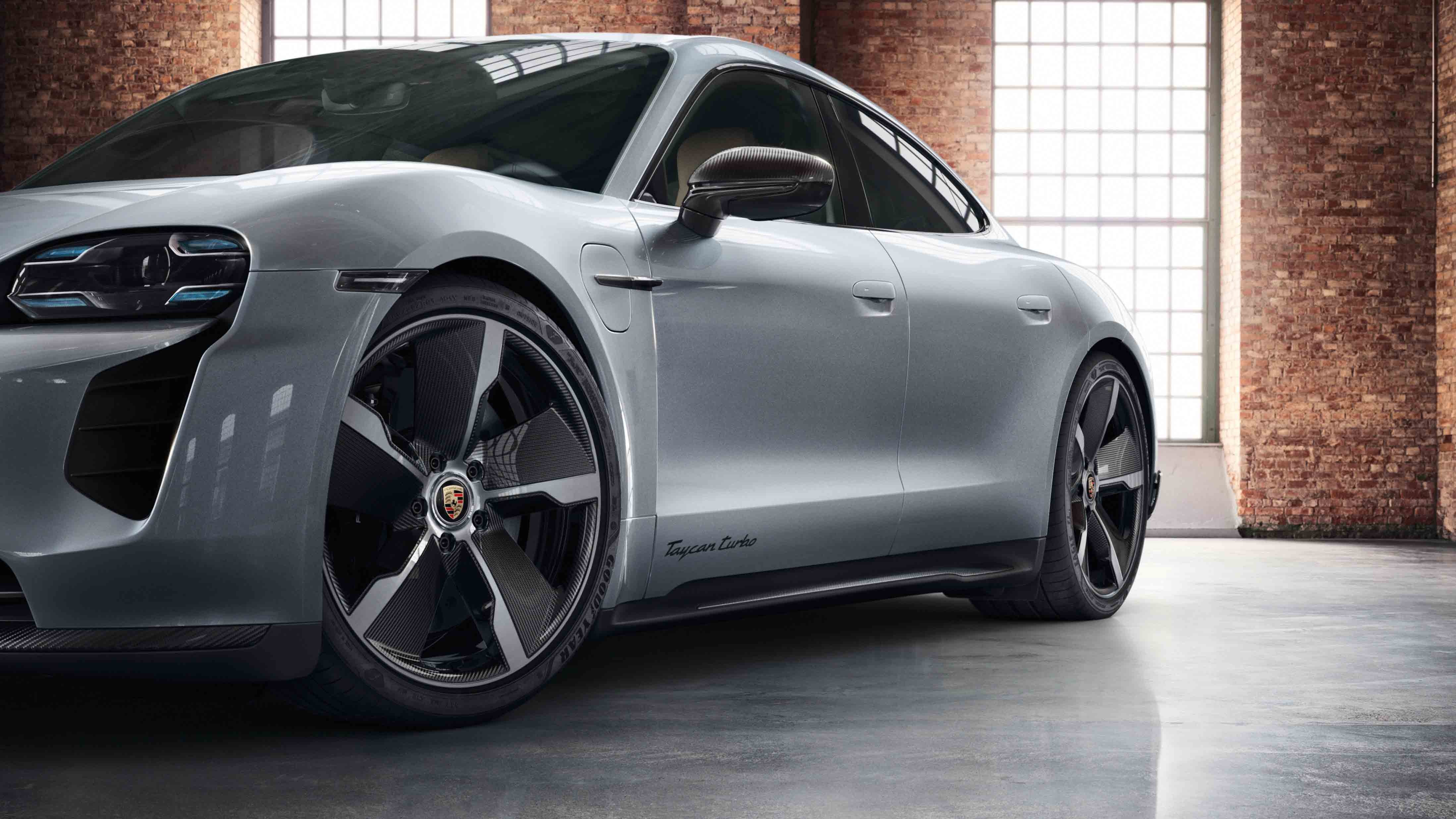
The battery pack, nestled low and central, would distribute weight like a ballerina on pointe, ensuring the coupe feels planted even at triple-digit speeds. The absence of rear seats would free up space for additional battery capacity or even a more advanced cooling system, pushing the boundaries of what an electric sports sedan could achieve. And let’s not forget the sound—while electric motors are often criticized for their silence, the Taycan coupe would have been a symphony of synthetic growls and whines, a digital overture that announces its arrival with the authority of a supercar.
The Practicality Paradox: Can a Coupe Truly Replace a Four-Door?
Of course, the coupe’s Achilles’ heel is its practicality—or lack thereof. Porsche’s decision to focus on the four-door Taycan was a pragmatic one, catering to families and daily drivers who prioritize space over spectacle. A coupe, by its very nature, is a compromise. The rear seats, if they exist at all, would be cramped, more suited for children or occasional passengers than adults. The trunk, while still functional, would be smaller, forcing owners to prioritize luggage space over weekend getaways. And let’s not ignore the practicalities of daily life: climbing into the back of a coupe is a contortionist’s feat, while the four-door Taycan offers the ease of a sedan.
Yet, for those who see cars as more than just appliances, the coupe’s limitations are its greatest strength. It’s a machine designed for the purist, the enthusiast who values driving dynamics over utility. The Taycan coupe would have been a halo car—a halo that Porsche chose not to cast. But what if it had? Would it have cannibalized sales from the 911, or would it have carved out a niche for itself, a blend of electric innovation and timeless coupe elegance? The answer lies in the hypothetical, but the question lingers like an unopened bottle of champagne.
The Design Dilemma: Would the Coupe Have Been a Step Too Far?
Porsche’s design language is a delicate balance between tradition and innovation. The Taycan four-door already pushes boundaries with its sharp, angular aesthetic, but the coupe would have taken that ethos to its extreme. The fastback roofline, while undeniably striking, could have alienated purists who prefer the classic proportions of a sedan. The absence of rear doors would have forced Porsche to rethink the cabin’s ergonomics, potentially sacrificing comfort for style. And what about the rear? A coupe’s trunk is often an afterthought, a small, awkward space that’s more of a hindrance than a help.
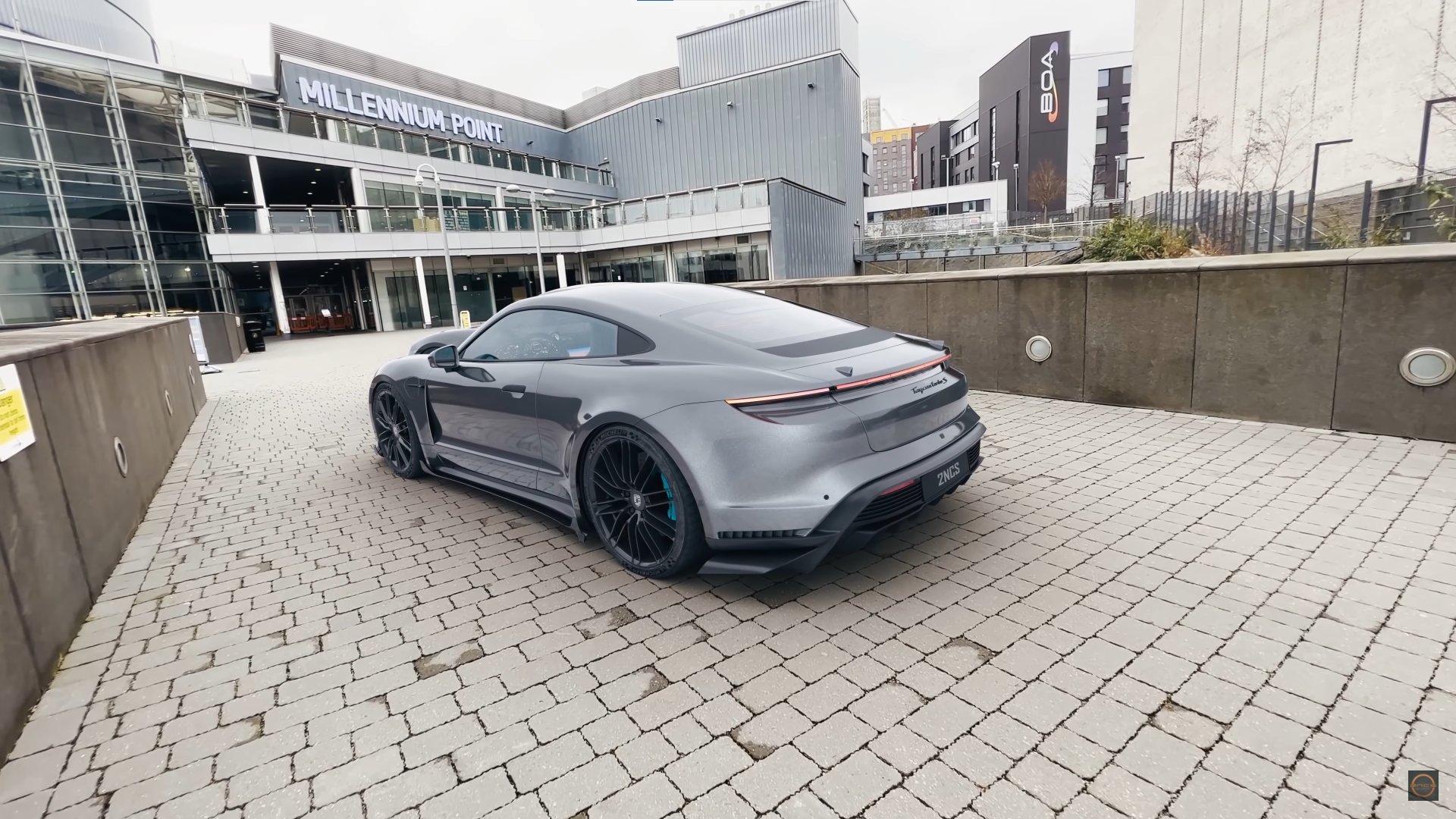
Yet, for all its potential flaws, the coupe’s design would have been a masterstroke of minimalism. Every surface would have served a purpose, from the sculpted haunches to the integrated rear spoiler. The Taycan coupe wouldn’t just be a car; it would be a rolling sculpture, a testament to Porsche’s ability to blend art and engineering into a single, breathtaking form. The question isn’t whether it would have been practical—it’s whether it would have been worth the sacrifice.
The Cultural Impact: A Coupe for the Electric Age
In an era where electric vehicles are often criticized for their lack of soul, the Taycan coupe would have been a cultural reset. It would have proven that electric cars don’t have to be anonymous appliances—they can be objects of desire, machines that stir the soul and quicken the pulse. Imagine the Taycan coupe gracing the pages of Car and Driver or Top Gear, its electric powertrain a talking point, its design a conversation starter. It would have been a car that transcends its technology, becoming a symbol of a new era in automotive design.
The coupe’s absence from Porsche’s lineup is a reminder of the compromises automakers must make in the pursuit of mass appeal. But it’s also a tantalizing glimpse into what could have been—a world where the Taycan isn’t just a four-door sedan, but a two-door legend. Would it have been a commercial success? Probably not. But would it have been a masterpiece? Absolutely. In a market dominated by SUVs and crossovers, the Taycan coupe would have been a breath of fresh air, a car that dared to be different in a world of conformity.
So, as we marvel at the Taycan’s four-door prowess, let’s not forget to dream. What if Porsche had taken the road less traveled? What if the Taycan coupe had roared to life, a silent yet thunderous ode to the electric age? The answer may never be known, but the question itself is a testament to the power of automotive imagination—a power that, for a moment, made us believe in the impossible.