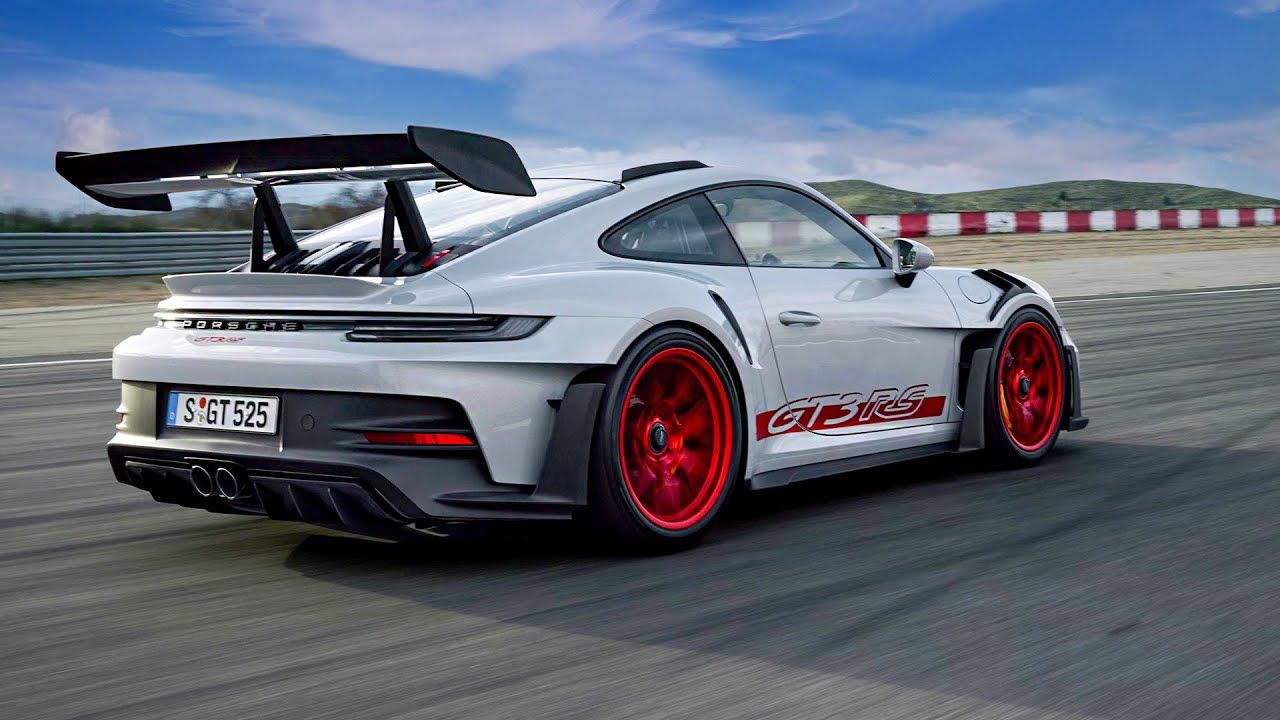
The Porsche 911 GT3 RS isn’t just another sports car—it’s a symphony of engineering precision, raw emotion, and unbridled track dominance. Born from the crucible of motorsport, this winged titan distills decades of Porsche’s racing pedigree into a road-legal masterpiece that commands attention with every glance. Its razor-sharp aerodynamics, thunderous flat-six symphony, and race-bred chassis don’t just push boundaries; they obliterate them. Whether carving through mountain passes or dominating the apex of the Nürburgring, the GT3 RS is a rolling testament to what happens when artistry meets athleticism. Buckle up, because we’re about to dissect the elements that make this machine a legend in the making.
The Aerodynamic Arsenal: Where Air Becomes an Ally
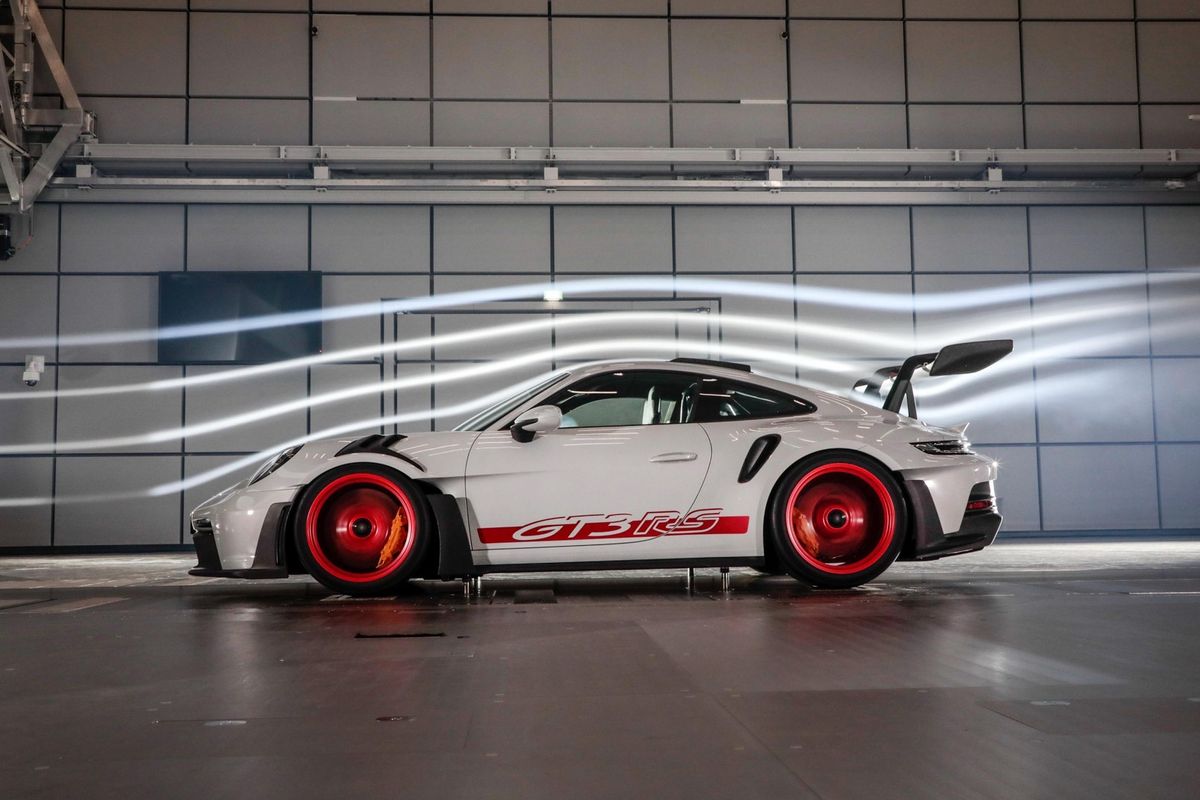
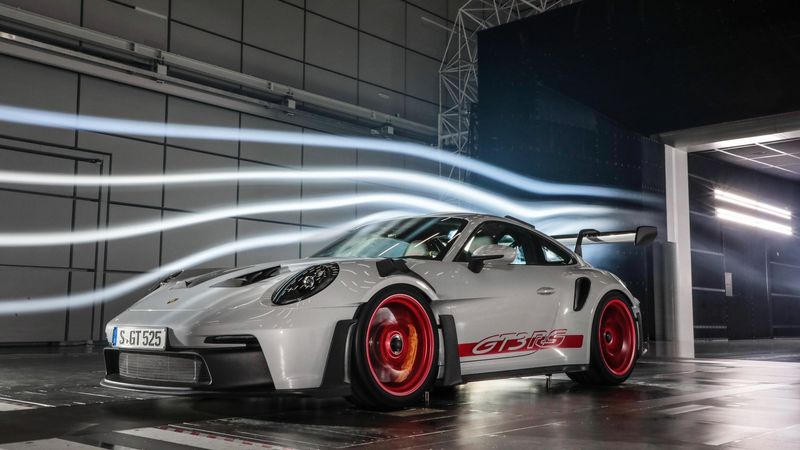
At first glance, the GT3 RS’s bodywork looks like it was sculpted by a hurricane. Every crease, vent, and wing is a calculated weapon in the war against lift and drag. The massive rear wing—adjustable in three positions—isn’t just for show; it’s a dynamic force multiplier, generating up to 860 kg of downforce at 200 km/h. That’s enough to glue the car to the tarmac, allowing cornering speeds that would make lesser machines weep. The front diffuser and underbody aero work in tandem, channeling airflow with surgical precision to create a ground-effect vacuum that clings to the road like a second skin.
But the GT3 RS’s aero isn’t just about brute force. The front splitter’s active cooling ducts and the intricate louvres along the flanks are a masterclass in thermal management, ensuring the brakes and engine stay frosty even under the most brutal track conditions. The result? A car that feels planted, responsive, and alive—where every input from the driver is met with immediate, predictable feedback.
The Heart of the Beast: A Flat-Six Symphony
Beneath the carbon fiber skin lies the GT3 RS’s beating heart: a 4.0-liter naturally aspirated flat-six engine that revs to an ear-splitting 9,000 rpm. This isn’t just an engine; it’s a precision instrument, each cylinder humming in perfect harmony as it delivers 518 horsepower and 479 lb-ft of torque. The sound? A spine-tingling crescendo of mechanical fury, a symphony of induction roar and exhaust bellow that would make a symphony orchestra jealous.
The engine’s redline is a siren’s call, beckoning the driver to explore the upper reaches of its rev band. With each shift of the seven-speed PDK dual-clutch transmission—faster than a blink—the GT3 RS lunges forward, acceleration times that defy logic. But power alone doesn’t make a legend. The GT3 RS’s engine is a marvel of lightweight construction, featuring forged pistons, titanium connecting rods, and a dry-sump lubrication system that ensures oil delivery remains uninterrupted even during the most violent cornering. It’s a powerplant that doesn’t just push limits; it redefines them.
The Chassis: A Race-Bred Foundation
The GT3 RS’s chassis is a study in contrasts—stiff yet compliant, brutal yet refined. Built around a lightweight aluminum spaceframe and carbon fiber composite body, the structure is a fortress of rigidity, minimizing flex and maximizing feedback. The double-wishbone front suspension and multi-link rear setup are tuned to razor-sharp precision, allowing the driver to place the car with surgical accuracy. Adjustable dampers and anti-roll bars let you dial in the perfect balance between comfort and track-day ferocity.
But the real magic lies in the GT3 RS’s rear-wheel steering system. At low speeds, it turns the rear wheels in the opposite direction of the front wheels, enhancing agility and reducing the turning circle. At high speeds, it steers the rear wheels in the same direction as the front, tightening the car’s line and improving stability. It’s a trick borrowed from the world of endurance racing, and it makes the GT3 RS feel like it’s on rails, even when the road is anything but straight.
The Interior: A Cockpit for the Obsessed
Step inside the GT3 RS, and you’re greeted by a cabin that’s all business. The seats—carbon fiber bucket thrones with Alcantara upholstery—hug your body like a second skeleton, offering unparalleled support during high-G cornering. The steering wheel, wrapped in perforated leather and adorned with magnesium paddle shifters, is a tactile extension of the driver, its flat bottom begging for heel-toe downshifts. The digital instrument cluster, a 12.3-inch display, throws up a deluge of data—oil temperature, lap times, G-forces—all rendered in crisp, high-contrast clarity.
But the GT3 RS’s interior isn’t just about functionality. It’s a statement. The exposed carbon fiber weave, the magnesium trim, the titanium bolts—every surface is a testament to the car’s racing DNA. Even the infotainment system, though secondary to the driving experience, is a marvel of simplicity, with a touch-sensitive interface that responds to the lightest touch. It’s a cockpit designed for those who see driving as more than just transportation; it’s a calling.
Track Performance: The Ultimate Driver’s Tool
On the track, the GT3 RS transforms from a civilized grand tourer into a full-blown race car. The carbon-ceramic brakes—massive 390mm rotors at the front and 380mm at the rear—are fade-free even after repeated hard braking, their bite as consistent as a metronome. The steering, direct and communicative, transmits every nuance of the road surface, allowing the driver to dance on the edge of adhesion. The PDK transmission shifts in milliseconds, its lightning-fast shifts preserving momentum and keeping the engine in its power band.
But the GT3 RS’s true genius lies in its adaptability. Whether you’re tackling the sweeping esses of Laguna Seca or the relentless chicanes of the Nürburgring, the car’s balance is nothing short of supernatural. The front end dives into corners with confidence, the rear end trailing in a controlled drift as you trail-brake into the apex. The traction control and stability management systems are there to catch you if you overstep, but the GT3 RS rewards precision above all else. It’s a car that doesn’t just tolerate mistakes—it teaches you to avoid them.
The GT3 RS vs. The World: A David vs. Goliath Story
In a world where hypercars dominate the headlines with their 1,000+ horsepower and exotic materials, the GT3 RS stands apart. It doesn’t need brute force to dominate; it relies on finesse, balance, and an almost telepathic connection between man and machine. Where a McLaren Senna might bludgeon its way around a circuit with sheer downforce, the GT3 RS outsmarts it with a blend of aerodynamics, chassis dynamics, and driver engagement that’s second to none.
Even against track-focused exotics like the Audi R8 V10 Performance RWD or the Mercedes-AMG GT Black Series, the GT3 RS holds its own. Its naturally aspirated engine may lack the torque of a turbocharged rival, but its linear power delivery and stratospheric redline make it a weapon in the right hands. The GT3 RS isn’t just a car; it’s a statement—a reminder that sometimes, less really is more.
The Future of the GT3 RS: A Legacy in the Making
As Porsche continues to refine the GT3 RS formula, one thing is certain: this car’s legacy is only just beginning. With each iteration, the GT3 RS pushes the envelope further, blending cutting-edge technology with timeless driving purity. The next generation may introduce hybrid powertrains or even more advanced aerodynamics, but the soul of the car will remain unchanged. The GT3 RS is more than a machine; it’s a philosophy—a celebration of the art of driving in its purest form.
For those lucky enough to experience it, the GT3 RS isn’t just a car they’ll drive; it’s a car they’ll remember. A machine that doesn’t just move them from point A to point B, but one that makes them feel alive. In a world of increasingly sanitized transportation, the GT3 RS is a breath of fresh air—a roaring, winged testament to the joy of driving.
So, if you ever find yourself behind the wheel of one, savor the moment. Because the Porsche 911 GT3 RS isn’t just a car. It’s an experience. And experiences like this? They’re rare. They’re precious. And they’re unforgettable.