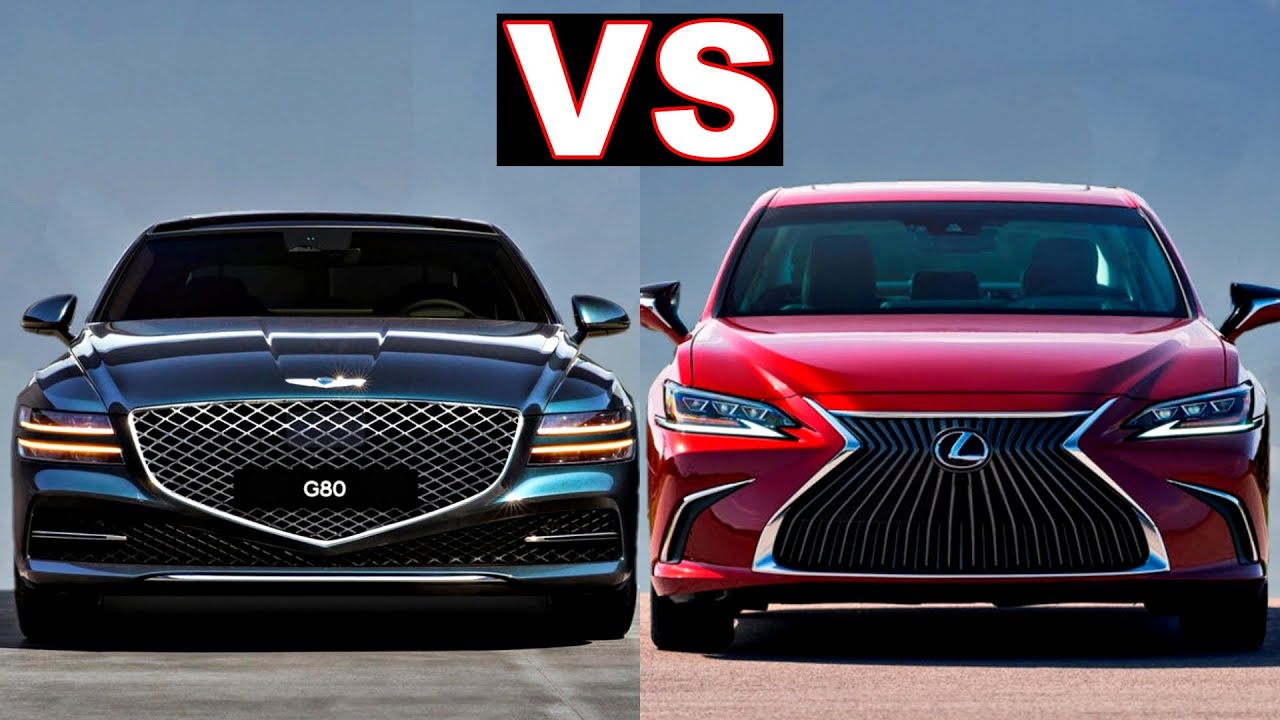
There’s a particular kind of pause that happens at the dealership or in the garage after the first few laps around the block. One car seems to “settle” into the lane; the other feels as if it’s already aware of your destination. That’s the unspoken contrast between the Lexus ES and the Genesis G80—both marketed as comfort-first sedans, yet both seducing drivers in slightly different ways. A common observation is that these two cars can feel similar at a glance: quiet cabins, plush seating, and a confident air of refinement. But the deeper fascination lies in what each brand chooses to prioritize beneath the surface, and how that philosophy shows up when the road gets rough, the traffic thickens, or the journey stretches farther than expected.
Let’s walk through the comfort luxury comparison with a narrative lens: not just what each car offers, but why it feels the way it does. Because comfort isn’t only padding and insulation. It’s also geometry, calibration, materials, and the subtle art of making you forget you’re inside a machine.
First Impressions: The Cabin Mood as a Luxury Signature
Step into either cabin and the first emotion is often similar—calm. Yet the mood develops differently. The Lexus ES tends to project serenity like a well-tuned sanctuary. The interfaces feel intentionally restrained. Nothing screams for attention; everything is arranged to reduce friction between you and the drive. The result is an oasis-like ambience, where even transitions—turning the wheel, adjusting climate controls—feel quietly resolved.

The Genesis G80, in contrast, leans toward a more cinematic luxury. The space feels composed, even when you’re not thinking about it. Surfaces tend to look richer, and design language carries a confident flourish. Comfort here is not just about softness. It’s about presence—about making the cabin feel like a private lounge with an executive’s sense of timing.
Both are comforting. But one smooths your day like polished glass, while the other wraps it in a slightly more theatrical embrace.
Ride Comfort: How They Isolate You From Imperfection
Comfort luxury lives or dies on ride quality. On well-paved roads, both sedans can feel composed. But the real comparison arrives when the asphalt turns imperfect—broken seams, shallow potholes, or the sporadic rattle of suburban roadwork.
The Lexus ES typically prioritizes a soothing, rolling sensation. Its suspension calibration often aims to “dampen” disturbance rather than merely absorb it. Small bumps are filtered so thoroughly that you may only register them as a change in cadence, not impact. Long-distance travelers frequently notice this most: hours can pass with less fatigue because the chassis communicates fewer harsh details.
The Genesis G80, meanwhile, often feels more dynamically balanced. It can deliver comfort with a controlled stance, keeping body motion tidy. The fascination is that the G80 may feel luxurious and alert at the same time—less like being cushioned into stillness, more like being supported while staying engaged with the road’s rhythm.
So the common observation that “both are comfortable” is correct, but incomplete. The Lexus comfort leans toward tranquil detachment; the Genesis comfort leans toward controlled serenity.
Seat Design and Ergonomics: The Difference Between Plush and Supportive
Comfort is often interpreted as softness, yet long drives punish overly compliant cushioning. What matters is how well the seats support posture while still delivering an inviting surface feel.
In the Lexus ES, seat comfort generally feels tailored for effortless endurance. Many occupants describe it as “sink-in without slouch.” The cushions tend to distribute pressure evenly, and the seating position often encourages a relaxed driving posture. The cabin’s overall quietness amplifies this effect. When the car doesn’t constantly announce road texture, your body stops bracing.
The Genesis G80 brings a different kind of plushness—more enveloping, sometimes with a pronounced sense of lateral containment. For drivers who like a more held-in feel, the Genesis can feel like a luxury glove that fits. Ergonomics often feel deliberate rather than merely comfortable: controls are typically positioned to reduce reach, and the overall seating geometry supports a consistent posture.
In short, both offer comfort luxury. The Lexus leans toward effortless calm; the Genesis leans toward indulgent structure.
Noise, Vibration, and Harshness: The Quiet War
Most people don’t consciously measure NVH, yet they experience it like weather. Some cabins feel like a blanket; others feel like a room with thick walls. The Lexus ES often wins hearts with a refined quietness that feels almost effortless. Road and wind intrusions tend to remain subdued, letting conversation, music, and thought occupy the foreground.
The Genesis G80 also targets a quiet cabin, but the character can feel slightly more “engineered.” You may notice a structured approach to insulation and damping—still serene, but with a hint of precision. That precision can translate into a cabin that feels particularly composed at speed.
Either way, the shared advantage is what luxury should do: lower the cognitive noise. When the car rarely interrupts you, the drive becomes more about destination—less about endurance.
Materials and Finishes: Where Comfort Becomes Tangible
Comfort luxury isn’t only a sensation; it’s also a texture, a visual comfort, and a sense of craftsmanship. The Lexus ES often uses materials and stitching to create a restrained, premium impression. Surfaces feel consistently refined, and the overall layout discourages visual clutter. It’s the kind of interior that looks better the longer you spend in it.
The Genesis G80 frequently aims for a more opulent atmosphere. Trims can feel richer, and the interior presentation often carries a “grand hotel” energy—substantial, well-finished, and designed to impress without needing to shout. This is where many owners discover their fascination: the Genesis doesn’t simply provide comfort; it provides the feeling of arriving somewhere.
The deeper reason buyers gravitate toward one or the other often isn’t about cost. It’s about how the cabin’s aesthetic language aligns with personal taste—minimalism versus warmth, subtlety versus glamour.
Technology and Usability: The Comfort of Not Struggling
Luxury comfort includes software comfort—the absence of frustration. When menus are confusing or responses are sluggish, even a soft ride can’t rescue your patience.
The Lexus ES typically emphasizes clarity and intuitive operation. Controls and infotainment design often feel designed for quick comprehension, with fewer mental detours. The car aims to behave like a helpful companion: calm, predictable, and ready when you need it.
The Genesis G80 commonly offers a more expressive, feature-forward experience. The cabin technology can feel richer and more configurable, with a sense that the car is offering you options. That can be delightful for drivers who like to personalize the environment. Yet the appeal isn’t only the features; it’s the sense of control and immersion.
Comfort technology is often measured by one thing: how quickly you forget about it. When both sedans achieve that, drivers experience true luxury—because the car becomes background.
Climate Comfort: Warmth, Chill, and the Art of Steady Air
Few luxuries matter as much as thermal steadiness. A cabin that swings between too-hot and too-cold forces you to manage comfort rather than enjoy it.
The Lexus ES tends to foster a stable climate experience—soft airflow, consistent temperature control, and a premium feeling that the cabin is always “right.” The quiet ride complements this, making the climate system feel like it belongs rather than intrudes.
The Genesis G80 often delivers a similarly refined climate atmosphere, but with a slightly more pronounced sense of responsiveness. The system can feel eager to restore comfort, which is especially noticeable when you step in from harsh weather.
In both cases, the fascination lies in how effortless the environment becomes. When cabin air behaves, the mind stops thinking about the weather and starts enjoying the drive.
Practical Comfort: Space, Visibility, and Daily Ease
Luxury is often romanticized, but comfort shows up in the daily details. Rear-seat comfort, trunk usability, steering visibility, and the ease of ingress and egress all shape the ownership feeling.
The Lexus ES generally provides a naturally comfortable everyday layout. Visibility often feels balanced, and the driving position tends to support relaxed control. For passengers, the rear seat can be a calm zone—less tiring on commutes and more supportive on longer trips.
The Genesis G80 tends to impress with its sense of space and design coherence. Rear-seat comfort often feels generous, and the car frequently gives occupants a feeling of being in a well-appointed venue rather than simply transported. The way surfaces, headroom, and shoulder room combine can create an unexpectedly premium sensation for rear passengers.
It’s not only about legroom numbers. It’s about whether people feel uncompressed—whether the cabin invites conversation instead of negotiation.

Who Each Car Comforts Best: Matching Philosophy to Lifestyle
Here’s where the common observation becomes personal. Choosing between the Lexus ES and the Genesis G80 is less about finding which one is “better,” and more about identifying which comfort philosophy fits your life.
If your ideal drive is quiet, predictable, and restorative—if you value calm more than drama—the Lexus ES will often feel like an instinctive companion. It comforts by minimizing interruption.
If you prefer comfort with a sense of prestige, richness, and presence—if you like a cabin that feels like a destination—the Genesis G80 often delivers that thrill of indulgence. It comforts by immersing you.
Both sedans offer a kind of luxury that doesn’t require you to perform. Yet the fascination comes from their different routes to the same destination: one via serene refinement, the other via composed opulence.
Final Thoughts: The Real Luxury Is How You Feel After the Drive
When the engine is off and you’ve walked away, the true question is simple: do you feel energized, or merely finished? The Lexus ES often leaves drivers feeling mentally soothed, with fatigue reduced by quietness and gentle compliance. The Genesis G80 often leaves occupants feeling elevated—comfort that feels styled, supported, and intentionally crafted.
Comfort luxury isn’t a single feature. It’s a series of decisions made by engineers and designers—decisions you experience as ease. And that’s why the ES versus G80 comparison keeps pulling people in. You’re not just choosing a sedan. You’re choosing a personal definition of calm.

Whether you’re commuting through stop-and-go traffic or planning a weekend escape, both cars promise comfort. The deciding factor is which kind of luxury feels more like you: Lexus serenity, or Genesis opulence.