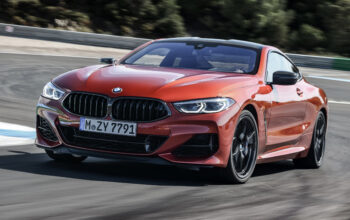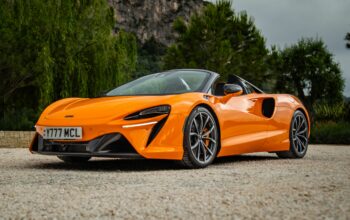
The first time you hear the phrase “mid-engine versus rear-engine,” it doesn’t just sound like a technical distinction—it sounds like a worldview. And when the debate lands on the Porsche 911 Carrera and the Chevrolet Corvette, it becomes a story with two familiar characters and one unfamiliar twist. On one side, the Porsche arrives with the unmistakable silhouette of a rear-engined icon, wearing tradition like tailored fabric. On the other, the Corvette approaches with a posture that feels engineered for immediacy: a mid-engine layout that pulls the whole drama closer to the driver’s perspective.
Yet people often summarize the rivalry too quickly. They say, “One is mid-engine, one is rear-engine. Case closed.” That common observation is understandable—and also incomplete. Because what you’re really comparing isn’t merely where the engine sits. You’re comparing how weight migrates, how traction is allocated, how feedback is transmitted, and why both cars manage to seduce their owners in different, strangely poetic ways.
Let’s walk the long road through the mechanics and the emotion, from corner-entry to corner-exit, from track session to streetlight reverie. The fascination isn’t accidental. It’s engineered, and it’s cultural, and it’s partly psychological. Hold onto that thought; it will matter more than you expect.
Two layouts, one obsession: what “engine position” really changes
At the simplest level, engine placement alters polarizing sensations. A mid-engine car tends to feel like it “rotates on command,” because the mass sits closer to the center of gravity. This can sharpen turn-in and make balance feel less like a negotiation. A rear-engine car, meanwhile, typically emphasizes traction at the back, which can be exhilarating—especially under throttle where rear grip becomes a kind of promise.
But here’s the deeper reason people keep returning to this comparison: layouts don’t just affect performance; they influence personality. The mid-engine configuration often encourages a cockpit-close confidence. The rear-engine configuration often invites a more theatrical relationship with the rear axle—one that rewards precision and punishes carelessness with theatrical immediacy.
And because we’re human, we map those sensations into identity. We remember how the car felt at the apex, not merely the lap time it delivered. That’s where fascination begins.

Porsche 911 Carrera: the rear-engine philosophy and its signature feel
The Porsche 911 Carrera doesn’t just use a rear-engine setup—it cultivates a legacy. The flat-six hanging over the rear axle brings a distinctive gait to motion. Turn-in may not always announce itself with mid-engine sharpness, but the chassis communicates with a measured cadence. You feel the car settling, you feel the tires preparing, and then—when you ask for it—the rear begins to contribute.
This is where the common observation tends to stumble. Many assume rear-engine means “unstable” by default. That’s too simplistic. Modern Porsche engineering adds electronics, suspension refinement, and tire development that tame the traditional quirks. What remains is not chaos; it’s character. The car can feel eager to rotate once properly loaded, and it can also encourage deliberate driving inputs—because the rear’s contribution often peaks when the driver times the request.
In other words, the 911 doesn’t simply follow steering; it converses with it. That subtle dialogue can become addictive, particularly for drivers who enjoy nuance over immediacy.
Chevrolet Corvette: the mid-engine advantage and why it feels so “close” to you
The Corvette’s mid-engine layout reshapes the chassis drama. With the engine positioned nearer to the center of the car, weight distribution becomes more favorable for balancing dynamics. The result can be a sensation of symmetry: when you steer, the car feels like it responds with fewer emotional delays between input and outcome.
Mid-engine cars are often praised for their ability to manage rotation at the limit. In practical terms, that means the Corvette may feel more composed during aggressive cornering, especially when the track surface changes. Sudden bumps, patches of different grip, and late braking moments all test how well a chassis can maintain equilibrium. The mid-engine layout typically offers a strong starting point, reducing the degree to which the front or rear must compensate for engine mass.
Yet fascination here isn’t about “better” in a single scoreboard sense. It’s about how the car invites you into a more instinctive rhythm. Many drivers describe mid-engine performance as a kind of intuitive steering—like the car is an extension of your intentions rather than a separate entity with its own agenda.

Corner entry and balance: where the difference becomes unforgettable
Corner entry is where debates become personal. In a mid-engine configuration like the Corvette, weight tends to sit closer to the rotational center, which can help the front tires maintain their bite while the car transitions into cornering. The steering response can feel immediate, almost communicative. Short inputs can produce clear results, and that predictability can inspire boldness.
In the 911, corner entry often has a different flavor. The rear engine shifts some mass rearward, and that can change how quickly load transfers to the front tires under braking. The Porsche may reward drivers who approach corners with a slightly more measured cadence. Once the chassis is loaded properly, the rear can contribute with traction that feels firm and ready.
What’s fascinating is that both approaches can feel “right,” depending on your driving style and expectations. The Corvette might make you feel like you’re carving a path with surgical intent. The 911 might make you feel like you’re conducting an orchestra—subtle control, careful timing, and satisfying crescendo at corner exit.
Corner exit and traction: throttle response as a personality test
Let’s talk about corner exit—the moment when engines reveal their intentions. The rear-engine Porsche carries its mass at the back, which can improve traction under acceleration. When grip is available, the car can surge confidently, often feeling like it’s pulling itself out of the corner with momentum it already possesses.
The Corvette’s mid-engine layout changes the “load” story. Because weight distribution is often more balanced, throttle application can translate into forward motion with excellent stability. The mid-engine platform often feels especially composed when exiting at the limit, where traction management and chassis balance become essential.
Both can be fast, both can be spectacular. But they can feel different in the way a song might be different between a minor-key ballad and a bright, percussive anthem. One emphasizes rear drive drama; the other emphasizes poised traction and composure.
Handling feedback: why driver communication matters more than spec sheets
Spec sheets quantify. Feedback persuades. The 911’s rear-engine arrangement can produce a feedback loop that’s rich with information: steering feel, tire loading cues, and how the car settles under varying throttle levels. Drivers often describe this sensation as “alive,” not in a chaotic sense, but in a communicative one.
The Corvette’s mid-engine layout frequently offers feedback that feels direct and tactile. The car can respond to micro-adjustments with minimal delay, encouraging smoothness and confidence. When you nail braking-to-turn transition, the chassis often feels like it’s helping you rather than merely permitting you.
This is where deeper fascination emerges. People don’t fall in love with numbers. They fall in love with the way a machine teaches them how to be better—how to brake with intention, how to steer with clarity, how to throttle without panic.
Braking, stability systems, and real-world confidence
Modern traction control, stability management, and brake technologies blur the old stereotypes. A rear-engine car can be remarkably safe when systems intervene quickly. A mid-engine car can still demand respect when tires overheat or grip disappears.
In real-world driving, the most meaningful difference might be how the car behaves when you’re not on rails—when you’re negotiating traffic, uneven pavement, or sudden changes in weather. Mid-engine platforms often offer a reassuring stability under spirited turning, while rear-engine platforms may deliver a more playful rearward character that feels rewarding when driven with awareness.
Both cars can be confidence machines. Yet confidence isn’t only about speed—it’s about what happens when your attention wavers for half a second. The layout can influence how forgiving the car feels during those moments.

Why the rivalry never ends: culture, heritage, and the romance of engineering
The rivalry persists because each car carries a different kind of romance. The Porsche 911 represents lineage—an engineering tradition that has endured enough evolutions to become mythology. Its rear-engine identity isn’t an accident; it’s a deliberate stance against replacing character with convenience.
The Corvette, meanwhile, represents bold engineering practicality—an American declaration that performance doesn’t need to be trapped in old formulas. Its mid-engine approach signals a willingness to rethink the balance sheet of physics and prioritize agility.
And that’s why drivers get fascinated. They don’t merely choose between two layouts; they choose between two narratives. One story says, “We keep the soul and refine the science.” The other says, “We redesign the science to amplify the soul.”
Choosing your fascination: which layout matches your instincts?
If you crave a sense of immediate rotation, confident balance, and a feeling that the car is ready to respond like a well-tuned instrument, the mid-engine Corvette often aligns with that desire. If you’re drawn to rear-traction drama, legacy-forward character, and a more nuanced conversation between throttle and chassis, the Porsche 911 Carrera can feel like destiny.
There’s also a practical truth: ownership isn’t only about track days. It’s about daily drives, sound at idle, how the car looks when it’s parked, how it feels when you press the accelerator in the real world. Fascination tends to intensify when engineering meets lifestyle.
Conclusion: mid-engine vs rear-engine as a doorway to deeper enjoyment
So, is this simply mid-engine versus rear-engine? Yes, in the way a fingerprint is “just” lines. It’s accurate, but it’s not the full story. The Porsche 911 Carrera and Chevrolet Corvette are fascinating not because they contradict each other, but because they reveal how engineering can create different kinds of joy. One layout emphasizes balance near the center and prompt response. The other preserves the rear-engined allure and encourages a more deliberate, rewarding relationship with traction.
Next time someone reduces the comparison to a single label, you’ll know better. The real fascination lives in the transitions—entry to apex, braking to steering, steering to throttle. It lives in how the chassis tells the truth through feedback. And it lives in why drivers keep returning, session after session, to feel that moment when physics becomes personal.