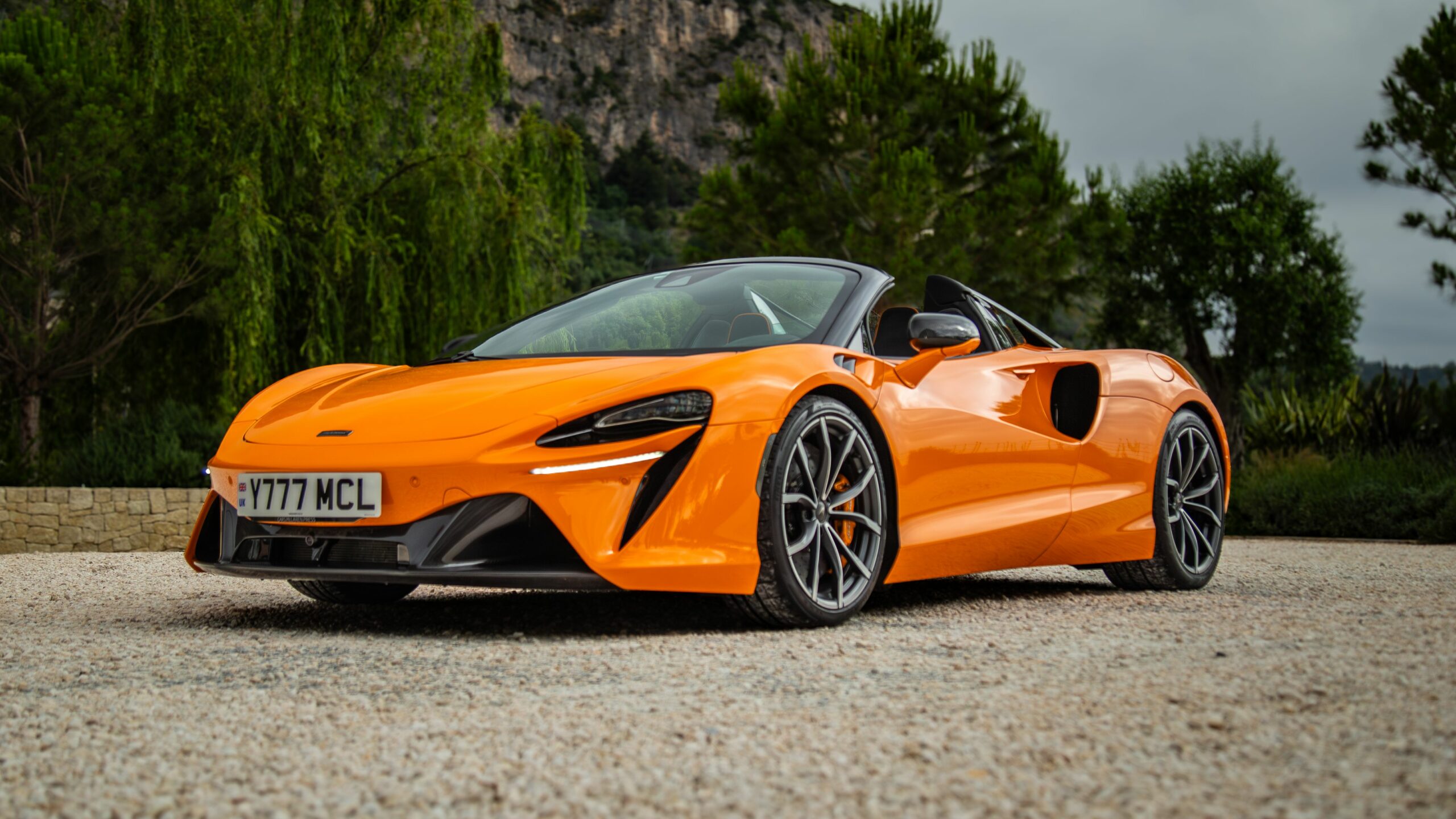
The McLaren Artura arrives like a spark trapped inside a velvet glove—subtle at first glance, then unmistakably electric once you listen closely. It’s not merely a supercar; it’s a negotiation between tradition and tomorrow. Under its sculpted skin beats a V6 hybrid heart, a compact thunderstorm engineered to deliver acceleration with the kind of theatrical immediacy that makes even seasoned drivers sit up a little straighter.
The Artura’s story is about balance: the balance between combustion’s disciplined roar and electric propulsion’s quicksilver thrust. It’s also about intent. McLaren didn’t approach hybridity as a compromise. It treated it as a new instrument, tuning the chassis, thermals, and responsiveness so the entire machine feels like one continuous thought—sharp, coherent, and alive.
A V6 Hybrid: Not a Backup Plan, but the Main Act
At the core of the Artura lies a V6 hybrid powertrain designed to feel cohesive rather than stitched together. The combustion engine provides the familiar cadence—steady torque build, then rising verve—while the electric component steps in like a stagehand who knows exactly when to pull the spotlight.
Think of it as a double-helix performance: one strand is the V6’s charismatic delivery, the other is electric assistance that smooths transitions and deepens the response. The result is propulsion that seems to anticipate your intent. Short inputs become meaningful. Wide-open moments become theatrically effortless.
What’s intriguing is the way the car’s character changes with context. In one scenario, the V6 carries the drive with motor-symphony intensity. In another, the electric system sharpens the edges—reducing lag, improving initial bite, and adding a distinctly urgent tone to the throttle’s reaction.
The Chassis Philosophy: Lightness with Purpose
Supercars often brag about speed, but the Artura also whispers about engineering elegance. Its architecture is built around the idea that lightness isn’t just a number—it’s a behavior. When weight is managed intelligently, the car becomes more agile, more communicative, and more forgiving in the way it responds to road irregularities.
The suspension and steering feel calibrated to preserve the sensation of control. The car doesn’t simply chase grip; it cultivates confidence. You sense the tire’s language—micro-corrections, subtle compliance—like reading the plot of a story through punctuation rather than exposition.
In corners, the Artura’s balance feels deliberate. The transitions are crisp. The chassis movement is restrained. It’s as if the car refuses to be dramatic for drama’s sake, choosing instead to be precise. And when the steering aligns with throttle and braking, the entire platform clicks into a kind of mechanical harmony.
Hybrid Performance Feel: The Metaphor of a Hidden Jet
There’s a special kind of thrill that comes from an electric system working with combustion rather than competing against it. In the Artura, electric propulsion behaves like a hidden jet tucked behind the seatbacks. When the moment arrives—when you ask for overtaking authority or a mid-corner burst—it’s there, instantly.
The electric motor’s contribution doesn’t just add power; it alters the rhythm of acceleration. It makes surges feel more continuous, less segmented. That fluidity matters. It turns performance into momentum, and momentum into a more natural driving flow.
Even the way power delivery scales feels thoughtful. Instead of abruptness, the car offers a sense of escalating inevitability. Like a wave building before it crests, the Artura’s thrust arrives with a sense of purpose rather than brute force.
Aerodynamics and Styling: Sculpted Intent
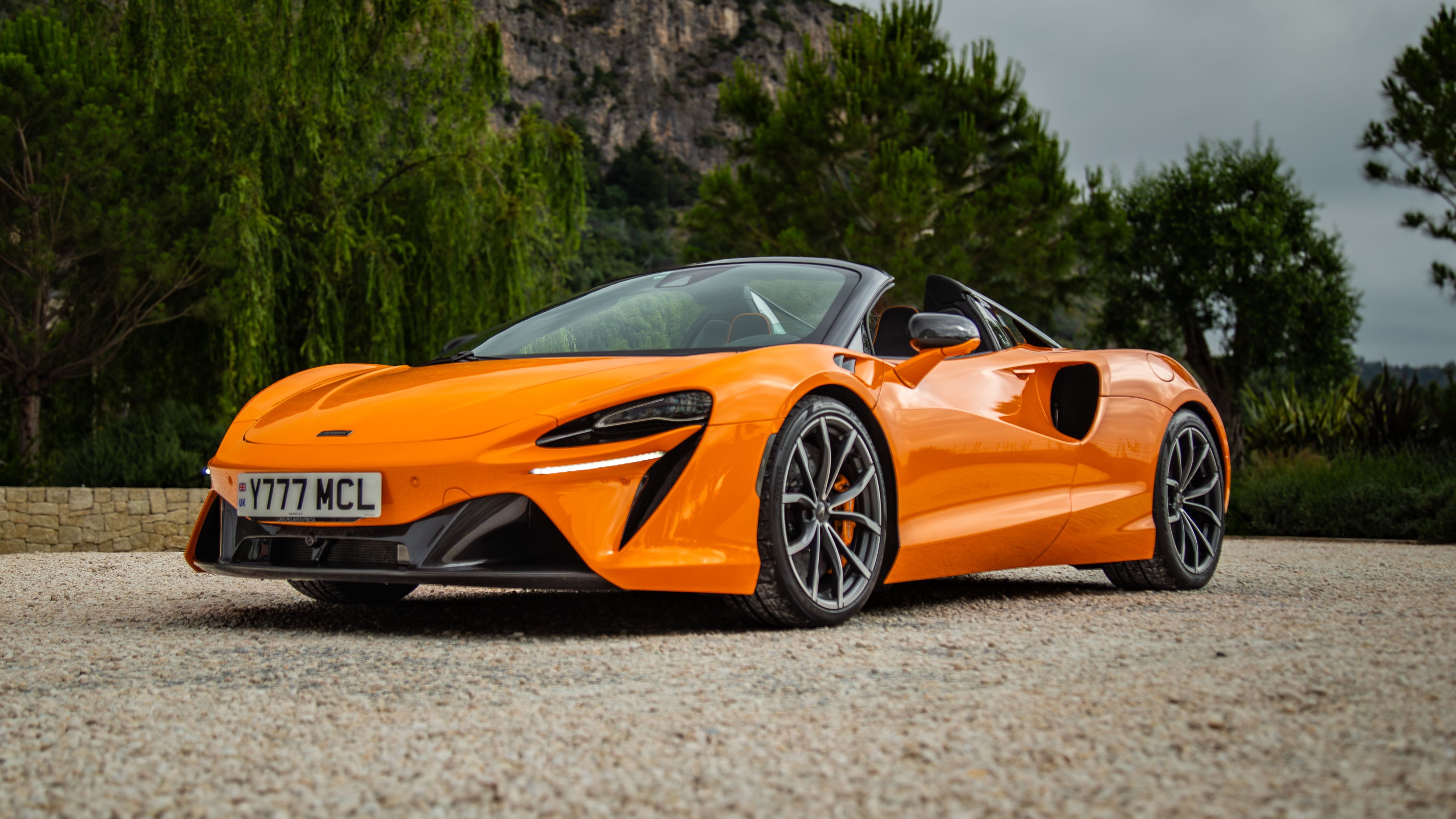
From certain angles, the Artura looks aerodynamic in the way predators look streamlined—built for motion, not display. Its bodywork channels airflow with purposeful aggression, directing pressure where it should go and reducing disruption where it shouldn’t.
The design isn’t just about downforce; it’s about visual momentum. Every crease and contour seems to imply forward motion, even when the car is standing still. You can almost hear the wind trying to cooperate with the shape.
Lighting details sharpen its presence, and the overall stance signals readiness. It’s a car that looks like it belongs on a fast road, not a showroom. The aesthetic feels functional, like a glove made to grip—beautiful, yes, but also engineered to fit the act of driving.
Driver Interface and Everyday Usability: The Human Side
Supercars can sometimes feel like they belong only to race tracks and spec sheets. The Artura nudges against that limitation. Its cockpit is designed to keep you engaged without turning every drive into a full-body extraction session.
There’s an emphasis on clarity—controls within easy reach, feedback that feels immediate, and a sense that the car is listening. Short trips become more than a chore. They become small adventures. Long drives become less exhausting because the car’s communication is steady and honest.
And because the powertrain is a hybrid, driving modes can transform the experience. You can choose a temperament: quieter response, more efficiency-minded behavior, or a more aggressive performance character. It’s like having multiple moods in one personality.
Sound, Vibration, and the Emotional Signature
Even when electrification enters the conversation, emotion doesn’t disappear. The Artura keeps its own sonic identity—part mechanical chant, part high-performance growl—shaped by how the V6 and hybrid system coordinate.
Close your eyes during acceleration and the sensation can feel like a living engine: vibrations transmitted through the body, the throttle response threading through the cabin like a pulse. Open your eyes, and you’ll see the car doing something special—motion that looks clean and urgent at the same time.
This is the emotional signature that matters. A hybrid supercar shouldn’t feel sterile. In the Artura, the sensation remains vibrant, textured, and distinct.
Technology and Thermal Management: Keeping the Fire Orderly
Performance isn’t only about delivering energy; it’s about managing it. Hybrid systems add complexity, and complexity demands discipline. The Artura’s engineering includes strategies to manage heat, protect components, and sustain output when driving gets demanding.
That matters for the driver’s confidence. You want performance that doesn’t evaporate after a few hard pulls. You want stability that holds its shape. The car’s thermal management aims to keep the hybrid system operating within its intended envelope—so the drama you start can continue.
In practice, this translates to a machine that feels consistent. The response you expect at the beginning of a drive is still there later, like a promise kept.
Why the Artura’s Appeal Feels Unique
The McLaren Artura appeals in a way that’s hard to reduce to specifications. It’s a supercar that feels like a new kind of skill. Instead of being purely about maximum numbers, it’s about intelligent orchestration—how systems collaborate to deliver a more complete driving experience.
The V6 hybrid setup offers both edge and composure. The chassis provides agility with restraint. The aerodynamics reinforce intent. And the overall feel creates a sense of immediacy that doesn’t demand constant aggression.
It’s thrilling, yes. But it’s also thoughtfully exhilarating. The Artura doesn’t just chase speed; it choreographs it. It invites you to drive with attention—to feel the transitions, to notice the powertrain’s timing, to understand how the car turns your intention into motion.
Final Thoughts: A Supercar for the Next Chapter
The McLaren Artura V6 Hybrid Supercar is less a departure from the future and more a confident handshake with it. It carries the spirit of high-performance engineering while embracing electrification with sincerity and control.
In the end, it’s about how it makes you feel when you press the accelerator. The response is crisp. The momentum is vivid. The experience lingers like a bright note after the music ends—proof that the next era of supercars can still be profoundly, irresistibly human.