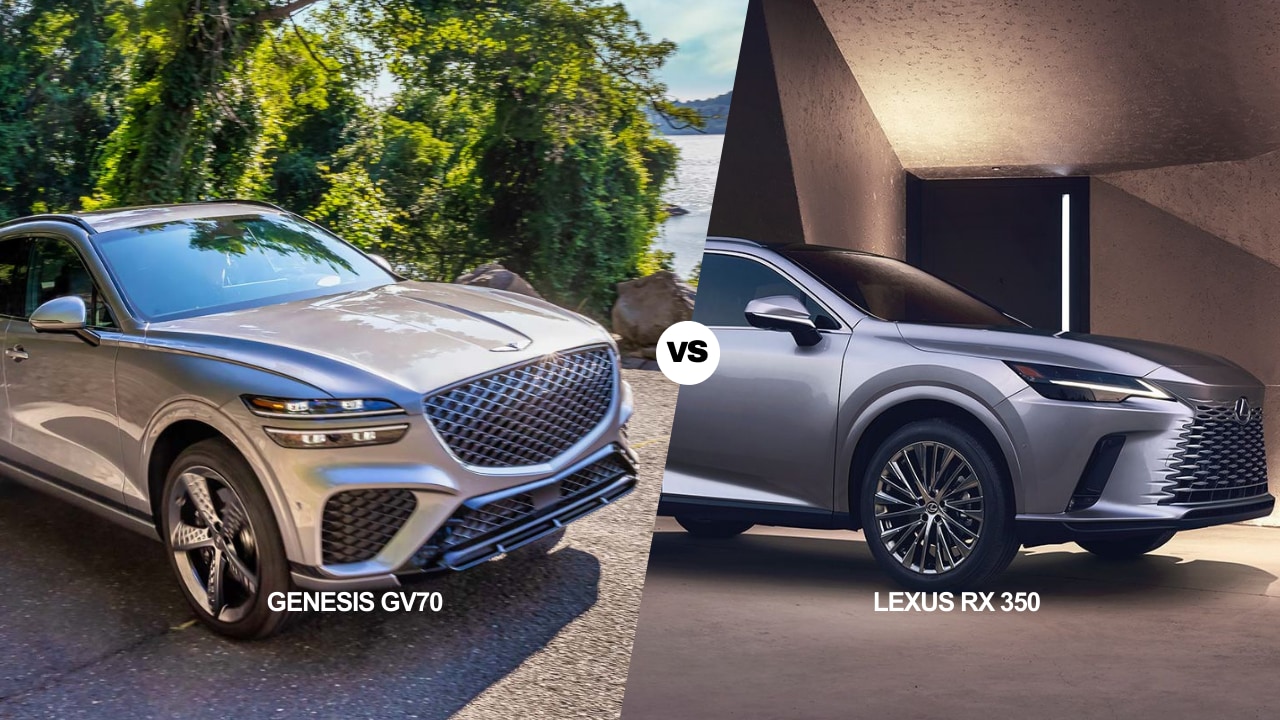
Midsize luxury has a curious habit: it promises refinement, yet it often delivers a story you can feel—how a door closes, how a dashboard gathers light, how a cabin settles into silence. In this arena, the Lexus RX and the Genesis GV70 frequently appear side by side in conversations. It’s a comparison that seems, at first glance, straightforward: both are premium SUVs chasing comfort, prestige, and everyday practicality. But beneath that surface lies a deeper fascination—an observation many drivers make after test drives: the two vehicles can feel equally “luxury,” yet their luxuries are composed of different ingredients.
The RX tends to impress with composure and continuity, like a well-edited film that never jolts your attention. The GV70, by contrast, often arrives with a more cinematic temperament—sharp styling cues, a cockpit that feels intentionally designed, and a willingness to express personality. The common observation—“Both are premium, so it’s a wash”—is understandable. Still, it dissolves once you pay attention to the details that guide daily life. The comparison becomes less about which brand is “better” and more about which philosophy fits your rhythm.
Here’s the heart of the matter: the Lexus RX and Genesis GV70 aren’t merely competing for attention; they’re competing for habituation. One tries to earn trust over time. The other tries to seize admiration right away.
First Impressions: The Visual Argument and the Psychological Hook
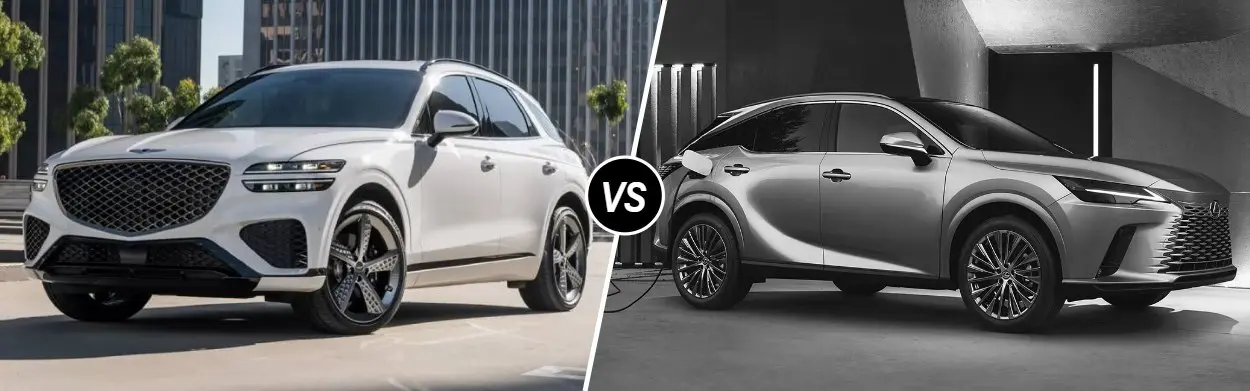
Most shoppers begin with what they can’t help noticing—stance, lighting, and the emotional temperature of the design. The RX carries the unmistakable confidence of Lexus styling: smooth, deliberate surfaces; a grille presence that reads as assured rather than aggressive. Its profile feels engineered to look composed in any setting, from suburban driveways to boulevard evenings.
The GV70, however, often feels like it’s speaking in metaphor. Its design language is more sculptural, more kinetic in the eye. Even at rest, it seems to suggest motion. That’s where fascination begins: the GV70 doesn’t simply ask to be admired—it asks to be remembered.
It’s worth noting how this affects perception during ownership. When a vehicle looks exceptional in the mirror, you treat it differently. You drive more slowly through tighter spaces. You park with more care. You become attentive to the small rituals that most people ignore—mirrors, reflections, and the choreography of entry and exit.
Cabin Atmosphere: Comfort vs Craft, Silence vs Character
Luxury isn’t only softness. It’s also restraint—how the cabin manages noise, vibration, and visual clutter. The RX is well known for a calming influence. Its interior feels like it has been tuned to reduce mental background noise. Short trips feel quieter than they should. Long drives feel less fatiguing than expected.
The GV70 tends to chase craft and immediacy. The layout often feels driver-forward, with materials and finishes that invite a closer look. The sensation is tactile as much as visual; surfaces appear selected rather than assembled. Where the RX encourages a kind of zen, the GV70 encourages a kind of curiosity.
One common observation comes from this difference: drivers sometimes describe the RX as “easy to live with,” while describing the GV70 as “fun to inhabit.” Both are valid. They simply prioritize different parts of the luxury equation—one leans toward effortless harmony, the other toward intentional allure.
Seating and Practicality: The Daily Logistics of Premium
In real life, luxury must also be functional. A premium SUV is judged by the mundane details: how the seats support your back after an hour, how the second row accommodates different heights, and how easy it is to store groceries or sports bags without turning the cargo area into a puzzle.
The RX generally earns points for mature ergonomics. Its seating positions tend to feel straightforward—like it was designed for a wide range of bodies rather than a single “ideal.” The GV70 can feel similarly comfortable, but with a slightly more stylized posture and attention to the overall cockpit geometry.
Check the second-row experience, too. Some vehicles offer “comfortable seats,” while others offer “comfortable access.” The RX often impresses with ease of ingress/egress. The GV70 may win on the sense of cohesion—how the rear space feels integrated into the overall design theme. Neither is objectively superior in every dimension; rather, each has a different interpretation of what “premium” should mean on an average Wednesday.
Powertrains and Driving Temperament: Smooth Assurance vs Responsive Confidence
Engine feel is where perceptions can diverge sharply. The RX is frequently recognized for its smoothness and composure. Acceleration is often treated as a background activity—there, when needed, but never demanding the driver’s attention. That’s why it’s frequently chosen by those who value predictability, not performance theatrics.
The GV70’s character can feel more alert. It tends to deliver responsiveness that reminds you the vehicle is paying attention. Even if the performance envelope isn’t the entire story, the sensation of interaction matters. Steering feedback, throttle mapping, and body control create an impression that the SUV is engaging with your inputs rather than simply translating them.
This is one of the deeper reasons people become fascinated with the GV70 after comparing it to the RX: it often feels like an invitation. The RX can feel like a promise. That difference alters buying decisions, especially for drivers who want their vehicle to reflect their mental state—calm, or energized.
Technology and Infotainment: Intuitive Ease vs Design-Focused Interface
Modern luxury SUVs must handle technology without making the driver feel like they’re operating an app. The RX’s infotainment experience is typically engineered for familiarity. The system’s logic often feels immediately navigable—an approach that reduces cognitive friction. In short sentences: it’s easier to use on the move.
The GV70’s tech can feel more design-forward, sometimes with a sharper sense of visual hierarchy. The interface may encourage exploration, especially for drivers who enjoy configuring settings and tailoring the feel of the cabin. It’s less about effortless sameness and more about curating a personal environment.
Both approaches can be excellent. The key is matching the technology philosophy to your habits. Do you want to spend less time thinking, or more time customizing? The “common observation” that both are simply premium can vanish once you interact with the system for several days instead of five minutes in a parking lot.

Ride Quality and Handling: The Art of Composure
Ride comfort is where the RX’s reputation becomes hard to dismiss. It often feels tuned for stability and fatigue reduction. The GV70, on the other hand, can deliver a more connected sensation—less detached, more communicative over imperfect pavement.
Think of it like this: the RX tries to smooth out your world. The GV70 tries to clarify it. Neither philosophy is universally superior. Smoothness can be a form of luxury; clarity can also be a form of luxury. Both are valid pathways to the same destination—confidence behind the wheel.
If your daily routes include rougher surfaces, the RX’s approach may feel more restorative. If you enjoy feeling the car’s stance and movement, the GV70 can feel more satisfying, like it shares your awareness of the road.
Safety and Driver Assistance: Trust Through Systems
Driver assistance technologies are now a cornerstone of premium value. The RX typically emphasizes a sense of reliable predictability—systems that behave calmly and communicate intentions clearly. The GV70 also offers a capable suite, often with an emphasis on integration and user experience.
What matters most is how the system feels when you actually depend on it. Does it assist without becoming intrusive? Does it provide the driver confidence to relax—just enough—without surrendering control? Both models aim to do that, but the “how” differs, and that difference can become a deciding factor after a period of real commuting.
Ownership Reality: Value, Brand Identity, and Long-Term Confidence
Luxury shopping rarely ends at the test drive. It moves into ownership thinking: maintenance expectations, resale considerations, dealership experience, and brand identity. Lexus, with its long-standing reputation for reliability and service consistency, often appeals to buyers who prioritize long-term confidence. Genesis, newer in its U.S. momentum, appeals to buyers who want premium performance and design with a sense of modern ambition.
The common observation—“They’re both great; it’s a matter of taste”—is incomplete. Taste matters, yes, but so does what your future self will prioritize. If you want a vehicle to fade into the background and remain dependable, the RX often fits that role elegantly. If you want your vehicle to feel like a statement, something you choose because it reflects your aesthetic and emotional preferences, the GV70 can be more compelling.
The Verdict: Choosing a Philosophy, Not Just a Vehicle
The Lexus RX vs Genesis GV70 comparison is fascinating because it reveals a truth about luxury: it’s not a single product. It’s a set of decisions about comfort, design, interaction, and identity. The RX often wins hearts through composure and confidence. The GV70 often wins hearts through craft, character, and a slightly more daring sense of self.
If you’re looking for the SUV that feels like it’s quietly taking care of you, the RX is designed for that. If you’re looking for a midsize luxury experience that feels tailored to your taste, the GV70’s allure can be magnetic.
In the end, the better choice is the one that matches your daily story—your tolerance for noise (literal and mental), your desire for personalization, and your preference for assurance or invitation. Drive them, yes. But also imagine them. A luxury SUV isn’t merely transported; it’s lived with. And when you choose wisely, the fascination doesn’t stop at the showroom—it deepens with every mile.