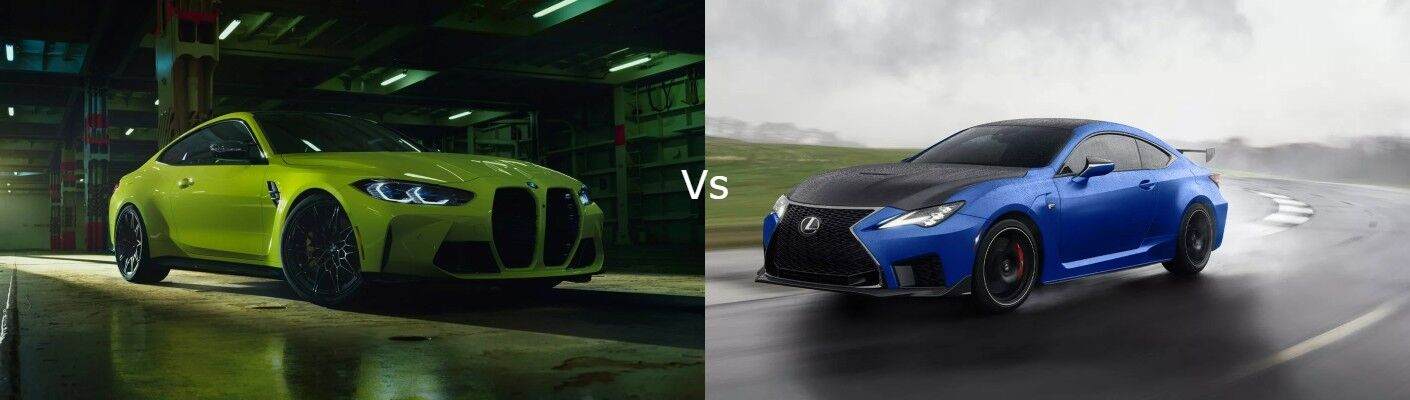
The Lexus RC F and BMW M4 aren’t just cars—they’re manifestos. One whispers promises of effortless torque and the kind of refinement that makes time stand still. The other growls with a mechanical intensity that demands your attention, a symphony of precision and raw emotion. This isn’t just a comparison of two performance coupes; it’s a clash of philosophies, where the V8’s velvety surge meets the straight-six’s razor-sharp responsiveness. Buckle up. We’re about to dissect what happens when Japanese meticulousness collides with German engineering obsession.
The Engines: Where Philosophy Meets Fire
At the heart of this duel lies a fundamental divide: the Lexus RC F’s 5.0-liter naturally aspirated V8 versus the BMW M4’s 3.0-liter twin-scroll turbocharged inline-six. The V8 doesn’t just make power—it conjures it. With 472 horsepower and a torque curve that stretches from idle to redline, the RC F doesn’t so much rev as it does exhale, a tidal wave of thrust that builds inexorably, relentlessly. There’s no lag, no hesitation—just an unshakable tide of momentum.
Contrast that with the M4’s S55 engine, a masterclass in forced induction. The straight-six’s turbochargers spool with the precision of a Swiss watch, delivering 473 horsepower and a torque curve that’s flat enough to iron a shirt. Where the V8 feels like a force of nature, the M4’s engine feels like a scalpel—every press of the throttle a surgical strike. The difference isn’t just in the numbers; it’s in the soul. One engine thrives on drama, the other on surgical efficiency.
The Sound: A Symphony or a Scream?
Sound is where these two cars reveal their true identities. The RC F’s V8 doesn’t just make noise—it orchestrates it. The exhaust note is a deep, resonant baritone, a growl that vibrates through your ribcage at idle and swells into a howling crescendo as the revs climb. It’s the kind of sound that makes passersby stop mid-stride, craning their necks to catch a glimpse of the source. There’s a primal satisfaction in it, a reminder that performance isn’t just about speed—it’s about presence.
The M4’s straight-six, meanwhile, sings a different tune. Its exhaust note is higher-pitched, more refined, a melodic wail that cuts through the air with surgical precision. The turbochargers add a subtle whistle at higher revs, a reminder that this engine is a product of modern engineering. It’s not just loud—it’s articulate. Where the RC F’s V8 feels like a rock anthem, the M4’s engine feels like a jazz improvisation: precise, controlled, and endlessly fascinating.

The Driving Experience: Precision vs. Power
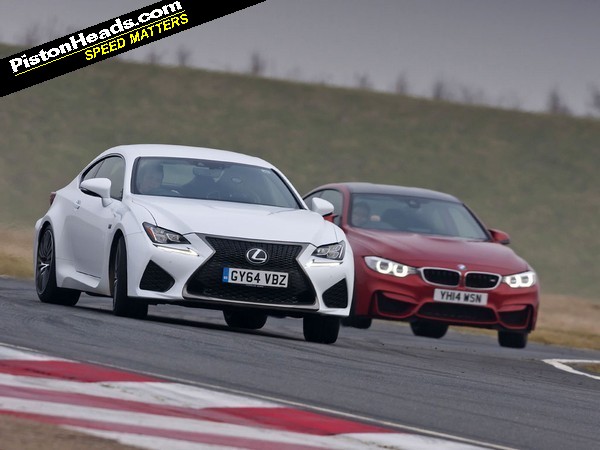
Behind the wheel, the differences become even more pronounced. The RC F is a grand tourer in spirit, a car that rewards smooth inputs and a relaxed demeanor. The steering is heavy at low speeds but lightens up at higher velocities, offering a direct connection to the road. The suspension is plush, absorbing bumps with ease while still providing enough feedback to keep you engaged. It’s a car that feels alive without demanding your undivided attention.
The M4, on the other hand, is a driver’s car through and through. The steering is razor-sharp, the feedback immediate and unfiltered. The suspension is firmer, tuned for cornering prowess rather than comfort. Every input—throttle, brake, steering—feels amplified, as if the car is an extension of your own body. It’s not just about going fast; it’s about feeling every nuance of the road beneath you.
The Aesthetics: Beauty in Contrast
The Lexus RC F is a study in understated elegance. Its curves are fluid, its lines unbroken, a testament to Japanese design philosophy. The front grille is a statement of intent, a bold assertion of power masked by a veneer of sophistication. Inside, the cabin is a cocoon of leather and carbon fiber, a space designed for both driver and passenger to revel in the moment. It’s a car that doesn’t just look fast—it looks timeless.
The BMW M4, by contrast, is a study in aggression. Its kidney grilles are flared, its body sculpted for aerodynamic efficiency. The headlights are sharp, almost predatory, while the rear haunches bulge with purpose. Inside, the cabin is a cockpit, all carbon fiber and Alcantara, a space designed to immerse the driver in the act of driving. It’s a car that looks like it’s always in motion, even when it’s standing still.
The Verdict: Which One Wins?
Choosing between the Lexus RC F and the BMW M4 isn’t about picking a winner—it’s about deciding what kind of driving experience you crave. If you value refinement, presence, and a driving experience that feels effortless, the RC F is your chariot. It’s a car that doesn’t just take you from point A to point B—it elevates the journey into something memorable.
If, however, you’re after razor-sharp precision, a symphony of mechanical feedback, and a driving experience that feels like an extension of your own reflexes, the M4 is the clear choice. It’s a car that doesn’t just respond to your inputs—it anticipates them, rewarding aggression with even greater performance.
Ultimately, the Lexus RC F and BMW M4 are two sides of the same coin. One represents the zenith of naturally aspirated power, the other the pinnacle of forced induction precision. Both are masterpieces in their own right. The question isn’t which one is better—it’s which one speaks to you.
The road awaits. Which one will you choose?