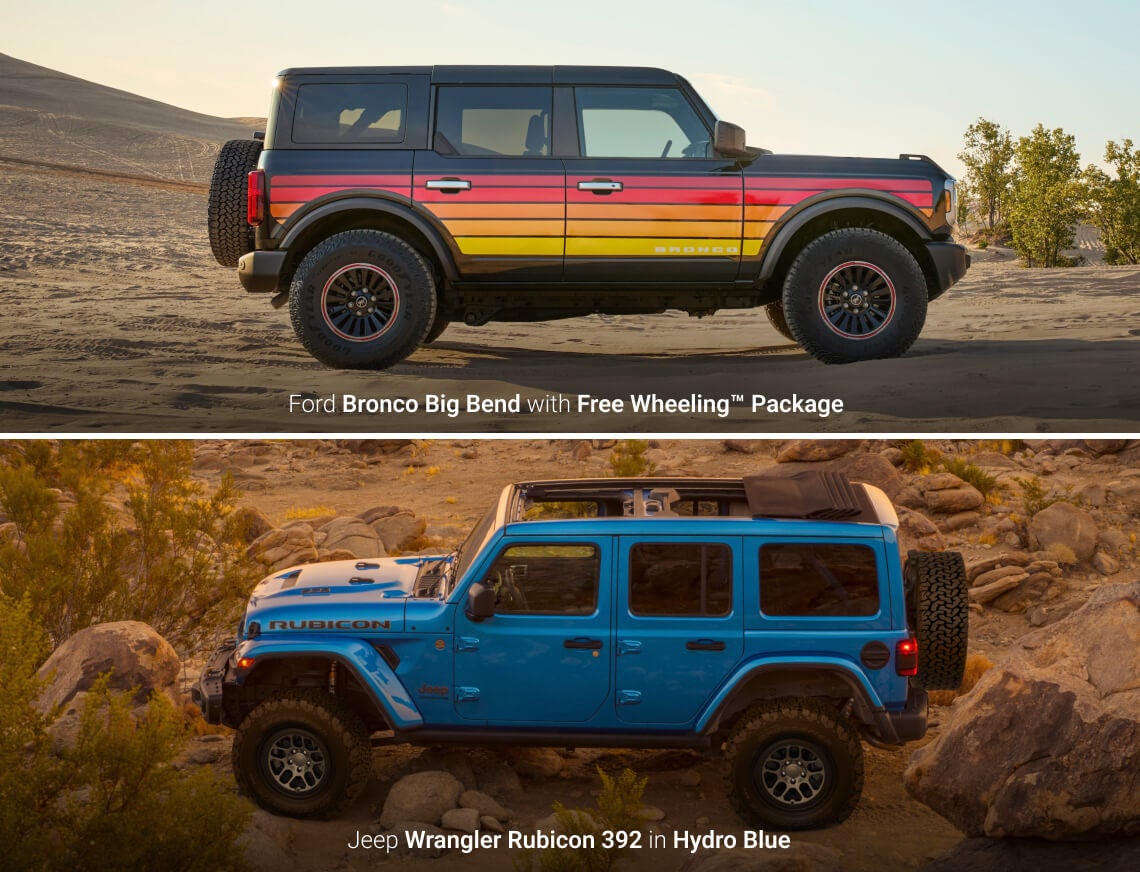
There’s a particular moment—usually just beyond the last paved street—when the landscape begins to rewrite the rules. Dust lifts like a curtain. The steering feels suddenly more honest. And the question that once sounded theoretical becomes immediate: Jeep Wrangler or Ford Bronco? Off-road isn’t merely a hobby. It’s a philosophy with mud on its cuffs. What follows is an off-road showdown designed to shift perspective, not simply compare specifications. Because when the trail narrows, the “better” vehicle is often the one that changes how you drive.
So imagine standing at the edge of a rocky two-track. Both machines look ready. But they don’t feel the same. One tends to inspire a familiar kind of trail confidence, while the other pushes you toward a bolder, more modern approach to capability. The difference is subtle at first—then it becomes undeniable the moment the terrain starts making demands.
First Impressions: Personality in the Front Row
Before tires ever meet dirt, presence matters. The Jeep Wrangler carries a long-running reputation—an iconic silhouette that seems to say, “Go ahead, challenge the map.” This isn’t just branding. It’s a vibe that reflects heritage, community knowledge, and an instinct for trail living. Every line feels purposeful, as if it’s been trained to handle irregularity.
The Ford Bronco, meanwhile, presents a different emotional contract. It looks engineered for command. Even at rest, there’s a sense of structured confidence—like the vehicle has a plan, even when the trail doesn’t. Where the Wrangler often feels like a seasoned companion, the Bronco can feel like a tactician.
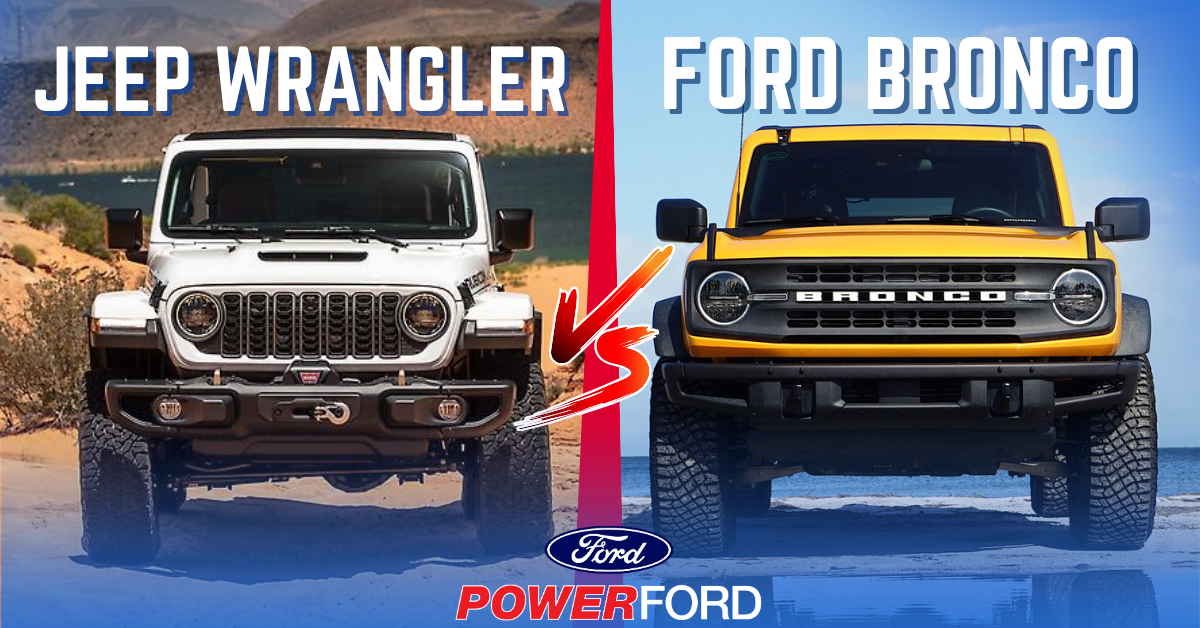
At this stage, curiosity is the first upgrade. Ask yourself: do you want the trail to feel like a story you’ve heard before, or a story you’re about to write with sharper tools?
Ground Contact: Tire, Traction, and the Art of Not Getting Stuck
Off-road success is rarely about brute force alone. It’s about how power reaches the ground—how traction gets negotiated between rubber, soil, and obstacles. The Wrangler and Bronco both offer off-road-ready tire options and drivetrain configurations, but their strengths often surface differently depending on the conditions.
The Wrangler’s reputation for rock crawling and trail articulation comes from its long lineage of off-road tuning. It frequently feels composed when traction becomes a suggestion rather than a guarantee. In loose gravel or rutted paths, it tends to encourage measured steering inputs—small corrections that keep momentum without chaos.
The Bronco often shines when you want control with a more contemporary electronics-assisted edge. It can feel confident over uneven ground, especially when you’re managing wheel slip and navigating transitions between rock, mud, and packed dirt. The Bronco’s approach often feels like an organized partnership between driver intention and traction management.
Neither is flawless on every trail. But the more you pay attention, the more you’ll notice how each vehicle rewards a different driving style. That’s where the shift in perspective begins.
Suspension and Articulation: When the Trail Becomes a Puzzle
Suspension is more than ride comfort. It’s how a vehicle “thinks” about irregular terrain. Articulation—how well wheels maintain contact when the body twists—is crucial on rock ledges, uneven ruts, and side-hill surfaces.
In that realm, the Wrangler tends to feel naturally adept. It often meets the trail with a sense of continuity, maintaining grip while the chassis negotiates twist. You can almost feel the suspension doing work behind the scenes, keeping traction available where it matters most.
The Bronco’s suspension engineering can deliver an equally capable experience, particularly when paired with its off-road packages. It frequently offers a strong balance between stability and flex. The ride can feel taut but not brittle, composed enough to inspire commitment when the path demands decisiveness.
If you’re the kind of driver who listens to feedback through the wheel, pay attention. Both vehicles speak—just in different dialects.
Ground Clearance and Approach Angles: The Conversation Between Bumpers and Reality
There’s a moment of dread that comes with steep grades and sharp ledges. Ground clearance isn’t a number; it’s peace of mind. Approach and departure angles also shape the boundaries of what feels possible.
The Wrangler generally offers a trail-forward geometry that prioritizes getting over obstacles without shaving the undercarriage. That characteristic can be liberating on tight trails where trees, rocks, and curbs all seem to appear without warning.
The Bronco also emphasizes off-road geometry, often aiming to reduce the “scrape risk” when climbing or dropping into uneven terrain. Its stance and design language often make it feel ready to handle the blunt edges of nature.
Ultimately, these traits influence driver psychology. When confidence increases, decisions become sharper. You stop hesitating. You start committing—responsibly, but decisively.
Four-Wheel Drive Systems: Control, Confidence, and the Fine Print of Electronics
Modern off-roading is a dialogue between mechanical capability and electronic control. Four-wheel drive systems determine how power is distributed, how traction is managed, and how quickly the vehicle adapts when the trail throws the unexpected.
The Wrangler’s traditional strengths can feel especially persuasive on trails where crawling pace and predictable response matter. It often rewards the driver who prefers a tactile, analog-like relationship with the drivetrain.
The Bronco can offer a more systematized experience—helpful when you’re dealing with rapid changes: slick mud turning to dry rock, snow patches interrupting a rocky climb, or sand that behaves differently every few meters. In these scenarios, electronic traction management can feel like a calm voice in your ear, preventing overcorrection.
Neither approach is “better” in a vacuum. The better fit depends on your instincts. Are you a deliberate crawler, or a dynamic explorer?
Braking and Low-Speed Precision: The Hidden Skill of Off-Roading
Many comparisons stop at big visuals—lift kits, bold grilles, dramatic suspension travel. But the real drama happens at low speed. Braking on uneven surfaces requires modulation, stability, and a system that resists panic.
Both the Wrangler and Bronco are engineered to handle the realities of off-road pacing. Still, their personalities differ. The Wrangler often feels like it supports careful crawling with a straightforward confidence. The Bronco can feel like it offers a more guided experience, particularly when descending or managing traction transitions.
In practice, precision becomes a form of storytelling. You learn the trail by repeating a line, adjusting your brake pressure, feeling the tires re-grip. The vehicle that best supports your learning style becomes the one you trust most.
Water, Snow, and Mud: Weather as a Test of Character
Off-road isn’t only about rocks. It’s about everything that comes with them—wet leaves that mimic ice, muddy ruts that swallow momentum, and slush that turns traction into negotiation. Both vehicles can handle these environments, but the way they inspire confidence varies.
The Wrangler’s trail heritage often makes it feel purpose-built for rough weather outings. Its community-driven evolution tends to create a sense that it belongs in messy situations. Drivers often describe a familiar readiness when the forecast looks uncooperative.
The Bronco’s modern engineering approach can feel particularly helpful when conditions change quickly. It often encourages exploration beyond the “safe line” because the vehicle can feel composed enough to handle more complexity.
Here’s the key perspective shift: the terrain isn’t testing only the vehicle. It’s testing your relationship with control.
Interior Usability: The Trail Ends, But the Drive Continues
Some off-road moments feel endless—until they end abruptly at a gas station with bright lighting and normal streets. A capable off-road vehicle should be comfortable enough to transition without losing the plot.
The Wrangler can feel ruggedly practical, with an emphasis on open-air adventure and a cockpit designed for trail spontaneity. It’s less about luxury theater and more about usable durability.
The Bronco often leans into a more refined daily experience while keeping off-road intent visible. The cabin frequently feels designed for long drives after a long day, which matters if the trail is far from home.
So ask a different question: not “Which is better off-road?” but “Which keeps your confidence when the adventure is over and you still have miles to go?”
Customization and Community: What Ownership Teaches You
Ownership shapes capability. The Wrangler’s ecosystem is famously vast—parts, accessories, and community wisdom that can turn a stock setup into a personalized expedition platform. If you like tinkering, learning, and building, that culture can become a powerful tool.
The Bronco has rapidly grown its own momentum, with a strong lineup of accessories and off-road tuning possibilities. It can feel like a fresh canvas, ready for personalization without needing to hunt for answers across decades.
Community is more than convenience. It’s mentorship without lectures. And in off-road life, mentorship can prevent expensive mistakes.
The Choice That Matters: Your Trail Identity
When you strip away the spreadsheets, the decision becomes personal. The Wrangler often invites a classic, go-anywhere confidence—an almost mythic sense that the trail is your natural habitat. The Bronco often challenges you to think like a strategist—approach obstacles with modern control and a willingness to push further with calculated nerve.
Choose the vehicle that matches how you want to feel when the scenery becomes unpredictable. If you want to trust tradition, the Wrangler’s character can be compelling. If you want a more contemporary command experience, the Bronco may align with your instincts.
Final Word: Off-Road Showdown, Reframed
In the end, this isn’t just a battle between two off-road legends. It’s a crossroads of driving identities. The trail doesn’t care what badge you wear. It cares how you respond—how you read traction, how you modulate control, how you move with patience and intent.
Whether you steer into the wild with a Wrangler’s heritage or a Bronco’s engineered confidence, the real victory is the same: the moment your fear turns into curiosity, and your curiosity turns into forward motion. That’s the true off-road showdown—between doubt and the daring you bring to the dirt.