When you hear the name Ford, what springs to mind? The throaty growl of a Mustang tearing down a backroad? The rugged silhouette of an F-150 silhouetted against a desert sunset? Or perhaps the quiet hum of a Focus gliding through city traffic? Whatever image flashes across your mind, one thing is certain: Ford’s legacy is etched into the asphalt of automotive history. But behind the chrome and horsepower lies a question that gnaws at every prospective buyer—one that echoes louder than a V8 at idle: Which Ford models are truly built to last?
Reliability isn’t just a spec on a spec sheet. It’s the silent guardian of your wallet, the unseen shield against the tyranny of repair bills, and the invisible thread that ties together a decade of smooth commutes. Yet, in a world where every manufacturer slaps “reliable” on their brochures like a badge of honor, how do you separate the steel from the hype? How do you know which Ford models will still be purring like kittens in ten years, and which ones will leave you stranded on the side of the highway with a repair bill that stings worse than a bee in a tin can?
Buckle up. We’re about to shift gears—and perspectives—on what it truly means for a Ford to stand the test of time.
Beyond the Brochure: What “Reliability” Really Means for Ford Owners
Let’s dispel a myth right now: reliability isn’t measured in horsepower or torque. It’s not found in the gleam of a freshly waxed hood or the allure of a tech-laden infotainment system. True reliability is a quiet covenant between machine and owner—a promise that the engine will turn, the transmission will shift, and the electronics won’t betray you at the worst possible moment.
For Ford, this covenant has been tested across generations, across continents, and across wildly different driving conditions. From the snow-packed roads of Minnesota to the sun-baked highways of Arizona, Ford vehicles have been asked to perform—and they have. But not all have risen to the challenge with equal grace. Some models, like the F-150, have become legends of durability, while others, like certain early years of the Focus, have left owners questioning their life choices.
What separates the enduring from the ephemeral? It’s not just the quality of the steel or the precision of the assembly line. It’s the marriage of engineering foresight and real-world feedback. Ford’s reliability rankings aren’t just numbers on a chart—they’re the echoes of thousands of voices, each sharing a story of triumph or tribulation. And those stories? They’re the real gold.

The Heavyweights: Ford Models That Defy the Clock
If reliability were a weight class, the Ford F-150 would be the undisputed champion. For over four decades, America’s best-selling truck has carried not just cargo, but a reputation for toughness that borders on mythological. But what makes it last? Is it the high-strength, military-grade aluminum body? The turbocharged EcoBoost engines that sip fuel like a diplomat? Or the sheer volume of parts and aftermarket support that ensures no bolt goes unturned?
The answer lies in a combination of all three. The F-150’s modular design allows for rapid repairs and upgrades. Its engines, though not without their quirks, have been refined over generations to handle everything from daily commutes to off-road expeditions. And its owner base? They’re a community of tinkerers, builders, and weekend warriors who refuse to let their trucks retire. The result? Model years from the late 2000s through the 2020s consistently rank among the most reliable in their class, with some owners reporting over 300,000 miles without major drivetrain issues.
But the F-150 isn’t alone in its longevity. The Ford Explorer, once a symbol of suburban family life, has evolved into a rugged, adventure-ready SUV that refuses to quit. With advancements in turbocharged powertrains and adaptive suspension systems, the Explorer now delivers both performance and endurance. Owners report fewer electrical gremlins and transmission hiccups than in previous generations, making it a compelling choice for those who demand both space and stamina.
And let’s not forget the Ford Expedition, the full-size titan that hauls families, gear, and sometimes entire lives across the country. Its body-on-frame construction and robust powertrain options have made it a favorite among those who need to tow heavy loads without breaking a sweat. When maintained properly, these behemoths can easily surpass 250,000 miles, turning them into rolling investments rather than depreciating assets.
The Fragile Frame: Ford Models That Trip Up Owners
Not every Ford model has aged as gracefully as a fine wine. Some have crumbled under the weight of poor design choices, subpar materials, or a stubborn refusal to adapt. Take the Ford Focus, for instance. Once a darling of the compact car segment, the Focus became a cautionary tale of what happens when cost-cutting meets real-world driving demands.
Early model years of the Focus, particularly those produced between 2012 and 2016, were plagued by transmission failures, electrical gremlins, and premature engine wear. Owners reported shuddering gear shifts, sudden stalling, and infotainment systems that crashed more often than a smartphone in a mosh pit. While later iterations improved, the damage to the Focus’s reputation lingered like a bad smell. Today, it serves as a stark reminder that even a brand with Ford’s pedigree can stumble when it prioritizes affordability over durability.
Then there’s the Ford Fusion, a midsize sedan that promised comfort and efficiency but delivered inconsistency. While some model years, particularly those from 2017 onward, showed marked improvements in reliability, earlier versions suffered from transmission hesitation, coolant leaks, and infotainment glitches that made even the simplest tasks feel like a high-stakes gamble. The Fusion’s story is one of potential unfulfilled—a vehicle that could have been a class leader but instead became a cautionary tale of mediocrity.
Even the Ford Escape, once a reliable compact SUV, has had its share of reliability roulette. Certain model years, particularly those from 2013 to 2015, were notorious for engine coolant leaks, transmission shuddering, and electrical system malfunctions. While later models have righted the ship, the Escape’s rocky past serves as a reminder that reliability isn’t a one-time achievement—it’s a continuous journey.

The Silent Revolution: How Ford Is Rewriting the Rules of Reliability
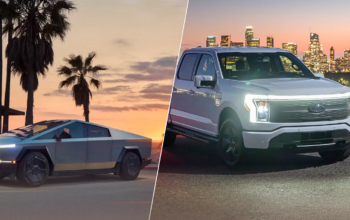
Ford isn’t resting on its laurels. In an era where electric vehicles are reshaping the automotive landscape, the Blue Oval is making bold moves to ensure its future models don’t just keep up—they set the pace. The introduction of the all-electric F-150 Lightning is a case in point. With a battery pack designed for longevity, regenerative braking systems that reduce wear on brake pads, and fewer moving parts prone to failure, the Lightning is poised to redefine what it means to be a Ford that lasts.
But electrification isn’t the only frontier. Ford’s push toward hybrid powertrains, particularly in models like the Escape Hybrid and Maverick Hybrid, is blending the best of both worlds—gasoline’s range with electric efficiency. These vehicles are engineered to sip fuel while delivering the kind of reliability that comes from fewer combustion cycles and reduced stress on traditional engine components.
Even in the realm of traditional internal combustion, Ford is doubling down on durability. The latest generation of the Mustang, for instance, features a robust cooling system, reinforced drivetrain components, and advanced driver-assistance systems that not only enhance safety but also reduce the likelihood of accidents—one of the leading causes of premature vehicle retirement.
And let’s not overlook Ford’s commitment to software reliability. In an age where a single glitch can render a modern vehicle undrivable, Ford has invested heavily in over-the-air updates and robust infotainment systems that are less prone to crashes and freezes. The result? Fewer instances of the dreaded “blue screen of death” that has plagued other brands.
Your Roadmap to Ford Longevity: Tips from the Trenches
Owning a Ford that lasts isn’t just about choosing the right model—it’s about how you treat it. The difference between a vehicle that thrives and one that merely survives often comes down to the habits of its owner. So, what can you do to ensure your Ford stays on the road longer than a politician’s promise?
First, prioritize maintenance like it’s your job. Oil changes aren’t just a suggestion; they’re the lifeblood of your engine. Skipping them is like skipping meals—eventually, you’ll pay the price. Follow the manufacturer’s recommended service intervals religiously, and don’t skimp on parts. A cheap air filter might save you a few bucks today, but it could cost you thousands in engine damage tomorrow.
Second, listen to your Ford. Modern vehicles are equipped with sensors and diagnostic systems that act as an early warning system. If your check engine light flickers to life, don’t ignore it. Address the issue immediately. A minor repair now is far cheaper than a major overhaul later.
Third, drive with intention. Aggressive acceleration and sudden braking aren’t just bad for your fuel economy—they’re brutal on your drivetrain. Treat your Ford like a fine instrument, not a demolition derby car, and it will reward you with years of faithful service.
Finally, consider the environment. Extreme temperatures, whether hot or cold, take a toll on your vehicle. Park in a garage when possible, and avoid leaving your Ford baking in the sun or shivering in the snow. A little TLC goes a long way in preserving your investment.
Reliability isn’t a destination. It’s a journey—a winding road that twists through the hills of engineering excellence and the valleys of design missteps. For Ford, that journey has been long, sometimes bumpy, but ultimately rewarding. From the indomitable F-150 to the electric dreams of the Lightning, the Blue Oval has proven time and again that it knows how to build vehicles that endure.
But remember: no car lasts forever. Even the most reliable Ford will eventually reach the end of its road. The key is to choose wisely, maintain diligently, and drive thoughtfully. Do that, and you won’t just own a Ford—you’ll own a piece of automotive history that refuses to quit.
So, the next time you slide behind the wheel of a Ford, ask yourself: Is this the one that will still be running when the kids are in college? If you’ve done your homework, the answer might just be a resounding yes.