Picture this: a car so feral it laughs in the face of speed limits, yet still has the audacity to wear a license plate. The Ford Mustang GTD isn’t just a machine—it’s a rolling provocation, a steel-and-carbon dare to every traffic cop from here to the Nürburgring. It’s the kind of vehicle that makes engineers weep with joy and insurance agents clutch their pearls. So, what happens when raw racing DNA is unleashed onto public roads? Buckle up. We’re about to find out.
From Le Mans to the Lunch Run: The GTD’s Unholy Heritage
Most supercars are born in wind tunnels and nursed on dyno sheets. The GTD? It’s a Frankenstein’s monster stitched together from the corpse of endurance racing. Ford’s GT supercar already proved that racing pedigree could translate into street-legal terror. But the GTD takes that philosophy and injects it with industrial-grade anabolic steroids.
Born from the GT3-spec Mustang that scorched the 24 Hours of Le Mans, the GTD strips away the GT’s exoticism and replaces it with something far more dangerous: practicality. This isn’t a car that’s content to sit in a museum. It’s a wolf in sheep’s clothing, a Trojan horse designed to slip past radar guns and into the dreams of weekend warriors with a need for speed.
The GTD’s chassis is a carbon-fiber monocoque, a lightweight exoskeleton that cradles a twin-turbocharged 5.2-liter V8. That engine, co-developed with Multimatic, pumps out over 800 horsepower—enough to catapult the car from 0 to 60 mph in under three seconds. But here’s the twist: it’s tuned for both track and tarmac. The GTD doesn’t just tolerate public roads; it thrives on them, taunting every speed bump and pothole with the confidence of a seasoned racer.
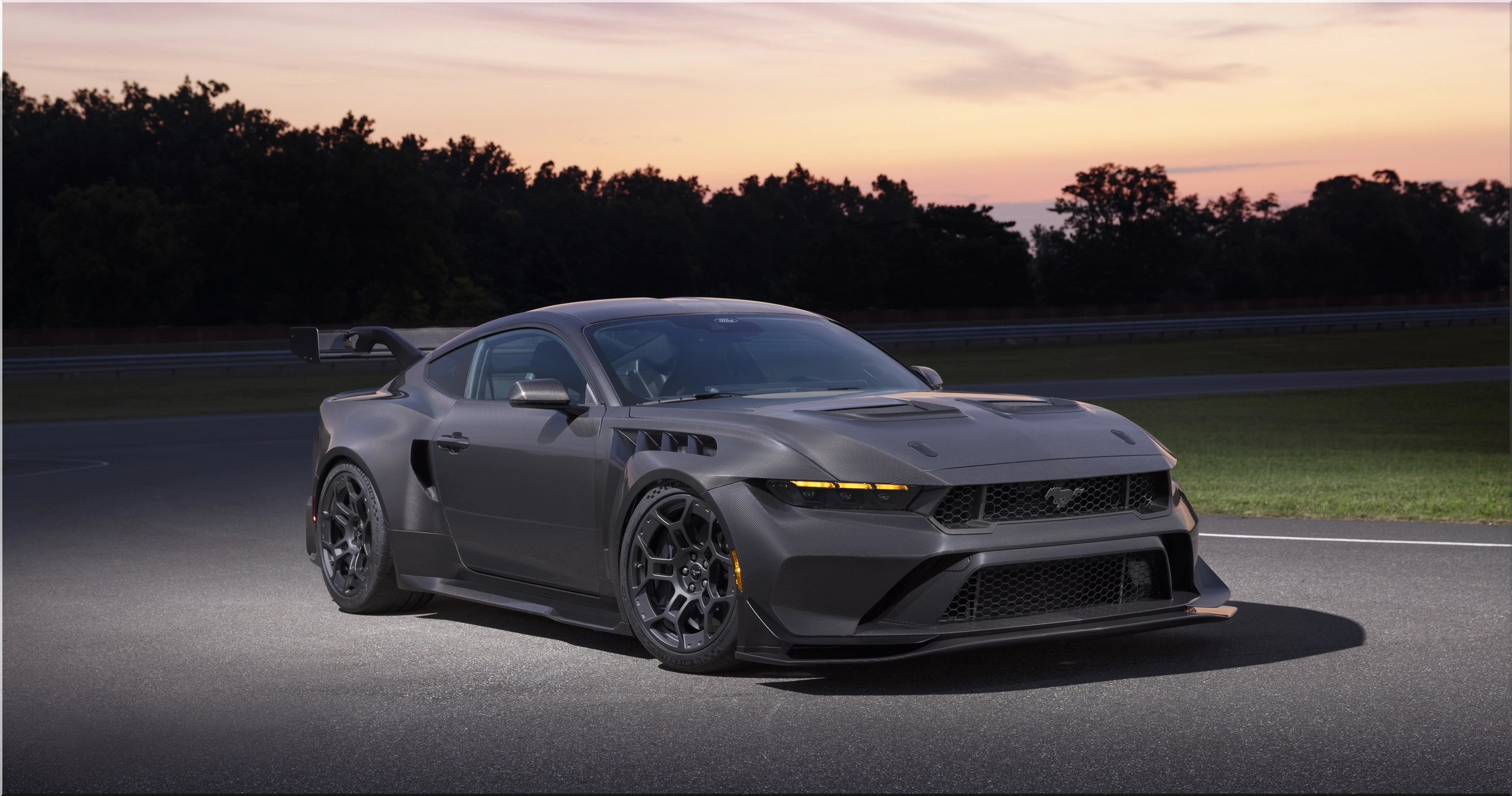
Design: A Symphony of Aggression and Aerodynamics
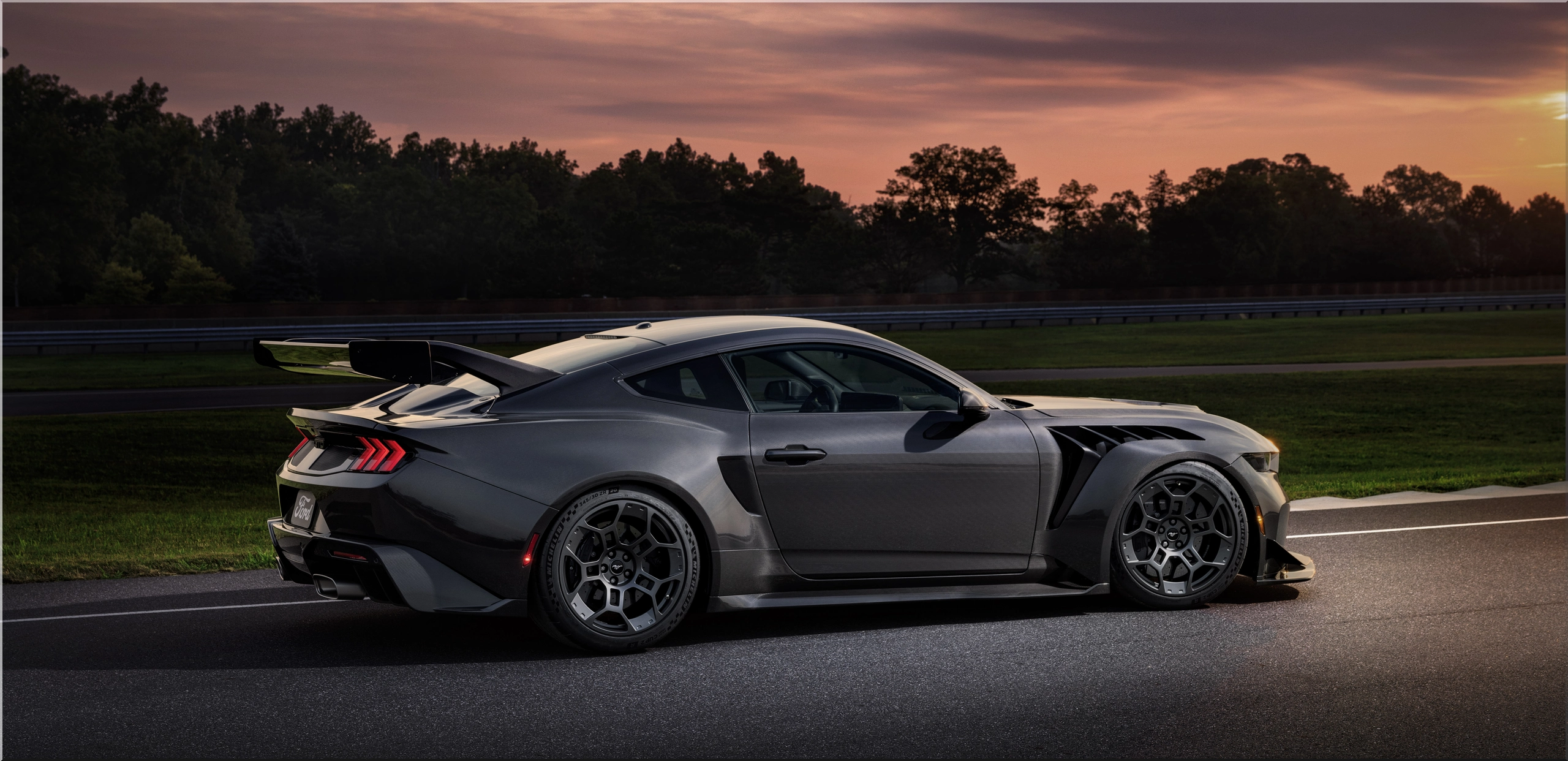
The GTD’s aesthetic isn’t just bold—it’s a middle finger to aerodynamic mediocrity. Every curve, every vent, every wicked line is a calculated insult to the laws of physics. The front splitter is so aggressive it could double as a plow. The rear diffuser? It’s less a diffuser and more a portal to warp speed.
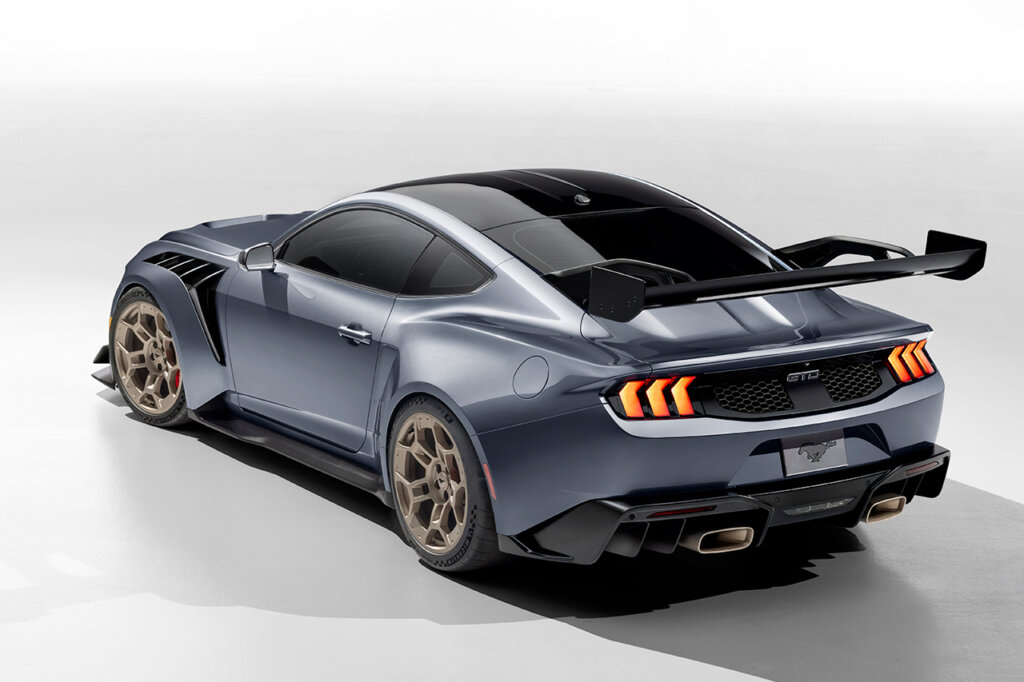
Ford’s designers didn’t just slap on racing bits for show. The GTD’s bodywork is a masterclass in functional art. The hood vents aren’t decorative; they’re breathing tubes for a beast that refuses to overheat. The massive rear wing isn’t just for Instagram—it’s a 1,000-pound downforce generator, pinning the car to the asphalt at triple-digit speeds. And those quad exhausts? They’re not just for noise. They’re a symphony of controlled chaos, a soundtrack for the anarchy that follows when you floor it in third gear.
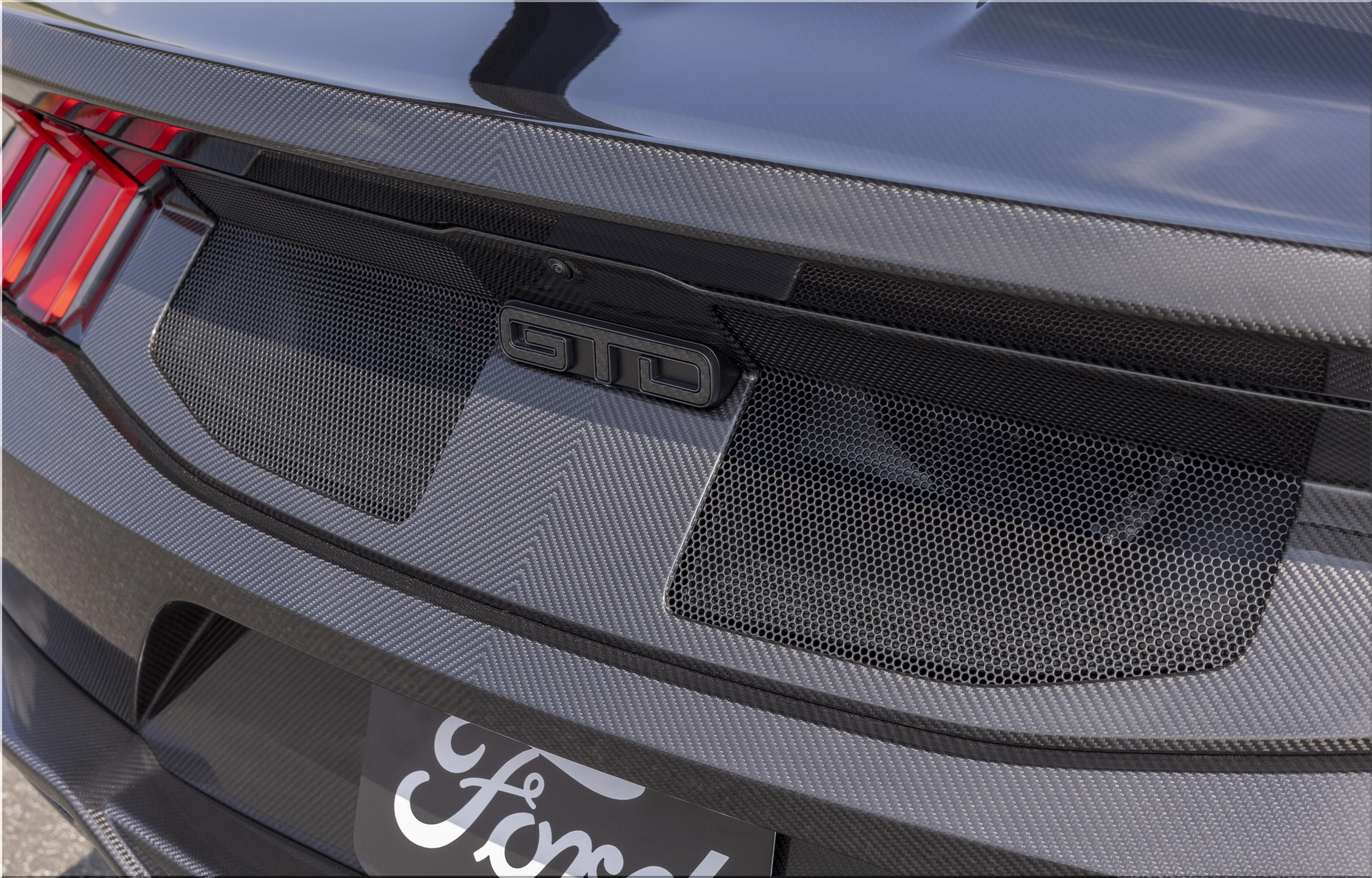
But the real magic lies in the details. The GTD’s Liquid Carbon finish isn’t just a color—it’s a statement. It’s the kind of hue that makes other cars look like they’ve been dipped in dishwater. Underneath, the carbon-fiber weave is exposed in strategic areas, a visual reminder that this car was forged in the fires of competition. Even the badges are aggressive, as if the GTD itself is daring you to challenge its dominance.
The Engine: A Thunderous Heartbeat of Pure Madness
Pop the hood—or rather, the carbon-fiber hatch—and you’re greeted by a V8 that sounds like the end of the world. This isn’t the kind of engine that hums. It roars. It bellows. It’s the kind of powerplant that makes mechanics question their life choices. The GTD’s 5.2-liter twin-turbo V8 is a marvel of engineering, a marriage of brute force and precision.
But power alone isn’t enough. The GTD’s engine is paired with a seven-speed dual-clutch transmission that shifts faster than your brain can process. There’s no hesitation, no lag—just a seamless transfer of energy that pins you to your seat like a fighter pilot in a dogfight. The exhaust note? It’s a symphony of controlled fury, a mechanical growl that could wake the dead.
Yet, for all its ferocity, the GTD’s engine is surprisingly civilized. It’s tuned to run on pump gas, a rarity in the world of hypercars. Ford didn’t just want a machine that could dominate the track. They wanted one that could devour the highway, too. The GTD’s engine management system is a chameleon, adapting to everything from stop-and-go traffic to full-throttle lunacy. It’s the kind of power that makes you question whether you’re really in control—or if the car is.
Behind the Wheel: A Cockpit Designed for Lunatics
Climb into the GTD, and you’re immediately enveloped in a cabin that’s equal parts race car and luxury GT. The seats are carbon-fiber buckets, molded to your body like a second skin. The steering wheel is flat-bottomed, a nod to its racing roots, but the Alcantara-wrapped grip feels like it was stitched just for your hands.
The dashboard is a digital masterpiece, dominated by a massive touchscreen that controls everything from climate settings to launch control. But don’t let the tech fool you. This is still a driver’s car. The pedals are adjustable. The steering is direct. The seats are firm enough to remind you that you’re not just along for the ride—you’re part of the machine.
Yet, for all its sophistication, the GTD’s interior is unapologetically raw. There’s no plush leather here. No wood trim. Just carbon fiber, Alcantara, and the occasional stitch of bright orange. It’s a cockpit built for those who see driving as a religion, not a hobby. The GTD doesn’t just want you to drive it. It wants you to worship it.
The GTD’s Dilemma: Can You Handle the Chaos?
Here’s the question that keeps enthusiasts up at night: Is the GTD too much car for the average driver? It’s not just about the power. It’s about the precision. The GTD demands respect. It rewards skill but punishes hesitation. A single misstep on a twisty backroad could leave you staring at a bill that makes your wallet weep.
And then there’s the insurance. Good luck finding a company willing to cover a car that can outrun a Porsche 911 Turbo S on a whim. The GTD isn’t just a purchase—it’s a lifestyle choice. It’s for those who see speed limits as suggestions, not rules. For those who believe that the perfect driving experience isn’t about comfort—it’s about control.
But here’s the thing: the GTD isn’t just a car. It’s an experience. It’s the kind of machine that turns a mundane commute into a thrill ride and a weekend blast into a full-blown adrenaline rush. It’s the automotive equivalent of eating a ghost pepper—painful, exhilarating, and impossible to forget.
The Ford Mustang GTD isn’t just a car. It’s a declaration. A challenge. A middle finger to the idea that performance and practicality can’t coexist. It’s a machine that laughs in the face of convention, a beast that thrives on chaos. So, the real question isn’t whether you can afford it. It’s whether you can handle it. And if you’re brave enough to answer that call, then buckle up. The GTD isn’t just taking over the road—it’s rewriting the rules of what a car can be.