In the realm of automotive innovation, few battles spark as much intrigue as the showdown between the Ford F-150 Lightning and the Tesla Cybertruck. These two electric titans embody a new frontier where tradition meets futurism, muscle intersects with cutting-edge technology, and daily utility is reimagined through an electrified lens. It’s not merely about trucks anymore; it’s about what these machines represent in the evolving narrative of transportation.
The Stark Allure of Electric Muscle
The intrigue surrounding electric trucks is palpable. Enthusiasts and skeptics alike are drawn to the juxtaposition of raw power with eco-conscious propulsion. The Ford F-150 Lightning extends the legacy of America’s quintessential pickup, marrying it with electric vigor, while the Cybertruck shatters conventional aesthetics with its ultra-modern, almost dystopian design. This fascination isn’t superficial—it taps into a deeper yearning for innovation that simultaneously respects heritage and heralds a new epoch.
Design Philosophy: Tradition Versus Futurism
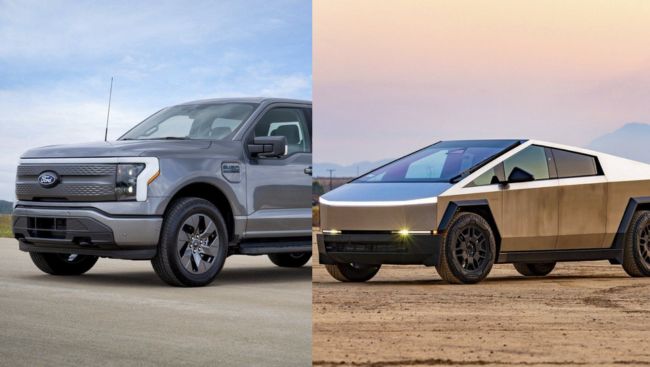
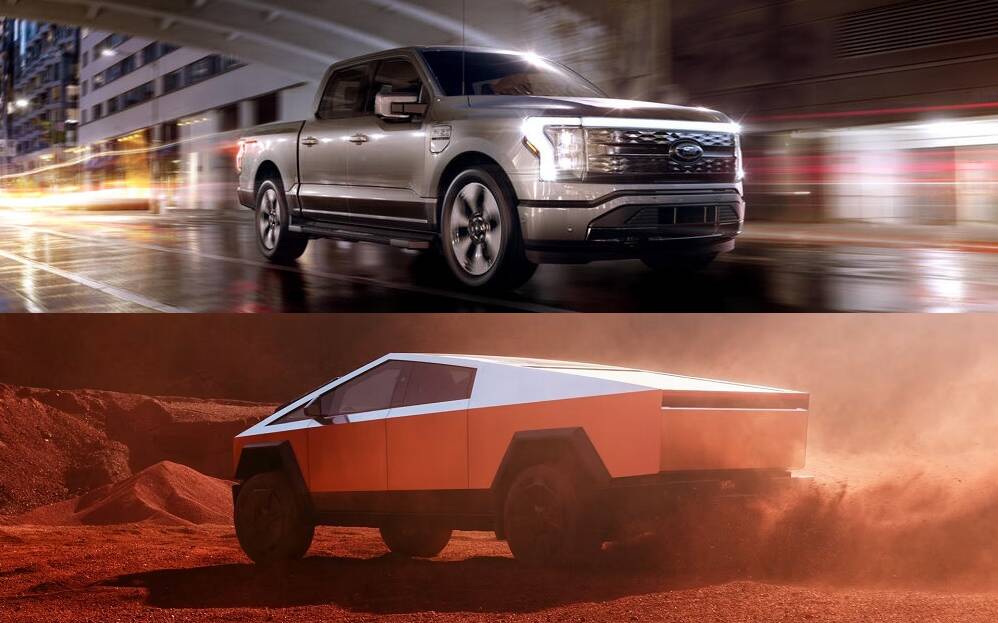
Design is often the first impression, and here the divide is stark. The Ford F-150 Lightning retains the familiar muscular silhouette that has defined the F-series for decades, with subtle modernizations that hint at its electrified heart. In contrast, the Cybertruck is a radical departure—a geometric icon born from science fiction. Its angular, stainless-steel exoskeleton challenges preconceived notions of what a truck should be, creating a polarizing yet undeniably captivating presence on the road.
Ford’s approach is one of evolution, reassuring for purists who crave reliability with innovation. Tesla adopts revolution—its design is as much a statement as it is functional, focusing on durability and an almost utilitarian minimalism that speaks to the brand’s avant-garde identity. Both vehicles, in their respective design choices, encapsulate divergent interpretations of the future of utility vehicles.
Performance and Powertrain Mastery
Performance metrics reveal the true essence of these electric contenders. The Ford F-150 Lightning boasts dual electric motors that deliver immediate torque and robust towing capabilities that rival its gasoline counterparts. It’s engineered for those who require a truck that can handle intense workdays without compromise.
The Cybertruck, meanwhile, dances on the bleeding edge of electric performance. Its tri-motor variant promises blistering acceleration, reaching 0 to 60 mph in mere seconds, a figure that shocks even traditional sports cars. Beyond speed, Tesla’s powertrain is designed for longevity and rugged use, incorporating regenerative braking and an impressive energy management system that maximizes range even under heavy load.
Technology and Innovation: More Than Meets the Eye
Both trucks are bristling with technology, but their philosophies diverge here as well. The F-150 Lightning integrates a comprehensive suite of smart features, including an innovative onboard power generator known as Pro Power Onboard, allowing the truck to act as a mobile power source—a game-changer for work sites and recreational use alike.
Tesla, true to its roots, centers its innovation around autonomous driving capabilities and a minimalist, immersive digital cockpit. Equipped with a cutting-edge Autopilot system and over-the-air updates, the Cybertruck reveals the potential for software-driven evolution, often leaving competitors playing catch-up. This focus on adaptability underscores Tesla’s vision of a vehicle that grows smarter over time, changing the driver’s relationship with the truck itself.
Utility and Practicality
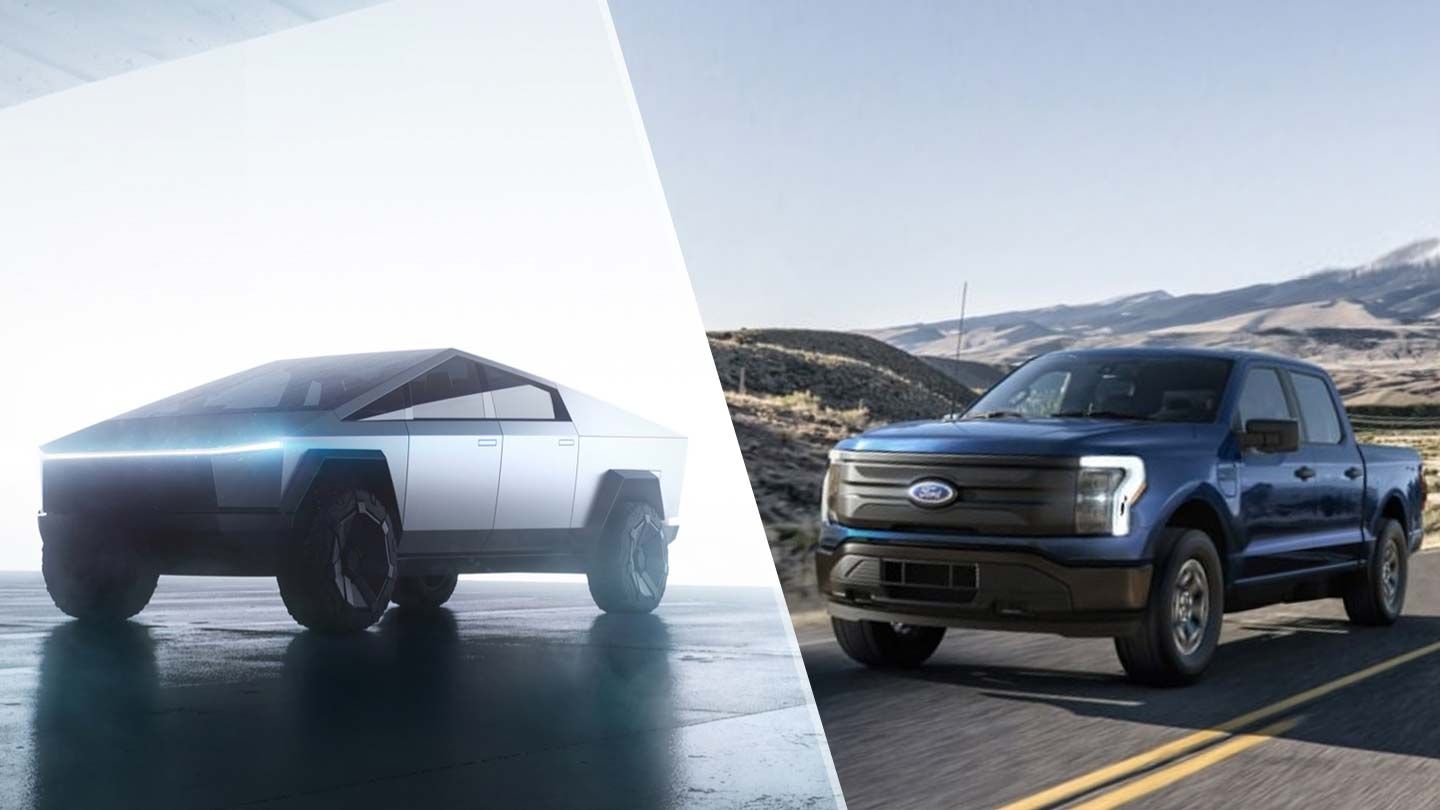
Beyond the spectacle and tech showcases, these vehicles are fundamentally tools destined for real-world application. The F-150 Lightning excels with its massive payload and towing capacities, enhanced by a traditional bed combined with a hidden “frunk” (front trunk)—a pragmatic fusion of utility and novel electric architecture. Its compatibility with existing Ford accessories and familiarity makes transitioning easier for traditional truck owners.
The Cybertruck, while imposing and spacious, stirs debate around its practicality. Its exoskeleton bed is durable, resistant to dents and corrosion, yet the angular design impacts cargo versatility compared to more conventional beds. However, Tesla compensates with innovative storage solutions and flexibility, including a built-in ramp for easy hauling of ATVs or motorcycles, appealing to adventurous users looking for a vehicle that pushes boundaries.
Environmental Impact and Sustainability
The fascination with electric trucks is inseparable from their environmental implications. Both the Ford F-150 Lightning and Tesla Cybertruck herald the promise of reduced emissions and decreased reliance on fossil fuels. However, it’s the nuances in their approach that illuminate the broader ecological dialogue. Ford, leveraging decades of manufacturing prowess, integrates sustainable materials and aims for carbon neutrality in production processes.
Tesla’s emphasis, meanwhile, extends to an overarching ecosystem: from solar energy integrations to battery recycling initiatives, illustrating a holistic commitment to sustainability. This vision transcends the individual vehicle, painting a picture of an interconnected, cleaner energy future where trucks are not just transporters but active participants in environmental stewardship.
Price Point and Market Positioning
Affordability remains a key factor in the electric truck market. The Ford F-150 Lightning positions itself as an accessible alternative, balancing advanced electric features with a price point that appeals to both commercial buyers and everyday consumers. Ford’s strategy to electrify a popular, widely-used platform helps ease the shift towards electric mobility without alienating its core audience.
The Cybertruck, while competitive, targets a niche audience enchanted by its audacity and performance. Its price reflects not just the vehicle itself but its embodiment of futuristic aspirations. For those captivated by innovation and disruptive design, the Cybertruck is a compelling proposition despite its initially higher price tag.
The Cultural Resonance and What Draws Us In
The attraction toward these vehicles transcends technical specifications. The Ford F-150 Lightning evokes a sense of continuity, bridging past and future in a way that comforts while inspiring. It taps into a collective nostalgia, yet offers a glimpse of what’s possible.
The Cybertruck mesmerizes with its defiance of norms, inviting us to imagine a radically different world where vehicles don’t just serve practical needs but also catalyze conversations and challenge cultural paradigms. It embodies a rebellion against convention, appealing to those who see transportation as an extension of identity and vision.
In essence, the Ford F-150 Lightning and Tesla Cybertruck are more than electric pickups. They are symbols in a larger tale about change—technological, environmental, and cultural. Their competition ignites imagination, fuels dreams, and propels us toward an electrified horizon.
As electric trucks carve their place on the roads and in our collective consciousness, the dialogue between these two machines continues to evolve. Whether one favors the steady evolution embodied by Ford or the disruptive futurism championed by Tesla, the future of trucks is undeniably electric—and endlessly fascinating.