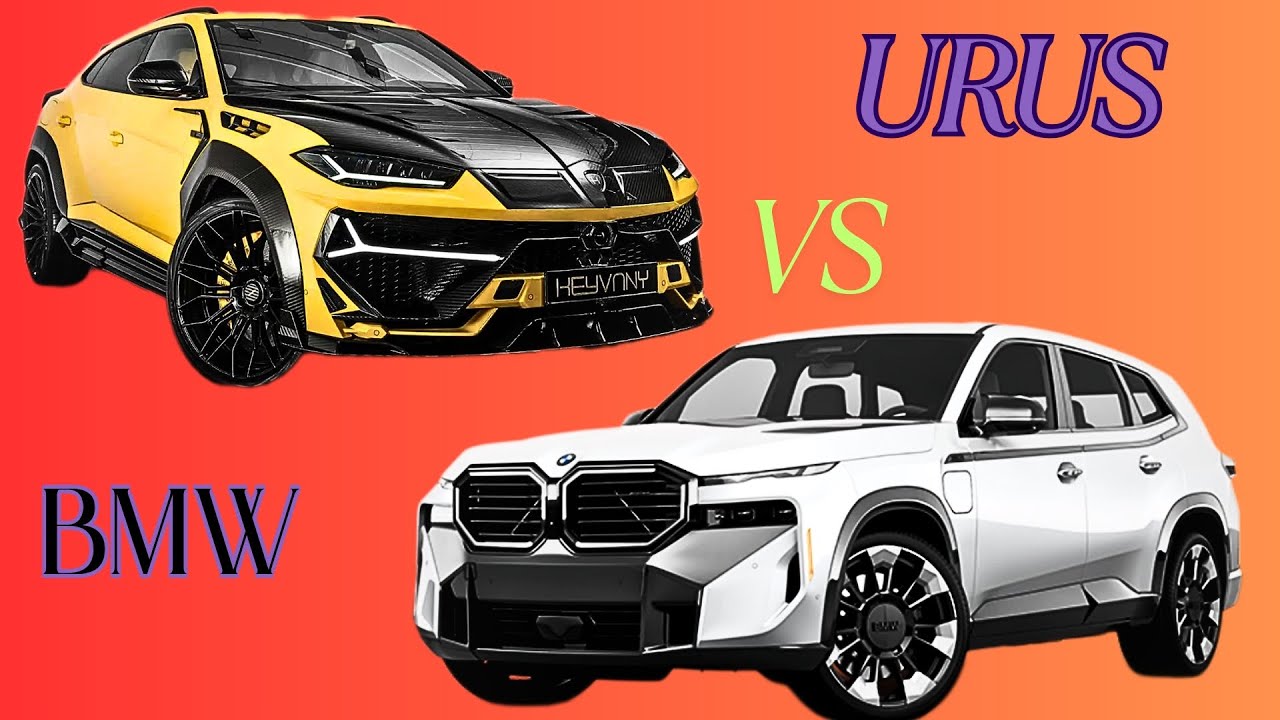
There are moments when a car isn’t merely transportation—it’s an argument. An aesthetic thesis. A provocation delivered at speed. The BMW XM and the Lamborghini Urus stand at that kind of crossroads, where the word “super SUV” stops being a marketing label and becomes a dare. This face-off is less about choosing the “right” vehicle and more about reshaping your point of view. Because once you’ve heard the engine symphony of both—once you’ve seen their proportions in the same frame—your idea of what an SUV can be starts to rearrange itself.
Picture a landscape of chrome highlights and aggressive silhouettes. Now imagine two different philosophies of dominance. The BMW XM brings a sculpted theatricality, an unmistakably Munich interpretation of wildness. The Lamborghini Urus, meanwhile, arrives with Italian inevitability—part supercar adrenaline, part fortress-like practicality. If you think this is simply a comparison of horsepower numbers, you’re missing the real drama: these vehicles aim to change how you watch the road.
Design Languages: Two Ways to Command Attention
Design is the first contract. It tells you how the car wants to be perceived before it ever moves. The BMW XM wears its presence like a billboard—bold surfaces, muscular contours, and detailing that feels engineered to catch light from every angle. Even at rest, it looks mid-performance, as though the air around it is already being pushed aside.
The Lamborghini Urus, by contrast, presents its aggression with sharper edges and a more performance-centric stance. Its visual grammar is unmistakable: low, purposeful lines; a stance that suggests instant launch; and a front fascia that reads like a challenge. The Urus doesn’t just look fast—it looks inevitable. You don’t question whether it belongs in this category. You question how it achieves such confidence in an SUV silhouette.

Step closer and you feel the difference in intent. The XM leans into dramatic expression—almost couture in its proportions. The Urus feels more like a thoroughbred wearing a suit tailored for rough terrain. Both command attention, yet they do it with distinct emotional temperatures.
Positioning: The XM’s Theatrical Power vs. the Urus’ Supercar DNA
The BMW XM is not trying to be discreet. It’s built around the promise of a new perspective: the idea that an SUV can feel like an event. It’s a vehicle that invites you to step into something larger-than-life—while still carrying the credibility of the BMW performance lineage.
The Lamborghini Urus answers with a different lure. It draws from supercar DNA, turning acceleration and responsiveness into a kind of second language. The Urus suggests a transformation: every time you drive, the SUV becomes a conduit to sensations typically reserved for lower, sportier machines.
Curiosity grows when you realize both are aiming at the same customer desire—thrill in a practical shell—yet they get there by different routes. The XM’s route is expressive and immersive. The Urus’ route is immediate and electric. It’s a choice between savoring the spectacle and sprinting toward it.
Engine Character: How Each One Makes Speed Feel
Performance is more than output. It’s cadence, the texture of acceleration, the way the vehicle gathers momentum. The XM and Urus both bring a serious wallop, but their personalities diverge the moment you ask for movement.
The XM tends to feel like a confident performer—broad-shouldered power delivered with a sense of control. There’s a weight to its thrust, a deliberate sensation of authority. You’re not just going fast; you’re being ushered through speed with a kind of German precision.
The Urus, in contrast, often feels like a scalpel cutting through resistance. Its response can feel quicker to the senses, sharper at the edge. It’s not merely acceleration—it’s a transformation from “driving” into “launching,” as if the car is rewriting the rules of physics for a few exhilarating seconds.

Chassis and Handling: Confident on the Road, Ceremonious at the Limit
Super SUVs must walk an unusual tightrope: they should handle like sports cars while staying stable like SUVs. The BMW XM leans toward composed confidence, with a suspension and steering demeanor designed to keep you feeling connected. Even when the road turns unruly, the car’s behavior can feel measured, as though it’s negotiating with the asphalt rather than fighting it.
The Urus is built to make you forget it’s tall. Its steering and chassis tuning often feel tuned for momentum and traction, allowing you to push with more certainty. It can deliver a satisfying sense of grip through corners—an attitude that turns “comfort-focused” into an elastic concept. The ride may remain usable, but the driving experience carries an undertow of sport intensity.
What’s intriguing is how quickly the mind adapts. In the beginning, you’re aware of size. Then you realize you’re prioritizing line choice. That’s the promise these machines make: they shift your perception from “big car” to “capable weapon.”
Interior Atmosphere: Luxury That Doesn’t Lose the Edge
Step inside and the conversation changes. Exterior aggression is one thing; interior tone is another. The BMW XM typically leans toward a premium, driver-focused cocoon—technology and materials that feel purposeful, not decorative. It’s luxury with an edge, and the cockpit layout tends to encourage you to feel in command rather than simply seated.
The Lamborghini Urus interior often feels like a performance lounge. Materials and design language suggest artistry, but the seating position and driver orientation keep the focus on action. Controls feel intuitive, and the ambiance tends to amplify the sensation of being in something special.
Both interiors aim to create a psychological effect: you should feel the car’s personality the moment your hands find the wheel. It’s not just about comfort. It’s about immersion. And immersion is what makes driving a habit worth repeating.
Technology and Driver Experience: Modernity With a Sense of Occasion
In today’s automotive world, tech is expected. But “expected” isn’t the same as “inspiring.” The XM and Urus incorporate advanced features designed to keep you informed, entertained, and supported—yet they’re also meant to elevate your sense of control.
Expect connectivity, driver-assistance systems, and configurable driving modes that help you tune the mood. In one mode, the car can feel almost civilized; in another, it becomes theatrical. That elasticity—the ability to shift character on command—is part of the appeal. It invites curiosity every time you start the engine.
These systems don’t exist solely for convenience. They exist to make the drive feel curated, as if the car is participating in the story you’re telling at the wheel.
Practicality and Real-World Use: Power Meets Purpose
Here’s where the narrative gets even more interesting. Super SUVs can’t simply be impressive; they must also be lived with. The Urus generally aims for a blend of sport performance and daily usability, promising comfort for longer journeys and the practicality expected from an SUV. It’s designed to carry more than just gear—it carries momentum, lifestyle, and plans.
The XM similarly emphasizes usability without surrendering its identity. The cabin provides space for occupants and the vehicle layout supports the kind of routine errands that, somehow, always feel more dramatic when the car is this charismatic. Both vehicles understand that you’re not just taking the road—you’re integrating the car into your life.
That’s the quiet promise: the thrill doesn’t vanish when you leave the highway. It follows you into traffic, into parking lots, into the everyday rhythms that usually sand down excitement.
Ownership and Identity: Choosing the Feel of a Brand
At some point, the comparison becomes less technical and more personal. The BMW XM carries the identity of a brand that often balances engineering seriousness with emotional design. It offers a sense of intelligent aggression—premium, deliberate, and a touch rebellious.
The Lamborghini Urus reflects the identity of a house built on spectacle. It suggests a lifestyle where performance is the headline and luxury is the supporting actor. Choosing the Urus often means choosing the feeling of being unmistakably part of something rare.
In this face-off, both cars offer power and prestige. But the differentiator is emotional alignment. Which narrative do you want to inhabit?
Verdict: A Duel of Perspective
BMW XM vs Lamborghini Urus isn’t merely a battle for specs. It’s a contest of worldview. The XM invites you to reconsider what a super SUV can feel like—dramatic, composed, and intensely modern. The Urus asks you to reimagine SUV driving as an extension of supercar sensation—fast responses, thrilling momentum, and unmistakable presence.
When you step back, the choice becomes clearer in an unexpected way. If you crave theatrical confidence and a German-crafted sense of command, the XM may feel like your new standard. If you want supercar immediacy wrapped in SUV practicality, the Urus pulls at your curiosity like a magnet.
Either way, the road never looks the same after you’ve seen both. These machines don’t just compete; they reshape expectations—turning “super SUV” from a category into a perspective you’ll carry long after the drive ends.