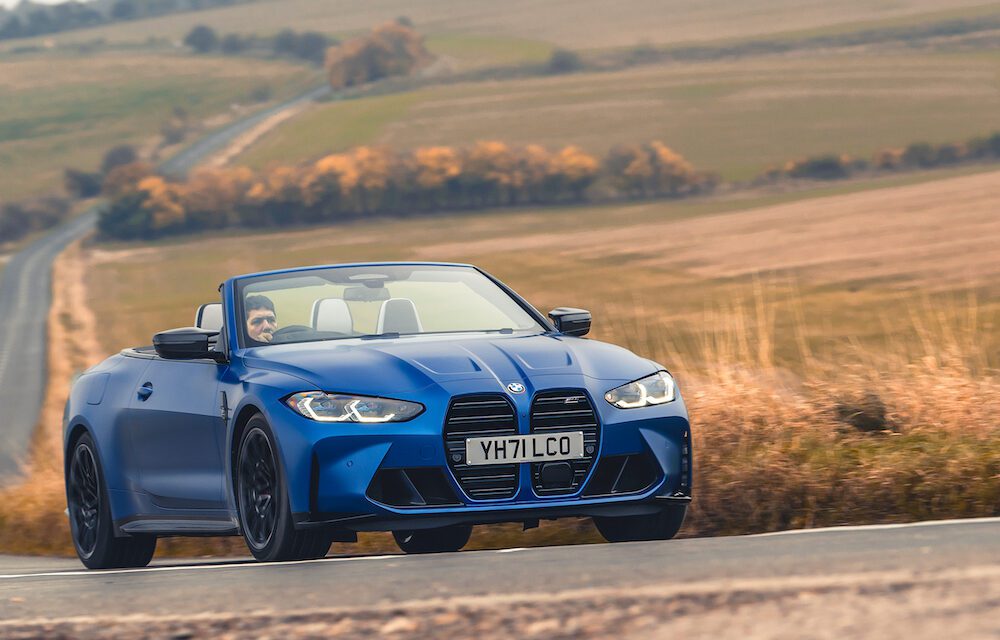
There’s a particular kind of anticipation that gathers at the intersection of precision engineering and open-air theatre. The BMW M4—offered as both coupe and convertible—arrives with that promise intact. It’s not merely a fast car; it’s a small, meticulously engineered drama where steering feel, throttle response, and aerodynamic confidence perform in the same act. One version is sealed behind a roofline sculpted like a promise. The other lets the world in, trading some insulation for a more vivid sensory script. Together, coupe and convertible versions form a compelling question for drivers: do you prefer the tight focus of a closed cabin, or the unfiltered exhilaration of wind and weather?
This review explores what readers can expect from the BMW M4 in both formats—how each one behaves on different surfaces, how the driving experience changes with the roof up or down, and where the practicality arguments begin and end. Along the way, there’s room for the details that matter: chassis character, engine personality, restraint and excess in equal measure, and the small usability decisions that decide whether enthusiasm becomes ownership pleasure.
First Impressions: Two Bodies, One Ambition
The coupe version greets you with an almost architectural certainty. Its silhouette is lower, more contained, and—crucially—more acoustically self-aware. Wind noise is muted compared with the convertible, and the cabin feels like a cockpit locked into a high-performance rhythm. It communicates speed before you even move: the stance is planted, the rear haunches appear deliberately muscular, and the design choices reinforce the idea that this car was made for commitment.
The convertible, by contrast, introduces an entirely different kind of immediacy. The roof’s absence changes more than scenery; it reshapes auditory texture. Instead of a controlled soundscape, you hear more of the engine’s intake character, more of the exhaust’s pulse, and more of the atmosphere pressing in at speed. The sensation is less “gloved and polished” and more “engaged and alive.” It’s thrilling, and it’s also revealing—every vibration and every shift decision feels more personal.

Engine and Performance: The M4’s Core Personality
Under the bonnet, the M4 aims for a sweet spot: potent torque, sharp escalation, and a responsiveness that doesn’t feel artificially managed. In everyday driving, it can be surprisingly civil when coaxed gently. Yet once you commit—when throttle input becomes decisive—the car behaves like a well-trained sprinter. Power arrives with authority rather than drama, building speed with a kind of linear menace that makes the speedometer feel reluctant to keep up.
Acceleration isn’t the whole story, though. The M4’s character is also about how it transitions between mid-range and higher revs. There’s a sensation of mechanical harmony: the drivetrain feels composed, the revs climb with purpose, and the car’s overall balance doesn’t collapse when you push beyond polite limits. The coupe benefits from slightly more stability as the body stays more aerodynamically “complete,” while the convertible demonstrates that it can still feel taut—if slightly more whimsical in its responses to airflow and weight transfer.
Chassis Dynamics: Steering Feel, Grip, and Confidence
The chassis is where the M4 becomes more than a number on a spec sheet. Steering response tends to feel immediate, with enough tactility to let you read what the front tires are doing. You don’t just drive the car; you interpret it. On smooth roads, that interpretation becomes a flow state—small inputs, quick corrections, and a sense that the car is always ready to change direction without protest.
On less ideal surfaces, the narrative shifts. The M4 reveals its performance intentions: it communicates traction boundaries early and with clarity. That clarity is empowering. It doesn’t always feel soft or forgiving, but it often feels honest. The coupe’s body stiffness can translate into a slightly more composed platform when cresting uneven pavement or threading through tight corners. The convertible, while still fundamentally capable, can feel marginally more influenced by wind and flex. That difference isn’t a dealbreaker; it’s a reminder that physics is always present, even in the age of electronic wizardry.
Ride Quality: Comfort With Sharp Edges
Comfort in an M4 is a nuanced claim. The car can be compliant at modest speeds, yet it also carries a performance bias in its damping philosophy. Short impacts may be absorbed with controlled firmness, but repeated bumps or rough patches can make the ride feel more like sport calibration than cruise comfort. Still, the coupe’s closed environment can reduce how much noise and vibration you perceive, while the convertible amplifies the sensation of movement through the body.
Readers should expect a car that can do long trips, but not in the manner of a grand touring limousine. Think of it as a performance machine that tolerates distance. It’s the difference between “smooth forever” and “comfortable enough to enjoy the journey while staying alert.”
Transmission and Throttle Mapping: Precision or Play
The M4’s driving personality is shaped by how it handles throttle mapping and gear selection. In sport-oriented modes, the car tends to favor agility—downshifts arrive with urgency, and throttle response becomes sharper. In normal conditions, the car can feel more measured, allowing you to enjoy the engine’s underlying character without triggering every hairline of performance reflex at once.
The convertible adds a unique layer to this behavior. With the roof down, the sound and airflow make you instinctively drive more theatrically, even if you’re not intending to. That means the transmission may feel more “alive,” because the sensory feedback loop is stronger. It’s one of those subtle psychological differences: the car doesn’t change radically, but the experience does.
Interior and Infotainment: Modern Ergonomics, M-Grade Intent
The cockpit is typically arranged to keep you oriented. Controls are within reach, driver-focused, and designed to reduce friction between intention and action. Materials and surfaces aim for a premium feel, but the vibe is distinctly performance-oriented—less about passive luxury and more about supportive control. Seats tend to hold you firmly during spirited cornering, keeping your posture stable when the car decides to accelerate through a bend.
For readers considering everyday use, the real question is usability: visibility, ingress and egress, and the practicality of storage spaces. The coupe’s sealed cabin often feels more forgiving in daily conditions. The convertible offers a more flexible lifestyle, but it comes with the usual trade-offs—more wind influence at speed, more awareness of weather, and a general sense that the car is best enjoyed with intention.
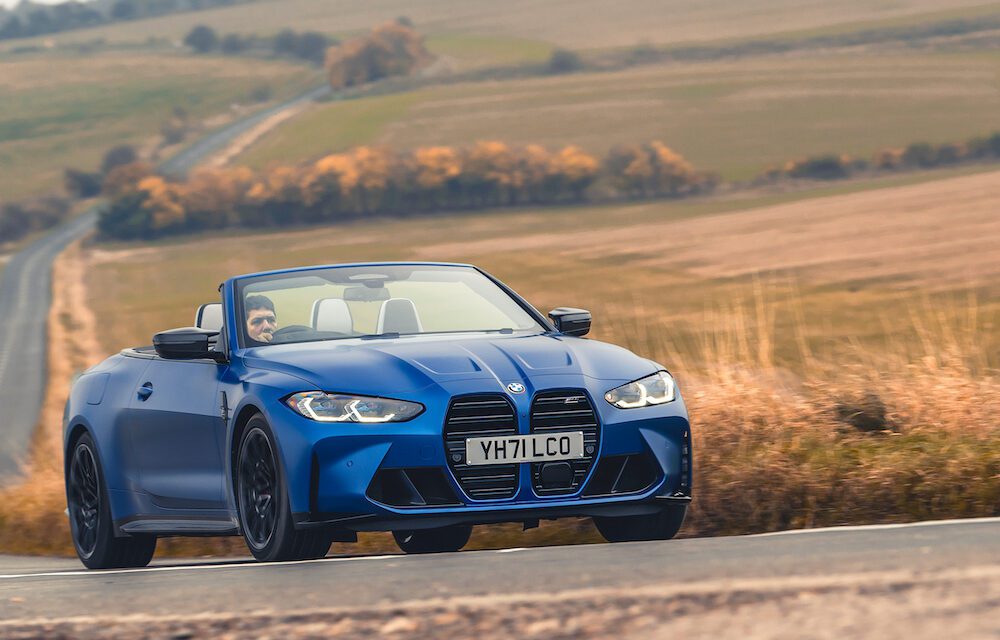
Exterior Appeal: The Coupe’s Sculpted Discipline, the Convertible’s Open-Air Drama
Visually, both versions share the same M4 lineage—muscular proportions, purposeful details, and a sense of design continuity. Yet the coupe and convertible each tell a different story. The coupe looks like it could sprint from a stoplight without needing to warm up. Its roofline is taut and continuous, visually reinforcing the car’s rigidity and performance intent.
The convertible, meanwhile, is an exercise in controlled exposure. With the roof up, it still looks dramatic and confident. With the roof down, the car becomes a roaming stage. It’s the kind of vehicle that turns ordinary routes into events. Even when you aren’t pushing hard, the open cabin makes you feel more connected to your surroundings—streetlights, traffic rhythms, and the changing sky become part of the drive.
Ownership Considerations: Maintenance, Comfort, and Value Logic
Owning an M4 means respecting it. High-performance tires, brake components, and frequent use of dynamic driving modes can impact running costs. This isn’t meant to discourage—rather, it clarifies expectations. Those who treat the car as a weekend instrument will notice less strain in consumables than those who drive it relentlessly in aggressive patterns.
For convertible buyers, additional ownership logic enters the equation: the system that operates the roof, the importance of care in weather exposure, and the reality that convertible driving is a seasonally influenced experience. Still, when the conditions are right, the payoff is substantial. The coupe, on the other hand, typically feels simpler to live with in a wide range of climates.
Who Should Buy: Matching the Version to the Personality
If you crave a tightly controlled performance sensation—less airflow disruption, slightly more composure, and a cockpit feel that stays isolated—you’ll likely gravitate toward the coupe. It suits drivers who enjoy precision, who want an atmosphere of focus, and who prefer the car to behave like a disciplined scalpel.
If you want the M4 to be more than transport—if you want atmosphere, sound, and wind as part of the driving equation—the convertible makes sense. It’s for people who measure joy in sensory clarity, who don’t mind the compromises that accompany open-air excitement, and who want the car to feel like a living event rather than a sealed machine.
Final Verdict: Two Flavors of M4 Thrill
The BMW M4 in coupe and convertible form delivers the same performance ambition, yet the experience splits into two distinct emotional temperatures. The coupe is composed and concentrated, offering a more insulated, track-adjacent confidence. The convertible is communicative and vivid, inviting the world in and turning each drive into an audible, atmospheric conversation with the road.
Ultimately, the best choice is the one that matches your idea of excitement. Whether you prefer the coupe’s disciplined grip or the convertible’s open-air exhilaration, the M4 remains an exceptional blend of engineering, responsiveness, and presence. In either shape, it doesn’t simply ask you to drive—it persuades you to pay attention.