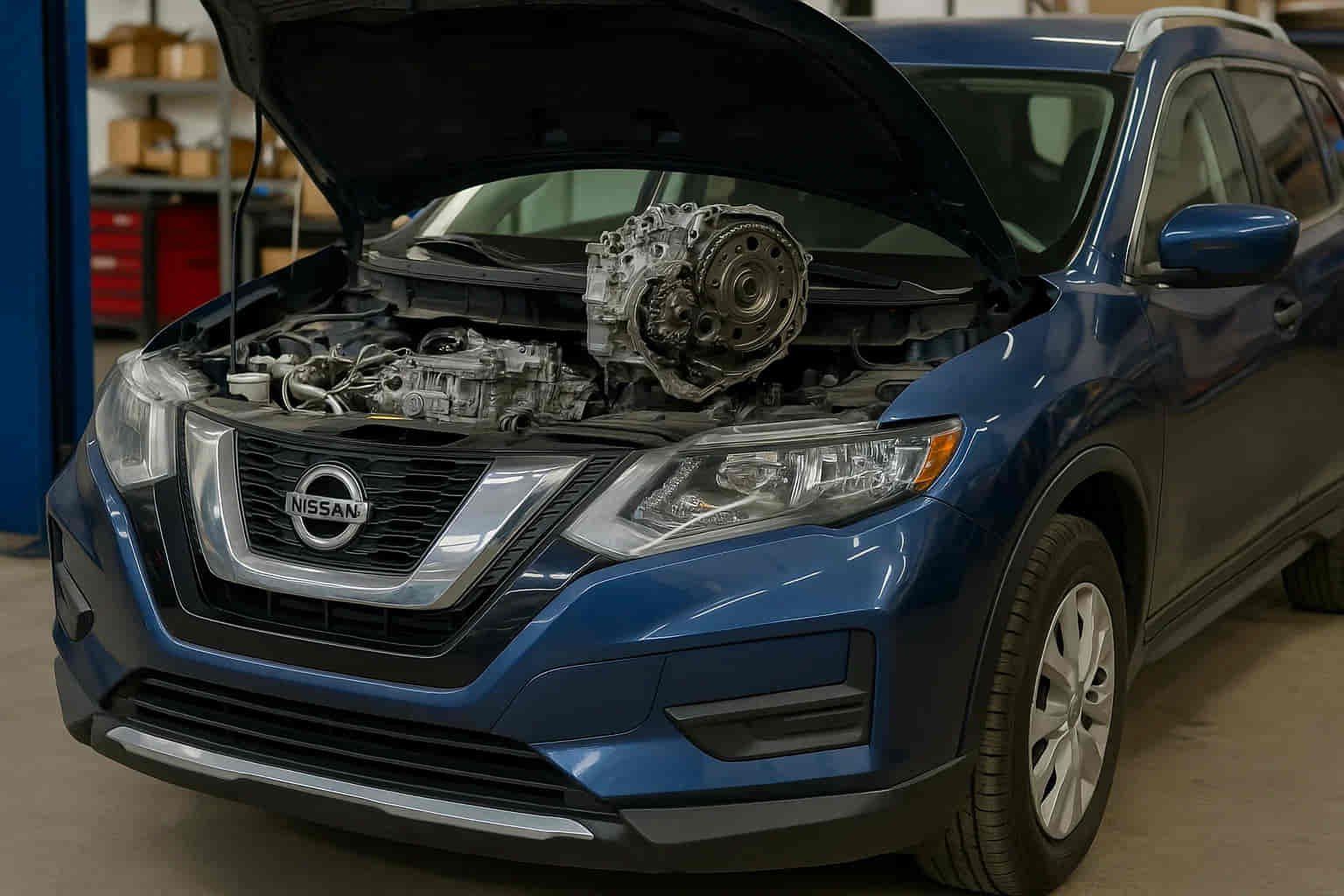
The Nissan Rogue has always carried a certain hush—like a well-tailored jacket for daily life. It promises comfort, practicality, and the reassuring glide of modern engineering. Yet beneath that smooth exterior, one question lingers in the minds of drivers: Nissan Rogue CVT – Still Problematic? The CVT, or continuously variable transmission, is meant to eliminate the interruptions of gear changes, offering a seamless continuum of motion. But when ownership stories start to echo—vibration, harsh engagement, strange shifting behavior—seamless can feel more like euphemism than reality. Still, the situation is not a simple fairy tale of doom. It’s closer to a weather map: patterns emerge, risk clusters form, and outcomes diverge depending on maintenance, model year, and driving habits.
So let’s peer into that mechanical backstage. Not with paranoia, but with clarity. Because a transmission is not merely a component; it’s the bridge between your intention and the road’s response. And when that bridge creaks, even the smoothest ride can begin to feel haunted.
What Makes a CVT “Different” in the Rogue
A traditional automatic transmission works like a relay team—one gear hands off to the next. A CVT is more like a continuous ribbon being rewound and redirected, infinitely adjusting ratios to keep the engine in its preferred operating range. In theory, that means improved drivability and efficiency. In practice, the CVT’s magic depends on delicate materials, precise hydraulics, and careful thermal management.
The Rogue’s CVT systems rely on a steel belt and pulleys that vary their effective diameter to create the desired ratio. That design invites smoothness, but it also demands consistent lubrication and stable operating temperatures. Short commutes, stop-and-go driving, and heat-soaked conditions can accelerate wear. And the more the system is asked to work without respite, the more important it becomes that maintenance isn’t treated as optional—especially when fluid condition, filter integrity, and driving technique are on the line.
The Symptoms Drivers Notice (and Why They Matter)
When problems arise, they rarely announce themselves like alarms. Instead, they arrive as subtle irregularities—small disturbances in the choreography of motion. Common reports include:
Vibration or shuddering during acceleration or at highway speeds.
Delayed engagement when shifting from Park to Drive or Reverse.
Surging as the engine speed climbs without a corresponding, expected increase in vehicle acceleration.
Unusual noises—whirring, grinding, or buzzing that seems out of proportion to the driving situation.
Warning lights or diagnostic trouble codes that hint at overheating or fluid degradation.
These aren’t just annoyances. They can indicate wear in the belt/pulley system, contamination or breakdown of transmission fluid, or pressure irregularities. The CVT behaves like a sensitive instrument: when conditions drift from specification, it may compensate temporarily—until the compensation becomes erratic.
And here’s the intriguing part: the same symptom can come from different root causes. A vibration may be tied to mounts or driveline issues. A delay might reflect software calibration or a hydraulic pressure concern. That’s why treating the CVT as a monolith can lead to misdiagnosis. Precision matters, and so does diagnostic discipline.
Why Maintenance Timing Turns the Story
Think of CVT fluid as the transmission’s blood and bloodstream at once—cooling, lubricating, and transmitting hydraulic pressure. If that fluid becomes degraded, the system’s internal tolerances start to widen. Slippage can increase. Temperatures can climb. Wear accelerates in a kind of mechanical domino effect.
Some drivers follow conservative service intervals; others operate on the vague promise that “it’s sealed for life.” But “life” is a word with elastic meaning, and CVTs tend to punish neglect more quickly than many conventional automatics. Fluid change intervals that align with manufacturer guidance—or shorter intervals for demanding use—can be a turning point. Fresh fluid can restore friction characteristics and cooling capacity, giving the CVT a smoother runway.
Service documentation also matters. A transmission that was treated consistently feels different from one that experienced long stretches of untreated stress. Even among similarly aged vehicles, maintenance history can produce dramatically different outcomes.
Model Years and Design Evolution: Not All Rogues Are Identical
Across time, Nissan made updates to parts, calibration, and service procedures. That means the Rogue’s CVT story is not one continuous narrative—it’s a braided one. Early production runs may differ from later revisions, and the software logic that governs shift ratio changes can be updated over time.
It’s also crucial to recognize variations in driving patterns. Two vehicles with identical model years can diverge drastically based on climate, road conditions, towing habits, and the frequency of low-speed creeping traffic. A CVT subjected to persistent heat and heavy demand becomes an experiment conducted without informed consent.
Recall and Technical Service Bulletin Threads: What to Look For
When manufacturers address recurring concerns, the response often arrives via recall notices or Technical Service Bulletins (TSBs). While recalls tend to carry a direct remedy, TSBs may guide dealers on diagnosis, software reprogramming, or updated service procedures.
The practical value of these documents is not merely administrative. They tell you whether the issue has been acknowledged as a pattern rather than a one-off tragedy. If your Rogue falls within a relevant range, the repair pathway can shift from guesswork to informed procedure.
In the real world, this means verifying service records, confirming whether updates were performed, and requesting a targeted diagnostic scan that includes transmission-related data. A casual scan that only reads the code can be like listening to a single note and claiming the whole song is understood.
Driving Habits That Either Court Trouble or Build Resilience
Certain habits can either sharpen the CVT’s longevity or slowly sand it down like water wearing stone. Smooth acceleration matters. Aggressive throttle inputs can increase belt tension and thermal load. Frequent rapid transitions between Drive and Reverse—especially during congestion—can magnify wear. Long downhill descents or towing beyond recommended capacity add further stress.
Equally important is how you manage temperature. If the vehicle frequently runs hot due to climate or repeated short trips, fluid degradation accelerates. Treating overheating indicators seriously is not dramatic—it’s preventive medicine.
Some drivers also report benefits from allowing gentle warming before demanding acceleration, particularly in cold weather. While modern vehicles are engineered for day-to-day operation, the CVT belt and hydraulic systems still benefit from a sensible introduction to motion.
Repair vs. Replacement: The Crossroads Moment
When a CVT begins acting up repeatedly, owners reach a crossroads: repair attempts, rebuild options, or complete replacement. Each path has its own risk profile. Repair might target fluid-related concerns, valve body issues, sensor problems, or software logic. Rebuild or replacement addresses internal wear but can be expensive and varies widely by shop quality and parts sourcing.
What’s often overlooked is the “why,” not just the “what.” A CVT that fails without first addressing contamination, overheating, or maintenance neglect is like repairing a roof while ignoring the leak source. The problem can return, and the cost can multiply.
Experienced technicians approach CVT concerns with a systems mindset: they inspect for related issues—engine mounts, driveline components, and cooling performance—because the CVT operates inside a network of mechanical relationships.
Unique Appeal: Why People Still Love the Rogue Despite the Concern
Even with CVT conversations swirling, the Rogue retains a kind of enduring magnetism. It’s roomy without being cumbersome, confident without feeling confrontational, and often offers a driving experience that feels effortlessly calibrated. The CVT’s promise—smooth, continuous motion—can be genuinely delightful when everything is operating within healthy parameters.
There’s also the “daily life” appeal: easy commuting, comfortable seating, cargo practicality, and a balance of technology and usability. For many owners, the Rogue represents more than transport; it represents routine made smoother.
That’s what makes the CVT debate so uniquely human. The mechanics may stumble, but the vehicle’s character—its fit for real schedules and real roads—draws people back, even when they approach the question with caution.
Buying or Keeping One Now: A Practical Outlook
If you’re evaluating a Rogue today, the decision becomes an exercise in informed attention. For prospective buyers, focus on maintenance records, verify whether relevant updates were completed, and inspect for early warning signs. A thorough pre-purchase inspection should include a diagnostic scan and an assessment of transmission behavior under varied conditions.
If you already own one, the smartest move is proactive stewardship. Respect fluid service timelines. Address symptoms early rather than letting them evolve into irreversible wear. And seek diagnostics that go beyond superficial interpretation.
Still, it’s fair to ask: is the Rogue CVT “still problematic”? The honest answer is conditional. Problems have been reported, patterns have emerged, and risk can be influenced by time, temperature, and care. But not every Rogue suffers the same fate, and many owners experience long stretches of trouble-free operation.
Final Thoughts: The Road Tells the Truth
The CVT is not a villain; it’s a system with boundaries. When those boundaries are respected—through maintenance, sensible driving, and timely attention—it can deliver the kind of smooth motion that feels almost frictionless. When boundaries are ignored, wear accumulates silently until the vehicle starts speaking in vibrations, delays, and unsettling shifts.
So the Rogue’s story is still being written. Like any ongoing saga, it’s shaped by the choices of the people behind the wheel and the care bestowed upon the vehicle. If you treat the CVT as a precision instrument rather than a perpetual mystery, the journey can remain mostly serene—even if the question still returns every time you press the accelerator.