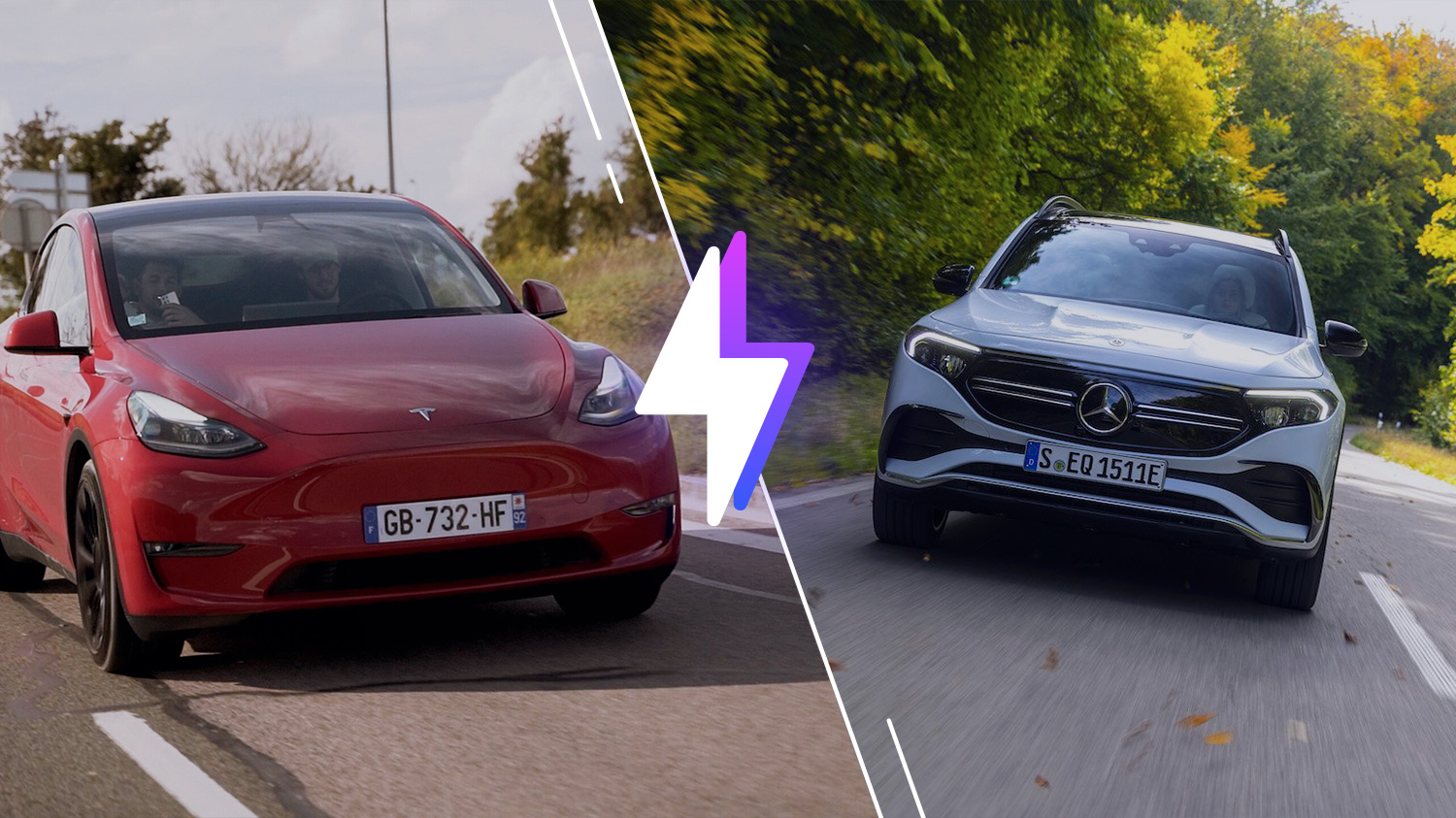
The compact electric crossover has become a kind of modern passport: small enough to maneuver through tight city grids, yet ambitious enough to carry daily life across longer distances. In 2026, that passport most often gets stamped with two familiar names—Mercedes-Benz EQB and Tesla Model Y. On the surface, the debate sounds simple: which one is “better”? But a recurring observation keeps resurfacing among owners and shoppers—people often fall in love with the idea of their chosen EV more fiercely than they expect, almost as if the car becomes a daily ritual. That fascination isn’t merely about horsepower or range. It’s about how each vehicle structures attention, comfort, and control in a way that feels surprisingly personal.
Let’s step into the compact EV face-off with a patient lens. The EQB approaches the segment with the poise of a premium utility vehicle, while the Model Y leans into a tech-forward, “quietly relentless” engineering ethos. Both are built to handle everyday errands, road trips, and everything in between. Yet the reasons people keep talking—long after the test drive—run deeper than spec sheets.
First impressions: character before credentials
The first glance often becomes the decisive moment. The EQB carries a recognizable Mercedes gravity: upright proportions, a friendly but purposeful stance, and the visual assurance that the cabin will feel intentional. The Model Y, by contrast, looks like it’s been engineered rather than styled. Its clean surfacing and minimal clutter communicate efficiency, even before you touch the controls.
Common observation: shoppers frequently say they “know” which one they prefer within minutes. But the more interesting truth is what the preference signals. It can be a subtle attraction to how the vehicle makes you feel—composed and protected in the EQB, or sleek and future-facing in the Model Y. People rarely articulate this immediately. Still, it colors the entire experience: how you drive, how you park, and how you interpret every notification.

Interior philosophy: comfort architecture vs software gravity
Inside, the EQB leans toward traditional premium craftsmanship. Surfaces, layout, and tactile feedback aim to reduce cognitive friction. Even when features become digital, the cabin still behaves like a thoughtfully organized space—calm, ergonomic, and familiar enough to feel “yours” quickly.
The Model Y’s interior has a different kind of magnetism. A large central touchscreen becomes the focal point; the cockpit feels like a command center, with software acting as the organizing principle. It’s not just that the controls are simplified—it’s that the experience is designed to be continually updated and reinterpreted. This creates a sense of ongoing evolution, which can be thrilling to some drivers and intimidating to others.
Deeper fascination: many owners don’t just want a comfortable seat. They want their vehicle to participate in their day. The EQB participates through comfort cues—settled seating posture, refined cabin ambiance, and a premium sense of readiness. The Model Y participates through software responsiveness—menus, profiles, and driving behaviors that can feel personalized on the fly.
Performance and drivability: calm torque vs instant thrust
Both cars deliver the effortless acceleration electric vehicles are known for, yet they deliver it with different emotional textures. The EQB can feel composed and smooth, with power delivered in a way that encourages confident, steady driving. It often reads as “civilized momentum.”
The Model Y tends to emphasize immediacy. Its power response can feel like a handshake that happens instantly—one you notice. That doesn’t always mean it’s better for every situation; sometimes, the thrill of instant thrust can be distracting in slow traffic or tight urban maneuvering. Still, it’s precisely this responsiveness that many drivers interpret as control.
Common observation: when acceleration is similar on paper, drivers still report a different “driving personality.” That’s because traction control, regen behavior, and throttle mapping shape how the car communicates. Fascination grows when the vehicle makes you feel understood—when it translates your intention into motion without drama.
Range, charging, and daily logistics
Range matters, but daily logistics matter more. The EQB’s strength is often how naturally it fits routine life: commuting, errands, and family runs that demand predictable usability. The Model Y’s strength is often how it supports long-distance planning and spontaneous trips, especially for drivers who frequently use fast charging networks.
Charging isn’t just a technical process; it’s a social ritual. People talk about charging stops the way others talk about coffee breaks. The deeper reason: an EV becomes part of your schedule. Whether that schedule feels effortless or stressful depends on how charging fits into your habits.

Technology and driver assistance: reassurance vs autonomy theater
Driver assistance systems have become the new mirror. Drivers use them to check confidence—how safe they feel, how relaxed the commute becomes, and how often the car seems to anticipate trouble. The EQB generally offers a more traditional driver-assist framing: assist features designed to support the human behind the wheel, with Mercedes-like insistence on structure and clarity.
Model Y features often feel more “software-native.” The system can feel like an interface to an evolving ecosystem. That’s where the fascination deepens: some drivers are captivated by the notion that their car can improve and adapt over time. Others prefer the certainty of systems that feel stable and predictably conservative.
Common observation: shoppers may agree on which system is “better,” yet the real difference is how the system’s philosophy changes your behavior. If the car prompts calm attentiveness, you drive differently. If it encourages experimentation, you may explore more frequently—settings, modes, and driving styles that reshape your relationship with the road.
Packaging and practicality: the quiet battle for space
The EQB is built to feel like a compact crossover with genuine utility. Its interior space planning often appeals to those who carry more than they expect—shopping bags, sports gear, child seats, and weekend detours. It’s not just the dimensions that matter; it’s the psychological effect of having room to store and organize without compromise.
The Model Y offers flexibility too, but with a different approach. The layout prioritizes a sleek, efficient form factor while still providing practical cargo capability. Owners often find themselves using the storage areas more intentionally because the cabin feels “simplified” and easy to manage.
In this segment, practicality isn’t a single metric. It’s a chain reaction: door opening width, seat-fold behavior, loading height, and how quickly you can switch from commuting mode to family logistics.
Build quality, ownership experience, and the meaning of “premium”
Premium ownership is rarely one thing. It’s door-close solidity, cabin quietness, and the sense that the car will remain composed across years of daily repetition. The EQB often wins shoppers who equate premium with tactile assurance and consistent refinement.
The Model Y tends to win shoppers who define premium as seamless integration—software, features, and a service model that feels like an extension of consumer technology. This is another reason fascination grows: people don’t just purchase vehicles; they purchase an expected lifestyle of updates, conveniences, and friction reduction.
It’s also worth noting how brand identity influences interpretation. A driver who expects sophistication may notice different details than a driver who expects innovation. Both notice the car. They just notice different kinds of “future.”
Who should choose which: matching temperament to mission
If your driving is a blend of commuting, family logistics, and the desire for a cabin that feels like a well-dressed lounge, the EQB often aligns beautifully. It’s an EV that can feel grounded—less about spectacle, more about daily confidence. You’ll likely appreciate the calm structure and the sense that comfort is not an add-on but a design premise.
If your driving revolves around technology curiosity, rapid acceleration moments, and a preference for software-led convenience, the Model Y may feel like the more natural fit. It’s an EV that can feel like a living interface—one that encourages you to tinker, personalize, and plan trips with a digital mindset.
And here’s the deeper takeaway: the “better car” is frequently the one that matches your way of paying attention. Some people want quiet reassurance. Others want continuous feedback from a responsive system. Both are valid. Both are compelling. Both can create the feeling that the car is more than transport—it becomes a companion to routine.
The final verdict: a compact EV rivalry with a personal dimension
The 2026 EQB vs Model Y face-off isn’t only a contest of specs. It’s a study in temperament. Mercedes-Benz leans into comfort architecture and premium steadiness; Tesla leans into software gravity, immediacy, and a sense of forward motion. When drivers choose, they often choose the narrative that best fits their lives—whether that narrative is “composed utility” or “tech-forward evolution.”
In the end, the most fascinating part of compact EV rivalry is how quickly it becomes personal. You stop thinking in terms of horsepower and range, and start thinking in terms of moments: the ease of a morning drive, the confidence of lane guidance, the satisfaction of a smooth charge session, the quiet pleasure of space that fits your real world. Pick the one that feels like it understands your routine, and the debate fades—because you’ve already found the experience you’ll keep returning to.