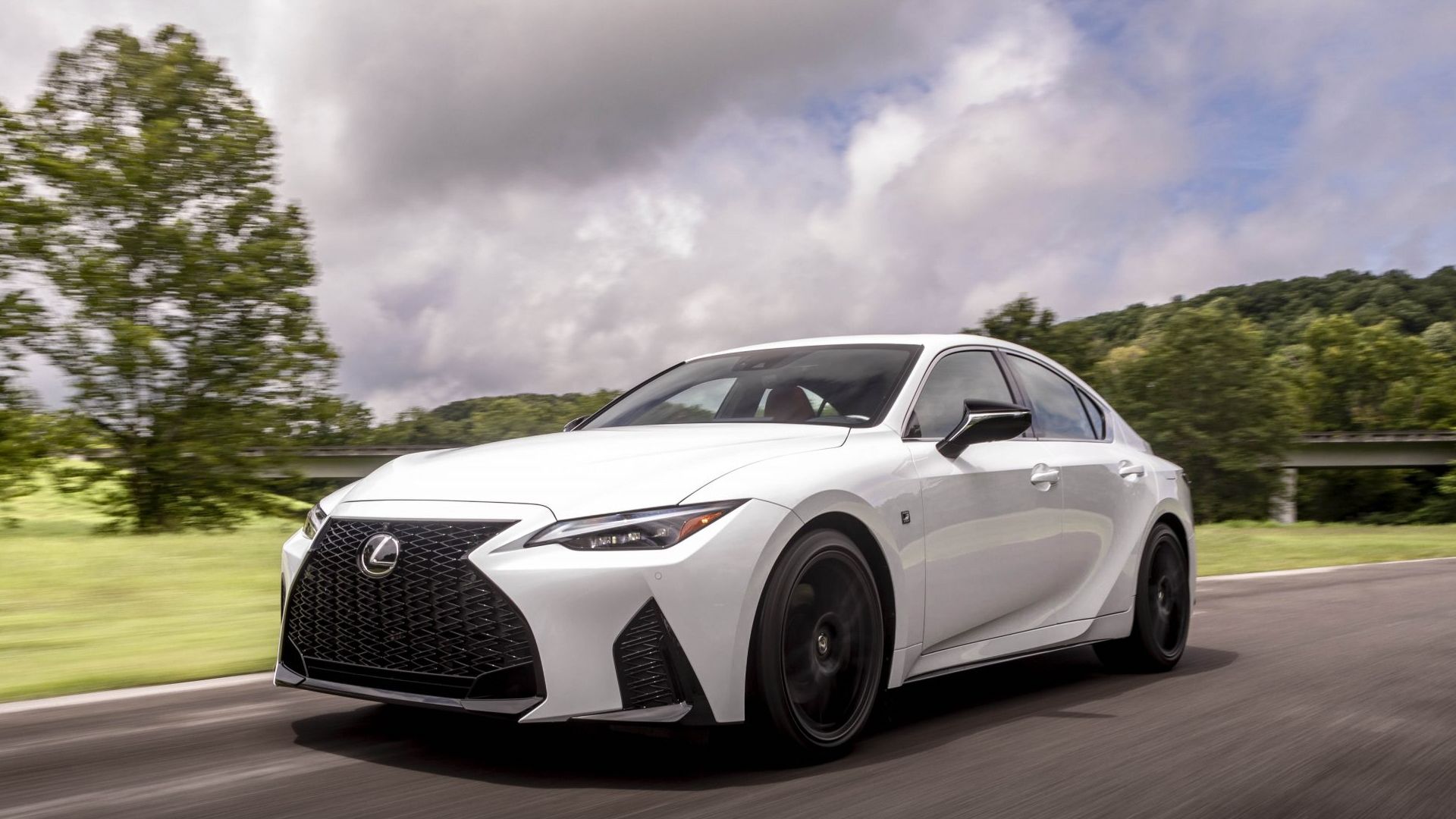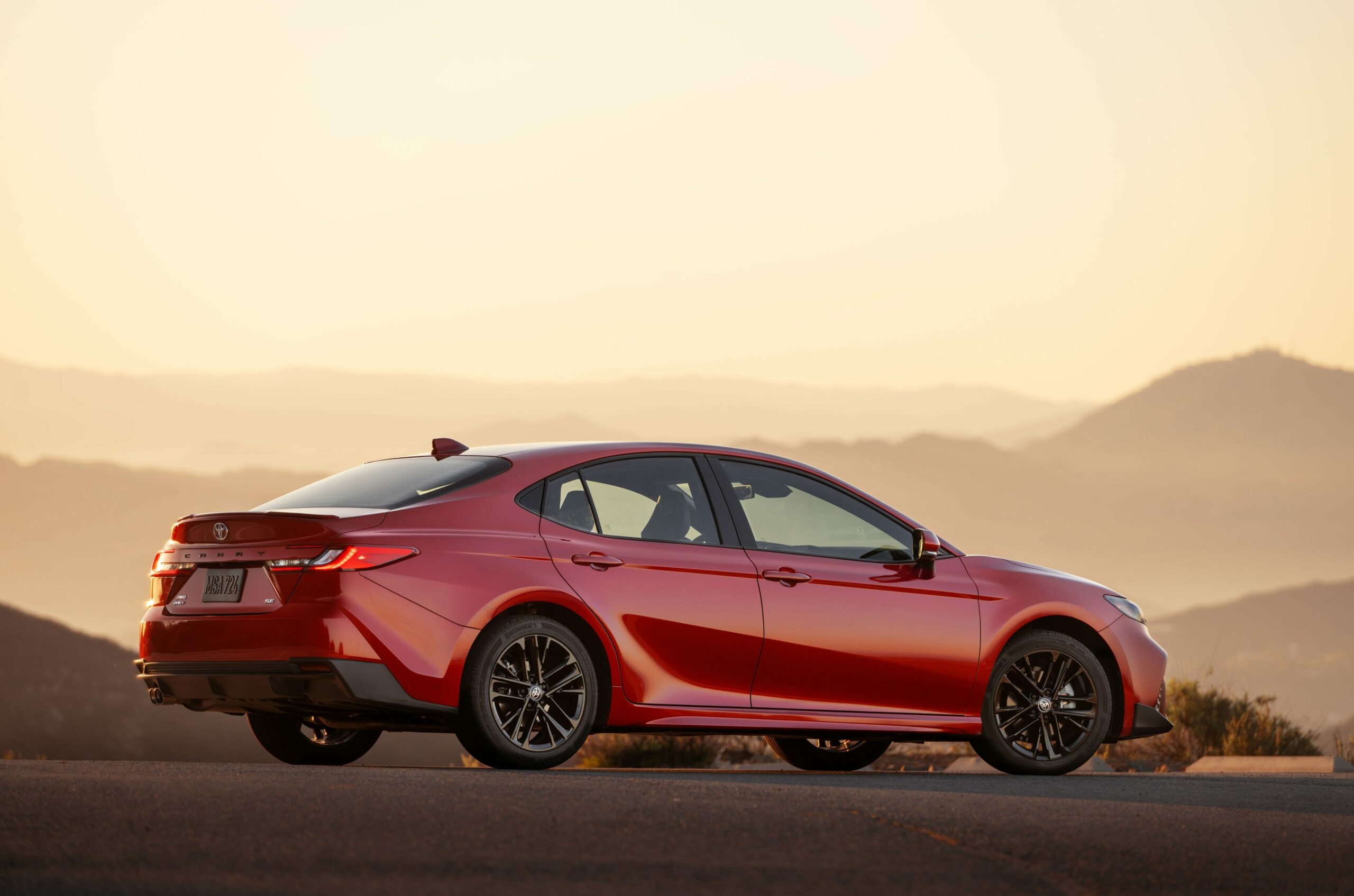
The weather has a way of rewriting expectations. One moment the road is a polished ribbon, the next it’s a restless, wet braid that grips and lets go without warning. In that shifting landscape, the “best” sport sedan isn’t the one that merely looks fast. It’s the one that keeps its composure—through rain-slick corners, winter slush, surprise crosswinds, and that familiar late-afternoon gloom when visibility tightens like a closing fist.
And then there’s the quiet promise of 2026: a more enlightened approach to all-weather performance. Instead of treating AWD as a checkbox, the best new sport sedans are engineered as weather-ready confidence machines. They translate traction into steering feel, refine stability into controllability, and turn grip into something you can trust—again and again.
Below, the spotlight falls on the most compelling 2026 AWD sport sedans—sedans built to make you drive differently. Not faster in a frantic way. Faster in a steadier, more deliberate one.
Why “All-Weather Performance” Isn’t Just About AWD
AWD is the headline, but it’s rarely the whole story. All-weather performance is a choreography: tire contact, suspension tuning, brake modulation, electronic torque distribution, and the way the steering communicates load transfer. The best 2026 AWD sport sedans behave like attentive conductors, coordinating every element so the car feels coherent even when the environment is not.
On rain-soaked pavement, the margin between “confident” and “uncertain” shrinks fast. A competent AWD system can deliver torque to the wheels that can actually use it, but the real magic is how quickly the car anticipates slip and corrects course. That’s where modern drivetrain calibration and stability logic matter—precision that doesn’t announce itself, yet shows up in your steering inputs feeling smoother, your throttle responses less abrupt, and your braking more predictable.
Still, the most underrated factor is tires. Even the best traction hardware can’t outmuscle worn sidewalls or mismatched compounds. For 2026 sedans, the ideal setup pairs advanced drivetrain capability with weather-appropriate rubber—often a winter-ready strategy if your climate demands it.
Chassis Balance: The Secret to Grip That You Can Feel
Sport sedans live and die by balance. When the road surface changes—dry to wet, warm to cold—the suspension must keep the platform steady while allowing controlled compliance. In 2026, the most compelling AWD sport sedans lean into that nuance: tighter control under load, smoother transitions over imperfections, and less of that “floaty” sensation that can make confident driving feel like guesswork.
Think of the chassis as a translator. It takes the chaos of the pavement—cracks, puddles, subtle ridges—and turns it into readable feedback. The result is not just speed potential, but drivability. You begin to sense how the front end will take corner entry, where the rear end will settle, and how the car reacts when traction returns after a brief loss.
The payoff is emotional. Driving feels less like wrestling. More like guiding.
Aero and Stability: Making High-Speed Rain Feel Ordinary
High-speed weather is where many cars become dramatic. Gusty winds push harder, wet surfaces reduce effective friction, and stability can either hold firm or degrade into nervousness. Aerodynamics—often overlooked in “all-weather” discussions—plays a major role here.
As speed climbs, aerodynamic forces influence tire loading and steering authority. Modern sedans increasingly aim for a more controlled airflow profile, reducing turbulence and encouraging a calmer ride stance at motorway velocities. It’s the kind of engineering you notice indirectly: the car tracks straighter, the steering doesn’t feel overly light, and lane changes require less correction.
In short, good aero turns unpleasant conditions into a manageable background detail.

Torque Vectoring and Drivetrain Logic: Confidence Through Calculation
AWD systems are not all equal. Some distribute torque in a blunt manner, reacting after slip appears. Others anticipate, measuring wheel speed differences, throttle demand, steering angle, and yaw behavior. The best 2026 AWD sport sedans aim for the latter—smarter torque routing that feels seamless.
When traction falls away in a rain corner, the goal is not to “save” the car at the last second. The goal is to prevent the loss of composure from starting. Effective drivetrain logic supplies torque where it can be used, reducing wheelspin and helping the vehicle maintain the intended path.
That’s why the driving experience changes. Instead of lifting early and tiptoeing, you can commit to a line with calm conviction. It’s a shift in perspective: performance becomes trust-based, not desperation-driven.
Braking Under Wet Conditions: Predictability Is Power
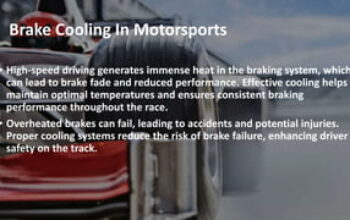
Braking in the rain is often described with vague metaphors—“careful,” “gentle,” “slippery.” But the best 2026 AWD sport sedans focus on something sharper: controllability. Wet braking performance isn’t only about stopping distance; it’s about pedal feel, modulation, and how consistently grip returns as the car slows.
Advanced brake systems with stable hydraulic response and traction-aware control help the car avoid sudden lock events or inconsistent deceleration. With the right calibration, you can brake deeper and later while still feeling the exact moment the car is transitioning from deceleration to stabilization.
This is where sport sedans separate themselves from “normal commuters.” The difference is often felt in your confidence to brake in a straight line before the turn-in—and to do it repeatedly without the car becoming unpredictable lap after lap, or storm after storm.
Steering Feel and Stability Control: The Art of Staying Connected
In all-weather driving, steering communication is everything. When the road is slick, steering input should translate into response without hysteresis—without lagging feedback, delayed correction, or an unsettling numbness.
Modern stability control systems can sometimes feel intrusive in less sophisticated setups. The best 2026 AWD sport sedans manage a delicate balance: intervening when necessary, yet preserving a sense of driver agency. You remain aware of what the car is doing, not trapped by what it’s preventing.
The result is a more involving kind of safety. It’s not merely protection. It’s connection.
Interior Comfort in Storm Season: Performance That Doesn’t Punish
All-weather performance isn’t confined to the tires. It extends into visibility, cabin calm, and the kind of comfort that allows sustained attention. A sport sedan designed for harsh conditions should offer effective thermal management, quiet aerodynamics, and controls that stay intuitive when the rain is tapping like impatient fingers on the windshield.
That “stillness” matters. When the cabin is well insulated and the ride remains composed over coarse pavement, your focus stays forward. Longer drives become less exhausting, even if the outside world is chaotic.
And the best part? Once your environment quiets, the car’s athletic traits become more apparent. The performance is there, but it’s not loud about it.
Fuel Economy and Efficiency: Smart Power for Long, Wet Routes
All-weather driving often adds time and distance—commutes longer by detours, trips extended due to rain-slowed traffic. Efficiency becomes more than a number. It’s how the car supports your routine without constant anxiety at the pump.
The most balanced 2026 AWD sport sedans integrate efficiency-focused thinking into drivetrain behavior—smooth torque delivery, refined gearing choices, and aerodynamic management that reduces unnecessary drag. Efficiency doesn’t have to feel like compromise. In the best setups, it feels like a form of refinement: power delivered with restraint, acceleration that doesn’t waste effort.
That refinement also benefits the all-weather experience. Less energy lost to inefficiency means the car stays responsive without feeling strained.
Choosing the Right AWD Sport Sedan for Your Climate
Not everyone’s “all-weather” is the same. Some drivers face frequent downpours; others contend with freezing mornings and slushy intersections. The ideal 2026 AWD sport sedan is the one that aligns with your reality.
For heavy rain and mild winters, prioritize tire quality and drivetrain responsiveness. For colder regions, consider a winter-ready strategy—appropriate wheel/tire setups, traction modes calibrated for snow, and a suspension tune that maintains grip over uneven ice-slick surfaces.
Also, examine how the car’s electronics behave under stress. Does the steering remain predictable? Does throttle response feel linear? Does stability control intervene early and smoothly, or late and aggressively? The goal isn’t “more intervention.” The goal is better-timed intervention.
What Makes a 2026 AWD Sport Sedan Truly “Best”
“Best” isn’t a spec sheet title. It’s the feeling you carry from one commute to the next. In 2026, the most deserving AWD sport sedans cultivate a particular kind of authority: confidence that persists when the road becomes unpredictable.
They do it with balanced chassis behavior, stability systems tuned for clarity, drivetrain logic that reacts intelligently, and aerodynamics that reduce high-speed drama. They also do it with everyday usability—comfort, calm cabin behavior, and visibility that helps you read the road instead of constantly second-guessing it.
Most importantly, they shift your perspective. Instead of thinking about whether you should drive cautiously, you think about where you want to go—and you let the car support the journey with competence rather than fear.
Road-Test Mindset: How to Verify Confidence
When the time comes to evaluate a 2026 AWD sport sedan, don’t only chase acceleration. Chase consistency. Try gentle throttle in low-grip conditions to feel how torque is distributed. Brake progressively to understand pedal logic. Enter a corner with a measured line and observe whether the car tightens, floats, or settles with intention.
Listen for subtle cues: steering weight changes, stability control smoothness, and whether the car’s response remains aligned with your inputs. If it feels coherent across different maneuvers—straight-line braking, corner entry, mid-corner modulation—then it’s built for real-world weather, not just ideal pavement.
Conclusion: A New Kind of Weather-Ready Performance
The best 2026 AWD sport sedans don’t promise invincibility. They promise something better: an experience where the weather is no longer the boss of your driving. Grip becomes dependable, stability becomes legible, and control feels like a continuous thread rather than a series of lucky recoveries.
In rainy corridors and wintered commutes, these cars transform uncertainty into direction. You arrive calmer. You drive sharper. And when the road looks uncooperative, you don’t shrink—you adapt, with the car doing its part in the background, quietly calculating, steadily connecting, and making all-weather performance feel less like a gamble and more like a habit.