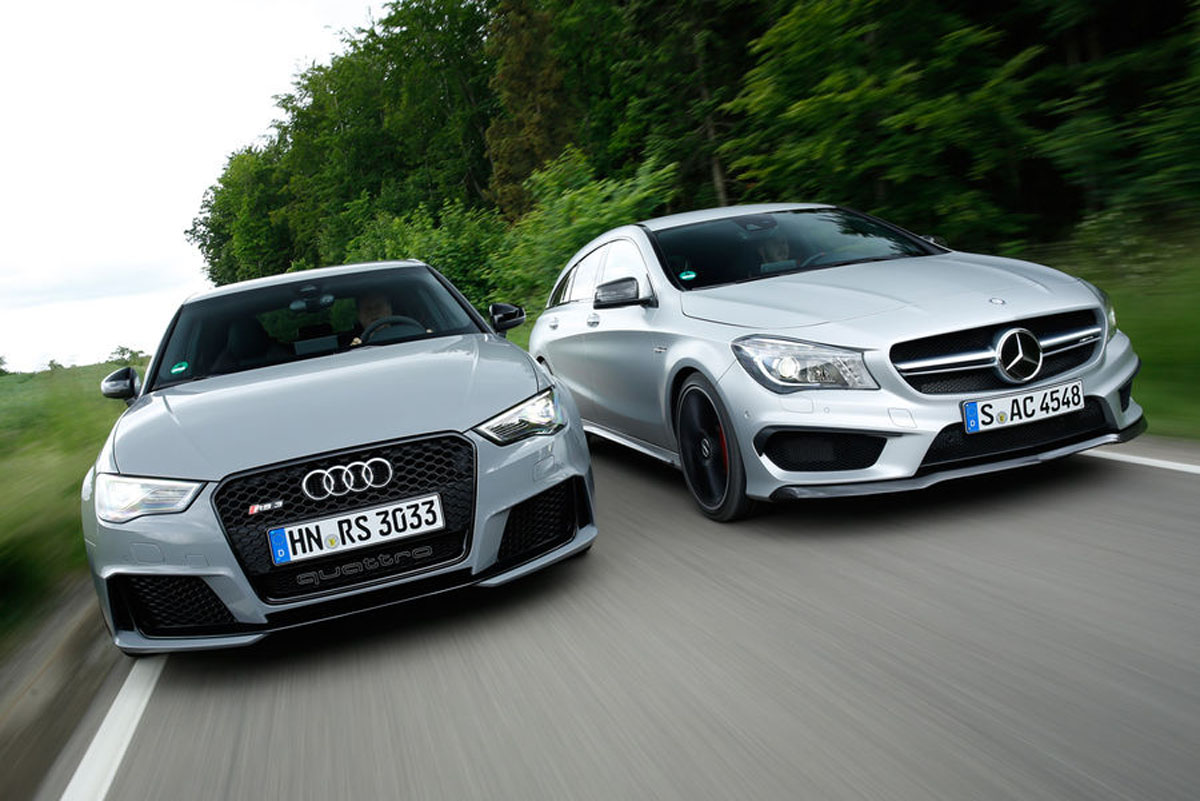
The compact sport-sedan arena has a particular electricity. It’s the kind of rivalry that begins with a glance at the tail lamps and ends—hours later—on a backroad where braking points feel like choreography. In one corner sits the Audi RS 3 Sedan, a machine designed to make restraint look like a myth. In the other, the Mercedes-AMG CLA 45 arrives with flamboyant intent, a turbocharged scalpel wrapped in a sculpted silhouette.
This duel isn’t simply about lap times. It’s about character. About what kind of driver each car imagines at the steering wheel. About whether you prefer a thunderous surge that feels engineered or a sharp thrust that feels instinctive. Below, you’ll find the full landscape: design language, performance temperament, chassis logic, tech sophistication, and the everyday reality that decides whether “sport sedan” is a lifestyle or a weekend habit.
Design Philosophy: The Look That Sets the Tone
Both sedans wear their ambition openly, yet their aesthetics speak different dialects. The Audi RS 3 Sedan leans toward a more muscular, purposeful presence. Its stance reads as planted, with lines that suggest balance over drama. The front end carries an unmistakable RS identity: aggressive contours, high-contrast detailing, and that unmistakable sense that the car was shaped to cut through air rather than simply to look fast.
The Mercedes-AMG CLA 45, by contrast, feels like dynamism rendered in metal. It’s more theatrical, with a design that emphasizes thrust and edge. The proportions—slim cabin, forward visual weight—create the impression of constant motion, even while it’s parked. Every angle seems tuned to communicate: “Press the pedal and watch how quickly the world shifts.”

Engine & Thrust Delivery: How Each Car Feels at Full Attention
Power in this class is never just numbers on a brochure. It’s how torque arrives, how the car responds to micro-adjustments, and how quickly the body settles into acceleration. The RS 3 is famous for its ability to feel urgent without sounding chaotic. There’s a sense of orderly force—like a drummer keeping perfect tempo while the bass thumps underneath.
The CLA 45 AMG, however, often delivers a punchy, lively character. It tends to feel more immediate in the way it spools and then launches. That immediacy can be addictive in city traffic where bursts of speed appear in short, bright intervals—overtakes that happen in a wink, merges that feel like a confident announcement rather than a gamble.
In both cases, the turbocharged heartbeat is front and center. Still, the Audi’s rhythm typically feels more composed, while the Mercedes often plays to the moment. If you crave a more linear escalation, the RS 3 usually scratches that itch. If you prefer a punchy response that feels almost telepathic, the CLA 45 can feel like a sport compact with grown-up manners.
Drivetrain & Traction Logic: The Invisible Partner
In a compact sport sedan, traction isn’t just about grip—it’s about confidence. The Audi RS 3 is built around a drivetrain strategy that aims to keep power flowing efficiently to the road. That means better composure during hard acceleration, especially when grip changes mid-corner or during wet-weather interruptions.
The CLA 45 also focuses heavily on putting torque to the ground. Yet its behavior often feels a touch more “alive,” as if the car is willing to communicate the limits sooner. You may feel slight variations through steering feel and throttle behavior, which can be thrilling for drivers who enjoy reading the road like a text.
Both cars, at their best, reduce wheelspin into something more manageable. But the Audi tends to feel like it’s helping you drive faster with less effort, while the Mercedes may invite you to stay more engaged—like a conductor expecting you to follow the beat.
Chassis, Steering, and Braking: Where Precision Becomes Personality
Once you leave the straight lines, the duel sharpens. The RS 3 often presents a chassis that feels cohesive—an environment where suspension movements are controlled, and steering feedback arrives with clarity. The sensation is less about raw sharpness and more about a measured, confidence-inspiring balance. Even when the pace rises, it tends to feel reluctant to lose its poise.
The CLA 45, though, often delivers a more dynamic edge. Steering feel can feel quicker to interpret, and braking performance usually inspires a strong sense of repeatability. In practical terms, this means you can trust the pedal, and you can run consistent lines without constant recalibration.
In the real world, these differences matter most on imperfect pavement—patches, seams, and the occasional surprise dip that makes body control the deciding factor between “fast” and “fearless.” The best car is the one that turns those irritations into information rather than anxiety.
Cabin Experience: Ergonomics, Materials, and the Art of Daily Usability
Here the rivalry becomes more intimate. The RS 3 cabin typically emphasizes a performance-forward cockpit: a driver-centric layout, serious switchgear, and materials that convey solidity. It’s the kind of interior that feels engineered for focus. Even when the car is idling outside a supermarket, the design suggests you should be ready for a spirited exit.
The CLA 45’s cabin leans into a more contemporary, fashion-meets-function atmosphere. The user interface and ambient styling can feel more “modern lounge” than “track tool,” while still keeping performance priorities in view. It’s often easier to inhabit comfortably over longer drives, especially when the day includes errands, commuting, or highway cruising.
Both interiors provide sport credentials, but the question is which one you want to live inside. The Audi often feels like it’s built to concentrate you. The Mercedes feels like it wants to energize you—like turning the volume knob on your mood.
Technology and Infotainment: The Features Behind the Feel
In 2026-spec expectations, technology isn’t decoration; it’s the modern layer of driver confidence. Expect each car to offer connected infotainment, driver assistance features, and customizable drive modes that alter how the powertrain and chassis behave. The difference lies in how intuitive the system feels when you’re moving.
Audi’s approach typically favors clarity and functional ergonomics—menus that feel logical, plus driving modes designed to keep the car’s personality coherent. Mercedes often emphasizes visual sophistication and a slightly more entertainment-forward user experience. Both can be excellent; the best choice often depends on your tolerance for menu depth and your preference for how quickly you want to reach key settings.

Sound and Character: The Emotional Dimension
Speed is physical, but sound is emotional. The RS 3 often delivers a performance note that feels richer, more textured—like the engine has layers you can hear rather than just volume you can measure. That sound can transform mundane driving into something with rhythm.
The CLA 45 tends to provide an energetic, expressive tone as well, with an insistence that performance is part of the daily script. Depending on exhaust setup and drive mode, it can feel more theatrical. For some drivers, that theatre is exactly the point; for others, it can be a little too eager.
Sound isn’t just about ego. It influences how you modulate throttle and how you perceive acceleration. The more communicative the engine note, the easier it becomes to drive smoothly rather than aggressively.
Real-World Ownership: Practicalities That Decide the Champion
Beyond the test loop, there are questions: fuel economy during normal use, maintenance expectations, tire consumption under spirited driving, and how often you’ll actually use the car’s most aggressive modes. A compact sport sedan is often both commuter and occasional thrill machine, and the best one is the one that doesn’t demand you become a specialist just to enjoy it.
The Audi RS 3 generally aims to blend performance with everyday sturdiness. The chassis composition tends to support confident highway travel and stable commuting. The Mercedes-AMG CLA 45 is frequently praised for its dynamic charisma and comfort balance—making it feel less like a weapon and more like a rapid partner.
Ultimately, the “winner” depends on whether you prioritize measured composure or impulsive excitement. Audi tends to reward drivers who like to refine their technique. Mercedes tends to reward those who prefer immediacy and expressive motion.
Verdict: Choosing Your Type of Fast
If the goal is composure, linear acceleration, and a chassis that encourages precision, the Audi RS 3 Sedan is the compelling choice. Its performance identity feels engineered, and its driving confidence often arrives with minimal drama—until you push it hard, then the drama shows up exactly when it should.
If the goal is punchy immediacy, energetic character, and a cabin that feels contemporary and lively, the Mercedes-AMG CLA 45 can steal the spotlight. It feels ready for sudden decisions, with a style that turns driving into a quick conversation rather than a controlled monologue.
Either way, you’re in the presence of genuinely exciting compact sport sedans—two different philosophies, one shared promise: the next red light won’t last long.
Choose the car that matches your rhythm. The duel is less about which is objectively faster, and more about which feels like it understands the way you drive.