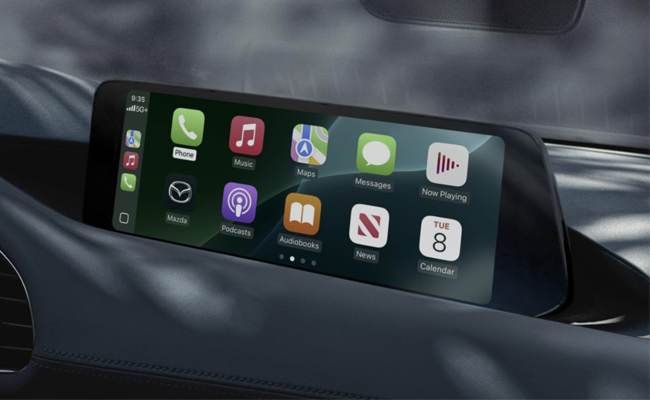
The subcompact hatchback class has always been about more than just saving space. It’s about feeling nimble in the city, playful on a back road, and—more than most drivers expect—comfortably connected every time you start the engine. In 2026, the “best infotainment” conversation isn’t limited to sharper screens or faster menus. It’s about how seamlessly the system disappears into your routine: maps that anticipate your turns, voice controls that don’t sound like robots, and audio that turns a commute into a private concert hall.
Below is an extensive tour of what readers can expect when shopping for 2026 subcompact hatchbacks with the best infotainment. From interface philosophy to connectivity nuance, each section unpacks the features that matter in real life—especially when you’re driving and want fewer distractions, not more.
What “Best Infotainment” Really Means in 2026
Infotainment has evolved from a dashboard accessory into an operational cockpit. The best systems share a common trait: they’re predictable. Predictability sounds boring, but it’s the secret ingredient. When your vehicle behaves consistently—whether you’re skipping a track, answering a call, or searching for parking—it reduces cognitive load. That’s not just comfort. It’s safety by design.
Look for three pillars: responsiveness (quick touch response and smooth transitions), clarity (legible typefaces, sensible color contrast, and readable map scaling), and integration (smartphone pairing that stays stable and doesn’t demand a reset every time you step outside).
In 2026, many hatchbacks also lean into “ambient intelligence,” using sensors and context clues to adjust what appears on screen. The result is less hunting for menus and more time focused on driving.
Screen Quality, Interface Design, and Usability
Let’s talk visuals—because a beautiful interface still has to function under pressure. The most satisfying systems use high-resolution displays with strong anti-glare behavior, enabling quick recognition in bright daylight and smoother viewing at night. A glossy screen can look futuristic, yet reflections can turn it into a mirror. The best designs avoid that trap.
Interface design is where systems differentiate. Some dashboards feel like a tablet: fluid swipes, app-style icons, and a grid-based layout. Others feel more automotive: structured home screens, large buttons, and fewer “nested” settings. While tablet-like menus can be delightful, the most ergonomic designs make critical actions—navigation, media, calls—reachable within two taps.
Expect a major trend in 2026: contextual shortcuts. When you’re driving, the interface often elevates relevant controls and quietly hides the rest. Short and long presses become meaningful. “Long-press for shortcuts” can be faster than searching through app menus.

Navigation That Doesn’t Fight You
Navigation is the infotainment feature you rely on most—yet it can also be the most frustrating when it’s overly cautious, oddly timed, or stubborn about routes. The best 2026 subcompact hatchbacks deliver navigation that feels conversational. It communicates proactively with clear prompts, sensible lane guidance, and quick recalculation when you change your mind.
Pay attention to map behavior: does the system zoom appropriately as intersections approach? Does it display turn lanes without clutter? Some systems include predictive traffic visualization, showing not only congestion but likely build-up patterns along your path.
Another understated advantage: route memory. A good system learns your patterns over time—favorites like home, work, and recurring destinations—and surfaces them quickly. This turns navigation from a chore into a habit.
Smartphone Integration: The Stability Standard
In 2026, smartphone integration is less about having Apple CarPlay or Android Auto—most systems already do—and more about stability. The best experiences keep the connection consistent, with fewer dropouts, fast relaunches, and minimal permission prompts.
Look for systems that support wireless connectivity while maintaining fast response times. Wireless is convenient, but it must also stay reliable when signal conditions are imperfect—like in garages, dense downtown blocks, or areas with reflective building materials.
Voice control is an essential companion to integration. The most capable systems understand natural phrasing: “Find the nearest coffee place open now,” “Text my friend I’ll be there in 15,” or “Turn down the volume a bit.” Short commands should work; long, specific requests should also succeed.
Voice Assistants and Hands-Free Control
Voice technology is becoming more than a novelty. In a great infotainment system, voice prompts are calm and brief. The system listens without sounding impatient, and it confirms actions in a way that’s easy to verify at a glance.
The most refined implementations support multi-command sequences—meaning you can ask for navigation, then request a playlist, then ask for weather without restarting from scratch. That’s where “uncommon” usability shines: it feels like a conversation rather than a series of isolated tasks.
Haptic feedback and steering-wheel button mapping also matter. The driver should be able to correct or cancel instantly. In real driving, you don’t want your vehicle to insist on doing the wrong thing “because you said it.”
Premium Audio That Feels Like Surround Sound
Audio quality is often treated as a luxury checkbox, but for many drivers it’s the emotional core of infotainment. In 2026, hatchbacks increasingly prioritize tuning that preserves clarity at higher volumes. The best systems deliver tight bass without turning the cabin into a drum, and they keep vocals crisp rather than muddy.
Consider the difference between “more speakers” and “better imaging.” Premium audio setups can simulate directional sound placement, helping instruments feel separated and layered. That’s especially noticeable with well-produced tracks where left-right separation matters.
Some systems include advanced equalization profiles, letting you choose presets for genres or even user-tuned settings. If the interface makes EQ adjustments easy—without burying them under layers of menus—it becomes a tool you actually use.
Connectivity Beyond Music: Updates, Hotspots, and Apps
Infotainment in 2026 isn’t just about media. Many subcompact hatchbacks now offer over-the-air updates that refine navigation databases, improve voice recognition, and address software quirks. The benefit is long-term: the system can become better after purchase instead of “freezing” at the time of sale.
Wireless data connectivity also changes the experience. Built-in Wi‑Fi hotspots can enable passengers to stream without draining a personal phone. Some vehicles support app ecosystems with remote commands—locking doors, checking vehicle status, or controlling certain cabin settings from a distance.
When those services integrate smoothly with the in-car interface, it feels cohesive rather than fragmented. The best systems make remote features part of a unified digital routine.
Safety, Driver Attention, and the Distraction Budget
The most advanced infotainment systems understand that screens are tools, not decorations. They apply a “distraction budget,” limiting complex interactions while the vehicle is in motion. That doesn’t mean the system is dumb—it means it’s calibrated.
Expect features like simplified menus during driving, automatic return to key screens, and clear visual hierarchy. Even when you’re using voice commands, the system should surface confirmations in a consistent place on the screen. That reduces surprise and helps the driver trust the system.
Good infotainment design also respects physical controls. Dedicated volume and tuning controls can be more efficient than hunting through touch sliders. The best setups offer both: touchscreen convenience plus tactile certainty.
Content Readers Can Expect During the Shopping Journey
To make the comparison process easier, readers typically look for clear content types that cut through marketing fog. Here’s what’s worth expecting as you evaluate different models:
Comparison checklists that highlight core infotainment capabilities—screen size, wireless integration, navigation quality, voice recognition strength, and audio tuning.
Feature deep-dives that explain how each system behaves in daily scenarios: connecting a phone quickly, switching between navigation and music, and handling incoming messages while driving.
Usability narratives—accounts of how the system feels during common moments like pulling into a parking spot, rerouting during traffic, or pairing a new device for the first time.
Real-world performance observations that focus on responsiveness: does the UI lag after a cold start, and does it freeze when loading maps?
Audio and media assessments that describe not just loudness, but sound character—bass control, midrange clarity, and the balance between instruments and vocals.
How to Choose the Right Infotainment for Your Lifestyle
Your best system depends on your habits. If you’re a road-trip regular, prioritize navigation sophistication, rerouting behavior, and traffic visualization. If you commute and live on playlists, focus on audio tuning and quick media access. If you’re frequently on calls, emphasize voice control accuracy and stable smartphone integration.
Finally, consider whether you prefer a minimalist interface or a feature-rich one. Both can be excellent—so long as the essentials are fast. The hallmark of top-tier infotainment is not how many menus exist. It’s how quickly you can do what matters.
Final Thoughts: The 2026 Hatchback Experience, Upgraded
In 2026, the best subcompact hatchbacks with top infotainment feel less like gadgets and more like partners. They reduce friction, elevate clarity, and turn routine drives into surprisingly satisfying rituals. The most compelling systems don’t overwhelm you with features. They orchestrate them—quietly, reliably, and with a sense of confidence that you’ll always be able to find your next step.
Choose the hatchback that matches your digital lifestyle, and you’ll notice the difference every day—especially the moments when the route updates, the playlist hits at the right time, and the cabin feels perfectly in sync with you.