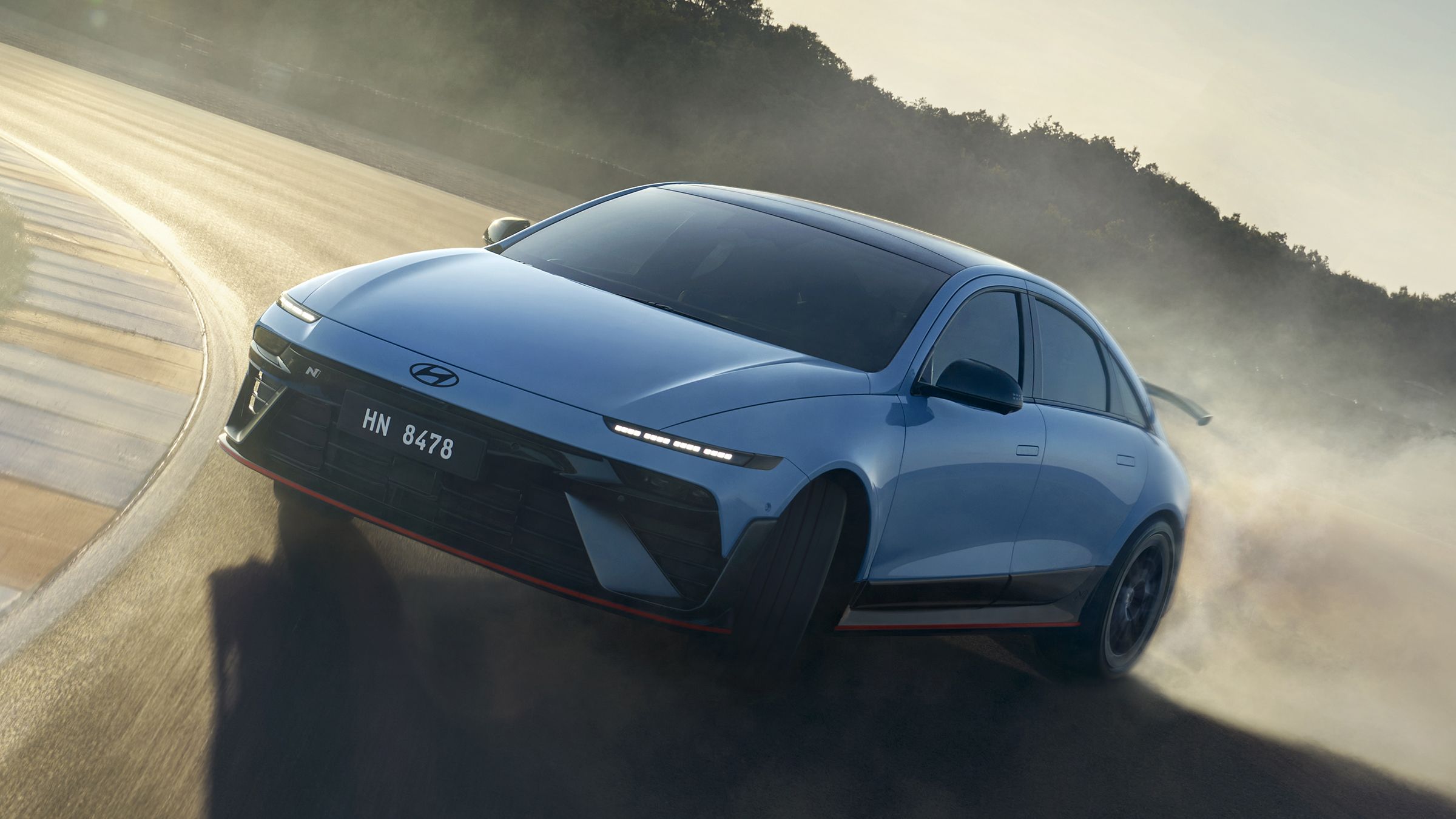
Have you ever slid into the driver’s seat of a car that whispers promises of the future, only to realize halfway through your commute that you’ve just fallen in love with a machine? That’s exactly what happened to me with the 2026 Hyundai Ioniq 6. For seven sunrise-to-sunset days, this sleek electric sedan became my daily chariot, my grocery-getter, my weekend escape pod, and—let’s be honest—my new obsession. But was it all smooth sailing, or did the Ioniq 6 reveal a few quirks that kept me guessing? Buckle up. This isn’t just another review. It’s a week-long love affair with a car that dares to redefine what it means to drive electric.

The First Impression: A Sculpture on Wheels
From the moment I laid eyes on the Ioniq 6, it was clear Hyundai had abandoned the traditional playbook. This isn’t just a car—it’s a rolling manifesto of aerodynamic obsession. With a drag coefficient of just 0.21, it slices through the air like a hot knife through butter, promising whispers of efficiency and a ride so silent you’ll second-guess whether the engine is even running. The long, tapering roofline and flush door handles aren’t just for show; they’re a statement. This is a car designed for those who believe less is more, and more is everything.

Sliding behind the wheel, the cabin greets you with an almost meditative calm. The minimalist dashboard, dominated by a dual 12.3-inch curved display, feels like stepping into a spaceship. Every control is intuitive, every button within thumb’s reach. The seats? They cradle you like a high-end massage chair, with bolstered sides that keep you planted during spirited cornering. But here’s the kicker—Hyundai didn’t just make this car beautiful. They made it *feel* expensive, even though the materials are a clever mix of sustainable plastics and soft-touch surfaces.
Day 1: The Electric Wake-Up Call
My first real test came on a Monday morning. The Ioniq 6’s 800-volt architecture promised a 10-80% charge in just 18 minutes, but could it handle the mundane grind of stop-and-go traffic? Spoiler: Yes. The instant torque delivery meant merging onto the highway felt like being catapulted forward, while regenerative braking turned every red light into a chance to juice up the battery. By the time I pulled into the office parking lot, I’d already regenerated enough energy to cover 12% of my daily commute.
But the real surprise? The Ioniq 6 doesn’t just drive. It *communicates*. The subtle haptic feedback through the steering wheel when you’re approaching the limits of grip is like a secret handshake between you and the road. It’s the kind of detail that makes you grin every time you take a corner too fast.
Midweek Adventures: Range Anxiety? What’s That?
By Wednesday, I decided to push the Ioniq 6’s limits. With a WLTP-estimated range of 379 miles, I plotted a 250-mile round trip to a lakeside cabin, fully aware that cold weather and highway speeds would chip away at that figure. What unfolded was nothing short of remarkable. The Ioniq 6’s efficiency was staggering—even at a steady 75 mph, it sipped electrons like a fine wine. The navigation system’s energy-saving route suggestions were eerily accurate, rerouting me to avoid traffic jams and steep inclines that would drain the battery faster than a sieve.
Yet, the challenge revealed itself in the most unexpected place: the charging infrastructure. While the Ioniq 6’s 800V compatibility is a game-changer, not all fast chargers are created equal. One station, advertised as a 350kW beast, delivered a measly 50kW. Lesson learned: Always check the fine print.

The Tech Tango: Features That Wow (and One That Worries)
Hyundai’s Bluelink system is a marvel of integration. Remote climate control, vehicle status checks, and even summoning the car to your driveway via the app felt like living in the future. The augmented reality heads-up display? Pure witchcraft. It projects navigation arrows onto the road ahead, making it impossible to miss a turn. But not everything was smooth sailing.
The Ioniq 6’s voice recognition system, while impressive, occasionally misheard commands with the precision of a sleep-deprived DJ. “Hey Hyundai, set climate to 72 degrees” became “Hey Hyundai, set climate to 72 *pizzas*.” Needless to say, the cabin stayed chilly for an awkwardly long time.
The dual screens also introduced a subtle but persistent challenge: distraction. With so much information at your fingertips, it’s easy to lose focus on the road. Hyundai’s solution? A clever “Driving Focus Mode” that dims non-essential displays when you’re in a hurry. It’s a small touch, but one that speaks volumes about the car’s thoughtful design.
Weekend Escapades: Can the Ioniq 6 Handle the Heat?
By Saturday, I was craving adventure. With the Ioniq 6’s available dual-motor AWD system, I figured it was time to test its mettle on a twisty mountain road. The result? A symphony of electric whirring and road-hugging confidence. The car’s low center of gravity, thanks to the battery pack mounted under the floor, made it feel like it was glued to the asphalt. The torque vectoring system distributed power to each wheel with surgical precision, turning every bend into a masterclass in control.
But here’s where the Ioniq 6 revealed its Achilles’ heel: tire noise. At higher speeds, the ultra-low rolling resistance tires emitted a faint hum that, while not deafening, became a constant companion on long drives. It’s a trade-off for the car’s stellar efficiency, but one that might irk perfectionists.
The Quiet Revolution: What It’s Like to Drive an Electric Ghost
There’s something almost surreal about driving the Ioniq 6. The lack of engine noise transforms the cabin into a mobile sanctuary. Conversations flow effortlessly. Music sounds richer. Even the hum of the tires becomes a soothing white noise. But this silence comes with a caveat: pedestrians won’t hear you coming. Hyundai’s solution—a pedestrian warning system that emits a futuristic artificial sound—is a necessary compromise, though it occasionally feels like the car is trying too hard to be noticed.
Then there’s the matter of charging etiquette. In a world where gas stations are ubiquitous, EV charging stations are still a Wild West of rules and unspoken norms. Should you unplug your car immediately when your charge is complete? What if someone else is waiting? The Ioniq 6’s app helps, but it’s a social challenge as much as a technological one.
Final Verdict: A Love Story with a Few Rough Patches
After seven days, the 2026 Hyundai Ioniq 6 didn’t just win me over—it rewired my expectations of what an electric car can be. It’s a machine that balances efficiency with exhilaration, technology with tactility, and silence with soul. Yes, it has its quirks—the occasional charging hiccup, the tire hum, the voice recognition’s occasional mutiny—but these are minor scars on an otherwise flawless machine.
The Ioniq 6 isn’t just a car. It’s a statement. A declaration that the future of driving doesn’t have to be utilitarian or boring. It can be beautiful, engaging, and yes, even a little rebellious. So, if you’re ready to trade in your gas-guzzling steed for a silent, sculpted arrow of progress, the Ioniq 6 awaits. Just promise me one thing: Don’t forget to charge it.