In the modern automotive landscape, where technology and driving pleasure intersect, few innovations captivate enthusiasts quite like a dual-screen infotainment system. The Kia Infotainment’s dual 12.3-inch display experience isn’t just a visual upgrade—it’s a paradigm shift in how drivers interact with their vehicles. This isn’t merely about aesthetics; it’s about redefining the cockpit’s ergonomics, functionality, and even the emotional connection between driver and machine. The moment you slide into the driver’s seat and the screens illuminate with crisp clarity, you realize this is more than a dashboard—it’s a portal to a new driving experience.
The dual-screen setup isn’t just a gimmick; it’s a thoughtful evolution of in-car technology that addresses a common frustration among drivers: the cluttered, overwhelming interface. Most infotainment systems cram too much information into a single, often small screen, forcing drivers to navigate through layers of menus just to adjust the climate or find their favorite playlist. Kia’s solution? A split-screen interface that separates critical driving information from entertainment and navigation, creating a harmonious balance between utility and indulgence. This isn’t just about seeing more—it’s about seeing better.
The Dual-Screen Layout: A Symphony of Form and Function
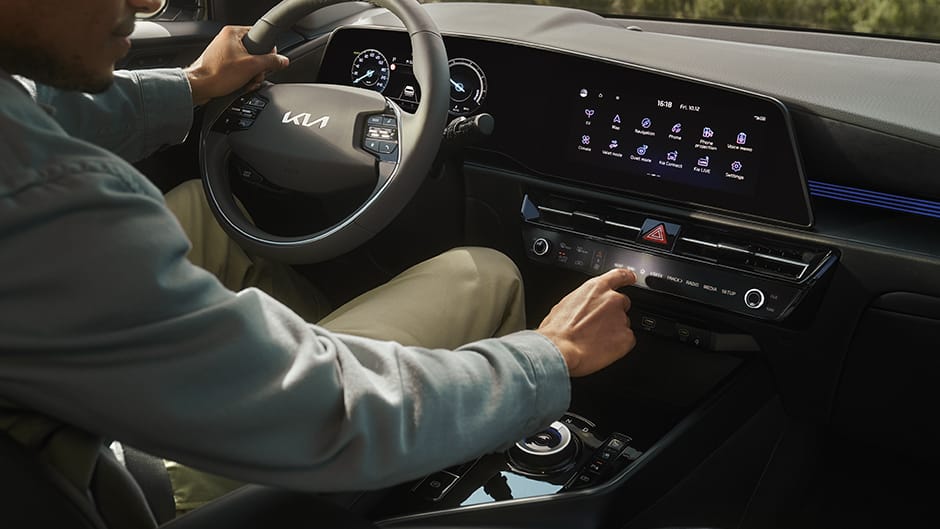
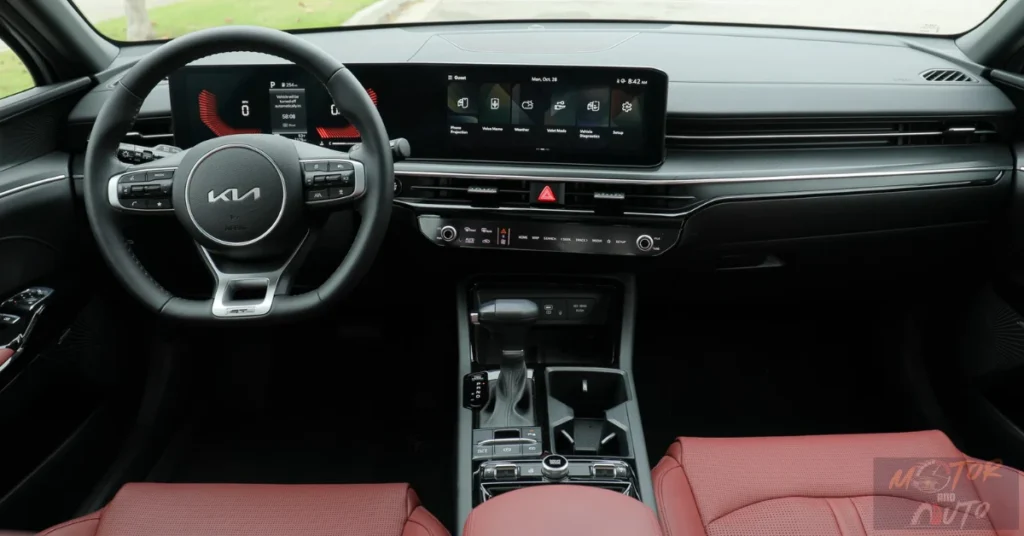
The first thing that strikes you about the Kia’s dual-screen setup is its symmetry. The left display, typically reserved for instrument cluster data, presents speed, RPM, fuel levels, and other vital stats in a clean, customizable layout. Gone are the days of squinting at a tiny analog gauge or deciphering a cluttered digital readout. Here, the information is presented with surgical precision—each data point has its place, and the high-resolution screen ensures readability even in direct sunlight. The right screen, meanwhile, serves as the command center for everything from navigation to media playback, all rendered in stunning 12.3-inch clarity.
What makes this layout truly exceptional is its adaptability. Drivers can toggle between different views on the right screen—whether it’s a full-screen map, a media player with album art, or a climate control interface that’s finally intuitive. The separation of duties between the two screens eliminates the cognitive overload that plagues traditional infotainment systems. It’s as if Kia took a step back and asked, “What do drivers *actually* need to see at a glance?” The answer is a system that anticipates their needs before they even articulate them.

Touch vs. Haptic: The Battle for Intuitive Control
One of the most debated aspects of modern infotainment systems is the method of interaction. Kia’s dual-screen setup employs a combination of touch and physical controls, a hybrid approach that feels both futuristic and reassuringly tactile. The right screen, where most of the interaction happens, responds to touch with impressive precision. Swiping through menus feels fluid, and the haptic feedback from the buttons surrounding the screen adds a layer of confirmation that touch alone can’t provide. This isn’t just about convenience; it’s about reducing distractions. When your eyes are on the road, your fingers can instinctively adjust the volume or skip a track without taking your hands off the wheel.
Yet, the real magic lies in the subtleties. The physical buttons—volume dial, voice command toggle, and shortcut keys—are strategically placed for muscle memory. Over time, they become extensions of the driver, allowing for adjustments without ever looking away from the road. It’s a design philosophy that prioritizes safety without sacrificing functionality. In an era where touchscreens dominate, Kia’s approach is a refreshing reminder that not all innovation requires the abandonment of tactile feedback.
Customization: Making the System Truly Yours
No two drivers are alike, and Kia’s infotainment system embraces this diversity with a level of customization that borders on obsession. The dual-screen setup allows for deep personalization, from rearranging widgets on the instrument cluster to selecting which apps appear on the main screen. Want your fuel efficiency stats front and center? Done. Prefer a minimalist view with just speed and navigation? That’s an option too. The system even remembers your preferences per user profile, ensuring that every drive feels tailored to your preferences.
But the true depth of customization lies in the software’s adaptability. The right screen can split into multiple windows, allowing you to keep an eye on navigation while simultaneously browsing your music library. You can even adjust the color temperature of the displays to match your mood or reduce eye strain during night drives. It’s this attention to detail that transforms the infotainment system from a utilitarian tool into a companion that evolves with you. The more you use it, the more it feels like it was designed just for you.
The Aesthetic Appeal: More Than Just a Pretty Face
Let’s be honest—first impressions matter. The moment you see the dual 12.3-inch screens glowing against the dashboard’s sleek lines, you know this isn’t just another run-of-the-mill infotainment system. The displays are framed by a subtle, ambient lighting strip that casts a soft glow, adding a touch of sophistication to the cabin. The bezel-less design ensures that the screens feel like an organic extension of the dashboard, rather than an afterthought bolted onto it.
This isn’t just about looking premium; it’s about creating an environment that feels cohesive and intentional. The materials surrounding the screens—whether it’s brushed aluminum, soft-touch plastics, or genuine leather—are chosen to complement the displays, not compete with them. It’s a holistic approach to interior design, where every element serves a purpose, and the result is a cabin that feels both modern and timeless. In a market where many infotainment systems look and feel like they were designed by committee, Kia’s dual-screen setup stands out as a statement of intent.
Beyond the Basics: Hidden Features That Elevate the Experience
For those who love to geek out on technology, the Kia infotainment system has a few tricks up its sleeve. One standout feature is the ability to mirror your smartphone screen wirelessly, allowing you to access apps, messages, and even games without ever plugging in a cable. The integration with Apple CarPlay and Android Auto is seamless, ensuring that your digital life is always within reach—safely, of course.
Another underrated gem is the voice command system. It’s not just about asking for directions or playing a song; the system understands natural language, so you can ask it to “show me the nearest gas station with premium fuel” or “play my workout playlist.” The more you use it, the more it feels like having a co-pilot who’s always one step ahead. And let’s not forget the ambient sound system, which can adjust its output based on your speed and road conditions, ensuring that your music always sounds just right.
The Psychological Impact: Why Dual Screens Feel Like a Revelation
There’s a deeper reason why the dual-screen infotainment system feels so revolutionary, and it’s not just about the hardware or software. It’s about the psychology of driving. For decades, car interiors have been designed around the idea of efficiency—packing as much information as possible into a single screen, often at the expense of clarity and comfort. The result? A driving experience that feels cluttered, stressful, and, frankly, outdated.
Kia’s dual-screen approach flips this script. By separating critical information from entertainment, it reduces cognitive load, allowing drivers to focus on what matters most: the road. The psychological relief is palpable. Suddenly, adjusting the temperature or selecting a playlist doesn’t feel like a chore; it feels like an extension of the driving experience. It’s as if the car has finally caught up with the way we live our lives—connected, intuitive, and effortlessly stylish.
This isn’t just a feature; it’s a philosophy. It’s a recognition that driving should be more than just a means to an end. It should be an experience—one that’s as enjoyable as it is functional. And in a world where technology often feels overwhelming, Kia’s dual-screen infotainment system is a breath of fresh air.
The dual 12.3-inch screen experience in Kia’s lineup isn’t just a step forward; it’s a leap into a future where cars are as smart as they are stylish. It’s a system that understands the driver’s needs before they do, that adapts to their preferences, and that transforms the cabin into a space that’s both high-tech and deeply human. In an era where most infotainment systems feel like afterthoughts, Kia’s approach is a reminder that the best technology doesn’t just serve you—it elevates the entire experience.
So the next time you slide into the driver’s seat and the screens light up, take a moment to appreciate what you’re seeing. This isn’t just a dashboard. It’s the future of driving, delivered in a way that’s as thoughtful as it is breathtaking.