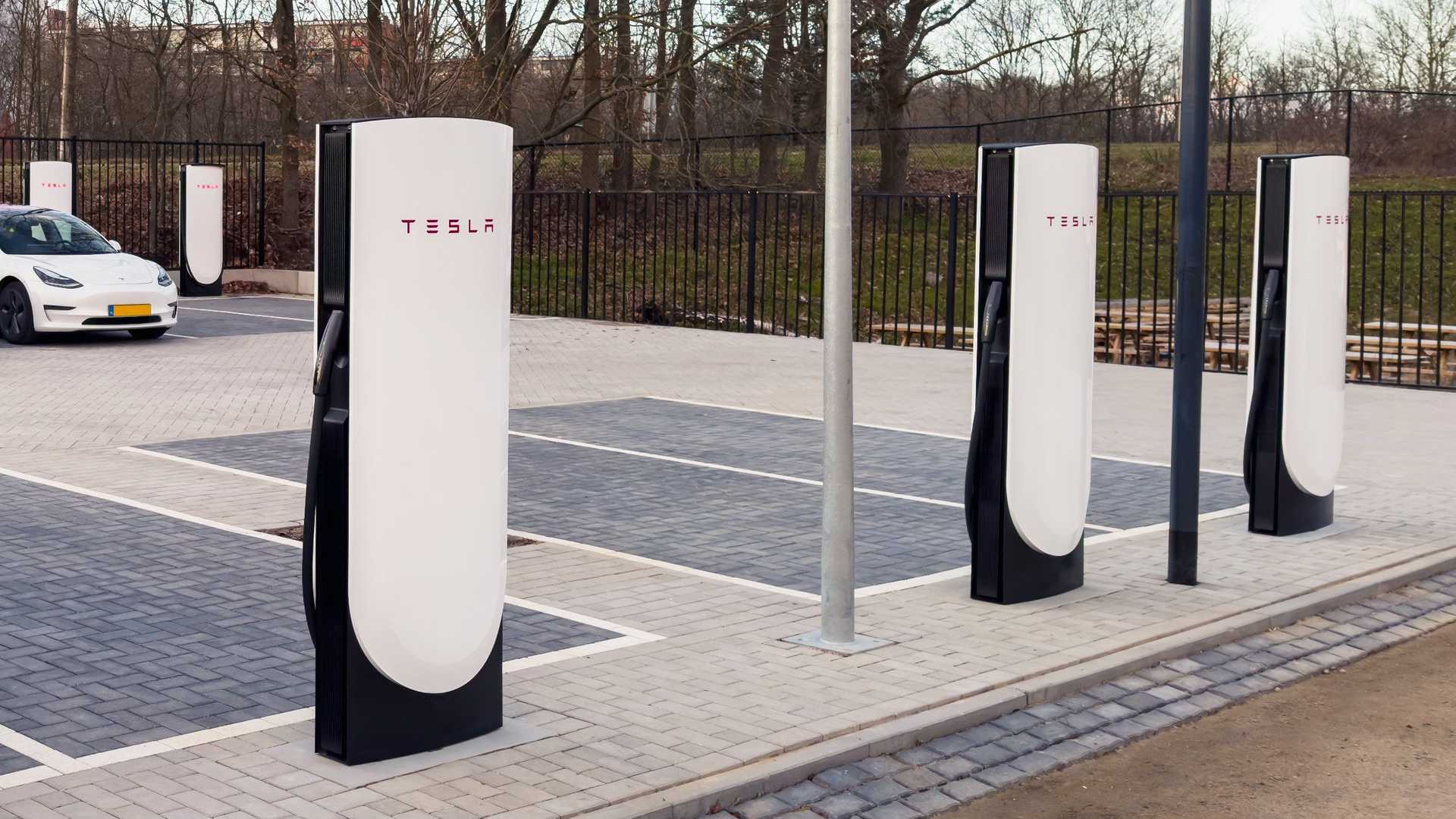
The Tesla Supercharger V4 isn’t just another charging station—it’s a technological marvel disguised as a mundane roadside fixture. Imagine a colossal artery pumping life into the veins of electric mobility, where electrons surge not in trickles, but in torrents. With a staggering 350 kW output, this charging behemoth redefines the boundaries of what’s possible, transforming what was once a tedious pit stop into an exhilarating pit lane sprint. The V4 doesn’t just refuel a vehicle; it reignites the very spirit of innovation, turning the act of charging into a spectacle of raw power and precision.
This isn’t merely an upgrade—it’s a revolution. The Supercharger V4 stands as a testament to Tesla’s relentless pursuit of perfection, where every millisecond of charging time is optimized, and every watt of energy is harnessed with surgical precision. It’s the automotive equivalent of a caffeine IV drip, delivering an instantaneous jolt of power that propels electric vehicles back onto the highway with a roar. But how does this technological titan operate? What secrets lie beneath its sleek exterior? And why does it represent a seismic shift in the electric vehicle ecosystem? Let’s embark on a journey through the inner workings, the real-world implications, and the sheer audacity of Tesla’s latest masterpiece.
The Anatomy of a Charging Titan: How the V4 Redefines Power Delivery
The Supercharger V4 is a symphony of engineering brilliance, where high-voltage architecture meets liquid-cooled precision. Unlike its predecessors, which often struggled with thermal throttling and power dissipation, the V4 employs a radical redesign. Its architecture is built around a modular, liquid-cooled system that ensures consistent 350 kW output without the dreaded fade that plagues lesser chargers. Think of it as a hyper-efficient circulatory system, where coolant flows through veins of copper and aluminum, whisking away excess heat before it can stifle performance.
The charging cable itself is a marvel—a thick, armored serpent that houses not one, but multiple high-power conductors. These conductors are shielded by advanced insulation materials, capable of withstanding the immense electrical stress without degradation. The connector, a marvel of ergonomic design, locks into place with a satisfying *click*, sealing the connection against the elements. Inside, the pins are gold-plated to minimize resistance, ensuring that every electron makes the journey from the grid to the battery with minimal loss.
But the true innovation lies in the power electronics. The V4 utilizes silicon carbide (SiC) MOSFETs, a semiconductor technology that operates at higher temperatures and frequencies than traditional silicon-based components. This allows for more compact, efficient power conversion, reducing energy loss and increasing reliability. The result? A charger that doesn’t just deliver power—it delivers it with the precision of a Swiss watch and the ferocity of a storm.
The Need for Speed: Real-World Charging Performance
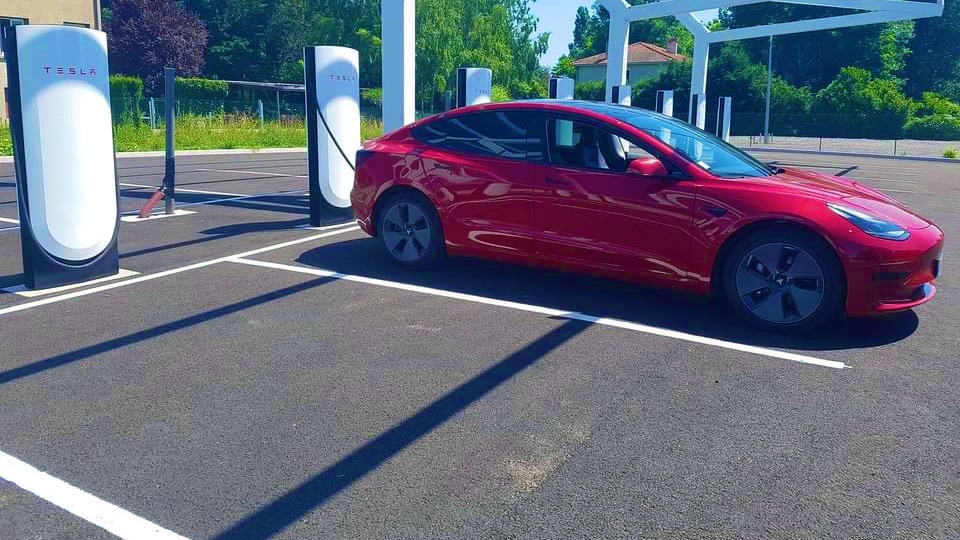
To truly grasp the V4’s capabilities, one must abandon the notion of charging as a passive activity. This is charging as an adrenaline rush. In ideal conditions, a compatible vehicle can add up to 200 miles of range in just 15 minutes—a feat that would have been unthinkable a decade ago. But the V4 doesn’t just excel in raw numbers; it excels in consistency. While older Superchargers often saw power drop as the battery filled, the V4 maintains near-peak output until the final stretches, ensuring that every minute at the charger counts.
Consider the Model S Plaid, a vehicle already renowned for its blistering acceleration. With the V4, its 4680 battery pack can absorb energy at rates that blur the line between charging and refueling. The experience is almost surreal—accelerating from 10% to 80% in under 20 minutes, all while the vehicle’s thermal management system works in overdrive to keep the battery in its optimal temperature window. It’s not just about getting back on the road; it’s about reclaiming time that was once lost to the tyranny of slow charging.
Yet, the V4’s prowess isn’t limited to high-performance models. Even more modest EVs, like the Tesla Model Y, benefit from the charger’s ability to deliver power in shorter, more frequent bursts. This is particularly advantageous for urban commuters, where the ability to top up during a quick errand can mean the difference between a dead battery and a seamless journey. The V4 doesn’t discriminate—it treats every vehicle with the same relentless efficiency, turning charging into a non-event rather than a chore.
The Infrastructure Behind the Innovation: Building the Future, One Charger at a Time
The Supercharger V4 isn’t an isolated phenomenon—it’s part of a grander vision. Tesla’s expansion of the V4 network is a logistical odyssey, requiring upgrades to electrical substations, the installation of high-capacity transformers, and the deployment of advanced grid management systems. Each V4 station is a node in a vast neural network, communicating with vehicles in real-time to optimize power delivery based on grid conditions, battery state, and even ambient temperature.
The placement of these chargers is equally strategic. Unlike older Superchargers, which were often clustered in urban hubs, the V4 is designed for both highway corridors and remote outposts. Imagine a cross-country road trip where the only stops are for food and rest, not for charging anxiety. The V4’s high power output means fewer chargers are needed to cover the same distance, reducing the physical footprint of the network while maximizing its reach.
But infrastructure isn’t just about hardware—it’s about software. Tesla’s proprietary charging algorithm is a masterclass in adaptive optimization. It continuously monitors the battery’s thermal state, the vehicle’s power demands, and even the grid’s load to ensure that power delivery is always at its peak. This isn’t just smart charging; it’s predictive charging, where the system anticipates your needs before you even pull into the station.

The Ripple Effect: How the V4 is Reshaping the EV Landscape
The introduction of the Supercharger V4 isn’t just a win for Tesla—it’s a catalyst for the entire electric vehicle industry. Competing automakers, long reliant on slower charging networks, are now under immense pressure to match Tesla’s pace. The V4 sets a new benchmark, one that forces the industry to rethink what’s possible. It’s no longer enough to offer fast charging; the standard must now be blistering speed, unwavering reliability, and seamless integration.
For consumers, the implications are profound. Range anxiety, once the elephant in the room for EV adoption, is being systematically dismantled. The V4’s ability to refuel a vehicle in the time it takes to grab a coffee means that electric cars can finally shed their reputation as “city cars” and embrace the open road. Long-haul travel, once the domain of internal combustion engines, is now within the grasp of EVs—provided, of course, that the charging network keeps pace.
Even the economics of charging are being upended. With higher power output, the cost per kilowatt-hour can be reduced, making long-distance travel more affordable. Tesla’s dynamic pricing model, which adjusts rates based on demand, further incentivizes off-peak charging, creating a more balanced and efficient grid. The V4 isn’t just a technological leap—it’s an economic one, reshaping the very foundations of how we power our vehicles.
The Human Experience: What It Feels Like to Charge at 350 kW
There’s something almost primal about the experience of using the Supercharger V4. The moment the cable locks into place, a deep, resonant hum fills the air—a sound that’s part machinery, part symphony. The vehicle’s display springs to life, showing a real-time estimate of the charge rate, climbing into the 200+ kW range. Within seconds, the battery icon begins to swell, a digital heartbeat quickening with each passing minute.
The acceleration is imperceptible to the human body, but the effects are undeniable. The vehicle’s thermal management system whirs to life, a gentle breeze emanating from the vents as it dissipates the heat generated by the rapid energy transfer. The air around the charger seems to hum with electricity, a tangible reminder that you’re witnessing the future in action. And then, as suddenly as it began, the charge rate tapers off, the vehicle signaling that it’s time to depart. The entire process is over in the blink of an eye, leaving you with a sense of awe—and a fully charged battery.
It’s an experience that transcends utility. It’s not just about getting from point A to point B; it’s about the thrill of possibility. The V4 turns a mundane task into a moment of connection with the cutting edge of technology. It’s a reminder that progress isn’t just about incremental improvements—it’s about leaps of faith, about daring to reimagine what’s possible.
In a world where time is the most precious commodity, the Supercharger V4 doesn’t just save minutes—it saves momentum. It turns the act of charging into an event, a ritual of renewal that propels both driver and machine forward. And as the network continues to expand, as more vehicles become compatible, the V4’s legacy will be measured not just in kilowatts, but in the stories of journeys made possible, of roads traveled, and of a future where the electric dream is no longer a distant promise, but a present reality.