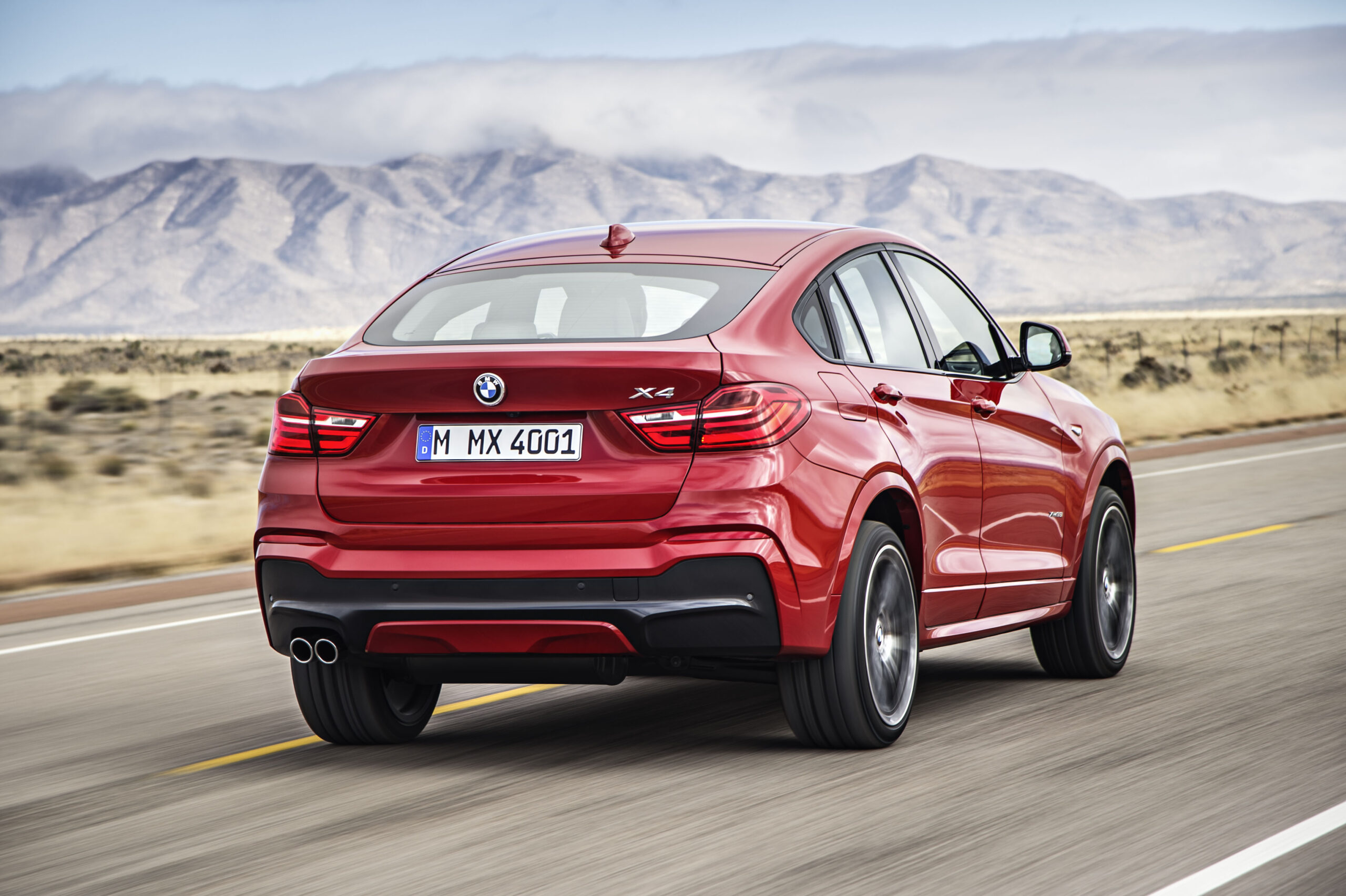
The BMW X4 is the kind of vehicle that makes you reconsider the word “SUV.” It doesn’t merely carry people and luggage—it curates a posture. From a distance, it looks like a coupé that learned how to handle gravel. Up close, the X4’s stance feels deliberate, as if the designers decided that everyday commuting should come with a trace of theatre. And that’s the promise: a shift in perspective. The X4 isn’t here to convince you that compromise is progress. It’s here to make you curious about what happens when sportiness is treated as a daily habit rather than a weekend ritual.
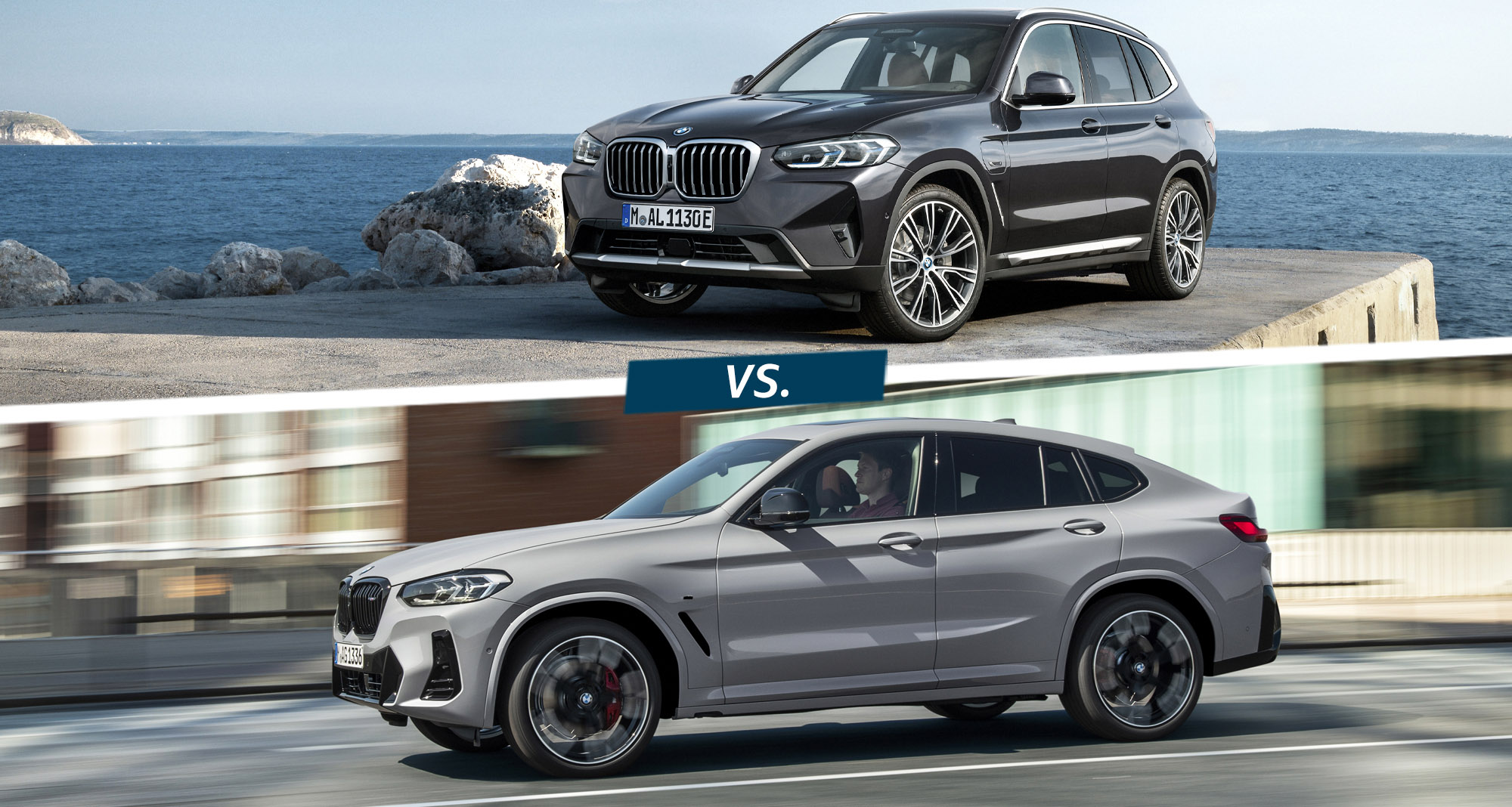
Think of the X4 as a refined alternative to the BMW X3—familiar in the bones, different in the silhouette. Where the X3 stretches into practicality, the X4 tightens the lines. It trims visual bulk, sharpens the roofline, and changes the emotional temperature inside the cabin. The result is a crossover that feels less like an appliance and more like a point of view.
Design Philosophy: A Coupé in SUV Clothing
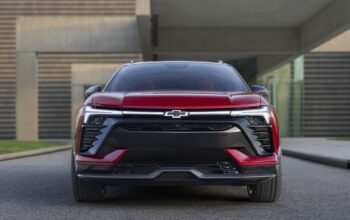
There are vehicles you drive, and vehicles you interpret. The X4 belongs to the second category. Its exterior proportions lean forward—an intentional dynamism that reads clearly from the moment you spot it in traffic. The sloping roofline reduces the sense of verticality, giving the cabin a more cocooned, cockpit-like aura.
Light plays differently on the X4’s surfaces. Body lines sweep with purposeful continuity, and the front end carries a confident, almost predatory clarity. It’s not loud. It’s legible. Even at rest, the car seems to be “ready.”
The aesthetic decision isn’t just about appearance, either. The coupé-style profile influences how the car feels on the move—lower visual mass, quicker perceived response, and a subtle reminder that this isn’t an SUV built solely for school runs and shopping lists.
Cabin Atmosphere: Sporty Comfort With a Different Kind of Space
Step inside and the shift in perspective becomes tangible. The X4’s cabin leans into driver focus. Controls are arranged with a sense of order—nothing feels haphazard or overly polite. Materials tend to feel thoughtfully selected, with surfaces that catch light in a way that makes everyday driving feel curated.
Visibility is often a topic with coupé-style crossovers, and the X4’s design does ask a question: are you willing to trade a touch of “boxy” sightlines for a sleeker environment? In return, you get a cabin that feels more intimate. The driver’s area, in particular, feels poised—like it was designed to make you want to stay a little longer at the wheel.
Second-row space is adequate for most real-world use, though the sloping roofline naturally trims headroom compared with more upright SUVs. It’s best suited to those who prioritize front-seat comfort and occasional passenger carrying. In the back, the experience is best described as “cozy,” not “expansive.”
Driving Dynamics: Where the X4 Feels More Connected
The BMW X4’s most compelling trait is its temperament. It feels engineered to reduce distance between intention and result. Steering response tends to feel purposeful, with resistance that communicates road texture rather than masking it. The vehicle doesn’t just travel; it converses with the driver.
Acceleration is typically brisk enough to make merging feel less like paperwork and more like momentum. The throttle response encourages assertive behavior, yet the ride doesn’t always demand aggression. That balance—performance without constant theatricality—is part of the X4’s appeal.
Body control also matters. The X4’s suspension tuning aims to keep motion composed through corners, preventing the car from floating or wallowing. The chassis feels confident, like it’s built to remain coherent even when the road turns unpredictable.
Even when driving conditions are bland, the X4 tries to keep the experience interesting. It may be subtle, but it’s persistent: a sense that you’re not simply getting from point A to point B—you’re participating in the journey.
All-Weather Usability: Practical Enough, Purposeful Enough
A coupé-SUV lives between worlds. It promises style, yet it must also handle the ordinary realities of weather, parking, and daily errands. The X4’s configuration is geared toward this in-between life.
Depending on the version, available traction and drivetrain features help maintain stability on wet pavement or uneven surfaces. This matters because the X4 is often chosen by drivers who want a vehicle that looks special but still functions like a reliable daily partner.
Ground clearance is typically sufficient for typical road conditions, though it’s not aimed at rock-crawling mythology. Think of the X4 as a confident commuter that can handle “life’s detours” rather than an expedition tool.
Technology and Infotainment: A Cockpit That Thinks Ahead
Inside the X4, technology tends to feel integrated, not bolted on. The interface is designed to be legible at a glance, and connectivity features are typically geared toward modern expectations—navigation, media control, and smartphone integration.
What makes the experience compelling is not raw gadgetry. It’s friction reduction. When the system responds quickly and menus don’t feel like labyrinths, driving becomes smoother. The result is a cockpit that supports attention rather than stealing it.
Driver assistance features—when equipped—can add an extra layer of composure in traffic. Lane centering, adaptive cruise control, and collision warning systems (depending on trim) can make long drives feel less exhausting. Not every assist will feel equally noticeable, but collectively they can soften the edges of the everyday commute.
Cargo and Versatility: Clever Storage in a Sleek Frame
Versatility is where many coupé-style crossovers are tested. The X4 manages the compromise with practical touches. The cargo area is useful for groceries, weekend gear, and the kind of luggage that fits neatly when planning is intentional.
Rear seatbacks can be folded to expand storage capability, allowing the X4 to swallow larger items when the day demands it. The opening shape and loading height are typically designed to reduce awkward angles, though it’s still worth noting that the coupé profile influences how tall items can be.
In daily life, that means the X4 works best when you treat it like a stylish SUV rather than a flatbed. It’s a vehicle that rewards good packing habits—and on the right day, it feels remarkably adaptable.
Efficiency and Ownership: The Cost of Keeping the Attitude
Fuel economy varies by engine and drivetrain selection, but the broader point holds: the X4 typically aims to deliver performance without being wasteful. It’s not always the most frugal choice in the BMW lineup, yet many drivers find the driving satisfaction justifies the trade.
Ownership costs also depend on factors like tire wear, insurance, and maintenance schedules. Premium vehicles often carry premium parts and labor realities. Still, BMW’s service ecosystem and the predictability of routine maintenance can keep ownership from becoming a mystery.
Consider the long-term equation: the X4 is often purchased by drivers who value longevity of feel—materials, fit, and the overall sense of engineering coherence. That intangible, “built to last” feeling can be as important as spreadsheets.
Should You Choose the BMW X4 Over the BMW X3?
This is the pivotal question, and it deserves clarity. The BMW X3 offers a more upright design and generally more accommodating rear-seat comfort for taller passengers. It leans harder into everyday versatility and a straightforward SUV interpretation.
The X4, however, sells something different: presence. It’s for drivers who want BMW’s practicality but refuse to accept a bland silhouette. The X4 is for those who believe the vehicle should reflect the driver’s aesthetic instincts as much as their transportation needs.
If your lifestyle includes frequent back-seat seating for adults, the X3 may feel more forgiving. If your world is front-seat oriented, and you prioritize driving feel and style, the X4 starts to look less like an alternative and more like the obvious choice.
Final Verdict: A Shift in Perspective Worth Taking
The BMW X4 doesn’t chase trends. It establishes a mood. It asks you to see SUV life differently—through sharper lines, a more driver-focused environment, and a driving character that feels connected rather than merely capable.
It’s practical enough for daily commitments, stylish enough to turn errands into small events, and dynamic enough to make the steering feel like a conversation. The X4 doesn’t demand that you trade comfort for sport. Instead, it suggests you can have both, with a coupé-like edge that makes every drive feel slightly more intentional.
Choose it if you want an SUV alternative that isn’t trying to disappear into the crowd. Choose it if you’re curious about what happens when performance styling becomes a way of life. And choose it if, deep down, you prefer a vehicle that feels like it has personality—because the BMW X4, unmistakably, does.