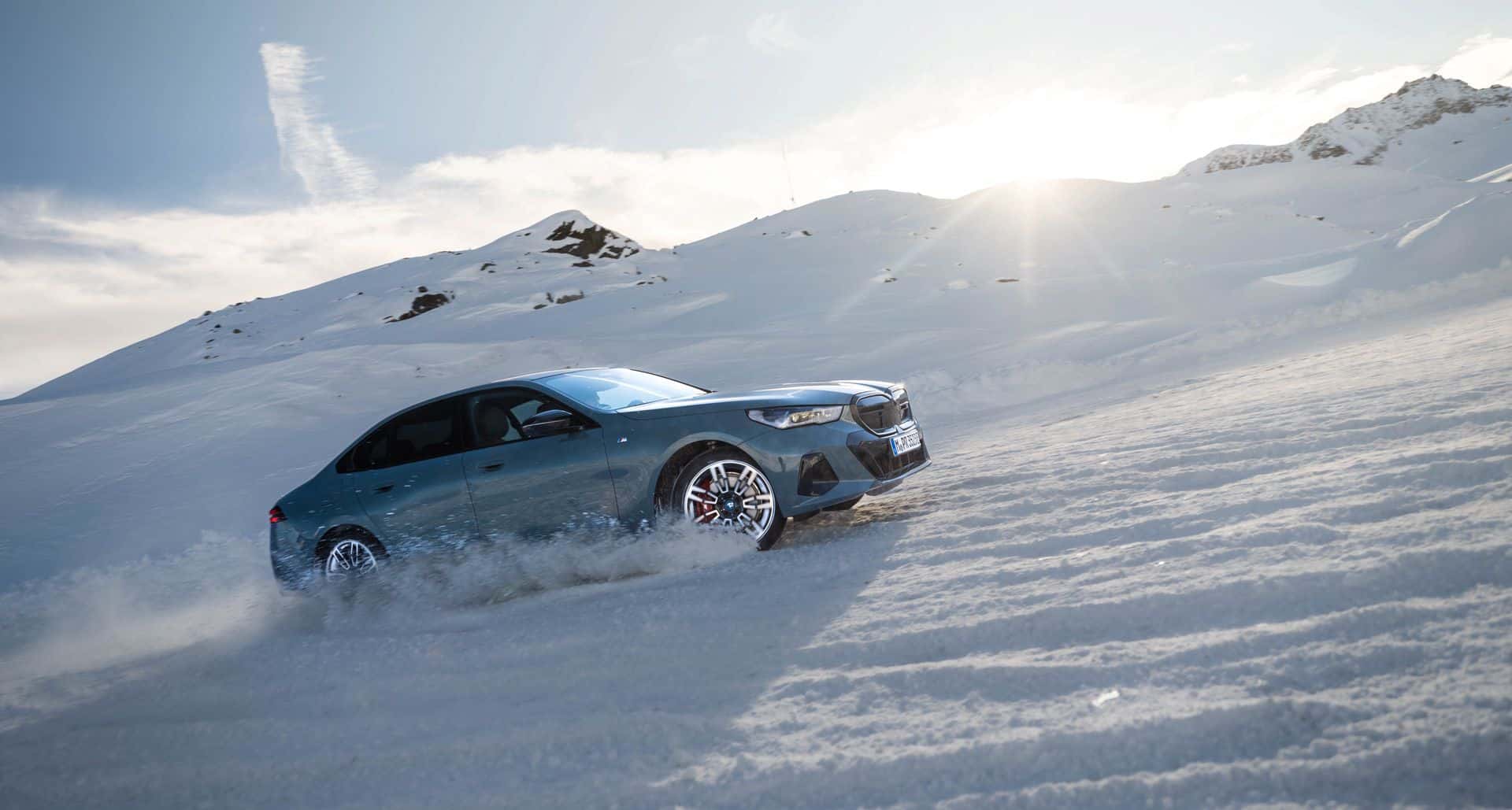
There’s a particular kind of confidence that only winter can manufacture. It arrives when the air turns crisp, the streets glisten like polished slate, and the first serious snowfall smudges the horizon into something quieter. In those conditions, people often make a simple observation: rear-wheel drive cars look brave, almost reckless, when the snow begins to stack up. And then they watch—sometimes in awe, sometimes in disbelief—how certain drivers keep composure, carve through drifts, and arrive with nothing but a faint scent of winter rubber.
That’s where the BMW M2 becomes more than a machine. It becomes a study in balance, traction, and the psychology of control. With proper technique and snow tires, the RWD drivetrain stops being a liability and starts acting like a canvas. The fascination runs deeper than horsepower or badge. It’s about what happens at the contact patch, at steering angle, at throttle modulation, and at the moment you realize the car is speaking a language you can learn.
Why the “RWD in snow” concern is so common
The common concern is understandable. Rear-wheel drive naturally concentrates propulsion at the back. When the road is slick, that concentration can amplify wheelspin, delay traction, and invite the tail to begin a polite—then not-so-polite—argument with the front.
But winter driving isn’t about whether the car is RWD or AWD. It’s about whether the tires can translate torque into motion without constantly crossing the threshold into spin. Snow turns rubber compound into a performance variable. The wrong tire turns the entire winter experience into a guessing game. The right tire converts uncertainty into repeatability.
The BMW M2’s allure in winter is partly psychological: it challenges a stereotype. Yet the deeper truth is mechanical and chemical. Modern snow tires are engineered with softer compounds, biting microtexture, and tread patterns that work like tiny shovels. They don’t just grip; they pump through slush and maintain lateral stability during weight transfer.
The M2’s winter personality: balance, feedback, and intention
The M2 isn’t a winter truck. It’s a compact sports coupe designed to respond instantly to intent. In the snow, that responsiveness can be either dramatic or controlled. The difference is how traction is managed.
When you enter a turn on snow tires, the steering can feel surprisingly legible. The front wheels set the line; the rear wheels follow the narrative—provided you don’t ask for more torque than the surface can donate. Short sentences help here. Think “smooth.” Think “measured.” Think “progressive.” Winter demands throttle like you’d demand speech from a diplomat: clearly, but never impulsively.

Snow tires: the real traction upgrade
If there’s one revelation that converts skepticism into fascination, it’s this: snow tires don’t merely reduce stopping distances. They reshape the entire behavior of the car. The tread blocks and sipes create additional edges for traction. Even in light snowfall, those edges can outperform summer rubber dramatically.
Snow tires also behave better as temperatures fall. Below freezing, many all-season compounds stiffen into something less cooperative. Snow tires remain supple, enabling the rubber to conform and bite. That conformance matters during lateral load transfer, when the sidewalls must work in harmony with the tread to prevent vague steering.
Consider the “hockey stick” effect. On slick pavement, the first small input often produces outsized results—like a board tipping the moment you step on it. Snow tires reduce that abruptness. The M2 becomes steadier. You feel it in your hands. You sense it in the way the car holds its intended trajectory instead of migrating sideways like it’s searching for grip.
Throttle discipline: making RWD feel surgical
Rear-wheel drive tends to expose throttle habits. In winter, the throttle is not a power button—it’s a metronome. A gentle application reduces the likelihood of wheelspin, while too-aggressive a press can overwhelm traction instantly.
Use the “two-phase” approach. First, establish the desired speed before entering the turn. Second, maintain momentum with minor, incremental throttle adjustments. Short corrections beat long ones. The more you wait, the less you chase.
There’s also a subtler benefit: controlled traction at the rear reduces the temptation to countersteer. When traction is stable, the car’s balance stays coherent. Then the M2 feels less like it’s sliding and more like it’s gliding—moving laterally within a predictable envelope.
Steering and weight transfer: why smoothness matters
Winter exaggerates physics. Weight transfer becomes more pronounced because the road provides less grip. The M2’s agility means it reacts quickly to steering input, so any abruptness can create a mismatch between direction and traction.
Turn-in should be calm. Let the front tires do their job. If the steering is sudden, the inside of the turn may load too aggressively, slipping before the rear has a chance to settle. Instead, apply steering progressively, like you’re drawing a line rather than snapping it into place.
Another uncommon but practical tip: watch your gaze. Your eyes influence your inputs. If you stare at the nearest patch of visible tire tracks, you may unconsciously guide the car into a textured rut. Looking farther—where the road opens—encourages smoother alignment. It’s not mysticism. It’s coordination.
Braking in snow: stopping is only half the story
Braking is often treated as a standalone act: press pedal, reduce speed, hope for the best. In reality, braking is also steering. Weight shifts forward, compressing grip where you need it most, but only if you avoid locking the wheels.
With snow tires, the M2’s braking feel can improve significantly. Still, the first few rides of the season should be treated as calibration laps. Test from a safe area. Learn how quickly the car decelerates. Learn how ABS intervention pulses under your typical conditions. Then adjust following distance accordingly.
Longer following distance isn’t simply cautious—it’s strategic. It reduces the frequency of hard braking, which reduces heat, reduces wear, and reduces the probability of unstable transitions from braking to turning.
Stability systems: allies, not autopilots
Stability control and traction aids can be invaluable on snowy roads. Yet fascination often comes from understanding them rather than surrendering to them. These systems interpret sensor data—wheel speed, steering angle, yaw rate—and then intervene when behavior diverges from expectation.
On snow tires with good grip, the systems may intervene less often, letting the car feel more connected. On weak tires, they may intervene constantly, creating a tug-of-war sensation. That tug-of-war is exhausting. It also hides the feedback that helps a driver learn.
Think of the systems as guardrails. They can prevent the worst outcomes. But great winter driving is still about staying inside the car’s intended geometry.
Common scenarios: hills, corners, and slush
Winter isn’t just snow; it’s layers. Hills test traction under load. Corners test lateral stability while propulsion may be demanded. Slush tests both, because it can behave like a lubricant one moment and an abrasive the next.
On hills, avoid late throttle corrections. Start smoothly and keep power consistent. In corners, aim for patience at entry and calm at exit. In slush, reduce sudden steering and keep braking gentle. Slush can change the surface under the tires faster than you can react. The best countermeasure is to drive as if the road is always more slippery than it looks.
Why it’s fascinating: the deeper appeal of learning traction
People keep returning to RWD M cars in winter for more than novelty. The fascination is earned. Every careful departure from the “normal” winter behavior teaches something: how torque interacts with road texture, how steering angle correlates with grip, how restraint can be faster than aggression.
The experience also feels honest. It tells you what you’re doing. It doesn’t reward showmanship as quickly as dry-road performance does. That humility can be strangely addictive. Mastery arrives through repetition, not bravado.
And the BMW M2, with its balance and feedback, turns that learning into a narrative. The car becomes a tool for attention. You notice the sound of tires. You notice the delay between input and response. You notice the moment the car finds its rhythm and refuses to relinquish it.
Practical checklist for winter readiness
Before the first snowfall, prepare like you mean it. Use dedicated snow tires with sufficient tread depth. Ensure correct tire pressures for cold temperatures and follow local recommendations. Inspect wheel alignment and suspension components. Make sure brake pads and fluid are in good condition.
Carry essentials: a scraper, a small brush, a flashlight, and a traction aid if your region requires it. Keep fluids topped up and verify your washer system. Winter is not a season for improvisation.
Most importantly, practice gradually. Find a safe, open area and learn how the car behaves at low speeds. Smooth inputs will teach you faster than panic ever could.
Conclusion: controlled bravery and the quiet romance of grip
RWD in snow can look dramatic from a distance. Up close, it becomes something else entirely: a controlled conversation between driver intent and tire traction. The BMW M2 doesn’t erase the challenges of winter—it translates them. With snow tires and disciplined technique, the car’s sporty nature turns from perceived risk into real capability.
That’s why the fascination persists. Winter driving isn’t only about getting from point A to B. It’s about discovering the boundaries of grip, respecting them, and then learning how to move with precision inside them. When the road finally opens and the tires bite cleanly, you’re not just impressed by performance—you’re rewarded by understanding.