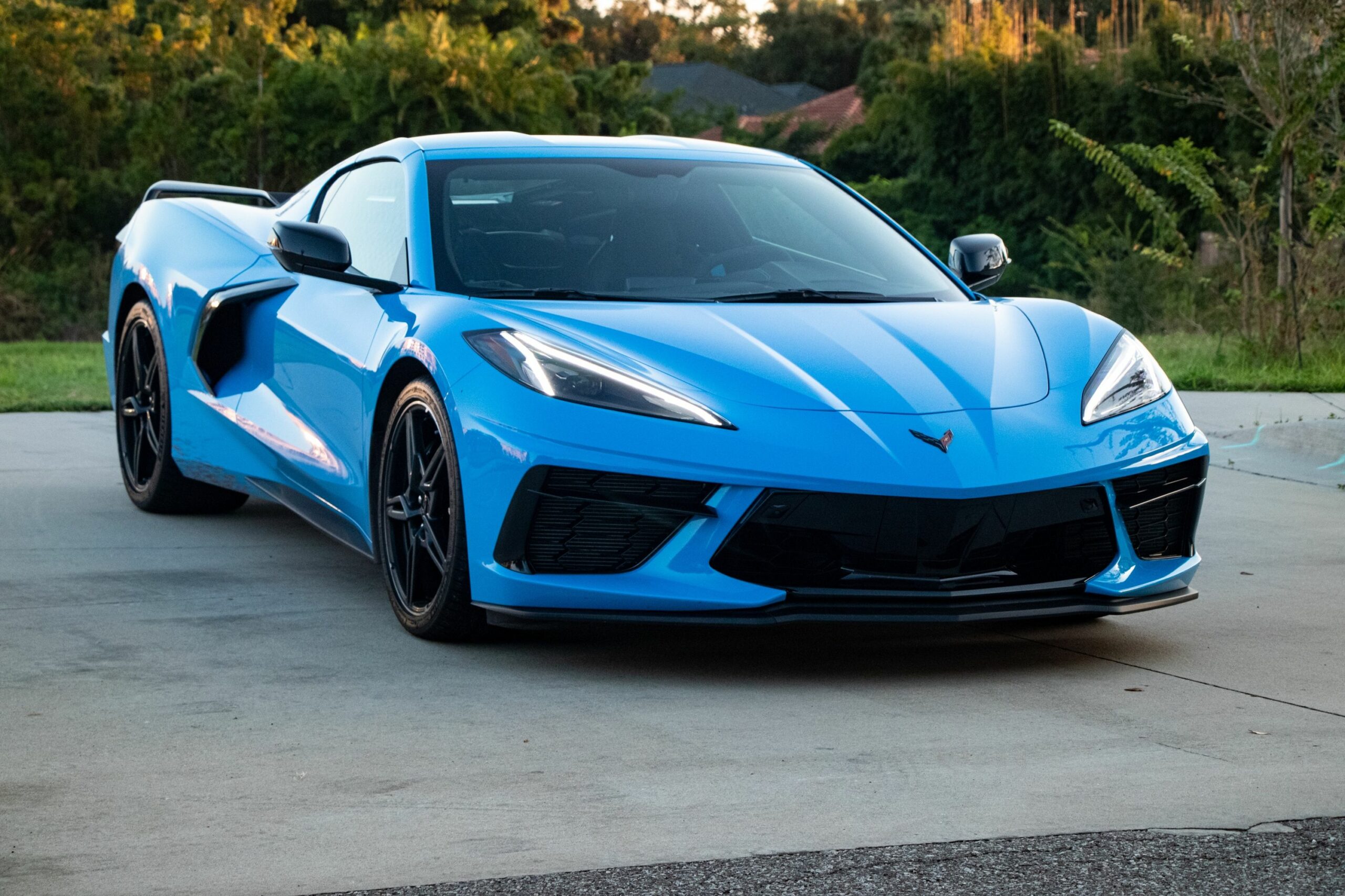
The 2026 Chevrolet Corvette Stingray carries a familiar name, yet it arrives with a new kind of confidence. The badge is recognizable; the sensation it produces is not. People tend to glance at the Stingray and focus on what’s obvious—its striking silhouette, its purposeful stance, the way it seems to compress space around the driver. But there’s a more intriguing story lurking beneath the surface: why so many enthusiasts feel an almost magnetic pull toward this particular mid-engine layout, even when they can’t always explain it in mechanical terms.
Yes, the Corvette Stingray is fast. But speed is the headline, not the hook. The fascination tends to come from how the car behaves when the road stops being polite—when braking turns sharp, when corners arrive unannounced, when the car’s attitude must be negotiated rather than simply conquered. In that moment, the mid-engine V8 architecture becomes more than a spec sheet detail. It becomes an emotional instrument.
A Mid-Engine V8 That Changes the Conversation
The most common observation about the 2026 Corvette Stingray is that it’s “a mid-engine Corvette.” That phrase sounds straightforward, almost like a convenient checkbox. Yet the location of the engine reorders the entire driving experience. When the powerplant sits behind the driver’s shoulders, the balance shifts in subtle ways that compound over time. It feels less like you’re steering a front-heavy machine and more like you’re guiding a system that’s naturally inclined to rotate.
Short sentence, long implication: the car feels more immediate.
With a mid-engine setup, the front end doesn’t need to carry the burden of direction and mass simultaneously. The result is a more composed front response during turn-in. The rear tends to provide stability without requiring constant correction. That stability is not bland; it’s supportive. It encourages confidence, particularly for drivers who enjoy exploring the limits rather than merely touching them.
And the V8 itself—because it’s not just a number—adds a particular kind of drama. The sound has presence. The throttle response has crispness. The torque delivery tends to feel “available,” as if the car is never done thinking before the next command arrives. Many sports cars feel quick; the Stingray often feels ready.
The Stingray’s Signature: Control With Character
Corvette design has always been a balancing act between athletic aggression and practical usability. The 2026 Stingray continues that tradition, but with an elegance that doesn’t soften its performance intent. Lines along the body don’t merely decorate; they guide airflow and visually telegraph how the car wants to move.
There’s a particular fascination in how the Stingray communicates through the steering, suspension, and chassis loading. You don’t just feel speed. You feel the car’s internal arguments—traction negotiating with torque, the suspension responding to surface texture, the tires translating micro-variations into clean, legible feedback.
Long sentence, vivid meaning: the car turns uncertainty into information, and that makes drivers lean in instead of brace.

Why the Mid-Engine Layout Feels So Addictive
Many enthusiasts start with an assumption: mid-engine means you can corner harder. That’s true, but incomplete. The deeper reason for fascination is how the mid-engine geometry changes the emotional timing of driving. In a front-engine car, the act of turning often carries a slight delay—weight transfers forward and then migrates as you progress through the maneuver. In the Stingray, that mass sits closer to the pivot point of the vehicle’s athletic intentions.
That produces a phenomenon drivers describe in different ways: the car feels “tucked,” as if it’s already in the posture you want before you fully commit. Braking can feel steadier because the rear doesn’t instantly feel like it’s waiting to be persuaded. Acceleration out of corners can feel more like a smooth escalation than a sudden shove.
In other words, the car invites continuity. You maintain rhythm. You don’t constantly reset your expectations.
Power Delivery: Not Just Fast—Intelligently Fast
A review of the 2026 Corvette Stingray’s V8 should acknowledge performance numbers, but the real story lives in how the engine behaves across the rev range. The most satisfying sports cars don’t simply surge; they build. The Stingray’s power delivery tends to feel urgent without being chaotic, which is a rare combination.
That balance matters because the car’s personality changes depending on driver intent. In a calmer mode, the response can feel measured and civil. Press harder, and the engine becomes more assertive—torque rises with purpose, and the car’s motion feels more like an orchestration than an explosion.
Short sentence again: the engine speaks fluently.
Chassis Dynamics and the Art of the Line
Even the best engine can’t fully compensate for a chassis that feels vague. The Stingray’s architecture supports more nuanced driving lines. It’s easier to hold a chosen trajectory. The front end communicates grip early enough for you to adjust. The rear offers traction that doesn’t feel fragile.
When the pavement turns coarse—patches, seams, mild irregularities—the Stingray tends to translate these disturbances into a controlled dialogue rather than a harsh interruption. That is where its road manners earn respect. A mid-engine sports car should be thrilling, yes, but it should also be usable, capable of returning you from aggression without demanding a full reboot of your confidence.
Long sentence, practical result: the car feels like it wants you to drive it, not merely admire it.
Design Details That Hint at Function
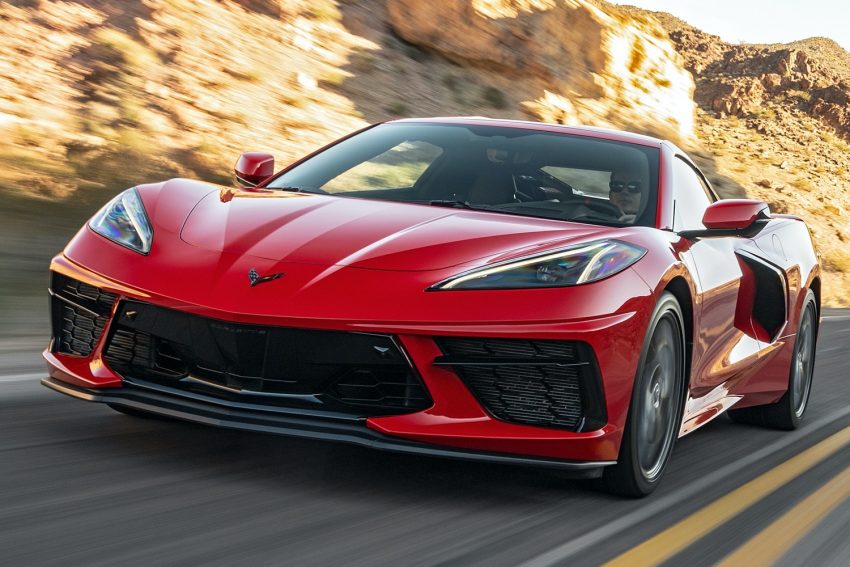
It’s tempting to treat exterior styling as pure aesthetics, but Corvette design often carries engineering subtext. The stance, the airflow treatments, and the visual emphasis on low, wide contact all suggest an intent: keep the car stable at speed and confident through transitions.
Look at the Stingray’s lighting signature and body contouring, and you’ll notice a kind of purposeful minimalism. Nothing feels random. Everything feels selected. Even when the design looks aggressive, it also looks disciplined—like a sports instrument built to perform repetitively, with consistent outcomes.
The Deeper Fascination: Engineering Meets Psychology
The 2026 Stingray’s allure is not only mechanical. It’s psychological. A driver enters with expectations about how a car should behave, and then the car quietly challenges those assumptions. Mid-engine balance changes what “normal” feels like. It compresses the gap between intention and outcome.
That compression is addictive. It makes drivers feel competent sooner. It reduces the cognitive clutter of correction. And when a car reduces clutter, the senses sharpen—sound becomes more vivid, acceleration becomes more meaningful, and steering feedback becomes a kind of conversation.
So the common observation—“mid-engine V8, impressive performance”—is merely the doorway. The deeper fascination is what happens after you drive long enough for your instincts to recalibrate.
Who the 2026 Corvette Stingray Fits Best
This is a car for drivers who want performance with clarity. It suits weekend enthusiasts who chase back-road rhythm. It suits confident daily drivers who appreciate a sports car that doesn’t become a burden. And it suits the kind of enthusiast who notices how the car behaves at the edges of traction, not just in straight-line spectacle.
If you’re seeking a vehicle that feels like it rewards precision, the Stingray’s mid-engine personality aligns neatly with that desire. It’s not only about going fast—it’s about feeling fast in a controlled, communicative way.
Final Thoughts: A Stingray That Keeps Its Secrets in Motion
The 2026 Chevrolet Corvette Stingray proves that fascination doesn’t come from specifications alone. It comes from how the car organizes force—how it turns balance into confidence, how it turns torque into intention, how it turns every corner into a readable sequence.
Yes, it’s a mid-engine V8. But the real marvel is the sensation that the car is continuously interpreting your commands, then responding with practiced clarity. The Stingray doesn’t just chase exhilaration; it cultivates it. And once that habit forms in your hands, you understand why people keep returning—not to the numbers, but to the feeling.