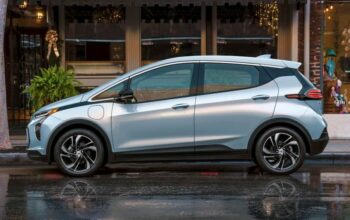
Some cars are built to impress in bright showrooms. Others are engineered for the quieter theatre of daily life—stoplights, shortcuts, errand detours, and the steady, unglamorous arithmetic of commuting. The Chevrolet Trax sits comfortably in that second category. It’s affordable on the price tag, yes, but its real magnetism is what happens after the novelty fades: the way it converts ordinary miles into something easier to swallow. And then there’s the question that lingers in the background, half curiosity and half calculation—how does the Trax behave when the road stops cooperating?
Consider this a shift in perspective. Instead of asking whether the Trax is “good for the money,” ask whether it makes your commute feel less like a financial event and more like a routine you can handle. When real-world mileage enters the conversation, expectations change. The Trax doesn’t promise perfection. It offers something more interesting: a credible path through the everyday.
From Sticker to Stopwatch: What “Real-World MPG” Really Means
Fuel economy is notorious for being misunderstood, mainly because it’s often discussed in clean, controlled conditions that rarely mirror actual driving. Real-world MPG is messier. It’s the morning start with cooler temperatures. It’s traffic compression, rapid accelerations to catch a gap, and those short trips where the engine never fully settles into an efficient rhythm. It’s also highway time at steady speeds, where aerodynamics and gearing stop improvising and begin performing.
The Chevrolet Trax’s appeal emerges when you stop treating mileage as a trivia score and start treating it as a budget instrument. Every mile is a transaction. Better MPG doesn’t just reduce fuel costs; it reduces the frequency of those small, irritating reminders—gas station stops, price-checking, and the mental tally that follows you like a shadow.
Meet the Trax: A Commuter’s Shape and a Daily Rhythm
The Trax is designed with the commuter’s reality in mind: compact proportions, practical visibility, and a stance that doesn’t demand you be a contortionist to park. Its exterior lines feel purposeful rather than theatrical, and that matters. On city blocks, ease of maneuvering becomes a kind of efficiency—less time searching for spots, less creeping, less needless throttle input.
That practicality extends into how the vehicle seems to “flow.” The cabin encourages straightforward movement: hands find controls without hunting, and the seating position supports a long drive without turning it into a stiff-necked ordeal. None of this guarantees a high MPG, but it influences driving behavior. When a car feels predictable, you tend to drive more smoothly. Smoothness often translates into fewer efficiency penalties.

The Engine-Driven Budget Promise: Efficiency Without Drama
Affordable commuting requires a specific kind of engineering restraint. You don’t want a vehicle that only performs when conditions are perfect. You want a powertrain that works with your day, not against it. The Trax aims for exactly that—delivering everyday responsiveness while maintaining the kind of fuel consumption that doesn’t make you wince at the pump.
In practical terms, the Trax’s efficiency is most visible across mixed driving: a blend of city segments and highway stretches. In town, the vehicle benefits from manageable size and a straightforward driving experience. On the highway, steady cruising helps the engine operate where it’s happiest—less hunting, fewer abrupt changes, more consistent progress.
Think of it as an efficiency conversation conducted in a calm voice. No flashy claims. Just a steady willingness to go the distance without pulling financial fireworks out of your pockets.
Driving Conditions: The Factors That Quietly Reframe MPG
Real-world MPG is a living thing. It changes with weather, route design, load, tire pressure, and even how aggressively you interpret traffic openings. The Trax can’t control your commute, but it can be the vehicle through which you learn its patterns.
Cold starts are one of the biggest MPG disruptors. In cooler weather, the engine requires extra time to reach operating efficiency. Short trips exaggerate this because the car doesn’t get enough time to settle into a stable thermal state. If your daily routine is mostly errands separated by brief drives, you’ll likely see lower MPG than someone who regularly completes longer, uninterrupted segments.
Tires are another quiet variable. Underinflated tires increase rolling resistance, which invites unnecessary energy expenditure. Keeping tires properly inflated is unglamorous, but it’s one of the most direct ways to protect your fuel economy. Weight also matters. Carrying heavy loads or filling the vehicle with items you don’t truly need can compound costs over time.
The fascinating part is that these factors are manageable. They’re not fate. With a few adjustments, a driver can unlock a surprising improvement in how the Trax measures up to its real-world expectations.
City vs. Highway: How the Trax Adapts to Everyday Geography
City driving is a test of patience, but it’s also a test of how efficiently a vehicle navigates frequent speed changes. The Trax handles that environment with a commuter’s calm. Its compactness supports smoother maneuvering, which can reduce unnecessary acceleration and braking. That’s where real-world MPG tends to improve—not through luck, but through reduced friction in your own driving.
Highway driving, however, is where a car’s fundamentals become more obvious. Aerodynamics, gearing, and engine operation at steady speeds determine the long-run efficiency. When the Trax is allowed to cruise without constant interruption, the fuel economy story becomes clearer and more consistent. It’s during these stretches that many drivers feel the difference between theoretical and actual mileage—because the real world becomes less chaotic.
For commuters, that means the Trax can be evaluated on the rhythm of their route. A person with a highway-heavy commute might experience noticeably stronger efficiency than someone navigating a stop-and-go corridor every day.
Where Affordability Converges with Efficiency
Affordability isn’t only about the purchase price. It’s about what the car costs you to live with. The Trax makes this intersection feel attainable, especially for drivers who want a vehicle that doesn’t require elaborate budgeting. When fuel economy is reasonable in daily life, it doesn’t just save money—it reduces stress.
There’s an emotional dimension to commuting economics. A vehicle with predictable efficiency makes planning easier. It helps you decide whether you can take the longer scenic route to avoid traffic. It influences whether you’re comfortable adding a detour. Over time, that turns into a sense of control. And control, in an era of expensive necessities, feels like a luxury.

Maximizing Trax MPG: Practical Habits That Matter
Improving real-world mileage isn’t about turning into a hypermiler. It’s about adopting sensible behaviors that work with how the Trax wants to move. Smooth acceleration is the simplest lever. Rapid throttle inputs can be fun for a moment, but they often steal efficiency later by forcing additional braking and recovery.
Consolidating errands can reduce the frequency of cold starts. If possible, grouping trips means the engine spends more time in its efficient operating window. Using cruise control on steady stretches can also help maintain consistent speed and reduce the subtle oscillations that waste fuel.
Another overlooked habit is watching vehicle loading. When you’re not transporting gear, lighten the load. When you are, do it efficiently—avoid carrying unnecessary items that add weight without improving your day.
Confidence Through Curiosity: The Commitment to Test the Car
The most useful way to understand the Trax’s real-world MPG is to treat it like a hypothesis you can verify. Pay attention over several tanks, not just one. Notice how changes in weather, traffic patterns, and route selection influence the numbers. The goal isn’t to chase an arbitrary figure—it’s to discover what your commute actually costs.
When you observe those patterns, the Trax becomes more than transportation. It becomes a tool for decision-making. That shift in perspective is the quiet payoff: you stop guessing, and you start knowing.
Conclusion: A Practical Car for Practical Miles
The Chevrolet Trax stands out as a commuter companion built for the long run—financially, mechanically, and emotionally. Its value doesn’t rely on fantasy conditions. It lives in the everyday: mixed routes, imperfect traffic, unpredictable weather, and the constant choreography of getting from point A to point B.
If you’re looking for a vehicle that respects your budget while delivering credible fuel economy in real-world driving, the Trax deserves a closer look. The most compelling story isn’t the one on a brochure—it’s the one revealed after you’ve driven it for yourself, after the curiosity has turned into certainty.