Depreciation is the quiet tax you pay for mobility—one that rarely announces itself with fanfare, yet steadily siphons value from the moment a key turns in the ignition. Still, not every vehicle bleeds the same way. Some models seem to wear time like a tailored jacket, gaining character while holding value with stubborn grace. Others… dissolve their worth with disarming speed.
So when the question becomes Chevrolet depreciation—Which models hold value best? the real pursuit isn’t merely a number. It’s a shift in perspective. It’s the decision to look beyond monthly payments and mileage myths, and instead ask a more revealing question: What kind of demand does a Chevy inspire after the initial shine fades?
Curiosity is warranted here, because depreciation behavior often hides in plain sight—inside trims, reputations, drivetrain choices, and the timing of market preference. Let’s walk through the logic, the signals, and the model patterns that tend to keep Chevrolet value from evaporating.
Why Chevrolet Depreciation Feels Personal
Depreciation isn’t only arithmetic. It’s psychology made measurable. When shoppers in the used market scan listings, they’re not simply comparing specs. They’re forecasting future costs: repairs, insurance vibes, fuel temperament, and the likelihood that the vehicle will be easy to sell later.
Chevrolet’s lineup—spanning mainstream commuters, family haulers, and workhorse-leaning trucks—creates a wide spectrum of outcomes. A small crossover can depreciate quickly if its resale appeal concentrates in only a narrow age window. A truck, meanwhile, may retain value longer because utility buyers treat vehicles as tools, not ornaments. That difference in buyer mindset becomes visible in depreciation curves.
Here’s the strange part: the market doesn’t always reward the “best” vehicle. It rewards the one people remember. And memory is often built on reliability anecdotes, parts availability, and how consistently a model fits into everyday life.
The Anatomy of Value: What Actually Drives Depreciation
To understand which Chevrolet models hold value best, you need to decode the ingredients. Depreciation usually follows a pattern: a sharp early drop, followed by a gradual taper—as long as demand remains steady and the supply of similar used options doesn’t flood the market.
Several forces tend to steer that curve:
1) Brand and model reputation: Some Chevrolet names carry a reputation that outlives model-year fluctuations. That reputation can act like a financial flywheel.
2) Trim popularity: Popular trims are liquid. Liquid assets behave better under stress. A drivetrain nobody wants will sell slowly, and slow sales crush value.
3) Condition resilience: Vehicles that age well—visibly and mechanically—hold attention longer. Interior wear, panel durability, and powertrain robustness all matter.
4) Market timing: Incentives, redesign cycles, and new-generation announcements can cause value to wobble. The “best” year is sometimes the one that missed the trough.
5) Demand elasticity: A model that buyers can’t easily replace with a substitute will typically depreciate less aggressively.
When these factors align, the depreciation curve flattens. When they don’t, it steepens—sometimes dramatically.
Chevy Crossover Value: Where Some Models Shine and Others Slip
Crossovers and compact SUVs often experience fast depreciation at first because the market is crowded and taste moves quickly. Yet not all Chevy crossovers behave the same. Some models keep their footing because they satisfy a specific, repeatable need: comfortable commuting, practical cargo geometry, and an affordable entry point into Chevy’s ecosystem.
Consider how a vehicle like the Chevrolet Trax fits into real life. It targets the “I need something manageable and economical” buyer. That buyer pool can be stable, especially if the vehicle maintains a reputation for affordability and ease of ownership. In many cases, value retention hinges on whether the model stays broadly desirable even after newer competitors arrive.
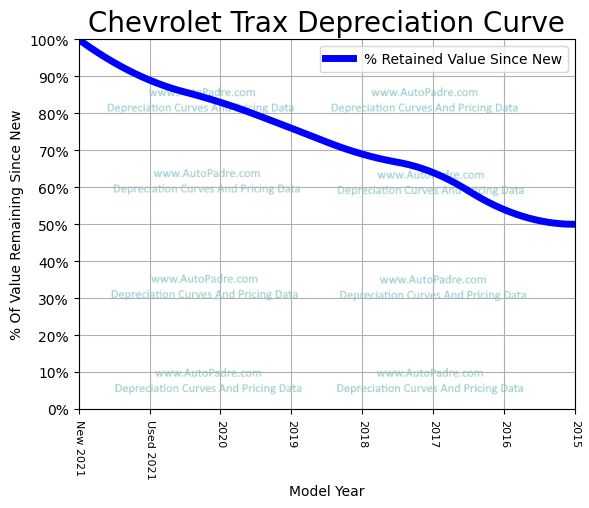
Notice how the curve concept matters more than any single datapoint. Early depreciation often sets the tone for the future. If a model loses value sharply right away, later stability may still be achievable—but the floor tends to be lower. Models that start with gentler declines often offer a better “landing” in the used market.
Curiosity should turn into a practical habit: check whether a crossover is still appealing to buyers searching for “good enough” without feeling like a bargain-bin risk.
Trucks and Utility: The Chevy Advantage in Practical Demand
If you want a genre of vehicle where depreciation can behave more respectfully, look toward utility. Chevy trucks occupy a space where people buy for work, towing, hauling, and long-term usage. That translates into sustained demand, and sustained demand is value’s best friend.
Trucks also benefit from a broader resale audience. Even when a model isn’t trendy, it can still be useful—and usefulness is often immune to fashion cycles. The market pays for capability, and capability doesn’t “expire” the way a gadget does.
That doesn’t mean all Chevy trucks depreciate identically. Specific configurations—like trims with popular features, or engines that match local usage patterns—tend to hold value better. A truck that’s easy to spec for real needs often becomes the default choice among used shoppers.
Think of it this way: depreciation is a forecast. Trucks are often forecasts written in ink—because buyers repeatedly need the same things.
Small Sedans and Discontinued Reality: The Hidden Depreciation Trap
Some Chevrolet vehicles face an additional challenge: market friction created by discontinuation, redesign transitions, or narrowing demand. When shoppers anticipate limited availability of future buyers, resale confidence can sag.
For sedans and niche segments, a small shift in preference can create a larger ripple in resale. Buyers may still love the vehicle today, but if the used market sees fewer future prospects, value can fall faster.
In these scenarios, depreciation isn’t only about current condition—it’s about narrative continuity. Vehicles whose story remains coherent across model years tend to sell better later.
So the secret question becomes: Can the next owner still justify buying it five years from now?
What the “Most and Least Depreciated” Lists Really Reveal
Lists can feel like tabloids, but they often expose a meaningful pattern: some models simply behave better because they meet market expectations with less friction. When you see charts showing “most and least depreciated” cars, the differences aren’t random. They reflect the supply-and-demand equilibrium of the used market—how many similar options exist, and how strongly buyers want them.
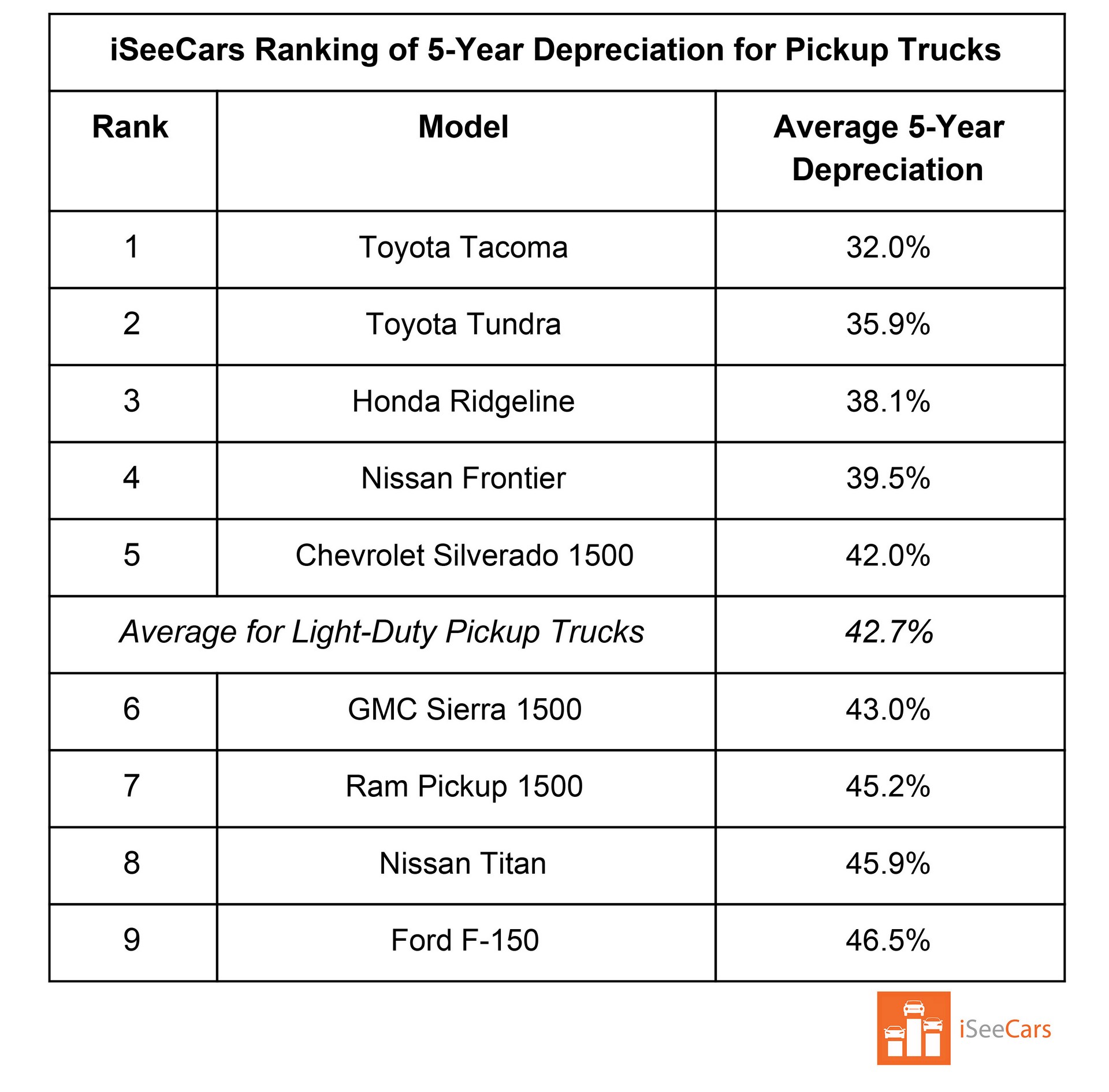
The most valuable takeaway isn’t who ranks where—it’s why those vehicles hold up. Models that decline less often share traits like broad buyer appeal, durable reputations, and fewer “resale friction points.” Meanwhile, models that decline more sharply often suffer from narrow demand or a segment that’s losing momentum.
In the Chevrolet universe, this means the models most likely to hold value are the ones with consistent ownership satisfaction and a familiar buyer profile.
How to Choose a Chevy That Holds Value: Practical Tactics
Depreciation can’t be fully controlled, but it can be influenced. The best results usually come from smart selection at purchase time.
Choose trims with maximum relevance: Popular options reduce resale friction.
Watch model-year timing: Avoid the awkward transition periods when buyers wait for the new design.
Prioritize condition hardpoints: Maintain tires, brakes, and interior cleanliness. Neglect is expensive.
Keep documentation tidy: Service records can act like a trust amplifier.
Consider drivetrain demand: Popular configurations tend to sell faster and for more.
Also, don’t underestimate the value of “scannability.” A used listing that clearly answers common concerns—range, maintenance history, accident status—tends to command better attention. Attention becomes value.
Common Myths About Chevrolet Depreciation
Several myths circulate like urban legends. One says mileage alone is destiny. Another insists that “rare equals valuable.” Reality is more subtle.
Low mileage helps, but buyers care about overall condition and mechanical confidence. Rarity can sometimes mean fewer buyers, not more. A vehicle can be uncommon and still depreciate because the resale market is smaller. The market favors vehicles that feel safe to buy, easy to live with, and simple to resell.
Another myth suggests that paying extra upfront guarantees better retention. Not always. If you buy a configuration nobody later wants, you can pay more and still lose more.
So, Which Chevrolet Models Hold Value Best?
While exact rankings change with time, the general pattern is consistent: Chevrolet models that maintain broad demand, offer practical utility, and align with popular trim preferences tend to depreciate less. In many cases, Chevy trucks and utility-focused vehicles have a structural advantage because the used market views them as tools. Meanwhile, certain crossovers can hold value respectably if their appeal stays steady beyond the initial purchase excitement.
The deeper promise here is that you can choose with intention. Depreciation doesn’t have to feel like fate. By selecting the models—and configurations—that match future buyer psychology, you reduce the likelihood of a value cliff.
Final Thoughts: A Different Way to Shop
When depreciation becomes a lens instead of a nuisance, shopping changes shape. You begin to ask questions that lead to better outcomes: Who will want this later? How easy will it be to sell? What friction might the next owner face?
Chevrolet depreciation may be unavoidable, but it’s not necessarily unforgiving. The best-held value often belongs to the vehicles that remain emotionally and logically “buyable” long after the new-car gloss fades.
That’s the real shift in perspective. Once you see depreciation as demand history written in numbers, your curiosity becomes a strategy—and your next Chevy purchase becomes less about hope, more about momentum.