The open road hums beneath your wheels, a ribbon of asphalt stretching toward the horizon like an invitation to wander. For those who crave the thrill of the journey without the guilt of fossil fuels, the Ford Mustang Mach-E emerges as more than just a vehicle—it’s a companion for the modern explorer. Yet, for all its electric prowess, the true test of any EV’s mettle lies in its ability to sustain the adventure. How does the Mustang Mach-E handle the demands of a cross-country odyssey? The answer isn’t just about range; it’s about the rhythm of charging, the art of anticipation, and the unspoken dance between driver and machine that turns a simple trip into an electrifying saga.
The Myth of the Effortless Charge: Why Planning Still Rules the Road
There’s a seductive myth that electric vehicles can simply “plug in and go,” as if the grid exists solely to serve our whims. The reality? A cross-country road trip in an EV demands the same strategic foresight as plotting a course through uncharted waters. The Mustang Mach-E’s range—up to 314 miles on a full charge—is impressive, but it’s not infinite. The key lies in understanding that every mile is a negotiation between energy consumption and replenishment.
Consider the topography. Climbing the Rockies demands more power than cruising the flatlands of Kansas. Aggressive acceleration, climate control, and even the weight of luggage conspire to drain the battery faster than you might expect. The Mach-E’s regenerative braking helps recapture energy, but it’s not a magic bullet. Drivers must learn to read the road like a conductor reads a score, adjusting speed and anticipating stops to maintain momentum. A single miscalculation—a detour, a traffic jam, a forgotten charging session—can turn an exhilarating escape into a tedious wait.

The Charging Hierarchy: From Home to Highway
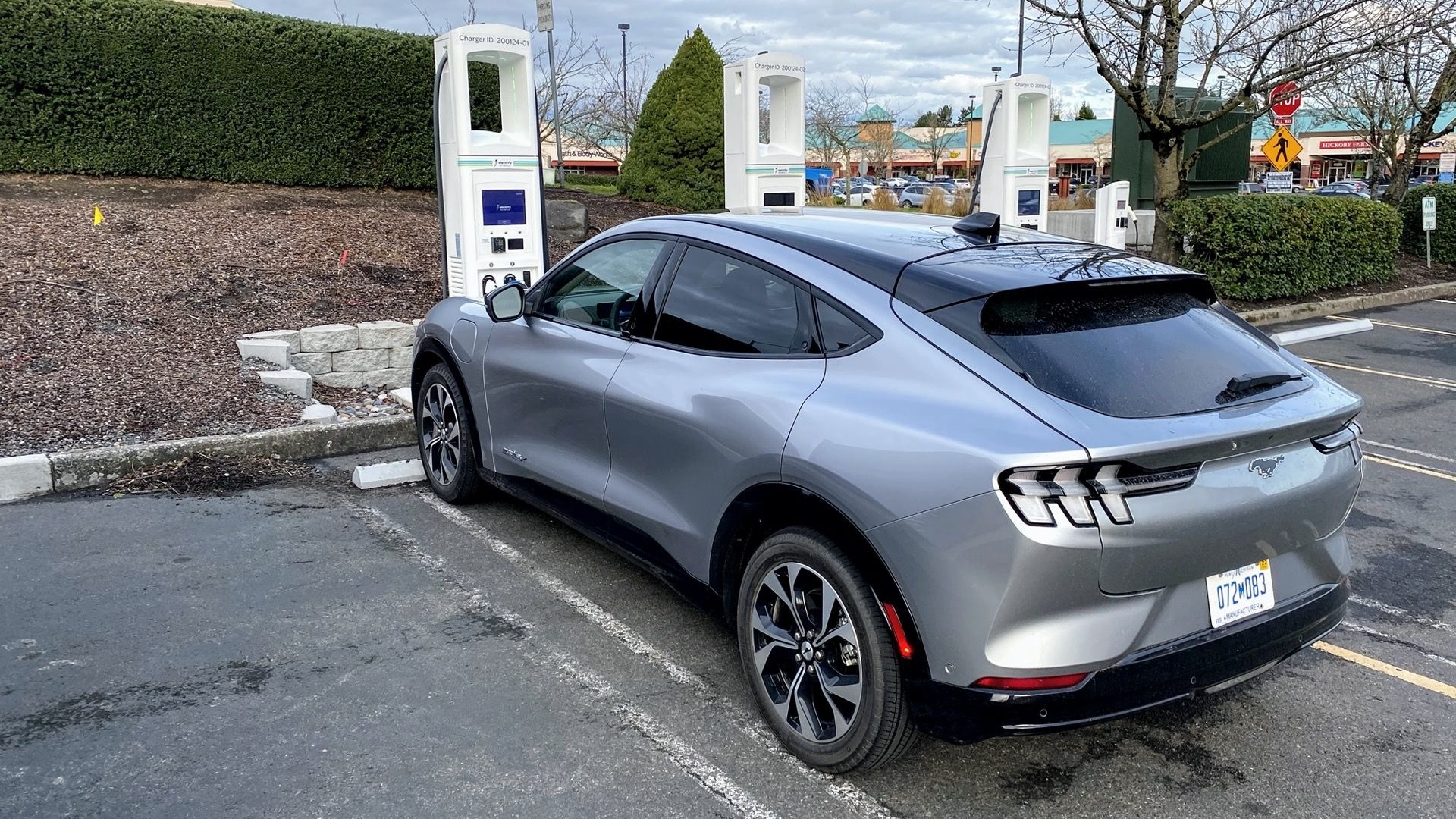
Not all charging is created equal, and the Mustang Mach-E’s journey is defined by the hierarchy of power sources. Home charging is the foundation, the quiet ritual of plugging in overnight and waking to a full tank of electrons. Level 2 chargers, like those found in garages or public stations, offer a steady 7 to 22 kW, ideal for overnight top-ups. But the road demands more—a network of fast chargers that can deliver 80% charge in the time it takes to refuel a gas-guzzler.
Ford’s BlueOval charging network, in partnership with Electrify America, provides the Mach-E’s lifeline. These stations, scattered along highways and in urban hubs, promise up to 150 kW of power, though real-world speeds often hover around 125 kW. The difference between 50 kW and 150 kW isn’t just time—it’s the difference between a quick pit stop and a prolonged intermission. Yet, even these fast chargers have their quirks. Some locations suffer from congestion, while others boast amenities that transform a mundane task into a mini-vacation: air-conditioned lounges, Wi-Fi, even coffee shops.
The Mach-E’s navigation system, integrated with PlugShare and Ford’s own charging map, becomes an indispensable co-pilot. It doesn’t just point to the nearest charger; it weighs factors like real-time availability, connector types (CCS for the Mach-E), and even the likelihood of a queue. The system’s predictive algorithms suggest optimal routes, but they can’t account for the unpredictable—the closed station, the faulty charger, the sudden urge to explore a detour. Adaptability, not just technology, is the driver’s greatest tool.

The Psychology of the Charge: Patience as a Virtue
There’s an unspoken tension in the act of charging, a psychological hurdle that gas-car drivers rarely confront. Waiting for a battery to fill isn’t just a logistical challenge; it’s a test of temperament. The Mach-E’s rapid charging reduces this wait to 20-30 minutes in ideal conditions, but even that span can feel like an eternity when the open road beckons. The hum of the charger, the digital countdown on the screen, the occasional glance at the charging cable—it’s a ritual that forces introspection.
What do we do with this time? Some dive into work, transforming a break into a productive pause. Others wander, exploring the charging station’s surroundings, striking up conversations with fellow travelers. A few simply sit, watching the world go by, their minds drifting between the hum of the charger and the hum of their own thoughts. The Mach-E’s cabin, with its spacious interior and quiet ride, becomes a sanctuary—a place to recharge not just the battery, but the spirit.
This pause is more than a necessity; it’s a reminder of the slower pace of electric travel. Where gas stations are transactional, charging stations can be communal. They’re gathering points for EV enthusiasts, hubs of shared stories and advice. The Mach-E’s journey isn’t just about reaching a destination; it’s about the connections forged along the way, the unexpected detours that become the highlights of the trip.
The Unseen Costs: Range Anxiety and the Illusion of Convenience
Range anxiety—the gnawing fear that the battery will die before reaching the next charger—is the elephant in the room. The Mustang Mach-E’s EPA-estimated range is a comfort, but real-world conditions often tell a different story. Cold weather saps battery efficiency, while heat can strain the system. Elevation changes, wind resistance, and even tire pressure all play their part in draining the charge faster than the dashboard predicts.
Yet, the Mach-E’s efficiency is part of its charm. Unlike gas guzzlers that guzzle fuel with abandon, the Mach-E rewards efficient driving with extended range. Gentle acceleration, steady cruising, and smart use of regenerative braking can stretch the battery’s limits. The car’s Eco mode, which limits power output and optimizes energy use, becomes a secret weapon for squeezing out extra miles. It’s a lesson in restraint, a reminder that sometimes, the journey is about more than speed.
The Mach-E’s thermal management system also plays a crucial role, pre-conditioning the battery before departure to ensure optimal performance. This feature, often overlooked, is a game-changer in extreme temperatures. It’s the difference between arriving at a charger with a healthy reserve and arriving on fumes, praying for a miracle.
The Road Ahead: What’s Next for EV Road Trips?
The Mustang Mach-E’s cross-country capabilities are a testament to the progress of electric vehicles, but they’re also a glimpse into the future. As charging infrastructure expands and battery technology improves, the act of road-tripping in an EV will become as seamless as it is in a gas-powered car. Ford’s commitment to 100% electric vehicles by 2030 signals a shift in the automotive landscape, one where the open road is no longer the domain of fossil fuels.
Yet, the true allure of the Mach-E’s journey lies in its imperfections. The detours, the delays, the moments of uncertainty—these are the threads that weave the tapestry of adventure. They remind us that travel isn’t just about the destination; it’s about the stories we collect along the way. The Mustang Mach-E doesn’t just get you from point A to point B; it transforms the journey into an experience, a symphony of power, patience, and possibility.
The road is calling. Are you ready to answer?