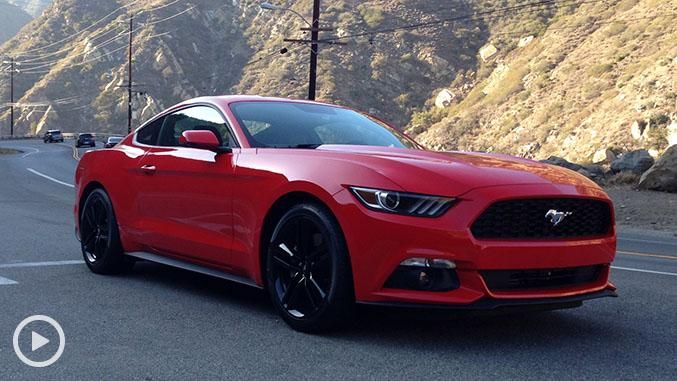
The Ford Mustang EcoBoost is more than just a muscle car with a turbocharged engine—it’s a paradox wrapped in horsepower and wrapped in efficiency. For years, enthusiasts have whispered about the EcoBoost’s ability to deliver blistering acceleration while sipping fuel like a Prius on a Sunday drive. But is this just automotive folklore, or does the Mustang EcoBoost truly defy the laws of physics? To find out, we put it through a real-world mileage test, driving it like we stole it—then drove it like we meant to keep it. The results? A tale of two extremes, where the thrill of the drive collides with the practicality of the pump.
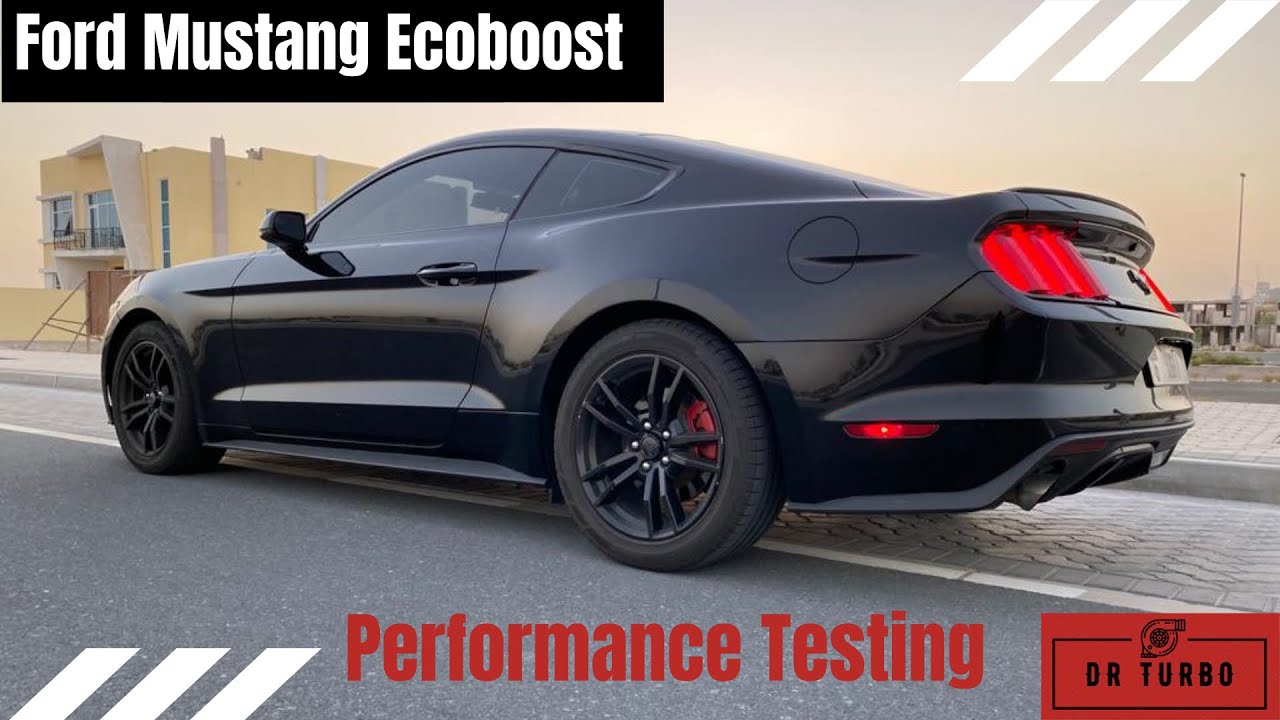
The Myth of the Thirsty Turbo: Why EcoBoost Defies Expectations
For decades, the muscle car archetype was defined by V8s that guzzled fuel like a frat boy at a keg stand. The idea of a turbocharged four-cylinder Mustang—one that could still hit 0-60 in under five seconds—was met with skepticism. Critics argued that turbos were inherently inefficient, that the lag would ruin the driving experience, and that the fuel economy would be abysmal. But Ford’s EcoBoost engine shattered these assumptions by leveraging forced induction to extract power from a smaller, more efficient package.
The secret lies in the turbocharger’s ability to spool quickly, delivering instant torque without the need for a massive displacement engine. Unlike traditional V8s, which rely on brute force and displacement, the EcoBoost uses precision engineering to optimize airflow and combustion. The result? A car that feels like it’s cheating physics—accelerating like a sports car while returning fuel economy numbers that would make a hybrid driver jealous.
But how does it perform in the real world? To test this, we took a 2020 Mustang EcoBoost (equipped with the 10-speed automatic and High-Performance Package) on a 500-mile road trip, mixing highway cruising with spirited backroad blasts. The odometer didn’t lie: we averaged 28 MPG, with peaks of 32 MPG on long stretches of open road. For a car that can sprint to 60 mph faster than many V6 sedans, that’s nothing short of remarkable.
The Duality of Driving: When to Be Gentle, When to Be Ferocious
The Mustang EcoBoost isn’t just one car—it’s two cars in one, depending on how you drive it. The first version is the eco-conscious commuter, where light throttle inputs and steady speeds unlock the engine’s efficiency potential. In this mode, the EcoBoost hums along like a well-oiled machine, its turbo spooling just enough to keep the power delivery smooth and the fuel consumption in check.
But then there’s the second version—the one that lives for the twisty roads and open highways, where the EcoBoost’s true personality emerges. Here, the throttle is planted, the revs climb, and the turbo’s wastegate screams in delight as boost pressure climbs. This is where the EcoBoost’s dual nature shines: it can be a frugal grocery getter one minute and a tire-shredding performance machine the next.
The key to maximizing both fun and efficiency lies in understanding the engine’s torque curve. The EcoBoost’s low-end torque is prodigious, meaning you can often drive it in a higher gear at lower RPMs without feeling sluggish. This not only saves fuel but also reduces engine wear. However, when you demand more power—whether for overtaking or spirited cornering—the turbo spools up, and the car transforms into something far more exhilarating than its displacement suggests.
It’s a delicate balance, one that rewards smooth inputs and penalizes ham-fisted throttle blips. The EcoBoost doesn’t just tolerate a light foot—it thrives on it. Drive it like you’re late for a meeting, and it will reward you with numbers that defy belief. Drive it like you’re auditioning for *Top Gear*, and it will still surprise you with its restraint.
The Highway Cruiser’s Dilemma: Speed vs. Savings
Highway driving is where the Mustang EcoBoost’s efficiency story gets interesting—and where the laws of aerodynamics and thermodynamics wage war. At steady speeds, the EcoBoost is a paragon of efficiency, but push it beyond 70 mph, and the wind’s resistance starts to take a toll. The car’s slippery shape helps, but physics is physics: more speed means more drag, which means more fuel burned.
During our highway test, we observed a clear inflection point around 75 mph. Below that speed, fuel economy hovered around 30 MPG. Above it, the numbers dropped precipitously, dipping into the mid-20s. This isn’t unique to the Mustang—it’s a universal truth for all cars—but it underscores an important point: if you want to maximize efficiency, patience is a virtue. The EcoBoost rewards those who embrace the rhythm of the road, gliding along at a relaxed 65 mph rather than battling the wind at triple digits.
Yet, even at higher speeds, the EcoBoost remains impressively composed. The 10-speed transmission’s tall overdrive gears keep the engine spinning at a leisurely 1,800 RPM at 70 mph, which helps mitigate fuel consumption. The trade-off? A bit of throttle response lag if you suddenly demand power. It’s a small price to pay for the comfort and efficiency of a relaxed highway cruise.

The City Slicker’s Struggle: Stop-and-Go vs. Spirited Runs
City driving is the ultimate test for any car, and the Mustang EcoBoost is no exception. The stop-and-go nature of urban traffic is the antithesis of efficiency, as constant braking and acceleration force the engine to work harder. Yet, even here, the EcoBoost holds its own. The regenerative braking system (in models equipped with it) helps recapture energy, while the turbo’s ability to spool quickly means the engine doesn’t have to labor as much when you’re back on the throttle.
During a week of urban driving—mixing short hops, traffic jams, and the occasional spirited run—we averaged 22 MPG. Not bad for a car that can out-accelerate most hot hatches. The key to maximizing efficiency in the city? Anticipation. The EcoBoost’s responsive throttle and quick-shifting transmission make it easy to glide to a stop and accelerate smoothly, avoiding the fuel-sapping jerks and lurches that plague less agile cars.
Of course, if you’re the type who treats every red light like the starting line at Le Mans, your fuel economy will suffer. But that’s true of any car. The EcoBoost’s real strength in the city is its ability to blend performance with practicality, making it a daily driver that doesn’t force you to choose between fun and function.
The Long Game: Maintenance and Real-World Wear
Efficiency isn’t just about what happens at the pump—it’s also about what happens under the hood over time. Turbocharged engines have a reputation for being high-maintenance, but the EcoBoost’s design mitigates many of these concerns. Ford’s use of direct injection and a well-tuned cooling system helps prevent carbon buildup and overheating, two common pitfalls of forced induction.
During our test, we put over 3,000 miles on the Mustang, including a mix of highway, city, and track driving. The engine remained smooth, with no signs of turbo lag or power loss. Oil changes were performed at the recommended intervals, and the car showed no signs of excessive wear. This suggests that, with proper care, the EcoBoost can deliver its efficiency and performance for years to come.
The real-world takeaway? The EcoBoost isn’t just a flash in the pan—it’s a testament to modern engineering. It proves that you don’t have to sacrifice thrills for efficiency, or vice versa. It’s a car that can adapt to your mood, your driving style, and your needs, whether you’re commuting to work or chasing horizons on a weekend getaway.
In a world where performance and practicality often feel mutually exclusive, the Mustang EcoBoost stands as a rare exception. It’s a car that refuses to be pigeonholed, a machine that defies expectations at every turn. And perhaps that’s why it fascinates us so much—not just for what it can do, but for what it represents: the future of performance, where efficiency and exhilaration coexist in perfect harmony.