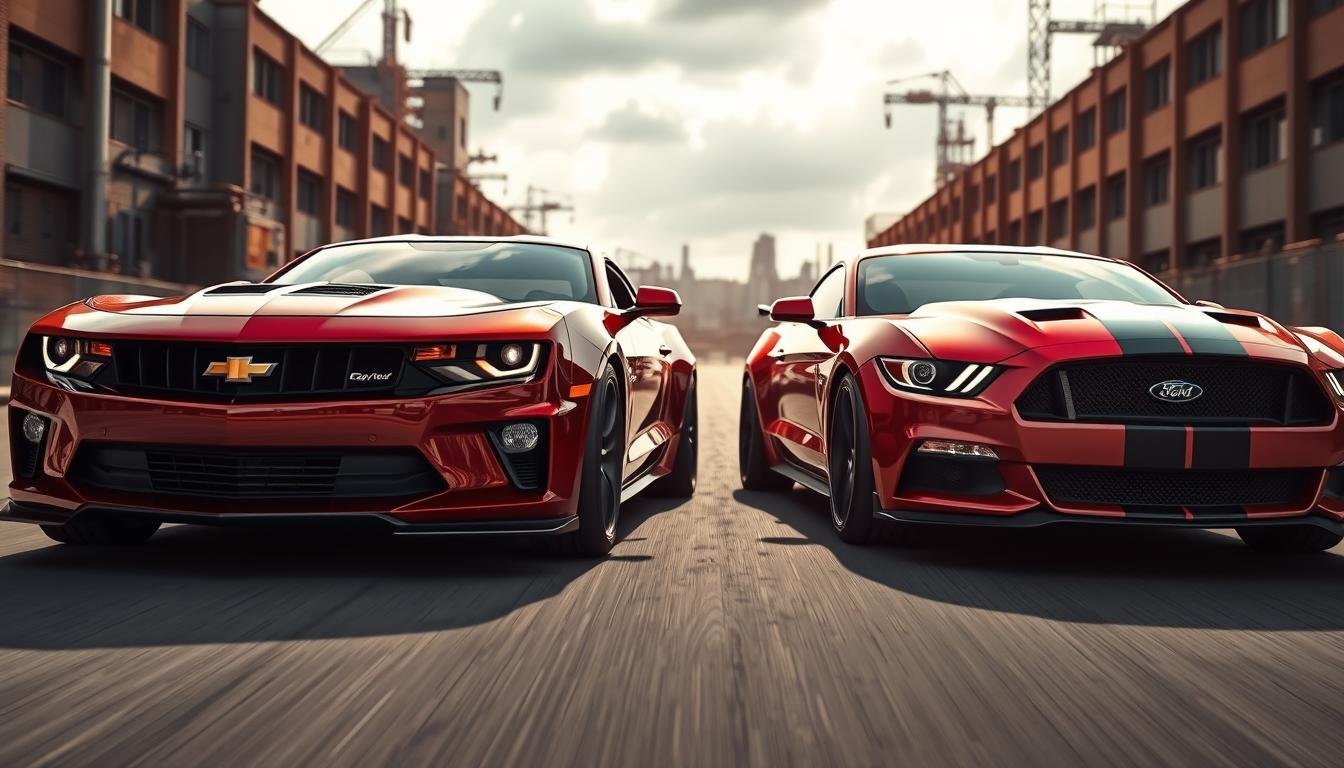
The roar of a V8 engine splits the air like a thunderclap, the scent of burning rubber mingling with the faint tang of gasoline. Two icons stand frozen in time, their silhouettes etched against the horizon—one a prancing horse, the other a bowtie. The Ford Mustang and the Chevrolet Camaro aren’t just cars; they’re living legends, symbols of American grit and automotive passion. For decades, they’ve danced in a high-octane waltz, each generation refining the art of affordable muscle. But what makes this rivalry more than just horsepower and chrome? Why does the mere mention of a Mustang versus a Camaro ignite debates that burn hotter than a freshly laid drag strip? The answer lies not just in performance, but in the very soul of what it means to drive with purpose.
The appeal isn’t merely about speed—it’s about identity. These cars whisper promises of freedom, rebellion, and the open road. They’re accessible yet aspirational, attainable for the enthusiast with a modest budget yet capable of stirring the dreams of weekend warriors and seasoned collectors alike. In a world where cars are increasingly becoming appliances, the Mustang and Camaro remain defiantly analog—machines that respond to the driver’s touch with visceral immediacy. They are the anthems of a generation that refuses to be silenced by automation and digital detachment.
The Genesis of a Rivalry: How It All Began
The story begins in the early 1960s, a time when Detroit was still the unchallenged capital of the automotive world. Ford, sensing an opportunity in the burgeoning “pony car” segment, launched the Mustang in 1964. It was an instant sensation—sleek, affordable, and brimming with potential. Within two years, over a million Mustangs had rolled off the assembly line, proving that America craved more than just practical transportation.
Chevrolet, never one to play second fiddle, responded with its own interpretation of the pony car formula. The Camaro debuted in 1966, riding on the coattails of the Mustang’s success but with a distinct personality. Where the Mustang wore its elegance like a tailored suit, the Camaro embraced a grittier, more aggressive stance. It was built for the enthusiast who wanted performance without pretense. The rivalry wasn’t just about engineering—it was about philosophy. One car promised sophistication; the other, raw capability.
This foundational contrast set the tone for generations. The Mustang became the car of the stylish rebel, the Camaro the choice of the no-nonsense gearhead. Their rivalry wasn’t just corporate—it was cultural, a reflection of diverging American ideals. One leaned into charisma; the other, into competence. And yet, both shared a common thread: they were built for the driver, not the backseat passenger.
Engineering on a Budget: The Heart of Affordability
At the core of the Mustang vs. Camaro debate lies a paradox: how do you deliver world-class performance without a world-class price tag? The answer is found in the ingenious use of shared platforms, modular engines, and a relentless focus on value engineering. Both cars have mastered the art of delivering thrills without demanding a king’s ransom.
The Ford Mustang, particularly in its EcoBoost and GT trims, offers a range of powertrains that cater to every budget. The turbocharged 2.3-liter inline-four may not set the world on fire, but it delivers spirited acceleration and impressive fuel efficiency—ideal for the enthusiast who wants a taste of performance without the guilt of a gas-guzzling V8. Meanwhile, the 5.0L Coyote V8 remains a benchmark in accessible power, churning out over 400 horsepower in its latest iterations. It’s a testament to Ford’s ability to extract performance from relatively simple, mass-produced components.
The Chevrolet Camaro, on the other hand, has always leaned into its racing pedigree. The LT1 V8, a descendant of the legendary LS family, delivers blistering performance with a naturally aspirated growl that resonates through the chassis. Even the turbocharged 2.0L inline-four in the base model offers surprising punch, proving that you don’t need a big engine to feel big power. Chevrolet’s approach emphasizes balance—lightweight materials, a rigid structure, and a suspension tuned for both comfort and cornering precision. It’s a car that rewards skill, not just throttle stomping.
What’s remarkable is how both manufacturers have managed to keep prices in check while continually raising the performance bar. The base Mustang starts under $30,000, while the Camaro’s entry point hovers around the same figure. Even in their most potent forms, neither car demands six-figure investments. This accessibility is the secret sauce that keeps the rivalry alive—it ensures that the dream of owning a muscle car isn’t confined to the elite few.
Design Language: Beauty in Brutality
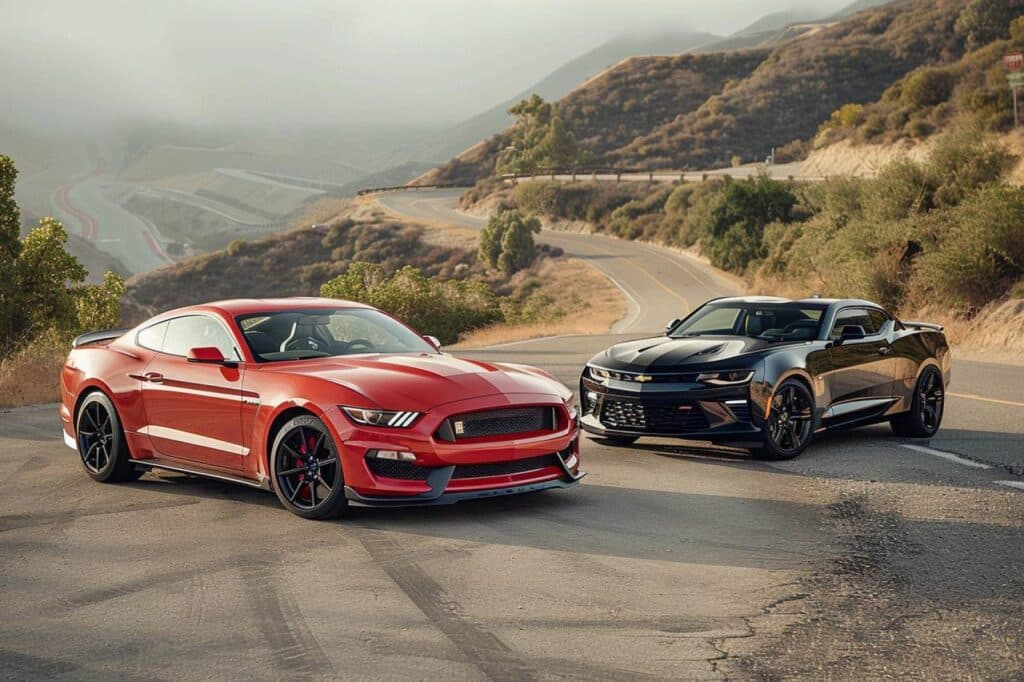
The visual language of the Mustang and Camaro is a study in contrasts—one exudes sophistication, the other exudes menace. The Mustang’s design is a masterclass in evolutionary aesthetics. Its long hood, short deck proportions, and sweeping roofline evoke classic sports cars of the 1960s, yet every generation introduces modern refinements. The latest models feature a bold grille, LED lighting, and sculpted bodywork that commands attention without screaming for it. It’s a car that looks as good parked in a downtown loft as it does on a country backroad.
The Camaro, by contrast, wears its aggression like armor. Its wide stance, pronounced fenders, and menacing grille give it the presence of a predator ready to pounce. The fastback roofline and muscular haunches emphasize its performance credentials, while details like the LED halo headlights and aerodynamic vents add a touch of modernity. The Camaro doesn’t just look fast—it looks like it was forged in a wind tunnel rather than a design studio.
Yet, despite their differences, both cars share a common trait: they are unmistakably American. Their designs are bold, unapologetic, and unmistakably rooted in the spirit of the open road. They are cars that demand to be seen, not just driven. In an era where automotive design is increasingly homogenized, the Mustang and Camaro stand as bastions of individuality.
The Driving Experience: Where the Rubber Meets the Road
To truly understand the Mustang vs. Camaro rivalry, you must get behind the wheel. The driving experience is where the philosophical differences between the two cars crystallize into something tangible.
The Mustang, particularly in its GT guise, offers a ride that balances comfort and performance. The cabin is plush, with soft-touch materials and modern infotainment systems that cater to the daily driver. The steering is precise, the shift quality of the automatic transmission is silky smooth, and the ride quality is compliant enough for long highway cruises. Yet, when the road tightens, the Mustang reveals its teeth. The V8’s mid-range torque shoves the car forward with relentless urgency, while the chassis, though not as razor-sharp as the Camaro’s, offers a forgiving and engaging experience.
The Camaro, on the other hand, is a driver’s car in the truest sense. The cabin is more intimate, with a focus on functionality over luxury. The seats are bolstered, the steering wheel is thick, and the pedals are positioned for heel-toe downshifts. The ride is firmer, the suspension tuned for maximum grip and minimal body roll. The Camaro doesn’t just corner—it carves through turns with surgical precision. The steering is direct, the feedback immediate, and the exhaust note a symphony of mechanical aggression. It’s a car that makes you feel alive, every twist of the wheel a reminder that driving is about connection.
This dichotomy is at the heart of the rivalry. The Mustang offers a blend of performance and practicality, making it ideal for the enthusiast who also needs a daily driver. The Camaro, however, is for those who prioritize driving purity above all else. It’s a car that demands engagement, rewarding the driver with a level of feedback and involvement that few modern performance cars can match.
Cultural Impact: More Than Just Cars
The Mustang and Camaro are more than machines—they are cultural touchstones. They’ve starred in films, graced magazine covers, and inspired generations of gearheads. The Mustang, with its association with freedom and rebellion, has become a symbol of American individualism. It’s the car of choice for movie heroes and rock stars, a rolling metaphor for breaking free from convention.
The Camaro, meanwhile, has carved out its own niche in the cultural landscape. It’s the car of choice for drag racers, road course warriors, and anyone who values performance above all else. Its racing pedigree, from Trans-Am to NASCAR, has cemented its reputation as a car built for the track. Yet, it’s also a car that thrives on the street, where its aggressive styling and raw power turn heads at every stoplight.
Both cars have transcended their mechanical origins to become icons of a lifestyle. They represent a time when cars were more than just transportation—they were statements. They were the embodiment of dreams, the vehicles through which people expressed their identities. In an age of electric vehicles and autonomous driving, the Mustang and Camaro stand as reminders of a bygone era when the journey was as important as the destination.
The Future: Can the Rivalry Survive the Electric Revolution?
As the automotive world hurtles toward an electric future, the future of the Mustang and Camaro is a subject of intense speculation. Ford has already taken the plunge with the Mustang Mach-E, an all-electric SUV that carries the Mustang name into uncharted territory. Meanwhile, Chevrolet is preparing to launch the eCamaro, a battery-powered version of its iconic coupe. The question on everyone’s lips is simple: can the spirit of the Mustang and Camaro survive the transition to electric power?
The answer lies in the soul of the cars. The Mustang and Camaro are more than just engines and exhaust systems—they are symbols of passion, performance, and individuality. Electric powertrains may change the way these cars are powered, but they won’t change the way they make people feel. The visceral thrill of acceleration, the symphony of a V8 at full throttle, the connection between driver and machine—these are experiences that transcend the source of propulsion.
Moreover, both manufacturers have committed to preserving the essence of their iconic models. The Mustang Mach-E may wear an electric badge, but it retains the spirit of its gasoline-powered sibling. The same goes for the eCamaro. These cars will continue to offer the performance, handling, and driving engagement that have defined the Mustang and Camaro for generations. They will simply do it with a new kind of power.
The rivalry may evolve, but it won’t disappear. The Mustang and Camaro have weathered economic downturns, changing tastes, and shifting automotive trends. They’ve adapted, innovated, and endured. And as long as there are drivers who crave the thrill of the open road, these two icons will continue to duel—affordable, accessible, and utterly irresistible.
The roar of the engines may one day fade into silence, but the legend of the Mustang and Camaro will live on. They are more than cars. They are dreams on wheels, and dreams, as we all know, never truly die.