The 2025 Tesla Model 3 doesn’t arrive like a conventional family sedan. It glides in, quiet as a held breath, then opens the throttle of expectations. In the driveway, it looks composed—sleek, intentional, and slightly enigmatic, the way a well-designed watch face suggests time without shouting it. Inside, it turns daily routines into something more deliberate: the commute feels less like a chore and more like a calm ritual. This is a car that seems to treat electricity not as a compromise, but as a new operating language—one families can actually speak fluently.
Test-driving it with a family mindset changes the lens. It’s no longer only about acceleration. It’s about how the car behaves on ordinary roads, how it shelters passengers from noise and stress, and how confidently it handles the mundane choreography of errands, school runs, and weekend departures. The 2025 Model 3 earns its place by doing the unglamorous things extremely well—then adding a few thrilling flourishes that make you notice.
A Quiet Kind of Confidence
The first thing that stands out is the soundscape. Traditional cars have a soundtrack: engine hum, tire chatter, the faint mechanical percussion of motion. The Model 3 replaces much of that with near-silence, leaving only the road’s texture and the wind’s occasional whisper. That silence is not emptiness; it’s clarity. It makes conversations easier. It lets kids settle. It turns the cabin into a soft cocoon where attention can actually rest.
There’s also a psychological advantage to that quietness. Without the familiar engine drama, the car feels composed at every speed. You don’t brace for what comes next. You simply move. It’s like stepping into a well-designed library: the air is still, the rules are consistent, and the experience is surprisingly restorative.
Acceleration as a Family-Friendly Superpower
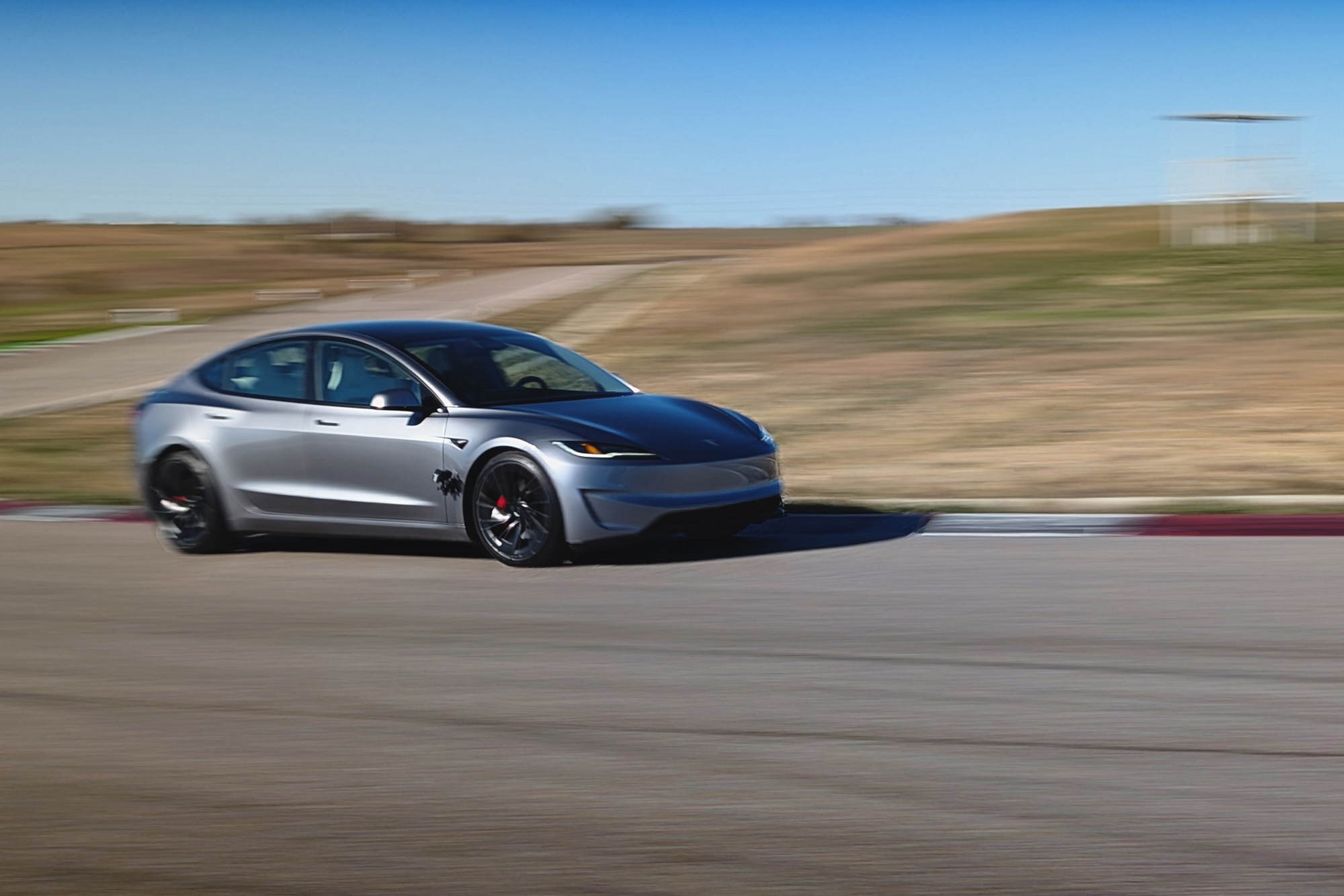
Acceleration in an electric car isn’t just about going fast. It’s about timing—how quickly you can respond when the road requires it. During test drives, that responsiveness becomes a subtle form of safety. Merging feels less like negotiation and more like assertion. Passing on multi-lane roads becomes decisive, not reckless.
The Model 3’s power delivery carries a distinct personality. It doesn’t surge like a startled animal. It advances with controlled intent, as if it has already mapped the next second. For families, that matters. You want confidence without chaos. You want propulsion that feels smooth to passengers, even when you press for performance.
And then there are the moments that surprise you—leaving a stoplight, cresting a hill, or reclaiming space in traffic. The car performs like a discreet athlete: elegant when you want comfort, eager when you want momentum.
Cabin Space, Seating Reality, and Daily Usability
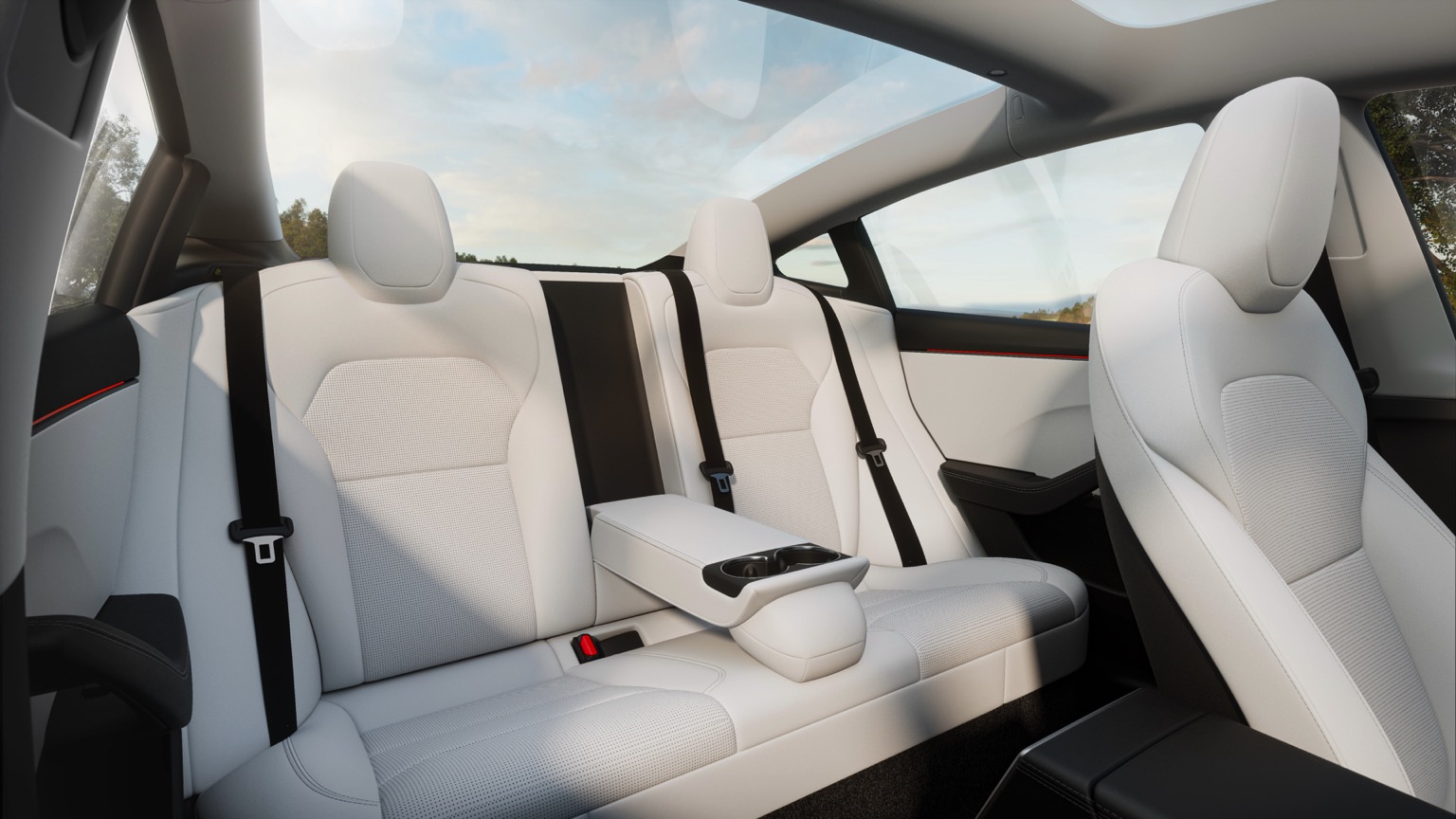
A family sedan lives or dies on practicality. Seats must be supportive. Visibility must be forgiving. Storage must be more than a token gesture. The 2025 Model 3 treats these requirements like design constraints worth respecting, not afterthoughts.
The cabin layout feels efficient, as though every surface was asked to justify its existence. That efficiency reduces clutter and encourages order. Long drives become calmer because the environment doesn’t feel busy. Short drives become easier because the necessities—backpacks, jackets, water bottles—can find their places without turning the car into a moving storage unit.
Rear-seat passengers benefit from the car’s overall proportions, and the ride quality helps them forget they’re seated in a vehicle at all. The goal isn’t to make every ride feel luxurious in a showroom sense. The goal is to make it feel effortless in real life.
Driving Feel: Steering, Handling, and Predictable Motion
Driving dynamics are often marketed with adjectives. Here, the reality is more persuasive: steering response is communicative, and the chassis behavior stays composed. The Model 3 doesn’t chase drama; it offers predictability. That’s a quiet luxury for families, particularly on wet roads, uneven pavement, and those everyday corners where your confidence matters more than your bragging rights.
On test routes that alternate between smooth highways and imperfect city streets, the suspension and tire interface create a sense of control. The car seems to understand the difference between comfort and float. It gives you comfort without losing alignment with the road’s intentions.
Think of it as a conductor rather than a drummer. The ride doesn’t just happen; it’s directed.
Range and Charging: The New Geography of Planning
Electric cars change family schedules in a different way than gas vehicles ever did. Instead of thinking about filling up, you think about energy availability. The 2025 Model 3 invites that mental shift by making charging feel more like infrastructure access than a recurring chore.
During real-world driving, you begin to notice range as a flexible boundary rather than a fixed limit. Short trips stack neatly. Errands fit into the rhythm of the day. Then the weekend arrives—longer distances, more spontaneity—and charging becomes a matter of planning rather than anxiety.
Charging networks and home charging are the twin pillars of this experience. With the car ready to plug in, energy stops being a question and becomes a routine. The metaphor is simple: gas stations used to be landmarks. With EV ownership, the landmarks move closer to home—like turning “travel” into “seasonal habit.”
Technology and Interface: A Dashboard That Thinks Like a Companion
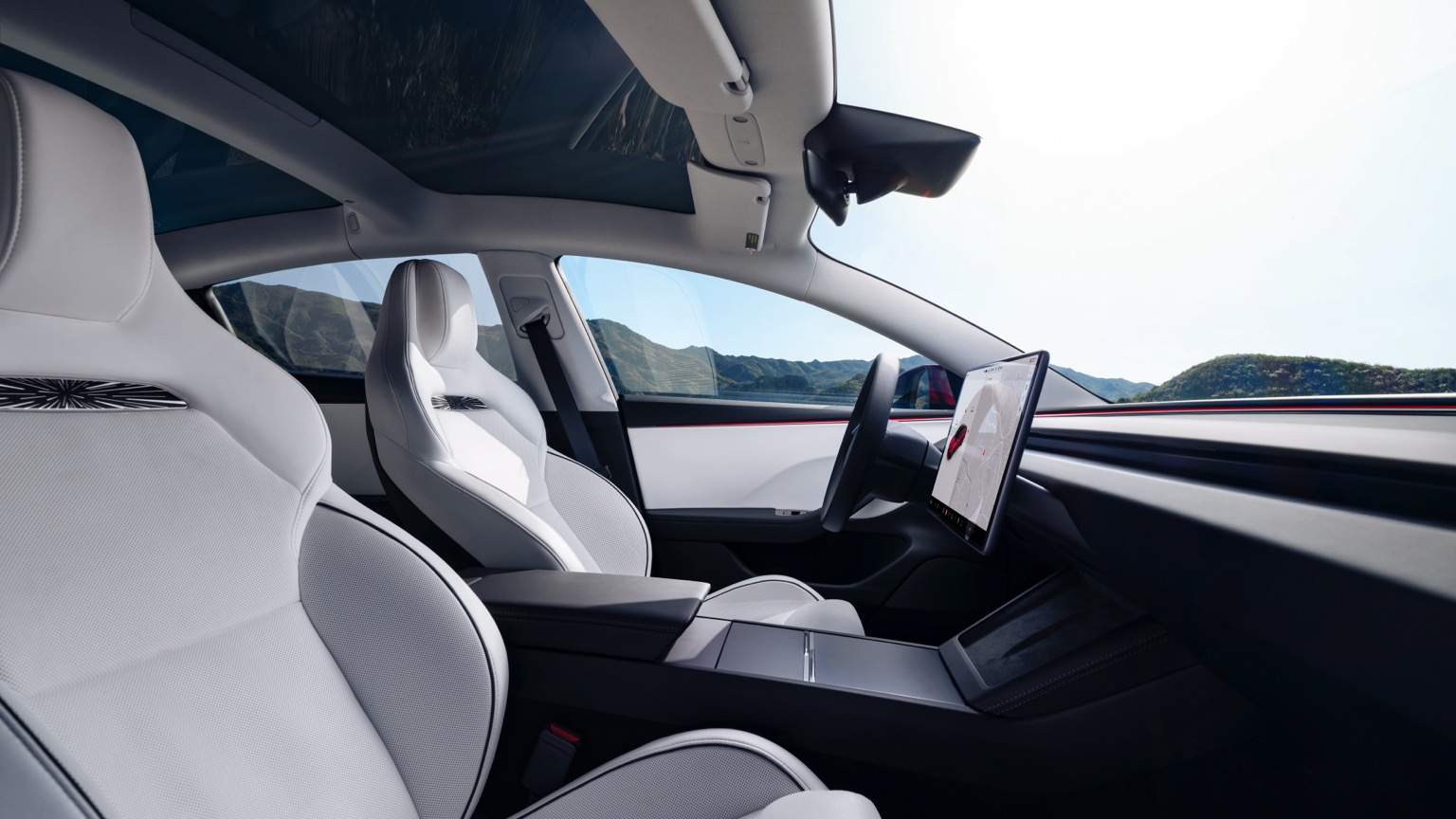
The Model 3’s cockpit feels less like a dashboard and more like a command center. Instead of scattering information across multiple analog-style instruments, the interface assembles clarity into a single, cohesive view. That reduces visual hunting, especially when you’re focused on navigation, traffic, or timing your arrival for pickups.
For families, usability is everything. The system responds to touch and intent, and it organizes functions in ways that keep you from wrestling the car. In motion, the goal is to keep attention on driving, not on deciphering menus.
It can feel like having a calm co-pilot who never interrupts and never forgets where the keys are. Not flashy. Not theatrical. Just reliably helpful.
Safety and Driver Assistance: Confidence Without Overconfidence
Safety isn’t only about crash engineering—it’s also about the daily reduction of friction in challenging conditions. The 2025 Model 3’s driver assistance features contribute to that atmosphere of confidence. They help manage long stretches of highway monotony and increase awareness around the edges of your attention.
During test drives, the most impressive effect is not the feeling of “automation,” but the feeling of extra vigilance. Systems support lane awareness, spacing considerations, and alertness. The car doesn’t replace the driver. It acts like a protective umbrella—there when you need it, quietly out of the way when you don’t.
In family life, that distinction matters. You want assistance that empowers you, not assistance that distracts you.
Efficiency and Cost of Ownership: The Quiet Payoff
Efficiency is often discussed in numbers, but in daily living it’s felt. Electric power delivery is inherently efficient, and the Model 3’s aerodynamic design supports that theme. Over time, the savings can be noticeable, particularly when you compare the cost structure of charging versus fuel.
Ownership becomes more predictable. Maintenance needs can be simpler without the engine-driven complexity of traditional powertrains. It’s not that upkeep disappears. It’s that the burden shifts from frequent mechanical consumption to periodic checks and routine service.
The payoff is less about one dramatic moment and more about accumulation—like stacking small deposits that eventually add up to a calmer financial calendar.
The Unique Appeal: An Electric Sedan with a Sense of Purpose
What makes the 2025 Tesla Model 3 genuinely compelling isn’t one feature. It’s the orchestration of many small advantages into a single emotional tone: calm speed, clean usability, and a cabin that feels like a retreat rather than a compartment.
It’s intriguing because it doesn’t ask you to lower your expectations for family practicality. It asks you to widen them. It treats commuting as a design problem worth solving. It treats charging as an activity that can be integrated rather than endured. It treats performance as something that can be refined enough for regular life.
In the end, the Model 3 feels like a modern household appliance—one that’s engineered for daily use, tuned for efficiency, and capable of delight when you invite it. It’s not just a car. It’s a new rhythm for the week ahead.
Conclusion: Ready for School Runs and Skyline Moments
Testing the 2025 Tesla Model 3 as a family sedan reveals a thoughtful balance. It offers quiet composure for everyday rides, energetic responsiveness when roads demand confidence, and an interface that helps you stay present. It reshapes how you plan, how you drive, and how you perceive the act of going somewhere.
If a family sedan should do one thing exceptionally well, it’s reduce stress while expanding choice. The 2025 Tesla Model 3 does that with an almost poetic efficiency—like electricity itself, it transforms what used to be friction into something closer to flow.