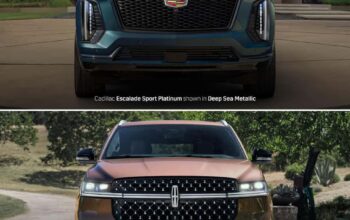
There’s a particular kind of quiet satisfaction that arrives when a luxury car glides over imperfections as if the road were merely a suggestion. It’s not silence alone. It’s the way the chassis seems to absorb chaos—expanding, cushioning, and then returning to shape—until your body feels recalibrated to calm. A common observation among drivers and passengers is that some 2026 luxury cars deliver an unusually smooth ride quality, almost eerily consistent from city pavement to open highway. Yet the deeper fascination lies in the engineering choreography behind that comfort: a multilayered conversation between materials, suspension logic, tire behavior, and aerodynamics, tuned so precisely that bumps lose their urgency.
In 2026, luxury brands are treating ride quality less like a static specification and more like a dynamic performance. The result is that “smooth” feels less like a marketing adjective and more like an experience—one that can change how you perceive distance, fatigue, and even time. Below, the story unfolds across the technologies and design choices that make certain models stand out for their velvety composure.
The Smoothness You Feel Starts Before the Suspension
It’s tempting to credit the suspension first, and it certainly plays a starring role. But the smoothest rides often begin at the ground level—where tires meet asphalt. In 2026, many luxury cars use refined tire compounds and more sophisticated sidewall architectures. These details can filter high-frequency vibration, the kind that causes “buzz” in the cabin. A tire can be remarkably perceptive: it responds to micro-slips and road texture, moderating how force travels upward.
Then there’s wheel design. Aerodynamic wheel faces can reduce turbulence, which influences perceived stability and steering steadiness. Stability, in turn, reduces the driver’s instinct to correct. That matters because frequent corrections introduce small, cumulative jolts—physical and mental—that make a ride feel harsher, even if the suspension is capable.
In practice, smooth cars feel as though they “hold a line” effortlessly. The chassis might be moving, but it’s not dithering. That composure is the prelude to comfort.
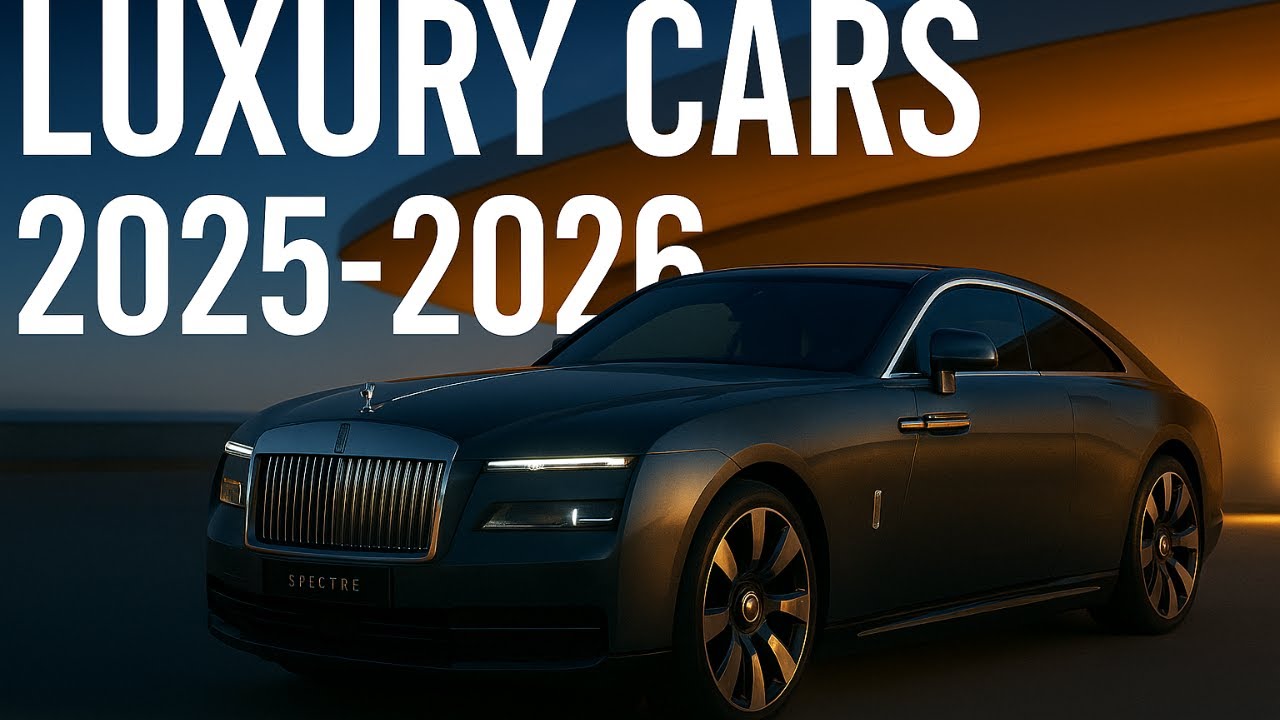
Adaptive Suspension: Comfort That Learns in Real Time
Adaptive suspension systems have matured. In 2026, the smoothest ride quality typically comes from setups that continuously interpret road conditions. These systems don’t merely react to bumps; they predict them by reading steering input, wheel speed, and body motion. The goal is to keep the suspension in an optimal damping window—neither too soft for control nor too firm for impact absorption.
Some vehicles integrate electronically controlled dampers that can shift characteristics within fractions of a second. When you cross a seam in the road, the system can soften to cushion the impact, then firm just enough to stabilize the chassis after the disturbance. The sensation is subtle, but it’s powerful: instead of a single jolt, you experience a brief, managed transition.
A deeper reason people become fascinated by this smoothness is trust. When a car consistently dampens unpredictability, the mind relaxes. The body stops bracing reflexively. Comfort becomes a kind of quiet certainty.
Air Suspension and the Art of Height Tuning
Air suspension remains a hallmark for ultra-smooth ride quality in the luxury class. By using air springs and electronically managed leveling, these systems can maintain consistent ride height regardless of load. That means the car’s geometry stays in a stable range, improving not only ride smoothness but also steering precision.
The best air-suspension implementations in 2026 add more than just cushioning. They incorporate intelligent pressure regulation that compensates for changing road grades and speed. On long drives, the system can hold composure during repeated elevation changes, preventing the “float then settle” sensation that sometimes occurs in older systems.
There’s an almost poetic element to it: the vehicle responds to the road as if it understands the road’s mood. For passengers, that can turn a commute into something closer to a gentle ritual.
Chassis Architecture: A Foundation for Velvet Control
Even advanced damping can’t fully erase the effects of structural harshness. That’s why 2026 luxury cars increasingly emphasize chassis stiffness management—using materials and geometries that balance rigidity with compliance. The trick is to avoid the “too rigid, too brittle” feeling that can transmit every contour into the cabin.
Manufacturers use high-strength steel, aluminum, and composite elements in strategic zones. Some platforms incorporate isolation mounts and refined subframe connections to reduce vibration pathways. These choices matter because the body is not a passive container; it’s a tuned assembly. When vibrations are blocked at the correct frequency bands, the cabin feels calm even during aggressive driving.
In smoother cars, the cabin doesn’t feel like it’s being shaken. It feels like it’s being shielded. That is chassis architecture doing its work beneath the surface.
Noise, Vibration, and Harshness (NVH): The Invisible Craft
“Smooth” often sounds like a visual concept, but it’s mostly tactile and acoustic. NVH engineering in 2026 has become more granular. Brands now target specific frequency ranges—partly by measuring resonance patterns and partly by using targeted acoustic materials.
Inside the cabin, layered insulation, active noise control, and improved sealing can reduce the transmission of road and engine sounds. But the most luxurious rides are not just quieter. They also reduce the sharpness of certain vibrations that can catch the ear and spine at once.
Active or semi-active systems may use sensors and microphones to counter particular frequencies. The result can be a cabin that feels “smoothly muted,” as if the world outside has been filtered through a high-end studio console.
Powertrain Smoothness: The Quiet Rhythm Beneath
A car can have a perfect suspension and still feel slightly unsettled if the powertrain introduces torque pulses or shift jolts. In 2026, transmissions and drivetrains are increasingly tuned for refined torque delivery. Many vehicles employ more sophisticated calibration for throttle mapping and gear changes, reducing the crests and dips that cause motion sickness-like discomfort in sensitive passengers.
Hybrid systems also contribute. Electric torque can arrive instantly yet smoothly, and when control software coordinates the transition between electric and engine power, the ride can feel seamless—like a continuous flow rather than a sequence of mechanical events.
That hidden rhythm is another reason fascination deepens. Smooth powertrain behavior makes the car feel present and composed, not mechanical or temperamental.
Brakes and Steering Feel: Confidence That Reduces Jitter
Smooth ride quality isn’t only about what happens over bumps. It’s also about how the car behaves during deceleration and maneuvering. Modern luxury vehicles use brake control strategies that mitigate pedal feedback vibrations. Better brake modulation can prevent abrupt chassis movement under hard stops, which often makes the suspension work harder.
Steering systems, too, influence comfort. When steering inputs produce predictable responses, the driver avoids micro-corrections that would otherwise disturb the cabin. Some models also pair steering assist with suspension damping logic, creating an integrated “comfort loop.”
The effect is subtle, but it’s measurable in how steady the ride feels. Smoothness becomes an ecosystem, not a single feature.
Driving Modes and Calibration: Comfort as a Personal Setting
In 2026, smoothness can be tailored. Driving modes often adjust throttle behavior, steering weight, transmission mapping, and suspension damping. The best luxury calibration systems treat comfort as a cohesive philosophy rather than a collection of sliders.
Some modes prioritize compliance, allowing the car to ride softer at low speeds while maintaining stability at highway velocity. Others focus on “quiet glide,” emphasizing vibration isolation and reduced drivetrain harshness. It’s the difference between feeling comfortable and feeling consistently settled.
When passengers experience that consistency, their fascination intensifies. They stop thinking about comfort and start enjoying the sensation.
Design for Aerodynamics: The Highway’s Secret Ingredient
At speed, smoothness changes character. Wind noise, airflow turbulence, and pressure fluctuations can influence perceived ride quality. In 2026, aerodynamic refinement—especially underbody detailing, improved mirrors, and optimized airflow management—reduces buffeting. Less buffeting means fewer micro-movements in the cabin and steadier steering effort.
A smooth highway ride feels effortless partly because air resistance becomes less intrusive. The car seems to carve through motion rather than fight it. That impression is a blend of aerodynamics and control software, collaborating so the chassis doesn’t have to constantly re-stabilize against airflow disturbances.
How to Choose a 2026 Luxury Car for the Smoothest Ride
Finding the smoothest ride quality often requires more than reading specs. Consider these practical indicators:
Try multiple surfaces: a parking lot transition, a patched roadway, and a highway on-ramp reveal different strengths.
Pay attention to tire feel: ride smoothness can hinge on wheel-and-tire setups. Large wheels may look dramatic, but sidewall tuning matters for comfort.
Evaluate the suspension behavior under braking: some systems feel compliant over bumps but become unsettled during deceleration.
Notice the “after-bump” settling: a truly smooth car doesn’t bounce in response; it returns with minimal drama.
Even short tests can uncover whether the vehicle offers controlled compliance—comfort with discipline.
Why We Can’t Stop Admiring Smoothness
There’s a reason smooth ride quality becomes addictive. It creates a sensation of control without effort. It reduces fatigue, and it lowers the mental volume of the journey. In that calm, the destination feels farther away—in a good way—because the drive becomes the reward.
Underneath that feeling is a deep fascination with refinement: the way engineers choreograph forces, frequencies, and responses until discomfort loses its foothold. Smoothness is not merely softness. It’s precision disguised as ease.
Conclusion: The 2026 Velvet Standard
In 2026, the smoothest luxury cars deliver comfort through integrated systems: tire intelligence, adaptive suspension logic, chassis architecture, and meticulous NVH control. They quiet the cabin, damp the shocks, and stabilize motion so your body stops bracing for the next disturbance. The experience can be surprisingly emotional—like stepping into a well-tuned rhythm where the outside world moves, but you remain steady.
Ultimately, the smoothest ride quality is a promise: that distance will feel manageable, travel will feel lighter, and the journey will maintain its composure—even when the road tries to disrupt it.