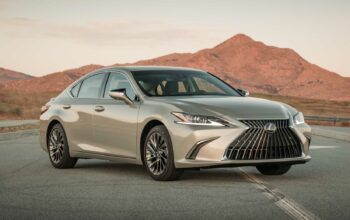
The idea of a “reliable” midsize sedan used to feel straightforward: buy the one with fewer trips to the mechanic, then enjoy the commute. Yet by 2026, reliability has become something more nuanced—less about absolute perfection and more about predictability. Drivers now notice patterns: which models start effortlessly on cold mornings, which ones keep their calibration without constant tampering, and which drivetrains seem to understand the rhythm of daily life. That’s why the most reliable 2026 midsize sedans don’t merely promise durability; they cultivate a kind of mechanical serenity.
There’s a common observation that tends to surface in owner conversations. People often say they chose their sedan because it “felt solid,” not because it was the most visually dramatic in the showroom. But that “solid” feeling usually has deeper roots. It’s often the result of refined engineering choices—balanced power delivery, conservative tuning, and manufacturing consistency that reduces the odds of annoying variability. Reliability, in other words, isn’t always luck. It’s frequently design philosophy showing up long after the first test drive.
Why Reliability Feels Different in 2026
Modern midsize sedans live in a world of sensors, software updates, and increasingly complex electrical architectures. Reliability today isn’t limited to hardware alone; it’s also about how systems communicate. When a car’s infotainment behaves calmly, when driver-assistance features don’t glitch unexpectedly, and when the vehicle’s thermal management prevents premature wear, owners experience reliability as steadiness rather than sporadic success.
Another layer is the “maintenance foresight” baked into many 2026 platforms. Engineers increasingly design for easier servicing and predictable component intervals. The outcome is subtle. Oil changes still matter, tires still matter, but fewer components surprise you with premature fatigue. That predictability is often what people are really responding to when they say a car is reliable.
And of course, reliability is also a cultural phenomenon. Owners become fascinated by machines that don’t demand constant attention. The fascination can feel almost comforting—like a well-run routine. The most reliable 2026 sedans tend to create that routine.
1) Toyota Camry (Midsize Mainstay with Practical Confidence)
The 2026 Camry has long carried the reputation of a dependable commuter, and its appeal is rooted in something deeper than brand familiarity. Its character is often described as unhurried, and that temperament matters. A powertrain that doesn’t thrash for performance tends to experience less stress in everyday use. Stress, after all, is where premature wear begins to breed.
Owners typically enjoy a drivetrain that’s easy to live with—smooth transitions, thoughtful throttle mapping, and stability that doesn’t require constant correction. The Camry also benefits from manufacturing maturity: systems are likely to behave consistently across vehicles, reducing the odds of isolated defects.
Reliability here isn’t merely the absence of problems. It’s the presence of calm. You feel it when the vehicle starts, when it warms up, and when it settles into cruising without fuss.
2) Honda Accord (Refinement That Doesn’t Turn Fragile)
The Accord’s reliability story often gets told through the lens of refinement: quiet cabins, composed handling, and engines that deliver power with minimal fuss. But refinement can be a reliability asset. When a car’s suspension tuning is balanced and its driveline backlash is carefully managed, the vehicle experiences fewer harsh mechanical events. Those are the moments that erode components over time.
In 2026, the Accord’s fascination lies in how it blends modern technology without making daily life feel like troubleshooting. Driver-assistance systems are expected to operate consistently, and when they do, owners perceive a higher level of “whole-car stability.”
There’s also a quiet advantage in how these vehicles are used. Many Accord drivers keep vehicles longer than the typical cycle. That long-term orientation encourages a design that tolerates years of routine ownership rather than just short-term novelty.
3) Subaru Legacy (Confidence in Weather, Composure in Motion)
When people talk about reliability, they sometimes forget the environmental variable. Newer drivers may live in regions where rain, snow, and temperature swings test everything. The 2026 Subaru Legacy often stands out because its traction strategy—especially when equipped for all-weather capability—helps reduce the kind of mechanical strain that comes from wheel slip and instability.
Reliability isn’t just about what breaks first; it’s also about how a vehicle manages difficult conditions without demanding extra attention from the driver. The Legacy’s steady behavior in varying grip conditions can make ownership feel less stressful, particularly in winter seasons.
There’s a deeper fascination too: all-weather confidence tends to shape driving habits. People ease into corners more smoothly, they accelerate with intention, and they avoid sudden corrections. Smoothness, in turn, is a subtle guardian against premature wear.
4) Hyundai Sonata (Smart Engineering and a Modern Reliability Renaissance)
The Sonata’s rise in reliability conversations reflects a broader shift in how Hyundai approaches durability and refinement. In 2026, the fascination is how the car feels engineered rather than merely assembled. Better quality control, more rigorous powertrain calibration, and a focus on long-term system integrity contribute to a more dependable ownership experience.
Owners often want two things: low friction in daily life and fewer unexpected visits. A well-calibrated engine can contribute directly. Reduced vibration, improved thermal efficiency, and careful transmission behavior all help the vehicle operate within healthier margins.
Another element is the vehicle’s software ecosystem. When systems update cleanly and electronic functions behave predictably, it removes a whole category of “reliability anxiety.” Reliability, after all, isn’t only mechanical. It’s also emotional—how steady you feel when you press the start button and trust the next mile.
5) Kia K5 (Durable Ambition with a Composed Ownership Profile)
The 2026 Kia K5 often surprises skeptics because it delivers youthful energy without sounding fragile. Reliability can coexist with sportier personality. The key is how the car’s tuning balances engagement with durability. When suspension and steering components operate with measured loads—rather than constant extremes—their lifespan tends to improve.
Drivers also appreciate how the K5 fits real routines. Smooth gear changes, consistent braking feel, and a cabin environment that resists annoying rattles all reinforce the perception of dependable design.
The deeper reason people become fascinated by a car like the K5 is that it challenges the old tradeoff: “fun” doesn’t have to mean “high maintenance.” When engineering choices are made to protect longevity, ownership becomes both enjoyable and predictable.
Common Reliability Tests Drivers Often Overlook
People frequently focus on headline metrics, but day-to-day reliability can be inferred from smaller signals. Watch for how a sedan behaves after long idling. Notice whether the steering feels unchanged after heat-soak. Pay attention to whether the car’s start-stop behavior stays smooth rather than jerky.
Also consider serviceability. A car that’s straightforward to maintain can be more reliable in practice because regular care happens on schedule. Reliability isn’t only about avoiding failure. It’s about making success likely over time.
Finally, consider the ecosystem: tire wear patterns, brake dust behavior, and how consistently the car tracks alignment. These factors quietly reveal the underlying mechanical harmony—or the lack of it.

How to Choose the Right Reliable Sedan for Your Life
Picking the “most reliable” sedan isn’t simply about choosing the brand with the strongest reputation. Your driving profile matters. Short trips can stress certain systems differently than long highway runs. Frequent cold starts can amplify the importance of oil flow and thermal management. If your routes include rough pavement, durability depends on suspension resilience and wheel-end robustness.
Choose a trim level that matches your priorities. Reliability often improves when your configuration reduces unnecessary complexity. That doesn’t mean avoiding advanced features—it means understanding your tolerance for maintenance cycles and knowing which technologies are essential for you.
For many drivers, reliability is ultimately a lifestyle decision. A dependable sedan becomes a moving basecamp—where errands feel easier, commutes feel shorter, and long road trips feel less like an experiment.
Final Thoughts: Reliability as a Daily Kind of Magic
The top 5 most reliable 2026 midsize sedans share a common trait: they reduce surprise. They don’t always market themselves as “mysteriously dependable,” but their engineering often reveals itself in the mundane moments—the start-up, the shift feel, the stable steering, the refusal to rattle into irritation.
That’s the deeper fascination. Reliability isn’t glamorous. It’s quietly charismatic. It turns a car into something closer to a routine companion, one that simply keeps showing up—capable, composed, and ready for tomorrow.