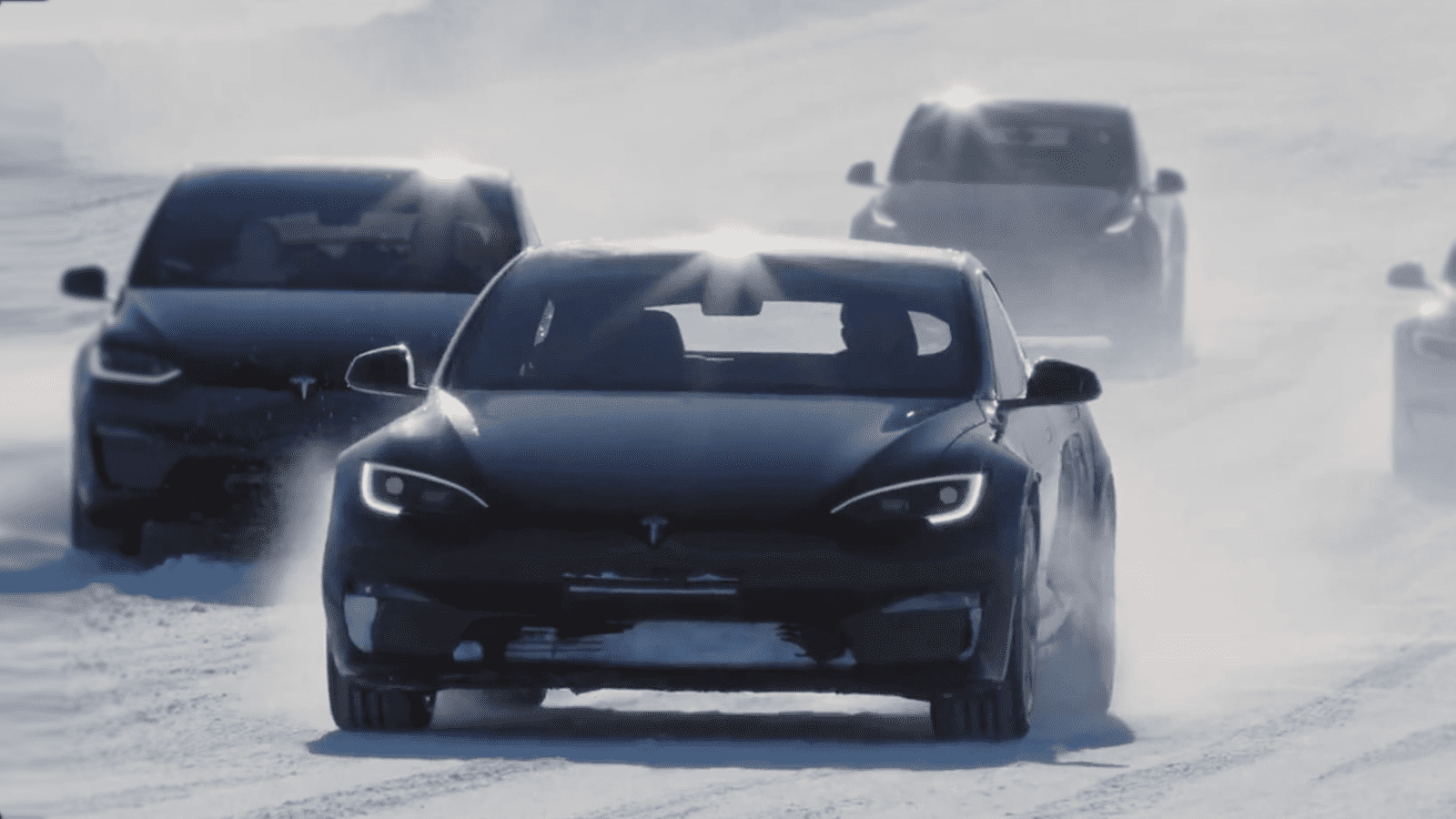
The first snowflakes of winter herald more than just a seasonal shift—they signal a brutal test for electric vehicles. When temperatures plummet below freezing, the once-celebrated range of a Tesla, Audi, or Nissan doesn’t just dip; it vanishes like morning mist under a relentless sun. The promise of silent, emission-free travel evaporates as the cold saps the life from lithium-ion cells, leaving drivers stranded between charging stations or forced to ration power like a miser hoarding gold. Yet, amidst this bleak tableau, a glimmer of innovation emerges. Recent winter range tests reveal not just the fragility of electric dreams in the cold, but the resilience of engineering that refuses to surrender to the elements. What happens when the mercury dips to 0°F, and how do these vehicles fare when the thermometer barely climbs above freezing? The answers may redefine your expectations of winter EV travel.
The Silent Thief: How Cold Steals Range from Electric Vehicles
Beneath the hood—or rather, beneath the floorboards—of every electric vehicle lies a battery pack, a marvel of modern chemistry that powers dreams of a greener future. Yet, when winter’s icy grip tightens, these same batteries become victims of a silent heist. Cold weather doesn’t merely inconvenience; it actively sabotages range through a cascade of electrochemical betrayals. At the heart of the issue is the electrolyte, the medium through which lithium ions shuttle between anode and cathode. As temperatures plummet, the electrolyte thickens, impeding ion flow and forcing the battery to work harder to deliver the same power. The result? A dramatic reduction in usable capacity, often as much as 30-50% in subzero conditions.
Worse still, the battery management system (BMS) intervenes, throttling power output to protect the cells from damage. This protective measure, while necessary, feels like a betrayal to drivers accustomed to the instantaneous torque of an electric motor. The cabin heater, another energy vampire, demands its share of the battery’s dwindling reserves, further eroding range. Even regenerative braking, the darling of efficiency advocates, falters in the cold, as the battery’s reduced receptivity diminishes its ability to recapture energy. The once-seamless dance between power delivery and energy recovery becomes a stumbling waltz, leaving drivers to navigate a gauntlet of range anxiety.
Tesla’s Winter Paradox: Range Loss vs. Technological Triumph
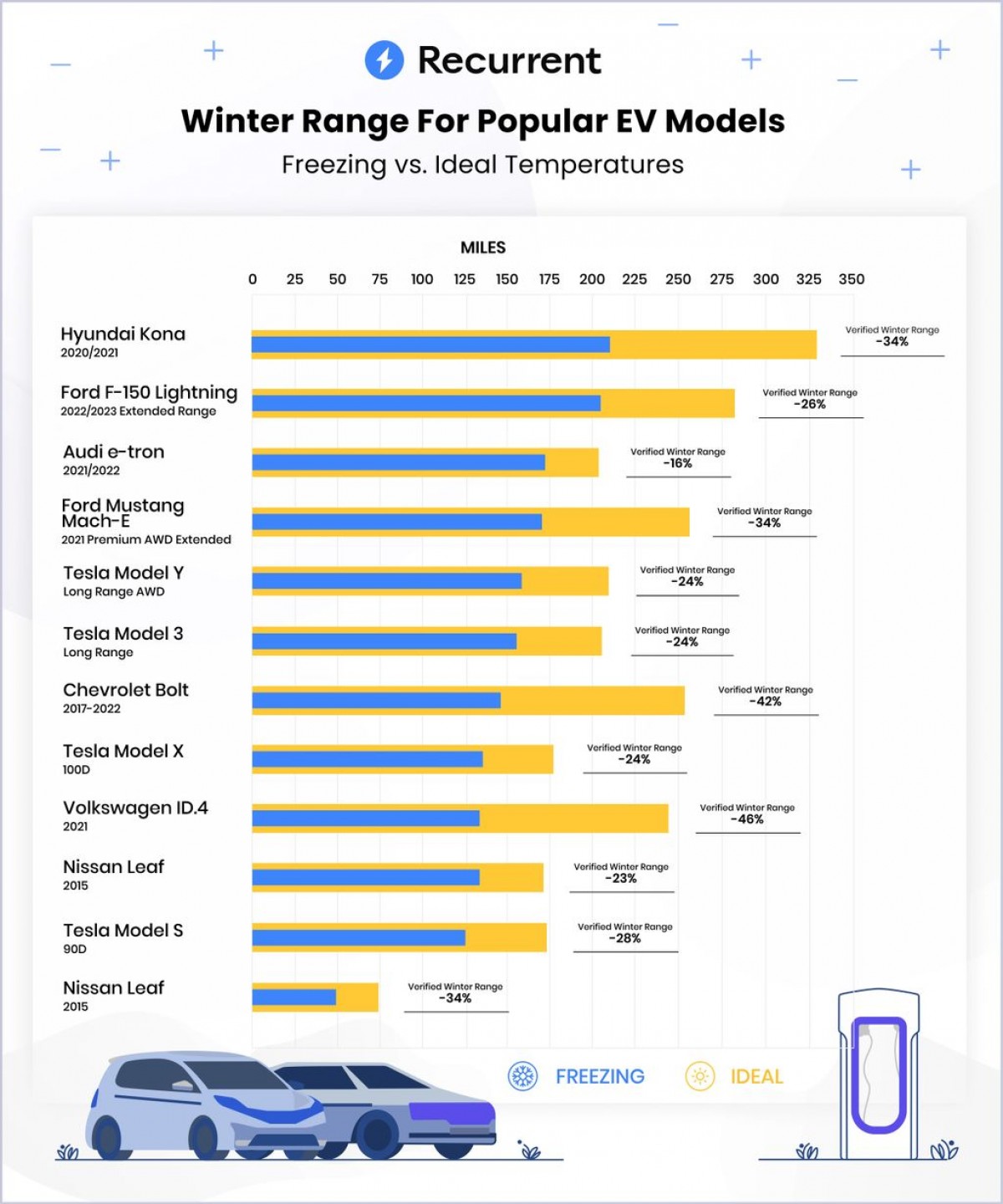
Tesla, the poster child of electric innovation, finds itself in a paradoxical position when winter arrives. Its vehicles, equipped with sophisticated thermal management systems, are theoretically better equipped to handle cold weather than many competitors. Yet, the data tells a different story. In controlled winter range tests, Tesla’s models—once lauded for their efficiency—exhibit range losses that rival, and sometimes exceed, those of less advanced EVs. The Model 3, for instance, may lose up to 40% of its EPA-rated range when temperatures hover around 0°F, a figure that sends shivers down the spines of prospective buyers in colder climates.
But here’s the twist: Tesla’s response to this challenge is as much about software as it is about hardware. Over-the-air updates have introduced features like “Scheduled Departure,” which preconditions the battery to optimal temperatures before a journey begins, and “Range Mode,” which optimizes energy consumption for maximum efficiency. These innovations don’t eliminate the cold’s impact, but they mitigate it, turning a potential disaster into a manageable inconvenience. The lesson? Even in the face of winter’s wrath, Tesla’s relentless pursuit of improvement shines through, proving that the battle against range loss is as much about adaptability as it is about raw engineering.
Audi and Nissan: The Underrated Contenders in the Cold
While Tesla captures headlines, two other automakers—Audi and Nissan—have quietly carved out their own niches in the winter EV landscape. Audi’s e-tron, with its heat pump and sophisticated thermal management, demonstrates a level of cold-weather prowess that often goes unnoticed. In independent tests, the e-tron retains a higher percentage of its range in freezing conditions compared to many of its peers, a testament to Audi’s commitment to all-weather performance. The heat pump, in particular, is a game-changer, siphoning waste heat from the drivetrain to warm the cabin without draining the battery, a feat that feels almost magical in subzero temperatures.
Nissan, the pioneer of mass-market electric vehicles with the Leaf, has also made strides in addressing winter range loss. The Leaf’s e-Pedal and ProPilot Assist systems, while not directly related to cold-weather performance, contribute to a smoother, more predictable driving experience that reduces energy waste. More importantly, Nissan’s battery thermal management system has evolved to better handle extreme temperatures, ensuring that the Leaf remains a viable option even in the harshest winters. These advancements underscore a critical truth: innovation in the EV space isn’t the sole domain of Silicon Valley disruptors. Legacy automakers, with their deep pockets and engineering prowess, are just as capable of delivering solutions that defy the cold.
The Human Factor: How Drivers Can Outsmart the Cold
Technology alone cannot vanquish winter’s tyranny. The driver, too, plays a pivotal role in preserving range and ensuring a safe journey. Preconditioning the battery before departure is a simple yet effective strategy, allowing the vehicle to reach an optimal operating temperature while still plugged in. This not only maximizes range but also reduces the load on the battery during the drive, extending its lifespan. Plugging in at every opportunity—even for short stops—ensures that the battery remains warm and ready for the road ahead, a habit that feels almost like cheating the system.
Driving habits, too, must adapt to the cold. Gentle acceleration and braking conserve energy, as does minimizing the use of auxiliary systems like heated seats and steering wheels. Planning routes with charging stops in mind is no longer optional; it’s a necessity. And yet, for all the preparation, the unpredictable nature of winter weather demands flexibility. A sudden blizzard or a malfunctioning charger can turn even the most meticulously planned trip into a test of patience and resilience. The key is to embrace the uncertainty, to see each challenge as an opportunity to refine one’s approach to winter EV travel.
The Road Ahead: Will Winter Range Loss Ever Be a Thing of the Past?
The quest to conquer winter range loss is far from over. Researchers are exploring breakthroughs in battery chemistry, such as solid-state electrolytes and silicon anodes, which promise to deliver superior performance in extreme temperatures. Thermal management systems are becoming more sophisticated, with heat pumps and advanced insulation reducing the energy demands of cabin heating. Even the humble tire is getting a makeover, with low-rolling-resistance winter tires designed to minimize energy loss on snow and ice.
Yet, for all these advancements, the cold remains an implacable foe. The laws of physics are not so easily bent, and the electrochemical processes that power electric vehicles are inherently sensitive to temperature. The best we can hope for is incremental progress, a steady erosion of winter’s grip on range and efficiency. In the meantime, drivers must steel themselves for the realities of cold-weather EV ownership, armed with knowledge, patience, and a willingness to adapt.
The winter range test is more than a technical exercise; it’s a crucible that separates the promise of electric mobility from its practical realities. It reveals the vulnerabilities of a technology still in its adolescence, even as it showcases the ingenuity of those determined to push its boundaries. The cold may steal range, but it cannot steal the spirit of innovation that drives the EV revolution forward. As the snow melts and the temperatures rise, one truth remains: the battle against winter’s tyranny is far from over, but the fight itself is what defines the future of electric mobility.