In the grand theater of automotive depreciation, where most vehicles fade into obsolescence like autumn leaves, the Tesla Model S stands as a rare exception—a phoenix that refuses to burn. While the average car loses nearly half its value within five years, the Model S defies gravity, clinging to its worth like a climber gripping a sheer cliff face. This isn’t just about numbers; it’s about legacy, engineering, and the quiet rebellion of a machine that refuses to be treated as disposable. The question isn’t merely which Tesla holds value best—it’s whether any other vehicle, electric or otherwise, dares to dream of such resilience.
Depreciation, that merciless accountant of the open road, typically treats cars as transient commodities. Yet, Tesla’s flagship sedan has rewritten the rules, proving that a vehicle can be both a technological marvel and a financial fortress. But what makes the Model S so different? Why does it outpace not just its electric peers but the entire pantheon of luxury sedans? The answer lies in a alchemy of brand mystique, relentless innovation, and an almost cult-like devotion from its owners. To understand its depreciation—or lack thereof—is to peer into the soul of modern automotive ambition.
The Tesla Model S: A Financial Anomaly in a Sea of Depreciation
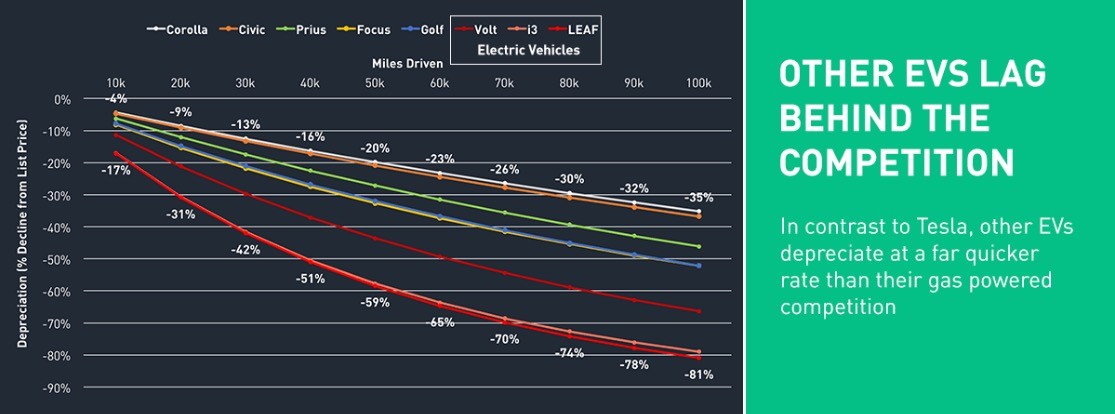
Picture a graph of automotive depreciation: a steep, unrelenting descent, with most models plummeting like discarded soda cans. Now, imagine a single line that bucks the trend, hovering near the summit like a stubborn mountain goat. That’s the Tesla Model S. Five years after rolling off the lot, it retains over 50% of its original value—an unheard-of feat in an industry where 30% retention is often hailed as a victory. This isn’t just good; it’s otherworldly.
The secret? A trifecta of desirability, scarcity, and technological obsolescence that works in Tesla’s favor. Unlike internal combustion engines, which are bound by the ticking clock of mechanical wear, the Model S is a rolling computer. Its software updates, battery improvements, and autonomous driving capabilities evolve even as the car ages. A five-year-old Model S isn’t a relic; it’s a time capsule of progress, still capable of receiving the latest autopilot enhancements. In an era where cars are increasingly disposable, the Model S is a living entity, one that grows more valuable with each passing software update.
Consider the alternatives. The Porsche Taycan, a masterpiece of German engineering, loses nearly 50% of its value within three years. The Audi e-tron GT, while stunning, follows the same downward spiral. Even the Lucid Air, Tesla’s closest rival in the luxury EV space, can’t match the Model S’s financial fortitude. Why? Because Tesla has mastered the art of brand mythology. Owning a Model S isn’t just about transportation; it’s about being part of a movement. It’s the iPhone of automobiles—a status symbol that transcends its function.
The Model 3: The People’s Depreciation Dynamo
If the Model S is the aristocrat of Tesla’s lineup, the Model 3 is its democratic champion—a car so ubiquitous that its depreciation curve tells a different story. Unlike its luxury sibling, the Model 3 isn’t just holding value; it’s defining it. Within the first year, it loses a mere 10% of its worth, a figure that stabilizes into a slow, dignified decline. By year five, it still commands a price that would make most combustion-engine sedans weep with envy.
What’s the Model 3’s secret? Scale. Tesla’s ability to churn out hundreds of thousands of these cars annually has turned depreciation into a non-issue. The more Model 3s on the road, the less each individual unit feels like a luxury purchase. It’s the automotive equivalent of a smartphone—ubiquitous, essential, and perpetually in demand. Dealers can’t keep them in stock, and used Model 3s fly off lots faster than new ones roll onto them. This isn’t just strong depreciation; it’s reverse depreciation.
Yet, the Model 3’s appeal isn’t purely economic. It’s the car that democratized electric driving, proving that EVs didn’t need to be six-figure status symbols to be desirable. Its minimalist interior, instant torque, and over-the-air updates make it feel perpetually modern. A three-year-old Model 3 doesn’t feel outdated; it feels timeless. And in a world where cars are increasingly seen as disposable, that’s a radical idea.
The Model X and Model Y: The Underrated Contenders
While the Model S and Model 3 steal the spotlight, the Model X and Model Y are the unsung heroes of Tesla’s depreciation saga. The Model X, with its falcon-wing doors and SUV practicality, has carved out a niche as the ultimate family hauler. Its depreciation is steeper than the Model S’s but gentler than most luxury SUVs. Five years in, it still commands a premium, thanks to its unique design and Tesla’s relentless software updates. It’s the automotive equivalent of a Swiss Army knife—versatile, enduring, and perpetually useful.
The Model Y, Tesla’s compact crossover, is the dark horse of the lineup. Its depreciation is nearly as impressive as the Model 3’s, thanks to its affordability and Tesla’s relentless production ramp-up. Within the first year, it loses just 12% of its value, a figure that stabilizes into a slow, steady decline. By year five, it’s still a hot commodity in the used market, a testament to its practicality and Tesla’s brand power. It’s the car that proves EVs don’t need to be expensive to be desirable.
What unites these models is Tesla’s refusal to let them become obsolete. While traditional automakers treat their vehicles as static products, Tesla treats them as living platforms. A five-year-old Model X isn’t a relic; it’s a machine that’s still evolving, still improving, still defying the odds. In an industry where depreciation is the norm, Tesla has turned it into an afterthought.
The Great Equalizer: Charging Infrastructure and Resale Value
Depreciation isn’t just about the car itself; it’s about the ecosystem that surrounds it. Tesla’s Supercharger network is the invisible hand that guides its resale value. Unlike other EVs, which leave owners at the mercy of third-party charging stations, Tesla owners enjoy a seamless, reliable network that spans continents. This isn’t just convenience; it’s peace of mind. A used Tesla isn’t just a car; it’s a passport to a global infrastructure that most EVs can only dream of.
Consider the alternative. A used Nissan Leaf, once a pioneer of affordable EVs, now languishes in used lots because its owners are trapped in a charging desert. A used Chevy Bolt, while affordable, suffers from the same infrastructure anemia. Tesla’s charging network isn’t just a feature; it’s a moat, a barrier that protects its resale value from the ravages of time and neglect. It’s the reason why a five-year-old Model 3 can still command a premium, while a five-year-old Leaf struggles to find a buyer.
This infrastructure advantage extends beyond charging. Tesla’s over-the-air updates ensure that even the oldest Model S feels modern. Its software is a living entity, constantly evolving, constantly improving. A three-year-old Tesla isn’t just a car; it’s a time capsule of progress, still capable of receiving the latest features. In an industry where cars are increasingly disposable, Tesla’s approach is nothing short of revolutionary.
The Future of Tesla Depreciation: A Crystal Ball
If Tesla’s past is any indication, the future of depreciation will be defined by two words: relentless innovation. The company’s commitment to autonomy, battery technology, and software integration ensures that its cars will never become obsolete. A five-year-old Model S won’t just hold its value; it will appreciate in desirability as new features are added. It’s the automotive equivalent of a vintage wine, growing richer with age.
Yet, the road ahead isn’t without potholes. The rise of Chinese EV manufacturers, the increasing affordability of traditional automakers’ EVs, and the looming specter of used car glut could all threaten Tesla’s depreciation dominance. But if history is any guide, Tesla will adapt. It always does. The company’s ability to pivot, to innovate, and to defy expectations is what sets it apart. In a world where most cars are treated as disposable, Tesla treats them as artifacts—objects of enduring value in a transient world.
The Model S, Model 3, Model X, and Model Y aren’t just cars; they’re financial anomalies, proof that depreciation isn’t an inevitability. It’s a choice. A choice to build machines that refuse to fade, to innovate, and to defy the odds. In the grand theater of automotive depreciation, Tesla isn’t just a player; it’s the director, the scriptwriter, and the star of the show. And the show isn’t over yet.