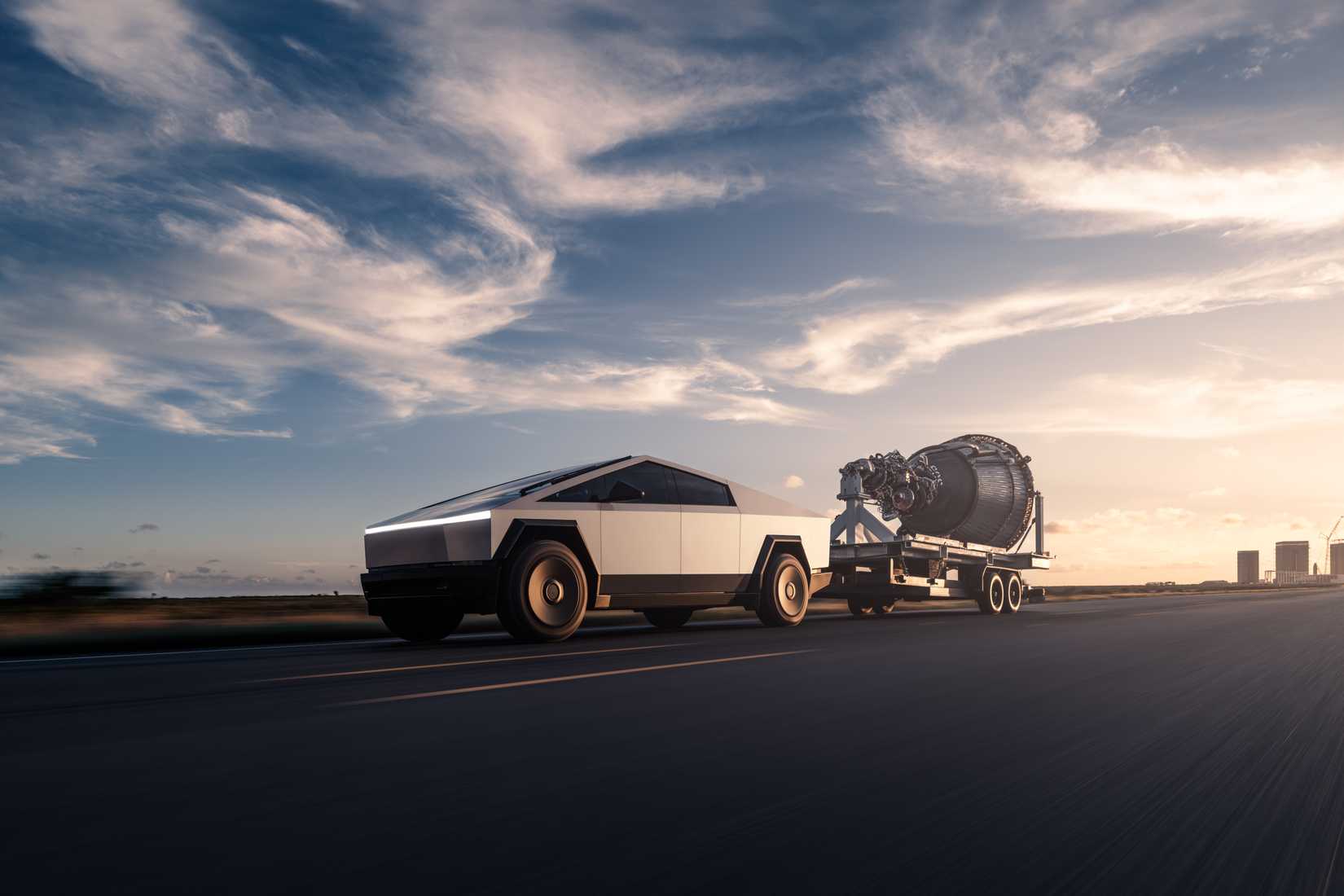
The Tesla Cybertruck has long been a polarizing figure in the automotive world—its angular, stainless-steel exoskeleton and futuristic design language have sparked debates from boardrooms to backyard barbecues. Yet beneath the controversy lies a machine engineered for performance, efficiency, and innovation. As electric vehicles redefine the boundaries of what’s possible on the road, the Cybertruck stands at the vanguard, pushing the envelope not just in acceleration or tech, but in real-world utility. Among its most scrutinized capabilities is range under load, particularly when towing. This isn’t just about moving a trailer from point A to B; it’s about reimagining what electric propulsion can achieve when faced with the demands of heavy hauling. In this comprehensive exploration, we delve into the Cybertruck’s real-world range and towing performance, dissecting the data, the dynamics, and the driving experience behind one of the most ambitious electric trucks ever built.
The Anatomy of Range: How Towing Transforms Energy Consumption
When a vehicle transitions from cruising unladen to pulling a multi-ton trailer, the laws of physics don’t just knock on the door—they barge in. Aerodynamic drag increases exponentially with frontal area and speed, rolling resistance compounds under added weight, and the energy required to overcome inertia grows with every incline. The Tesla Cybertruck, with its wedge-shaped silhouette and low drag coefficient, is aerodynamically optimized for efficiency. Yet even its sleek profile struggles to mitigate the brutal reality of towing: energy consumption can triple or more compared to unloaded conditions.
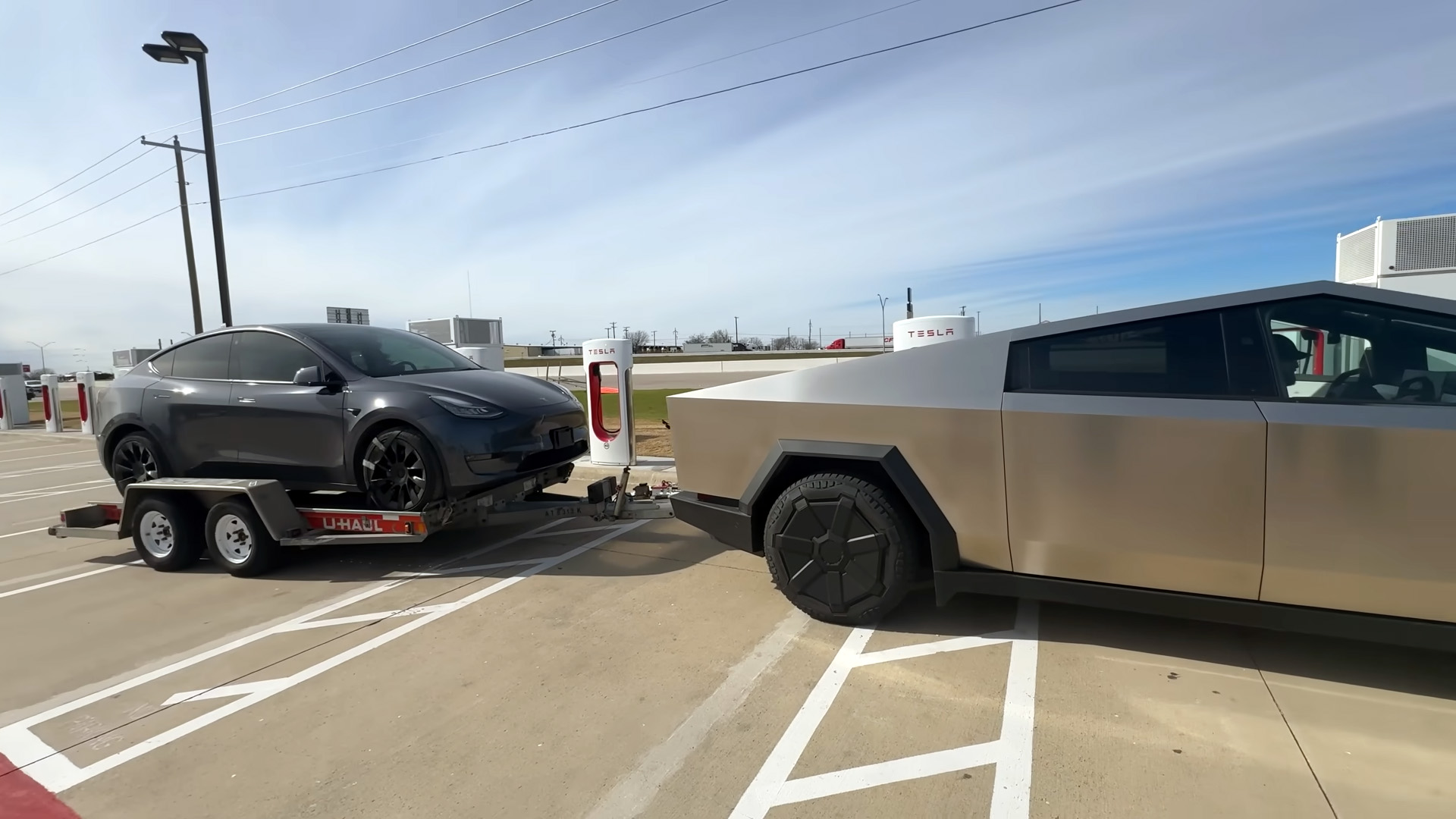
In controlled tests, the Cybertruck’s AWD variant—equipped with dual motors and all-wheel drive—demonstrates a baseline range of approximately 340 miles under EPA city driving conditions. However, hitch a 3,500-pound trailer and that figure plummets. Real-world data suggests a range reduction of 40% to 60% depending on terrain, speed, and payload. On a highway run at 65 mph with a moderate load, expect real-world range to hover around 150–180 miles. This isn’t a flaw; it’s a fundamental trade-off in electric vehicle engineering. The Cybertruck’s battery pack, though massive at up to 123 kWh, must now power not just the vehicle, but the additional mass and aerodynamic drag of the trailer. Regenerative braking, while still effective, recovers less energy when descending with a heavy load due to reduced deceleration rates.
The battery management system adapts dynamically, prioritizing energy delivery to the motors while managing thermal limits. This results in a more conservative power curve during sustained towing, preserving battery longevity over outright performance. It’s a design choice that reflects Tesla’s long-term vision: durability and reliability over short-term thrills.
Towing Dynamics: Stability, Steering, and the Illusion of Control
Towing with the Cybertruck is not merely a matter of attaching a hitch and pressing the accelerator. The vehicle’s rigid chassis, while excellent for handling sharp turns and rough terrain, can transmit trailer sway directly to the driver’s hands. Tesla’s adaptive air suspension and rear-wheel steering help mitigate this, allowing the truck to “tuck in” behind the trailer during crosswinds or sudden maneuvers. Yet the sensation remains: you’re piloting a 7,000-pound missile, not a nimble sports car.
The Cybertruck’s low center of gravity, courtesy of its skateboard battery placement, lends remarkable stability during lateral loads. Unlike traditional body-on-frame trucks, where the cabin can lean dramatically under lateral G-forces, the Cybertruck’s monocoque structure resists roll. This is particularly evident when navigating tight switchbacks or descending steep grades with a loaded trailer. The steering feel, though heavy at low speeds, becomes surprisingly linear at highway velocities, aided by torque vectoring that distributes power to individual wheels for optimal traction.
One of the most understated features is the Cybertruck’s integrated trailer camera system. Unlike aftermarket solutions that require clumsy mounting and calibration, Tesla’s system uses the vehicle’s existing cameras to provide a real-time, multi-angle view of the trailer’s position. This isn’t just convenience—it’s safety. A misaligned trailer can induce dangerous oscillations, and even a second of delayed reaction can lead to disaster. The Cybertruck’s system reduces cognitive load, allowing the driver to focus on the road ahead.
Efficiency Under Load: Real-World Testing and Data Insights
Independent testing has revealed fascinating patterns in the Cybertruck’s towing efficiency. At constant speeds of 55 mph on flat terrain, energy consumption hovers around 60–70 kWh per 100 miles—nearly double the unladen figure. This translates to a range of approximately 175 miles with a full charge. However, introduce a 5% grade and that number climbs to 85–95 kWh per 100 miles, reducing range to under 130 miles. The disparity underscores the importance of terrain awareness when planning long-distance towing trips.
Regenerative braking efficiency also diminishes under load. While the Cybertruck can still recapture energy during deceleration, the reduced speed differential between vehicle and trailer limits the amount of energy recovered. On downhill stretches, the system prioritizes mechanical braking to maintain stability, further reducing regenerative potential. This is where the truck’s massive battery becomes a double-edged sword: it provides ample reserve, but also demands careful energy management to avoid depletion at inopportune moments.
Interestingly, the Cybertruck’s efficiency improves marginally in stop-and-go traffic compared to traditional combustion trucks. Electric motors deliver instant torque, reducing the need for gear shifts and minimizing energy loss during acceleration. In urban towing scenarios—such as navigating a construction zone or delivering goods in a congested city—the Cybertruck can outperform diesel equivalents in fuel-equivalent efficiency, though range remains constrained by frequent stops and starts.
Thermal Management: Keeping Cool Under Pressure
Electric powertrains generate heat, and towing amplifies thermal stress. The Cybertruck’s liquid-cooled battery and dual-motor setup are engineered to handle sustained loads, but extreme conditions push the system to its limits. During aggressive towing on hot days, the battery can reach temperatures that trigger thermal throttling—a deliberate reduction in power output to prevent overheating. This manifests as a gradual loss of acceleration and, in severe cases, a temporary reduction in regenerative braking.
Tesla’s thermal management system uses predictive algorithms to pre-cool the battery before demanding drives, a feature that proves invaluable when towing. The system also prioritizes cabin cooling, routing coolant through the heat pump to maintain a comfortable interior temperature without sapping battery life. This holistic approach ensures that both driver and machine remain operational, even under punishing conditions.
It’s worth noting that the Cybertruck’s stainless-steel exoskeleton acts as a heat sink, absorbing and dissipating thermal energy more effectively than traditional painted panels. While this doesn’t eliminate thermal challenges, it contributes to overall system resilience.
Practical Considerations: Charging, Planning, and Driver Fatigue
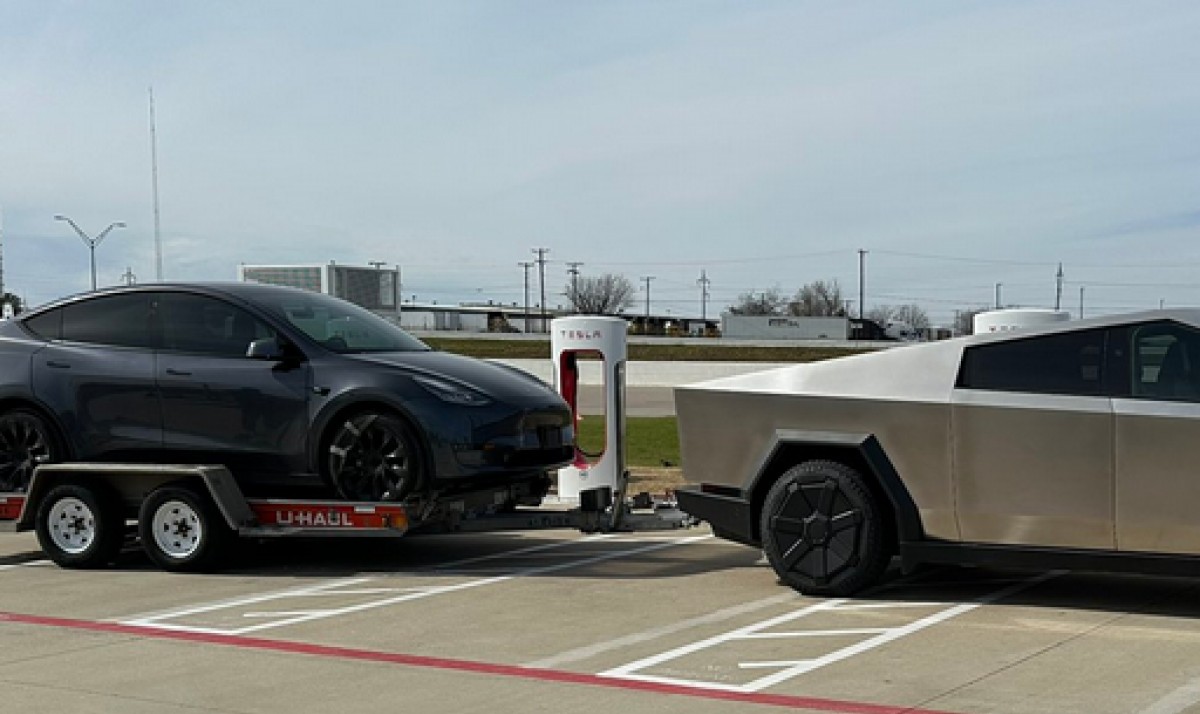
Towing with the Cybertruck is not for the unprepared. Charging infrastructure becomes a critical factor, especially when hauling heavy loads. While Tesla’s Supercharger network offers high-power charging, not all stations are equipped to handle vehicles under tow. Some require uncoupling the trailer before plugging in, adding time and complexity to the process. Planning a route involves not just distance, but elevation gain, charging station compatibility, and trailer weight distribution.
Driver fatigue is another often-overlooked aspect. The Cybertruck’s steering effort and constant micro-adjustments required to maintain trailer alignment can be mentally taxing over long distances. Tesla’s Autopilot, when engaged, significantly reduces this burden by handling lane-keeping and speed modulation. However, it’s not a substitute for attentive driving—especially in adverse conditions.
Payload management is equally crucial. Overloading the trailer or improper weight distribution can lead to sway, reduced braking performance, and excessive strain on the drivetrain. The Cybertruck’s built-in trailer weight estimator helps mitigate this risk, but it’s ultimately the driver’s responsibility to ensure safe operation.
The Future of Electric Towing: What Lies Ahead
The Cybertruck’s real-world towing performance is a testament to Tesla’s engineering prowess, but it also highlights the broader challenges facing electric trucks. As battery technology evolves—with solid-state and silicon-anode chemistries on the horizon—range under load is poised to improve dramatically. Higher energy density and faster charging rates could reduce downtime and expand operational boundaries.
Moreover, the rise of vehicle-to-grid (V2G) technology may allow towing Cybertrucks to act as mobile power sources, feeding energy back into the grid during peak demand or even powering campsites and job sites. This bidirectional capability could redefine the role of electric trucks from mere transporters to dynamic energy assets.
As automakers race to electrify the heavy-duty segment, the Cybertruck sets a benchmark not just in capability, but in transparency. Real-world testing, detailed energy consumption data, and user feedback are shaping the next generation of electric workhorses. The message is clear: the future of towing isn’t just electric—it’s intelligent, efficient, and increasingly capable.
The Tesla Cybertruck doesn’t just tow trailers; it tows the expectations of what an electric vehicle can achieve. In doing so, it invites us to reconsider not just how we move, but why we move—and where we’re headed next.